
GUIDE
Enfamil vs. Similac
Published on ·Updated on
Both meet the same FDA nutritional requirements. The biggest differences are proprietary ingredient branding, taste, and price — not nutritional outcomes.
Enfamil and Similac together account for roughly 70-80% of the U.S. infant formula market. Parents agonize over which to choose, but the honest truth is that both are safe, well-regulated, and nutritionally complete. Here is what actually differs — and what does not.
Log formula and bottles
“You usually don't need the most expensive formula to have a healthy, happy baby.”
 Dr. Matthew Badgett, MD, Pediatrician, Cleveland Clinic
The Honest Starting Point
If you are standing in a store aisle trying to decide between Enfamil and Similac, here is the most important thing to know: both formulas meet the same FDA nutritional standards, and for the vast majority of healthy, full-term babies, either one will work just fine.
The FDA regulates infant formula under 21 CFR 107, which sets minimum (and in some cases maximum) levels for 29 nutrients. Every formula sold in the United States — whether it is Enfamil, Similac, or the store brand next to them on the shelf — must meet these requirements before it can be marketed. The FDA also requires manufacturers to test each batch and conducts periodic facility inspections.
This does not mean all formulas are identical. There are real differences in ingredient sources, proprietary additions, and price. But the nutritional floor is the same, and the clinical outcomes for healthy babies are comparable across brands. The AAP does not recommend one brand over another.
For a broader look at how formula fits into feeding at every age, see our baby feeding chart.
| Feature | Enfamil | Similac | What It Means |
|---|---|---|---|
| Manufacturer | Reckitt (Mead Johnson) | Abbott Laboratories | Both are major pharmaceutical/nutrition companies with decades of formula manufacturing |
| Protein source | Nonfat milk, whey protein concentrate | Nonfat milk, whey protein concentrate | Essentially the same base proteins |
| Fat source | Palm olein, soy, coconut, high oleic sunflower oils | High oleic safflower, soy, coconut oils (no palm olein) | Similac markets 'No Palm Olein Oil' — some studies link palm olein to harder stools and slightly lower calcium absorption |
| Carbohydrate source | Lactose | Lactose | Same primary carbohydrate in standard lines |
| Signature ingredient | MFGM (milk fat globule membrane) | 2'-FL HMO (human milk oligosaccharide) | Both are bioactive compounds found in breast milk. Marketing emphasis differs, but neither has strong evidence of superiority in healthy term infants |
| DHA/ARA source | From Crypthecodinium cohnii and Mortierella alpina (algal/fungal oils) | From Schizochytrium sp. oil (algal oil) | Both use algal sources. Enfamil historically used Hexane-extracted DHA/ARA, though formulations have evolved |
| Price per oz (powder, standard line) | Approximately $1.10-$1.30/oz prepared | Approximately $1.10-$1.30/oz prepared | Very close. Prices vary by retailer and format. Both are significantly more expensive than store brands. |
| Available forms | Powder, liquid concentrate, ready-to-feed | Powder, liquid concentrate, ready-to-feed | Same options. Ready-to-feed is most expensive but requires no mixing. |
The Ingredient Differences That Actually Matter
Let's break down the two areas where Enfamil and Similac genuinely diverge: their signature bioactive ingredients and their fat sources.
MFGM vs. HMO: the marketing headlines
Enfamil's flagship NeuroPro line features MFGM (milk fat globule membrane), a component naturally found in breast milk that contains phospholipids, sphingomyelin, and other bioactive compounds. Enfamil positions MFGM as supporting brain development.
Similac's 360 Total Care features 2'-FL HMO (2'-fucosyllactose, a human milk oligosaccharide), a prebiotic that supports gut health and immune function. Similac markets this as bringing their formula closer to breast milk.
Both MFGM and HMOs are real components of breast milk, and both have some clinical research behind them. But the evidence that adding isolated versions of these compounds to formula produces measurable long-term benefits in healthy, full-term infants is still limited. The studies are promising but mostly short-term, funded by the manufacturers, and focused on biomarker changes rather than clinical outcomes.
Fat sources: the palm olein question
Enfamil uses palm olein oil as a fat source. Similac does not, and actively markets this distinction. Some research suggests that palm olein oil can form insoluble calcium soaps in the gut, leading to harder stools and slightly reduced calcium and fat absorption. A 2017 meta-analysis in Food and Nutrition Research found a modest effect on stool consistency. However, the clinical significance for healthy babies getting adequate nutrition is debatable — no major health organization has recommended against palm olein in formula.
If your baby tends toward constipation on Enfamil, the palm olein difference may be worth considering. For most babies, it will not be noticeable.
| Nutrient | Minimum | Maximum | Note |
|---|---|---|---|
| Protein | 1.8 g/100 kcal | 4.5 g/100 kcal | Both Enfamil and Similac standard formulas fall within this range |
| Fat | 3.3 g/100 kcal | 6.0 g/100 kcal | Must provide 30-54% of calories. Linoleic acid specifically required. |
| Iron | 0.15 mg/100 kcal | 3.0 mg/100 kcal | AAP recommends iron-fortified formula for all formula-fed infants |
| Vitamin D | 40 IU/100 kcal | 100 IU/100 kcal | Formula-fed babies typically do not need additional vitamin D supplementation |
| Calcium | 60 mg/100 kcal | No max specified | Some studies suggest palm olein oil may reduce calcium absorption slightly |
What the Marketing Doesn't Tell You
Here is what neither brand's marketing team will say: the proprietary ingredient branding — MFGM, HMO, OptiGRO, 360 Total Care — is largely marketing differentiation built on a shared nutritional foundation.
Both formulas meet the same FDA minimums. Both provide adequate DHA and ARA. Both use cow's milk protein as the base. The flashy ingredients on the front of the can represent a small fraction of the overall formulation, and the evidence that they produce meaningfully different outcomes in healthy babies is thin.
The hospital sample you went home with was determined by a contract between the hospital and the formula company — not by a clinical recommendation from your pediatrician. Hospitals sign exclusive distribution agreements with formula manufacturers. The brand you received in your discharge bag says more about that contract than about which formula is best for your baby.
Store-brand formulas (Parent's Choice at Walmart, Up and Up at Target, Kirkland at Costco) meet the same FDA nutritional requirements. They are manufactured in FDA-inspected facilities, often by the same contract manufacturers. They cost 30-50% less. The AAP has stated that store-brand formulas are a nutritionally appropriate option.
None of this means Enfamil and Similac are bad choices. They are both excellent formulas. It means you should not feel guilty or anxious if you choose a store brand instead — or if you switch between brands because one was on sale.
| Product | Typical Price | Cost Per Oz (Prepared) | Monthly Estimate |
|---|---|---|---|
| Enfamil NeuroPro (standard powder, 20.7 oz) | $33-$38 | ~$1.20/oz prepared | ~$150-$175/month |
| Similac 360 Total Care (standard powder, 20.6 oz) | $33-$38 | ~$1.20/oz prepared | ~$150-$175/month |
| Store brand (e.g., Parent's Choice, Up & Up) | $18-$25 | ~$0.70-$0.90/oz prepared | ~$90-$120/month |
| Enfamil or Similac ready-to-feed (32 oz bottles) | $9-$12 per bottle | ~$0.30-$0.38/oz | ~$250-$350/month |
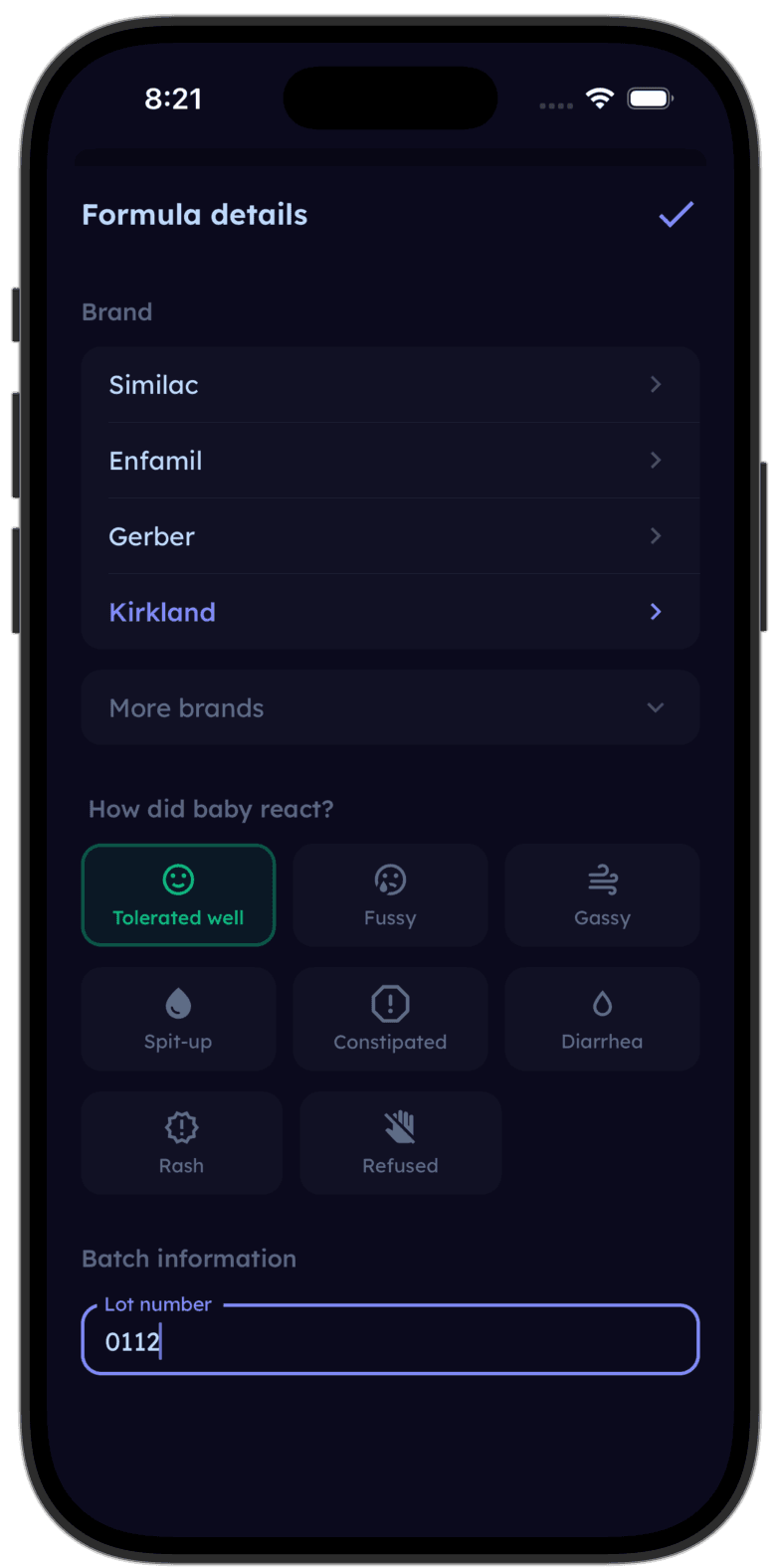
Tinylog tracks formula intake so you can spot what's working.
Log each bottle in seconds — see daily totals, track which formula your baby is on, and have real data ready for your pediatrician. Especially useful during formula transitions.


Taste, Mixing, and Practical Differences
Beyond the ingredient label, there are real-world differences that parents notice.
Taste: Enfamil and Similac taste slightly different due to their fat and protein processing. Babies can have a preference, and if your baby is refusing one brand, it is worth trying the other. You are not imagining the taste difference — you can taste it yourself (it is safe to do so).
Mixing: Enfamil powder tends to dissolve slightly more easily in room temperature water. Similac powder can be clumpier and may benefit from warmer water or a formula pitcher. Neither is difficult to mix, but parents frequently note this difference.
Stool changes: Because of the palm olein difference, some parents report that babies on Similac have softer, more frequent stools compared to Enfamil. This is not universal, but it is a commonly reported observation that aligns with the calcium soap research.
Availability: Both brands are widely available. During the 2022 formula shortage, Similac was disproportionately affected due to the Abbott Sturgis plant recall. Supply chains have since recovered, but it is a reminder that having flexibility between brands is valuable.
If you are doing combination feeding with breast milk and formula, either brand works. The choice often comes down to what your baby tolerates and what is available at your store.
When to Talk to Your Pediatrician
The formula brand decision should not require a doctor's visit for most healthy babies. However, you should talk to your pediatrician if your baby shows signs of formula intolerance or if you are considering specialty formulas.
Signs to Discuss With Your Pediatrician
- Your baby is consistently refusing feeds or eating significantly less than expected
- Persistent vomiting (not just spit-up) after most feedings
- Blood or mucus in stools
- Significant fussiness that does not improve after 1-2 weeks on a new formula
- Poor weight gain or weight loss
- Signs of allergic reaction: hives, facial swelling, wheezing, or difficulty breathing (seek immediate care)
Most formula discomfort (mild gas, occasional spit-up) is normal and does not require a formula change. Give any new formula at least 1-2 weeks before deciding it is not working. If you are tracking symptoms, bring that data to your appointment.
The Bottom Line
Enfamil and Similac are both safe, nutritionally complete formulas that meet FDA requirements. The signature ingredient differences (MFGM vs. HMO) are real but not clinically proven to produce different outcomes in healthy babies. The most meaningful practical differences are fat source (palm olein vs. no palm olein), taste, and mixing convenience.
Choose whichever one your baby tolerates well, is available at your store, and fits your budget. If that turns out to be a store brand, that is a perfectly good choice too. The best formula is the one that feeds your baby without draining your bank account or your peace of mind.
If you are switching formulas or want to track how your baby responds to a new one, keeping a simple log of feeds, diapers, and fussiness for a week or two gives you real data instead of guesswork. Tinylog makes this easy — a few taps per feed and you will have a clear picture to share with your pediatrician if needed.
For comparisons of specific formula lines, see our guides on Enfamil Gentlease vs. Similac Sensitive and Enfamil NeuroPro vs. Similac 360 Total Care.
Related Guides
-
Best Baby Formulas 2026 — An evidence-based guide
-
NeuroPro vs. 360 Total Care — Premium lines compared
-
Gentlease vs. Sensitive — For gassy babies
-
Similac Soy vs. Enfamil ProSobee — Soy formula options compared
-
Similac vs. Kirkland — Name brand vs. Costco's store brand
-
Enfamil vs. Kirkland — Name brand vs. Costco's store brand
Sources
- U.S. Food and Drug Administration. "21 CFR Part 107 — Infant Formula." Code of Federal Regulations.
- American Academy of Pediatrics. "Choosing an Infant Formula." HealthyChildren.org, 2024.
- Litmanovitz I, et al. "Reduced crying and improved neurodevelopmental outcome in infants fed a formula with MFGM." Clinical Pediatrics, 2014.
- Marriage BJ, et al. "Infants fed a lower calorie formula with 2'-FL show growth and 2'-FL uptake similar to breastfed infants." Journal of Pediatric Gastroenterology and Nutrition, 2015.
- Koo WW, et al. "Palm olein in infant formula affects bone mineralization and calcium absorption." Journal of the American College of Nutrition, 2006.
- Alarcon PA, et al. "Effect of individual fatty acids on calcium absorption in infant formulas." Food and Nutrition Research, 2017.
- U.S. FDA. "Infant Formula Guidance Documents and Regulatory Information." fda.gov, 2023.
This guide is for informational purposes only and is not a substitute for professional medical advice. Formula recommendations should be discussed with your pediatrician, especially for babies with allergies, reflux, or other medical conditions.
Frequently asked questions
- Is Enfamil or Similac better for babies?
- Neither is objectively better. Both meet FDA nutritional requirements under 21 CFR 107. Enfamil's flagship includes MFGM (milk fat globule membrane) while Similac's flagship includes 2'-FL HMO (a human milk oligosaccharide). Clinical outcomes for healthy, full-term babies are comparable with either brand. Most pediatricians say the best formula is the one your baby tolerates well.
- Do pediatricians recommend Enfamil or Similac?
- Pediatricians generally do not recommend one brand over the other for healthy babies. Hospital contracts often determine which brand new parents receive samples of, which creates a perception of recommendation. Both brands are considered safe and nutritionally complete by the AAP.
- Is store-brand formula as good as Enfamil or Similac?
- Yes. Store-brand formulas must meet the same FDA nutritional requirements as name brands. The FDA regulates all infant formula sold in the U.S. under 21 CFR 107, which sets minimum and maximum levels for 29 nutrients. Store brands typically cost 30-50% less per ounce.
- Can I switch between Enfamil and Similac?
- Yes. Most babies can switch between formulas without issues. If you want to transition gradually, try mixing the two for a few days. Some babies may have a brief adjustment period with changes in stool color or consistency, which is normal and usually resolves within a week.
- Why does Enfamil taste different from Similac?
- The taste difference comes from their protein and fat sources. Enfamil uses a blend of nonfat milk and whey protein with palm olein oil, while Similac uses nonfat milk and whey with high oleic safflower oil and soy oil (no palm olein). These fat source differences affect both taste and stool consistency.