GUIDE

Switching Baby Formulas

Most formula switches happen too early. Give a new formula at least 1-2 weeks before deciding it's not working.

Gas, spit-up, and weird stools are normal newborn behavior — not automatic signs you need a different formula. Here's when switching actually makes sense, and how to do it right.

The Most Common Formula Mistake: Switching Too Soon

Here is one of the most predictable patterns in newborn parenting: baby is fussy after a feeding, parent Googles "formula intolerance," parent switches to a new formula the next day. The new formula seems better for 48 hours (because novelty bias is real and newborn symptoms fluctuate), then the same issues return, and the cycle starts again.

This is not a criticism. When your baby is uncomfortable, you want to fix it immediately. The instinct to change something — anything — is completely understandable. But here is what the evidence says: most of the symptoms that trigger formula switches in the first few weeks are normal newborn behavior, not formula problems.

Gas, spit-up, grunting, evening fussiness, irregular stools — these are features of having a brand-new digestive system, not signs that your formula is wrong. And constantly switching formulas can actually make things worse, because you never give your baby's gut time to adjust to any single product.


Normal Newborn Behavior (Not Reasons to Switch)

  • Gas and grunting — newborns have immature digestive systems. Gas is universal, not a formula problem.
  • Spit-up after feeds — most healthy babies spit up. It's a laundry problem, not a medical problem, unless baby is in pain or losing weight.
  • Irregular stools — color, consistency, and frequency change constantly in the first weeks. Green, yellow, seedy, pasty — all can be normal.
  • Fussiness in the evening — the 'witching hour' is developmental, not digestive. It peaks around 6 weeks and fades by 3-4 months.
  • Straining during bowel movements — babies are learning to coordinate their muscles. Straining with soft stools is normal (infant dyschezia).
  • Hiccups — extremely common in newborns, not a sign of formula intolerance.

If your baby is gaining weight, producing 6+ wet diapers per day, and eating willingly — the formula is almost certainly fine. These symptoms are your baby's digestive system doing its job for the first time.

When Switching Actually Makes Sense

Not every switch is premature. There are real, legitimate reasons to change formulas, and recognizing them matters. The key distinction is between normal newborn digestive behavior and actual signs of intolerance or allergy.

True cow's milk protein allergy (CMPA) affects about 2-3% of infants, according to the American Academy of Pediatrics. It is real, it requires a formula change, and the symptoms are usually more severe and persistent than everyday fussiness. If you are seeing the signs below — especially blood in stool — contact your pediatrician. You do not need to diagnose this yourself.

Signs That May Warrant a Formula Switch

  • Blood or mucus in stool — this can indicate a cow's milk protein allergy (CMPA) and needs pediatrician evaluation
  • Persistent rash or hives that appear consistently after feeding — especially around the mouth, face, or body
  • Forceful, projectile vomiting after most feeds — not just normal spit-up, but vomiting that causes distress and weight loss
  • Severe, watery diarrhea lasting more than a few days — especially if accompanied by signs of dehydration
  • Consistent refusal to eat — baby arches back, cries during feeds, turns away repeatedly
  • Poor weight gain confirmed by your pediatrician — not just a slow week, but a documented pattern
  • Severe eczema that doesn't respond to topical treatment — can sometimes be linked to cow's milk protein sensitivity

These symptoms deserve a conversation with your pediatrician. They may recommend diagnostic testing or a trial of a different formula category.

The Formula Escalation Ladder

Not all formulas are created equal, and there is a logical progression when a baby needs something different. Think of it as an escalation ladder — you start at the bottom and only move up when there is a documented reason to do so.

Most babies — roughly 80% — do perfectly well on standard milk-based formula. The escalation ladder exists for the minority who need something more specialized, and each step up involves more processed (hydrolyzed) protein that is easier to digest but also more expensive and often less palatable.

The Formula Escalation Ladder
Step 1
Formula TypeStandard (Milk-Based)
ExamplesSimilac Advance, Enfamil NeuroPro, Kirkland ProCare, Gerber Good Start GentlePro
Protein StateIntact cow's milk protein
Best ForMost healthy, full-term babies. Start here unless your pediatrician says otherwise.
Approx. % of Babies~80% of babies
Step 2
Formula TypeGentle / Sensitive
ExamplesEnfamil Gentlease, Similac Sensitive, Gerber Good Start SoothePro
Protein StatePartially hydrolyzed (proteins broken into smaller pieces)
Best ForBabies with mild fussiness or gas that persists after 2+ weeks on standard formula.
Approx. % of Babies~15% of babies
Step 3
Formula TypeExtensively Hydrolyzed
ExamplesNutramigen, Alimentum, Gerber Extensive HA
Protein StateExtensively hydrolyzed (proteins broken into very small fragments)
Best ForConfirmed or suspected cow's milk protein allergy (CMPA). Requires pediatrician guidance.
Approx. % of Babies~3-5% of babies
Step 4
Formula TypeAmino Acid-Based
ExamplesEleCare, PurAmino, Alfamino
Protein StateFree amino acids (no intact protein at all)
Best ForSevere CMPA, multiple food protein intolerances, babies who don't improve on extensively hydrolyzed.
Approx. % of Babies<1% of babies
Always consult your pediatrician before moving up the ladder. Steps 3 and 4 are medical formulas typically recommended by a doctor, not self-selected by parents.

The Decision Flowchart: Should You Switch?

When you are in the middle of a difficult feeding stretch, it helps to have a clear framework. Use this decision guide to figure out whether a switch makes sense or whether waiting is the right call.

Formula Switch Decision Guide
Baby has gas, fussiness, or spit-up in the first 2 weeks on a new formula
What the Evidence SaysWait. These are almost always normal adjustment symptoms. Give it at least 1-2 full weeks.
Recommended ActionContinue current formula
Symptoms persist after 2 weeks on current formula with no improvement
What the Evidence SaysTalk to your pediatrician. They may suggest moving to a gentle/sensitive formula.
Recommended ActionConsider Step 2 (Gentle)
Blood in stool, persistent rash/hives, severe vomiting
What the Evidence SaysContact your pediatrician promptly. These may indicate CMPA and warrant a faster switch.
Recommended ActionPediatrician may recommend Step 3 (Extensively Hydrolyzed)
Baby improved on gentle formula but still has some issues
What the Evidence SaysGive the gentle formula another 1-2 weeks. Partial improvement is still improvement.
Recommended ActionContinue gentle formula
No improvement after 2 weeks on extensively hydrolyzed formula
What the Evidence SaysYour pediatrician may recommend an amino acid-based formula.
Recommended ActionConsider Step 4 (Amino Acid-Based)
Baby is thriving — good weight gain, content after feeds, normal stools
What the Evidence SaysStop looking for problems. Your formula is working.
Recommended ActionStay on current formula
This is a general guide, not a substitute for your pediatrician's advice. When in doubt, call your doctor.

How to Actually Switch Formulas

So you and your pediatrician have decided a switch is warranted. Here is how to do it without overthinking it.

Cold turkey is usually fine

Despite what the internet says, you don't need to gradually mix old and new formula for most switches. Just start the new formula at the next feeding. Your baby's digestive system can handle it. The American Academy of Pediatrics does not recommend a mixing transition for medical formula switches.

Gradual mixing is for taste, not digestion

The only reason to mix old and new formula together is if your baby refuses the taste of the new one. In that case, try 75% old / 25% new for a day, then 50/50, then 25/75, then full switch. This takes 3-4 days. But this is about acceptance, not about protecting their stomach.

Expect temporary stool changes

A new formula may change stool color, consistency, or frequency for a few days. Green stools, slightly firmer or looser texture, and a different smell are all normal during transition. This usually resolves within 3-5 days.

Don't switch during illness

If your baby is sick — cold, stomach bug, teething hard — wait until they're feeling better before switching formulas. You want to be able to tell what's causing what. Too many variables at once means you can't evaluate the new formula fairly.

Keep track of what you're seeing

When you switch formulas, write down what you observe each day — spit-up frequency, stool changes, fussiness level, any rash. Having real data instead of a general impression makes it much easier to tell if the new formula is actually better or worse.

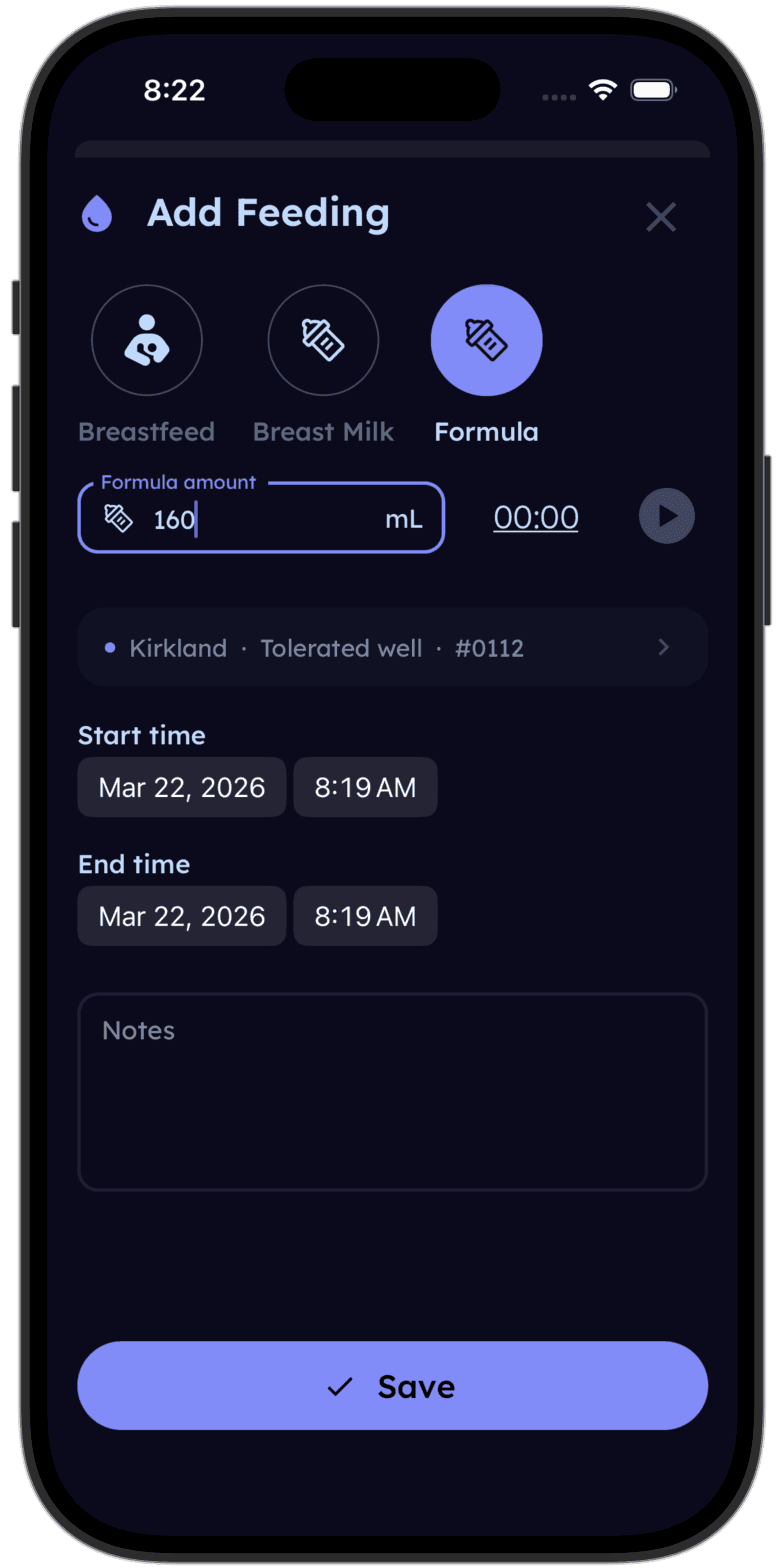
tinylog feeding log showing formula type and symptom notes during a transition

tinylog makes formula transitions trackable — so you're not guessing.

Log each bottle, note any symptoms, and see the real pattern over days — not just your 2 AM impression. When your pediatrician asks how the switch is going, you'll have actual data instead of 'I think maybe it's better?'

Download on the App StoreGet It On Google Play

What the Marketing Doesn't Tell You

Formula companies have a financial incentive for you to switch — specifically, to switch to their more expensive specialty lines. A standard formula costs roughly $25-30 per can. A gentle/sensitive formula costs $28-35. An extensively hydrolyzed formula like Nutramigen or Alimentum runs $40-50+. The margins are better on specialty products.

This does not mean specialty formulas are a scam. They serve a real purpose for babies who need them. But the marketing around them — "for fussiness and gas," "gentle on sensitive tummies" — is designed to make every parent of a fussy baby think they need to upgrade. The truth is that fussiness and gas are normal parts of newborn life for most babies, regardless of what formula they are on.

Another thing marketing will not tell you: all standard infant formulas sold in the US meet the same FDA nutritional requirements. The base nutrition is virtually identical across brands. The differences are in optional add-ins (probiotics, DHA levels, specific protein ratios) and in price. For a deeper look at what is actually in your formula, see our guide to reading formula labels.

Switching Between Brands (Same Category)

Switching between brands within the same category — for example, from Similac Advance to Enfamil NeuroPro — is generally straightforward and rarely causes issues. Both are standard milk-based formulas that meet the same FDA requirements.

Reasons parents switch brands include price, availability (the 2022 formula shortage taught many families this lesson), or simply that baby seems to prefer one taste over another. All of these are valid reasons, and none of them require a gradual transition. You can switch brands cold turkey.

The one caveat: if your baby is on a specialty formula (hydrolyzed or amino acid-based), talk to your pediatrician before switching brands within that category. The formulations can differ more significantly at that level.

For more on how formula feeding works alongside breastfeeding, see our combination feeding guide and our supplementing guide.

When to Talk to Your Pediatrician

  • Blood or mucus in your baby's stool
  • Forceful vomiting (not just spit-up) after most feedings
  • Baby is losing weight or not gaining weight
  • Rash or hives that appear consistently after feeding
  • You've tried two formula changes without improvement
  • Severe diarrhea lasting more than 2-3 days
  • Your baby seems to be in pain during or after most feeds
  • You're unsure whether what you're seeing is normal — asking is always the right call

You do not need to wait for a scheduled visit. If something feels wrong, call. 'I'm concerned' is always a valid reason to reach out to your pediatrician.

The Bottom Line

Switching formulas is one of the most common decisions formula-feeding parents face, and it is almost always driven by anxiety rather than medical necessity. That is not a judgment — it is completely natural to want your baby to be comfortable. But the data is clear: most newborn digestive symptoms are developmental, not formula-related, and they resolve with time.

Give a new formula at least 1-2 weeks before evaluating it. Use the escalation ladder as a framework. Track what you are actually seeing — not what you are worrying about — so you and your pediatrician can make decisions based on real patterns. And remember that the goal is a baby who is gaining weight, eating willingly, and generally thriving. Perfection is not on the menu.

Related Guides

Sources

  • American Academy of Pediatrics (AAP). (2023). Choosing an Infant Formula. HealthyChildren.org.
  • Vandenplas, Y., et al. (2019). Guidelines for the diagnosis and management of cow's milk protein allergy in infants. Archives of Disease in Childhood, 92(10), 902-908.
  • U.S. Food and Drug Administration. (2024). Infant Formula Requirements. FDA.gov.
  • Katz Cooper, A., et al. (2022). Infant Formula Feeding Practices and Parental Decision-Making. Journal of Nutrition Education and Behavior, 54(3).
  • Heine, R. G. (2018). Cow's milk protein allergy in infancy: A review of current concepts. Journal of Paediatrics and Child Health, 54(12).

Medical Disclaimer

This guide is for informational purposes only and is not a substitute for professional medical advice. If you have concerns about your baby's feeding, digestion, or growth, please consult your pediatrician.

Get this guide in your inbox.
We'll email you this switching guide so you can reference it when things get confusing — including the decision flowchart and escalation ladder.
Track feeds and symptoms during a formula switch.
Download tinylog free — log every bottle and note any changes so you have real data, not guesswork.
Download on the App StoreGet It On Google Play