
GUIDE
Ergobaby Adapt vs. WildBird Ring Sling
Published on
These are fundamentally different carriers built for different priorities. The Ergobaby Adapt is a structured, buckle-based carrier with lumbar support that handles newborns through toddlerhood (7–45 lbs). The WildBird Ring Sling is a lightweight linen sling that threads through two rings, offering a quick-on, quick-off carry for newborns through about 35 lbs. Most babywearing parents end up loving both for different situations.
The Ergobaby Adapt and WildBird Ring Sling represent two different approaches to keeping your baby close. One uses buckles, padding, and structured support to distribute weight evenly across long carries. The other uses a single piece of linen fabric and two aluminum rings to create a simple, elegant pouch. Comparing them is not quite apples to apples — but if you are choosing between the two, the differences are real and worth understanding.
Log carrier sessions, feeds, sleep, and milestones
A Buckle Carrier and a Ring Sling Walk Into a Comparison
The Ergobaby Adapt and the WildBird Ring Sling are both popular, well-made baby carriers — but they are built for different moments in your day. Comparing them head to head is a bit like comparing a backpack to a crossbody bag. Both carry your things. Both have their place. But you reach for them in different situations.
The Ergobaby Adapt is a structured carrier with padded straps, buckles, a waist belt with lumbar support, and three carry positions. It handles babies from 7 lbs through 45 lbs. It is engineered for comfort over long carries.
The WildBird Ring Sling is a length of linen fabric threaded through two aluminum rings. You pull it over one shoulder, create a pouch, and settle your baby in. It is lightweight, fast, and beautifully simple — and it shines for quick carries and hip-sitting older babies.
If you are trying to decide between the two, the real question is: how do you carry, and for how long?
For more on tracking your baby's growth during these early months, see our baby growth percentiles guide.
| Feature | Ergobaby Adapt | WildBird Ring Sling | What It Means |
|---|---|---|---|
| Carrier type | Structured buckle carrier | Linen ring sling | Fundamentally different designs. The Ergobaby uses buckles and padding; the WildBird uses a length of linen threaded through two aluminum rings. |
| Weight range | 7–45 lbs | 8–35 lbs | Ergobaby has a wider range. In practice, most parents stop using the ring sling comfortably around 25 lbs due to one-shoulder weight distribution. |
| Carry positions | 3 (front inward, hip, back) | 2 primary (front inward, hip) | Ergobaby offers more positions. The ring sling's hip carry is its standout — fast, natural, and great for older babies. |
| Newborn comfort | Good — adjustable seat, no insert needed | Excellent — fabric conforms closely to baby's body | WildBird edges ahead for newborns. The linen molds around small bodies and creates a snug, womb-like hold. |
| Learning curve | Moderate — 2–3 uses to feel confident | Steep initially — 5–8 practice sessions for proper threading and seat | Ergobaby is easier to learn. The ring sling takes more upfront practice but becomes second nature. |
| Time to put on | 30–60 seconds once familiar | 15–30 seconds once familiar | WildBird wins for speed. A practiced ring sling user can pop baby in faster than any buckle carrier. |
| Weight distribution | Padded waist belt with lumbar support, padded shoulder straps | All weight on one shoulder, spread across upper back | Ergobaby wins decisively. The two-shoulder, hip-belt design distributes weight far more evenly for long carries. |
| Portability | Bulky — does not fold down small | Highly packable — rolls into a small bundle | WildBird wins. It fits in a purse or diaper bag with ease. The Ergobaby takes up real space. |
| Fabric and breathability | SoftFlex mesh, single-layer coverage | 100% linen, single layer, naturally breathable | Both breathe well. Linen gets softer with every wash. The Ergobaby mesh is cooler in peak heat but less aesthetically versatile. |
| Hip-healthy certification | Yes — IHDI acknowledged | Yes — IHDI acknowledged | Tie. Both support the M-position for healthy hip development when used correctly. |
| Machine washable | Yes | Yes (machine wash, tumble dry low) | Both are machine washable. Linen improves with washing — it gets softer and more drapey over time. |
| Longevity of use | Birth through toddlerhood (~3+ years) | Birth through toddlerhood, but comfort drops past ~25 lbs | Ergobaby wins for extended daily use. The ring sling remains useful but shifts to a quick-carry tool as baby grows. |
The Weight Distribution Gap: Where the Ergobaby Pulls Ahead
This is the single biggest functional difference between these two carriers, and it affects everything else.
The Ergobaby Adapt distributes your baby's weight across both shoulders and your hips via a padded waist belt with lumbar support. The engineering is similar to a hiking pack — the belt does the heavy lifting, the shoulder straps stabilize, and your spine stays neutral. Parents with back pain, shoulder tension, or anyone carrying a baby over 15 lbs for extended periods will feel this advantage immediately.
The WildBird Ring Sling puts all of the baby's weight on one shoulder and across your upper back. The linen spreads the load across a wide swath of fabric, which helps — but it is still one-sided. For a 10 lb newborn, this is perfectly manageable. For a 20 lb baby on a 45-minute grocery run, your shoulder will let you know about it.
This does not make the ring sling a bad carrier. It makes it a different tool. The ring sling is built for carries that last 15–30 minutes, for quick transfers in and out, and for the kind of spontaneous "hold me" moments that happen a dozen times a day with a baby. It is not built for a two-hour hike.
If you only carry for short bursts, the weight distribution gap barely matters. If you carry for hours, it is the deciding factor.
Speed and Convenience: Where the Ring Sling Wins
Here is the thing that ring sling converts will tell you about within five minutes of meeting you: once you know how to use it, a ring sling is the fastest carrier on the planet.
A practiced WildBird user can have the sling pre-threaded on their shoulder and pop a baby in within 15 seconds. Getting a baby out is even faster — loosen the rings, lift baby, done. No buckles to undo, no straps to unclip, no waist belt to unfasten.
The Ergobaby Adapt takes about 30–60 seconds to put on — waist belt first, baby in the panel, shoulder straps over and buckled, chest clip adjusted. It is not slow, but it is not grab-and-go either. For a planned outing, this is fine. For the fifteenth time your toddler says "up" while you are making dinner, the ring sling's speed becomes a real lifestyle advantage.
This is why many parents who own both carriers describe the ring sling as their "around the house" carrier and the structured carrier as their "going out" carrier. Different tools, different jobs.
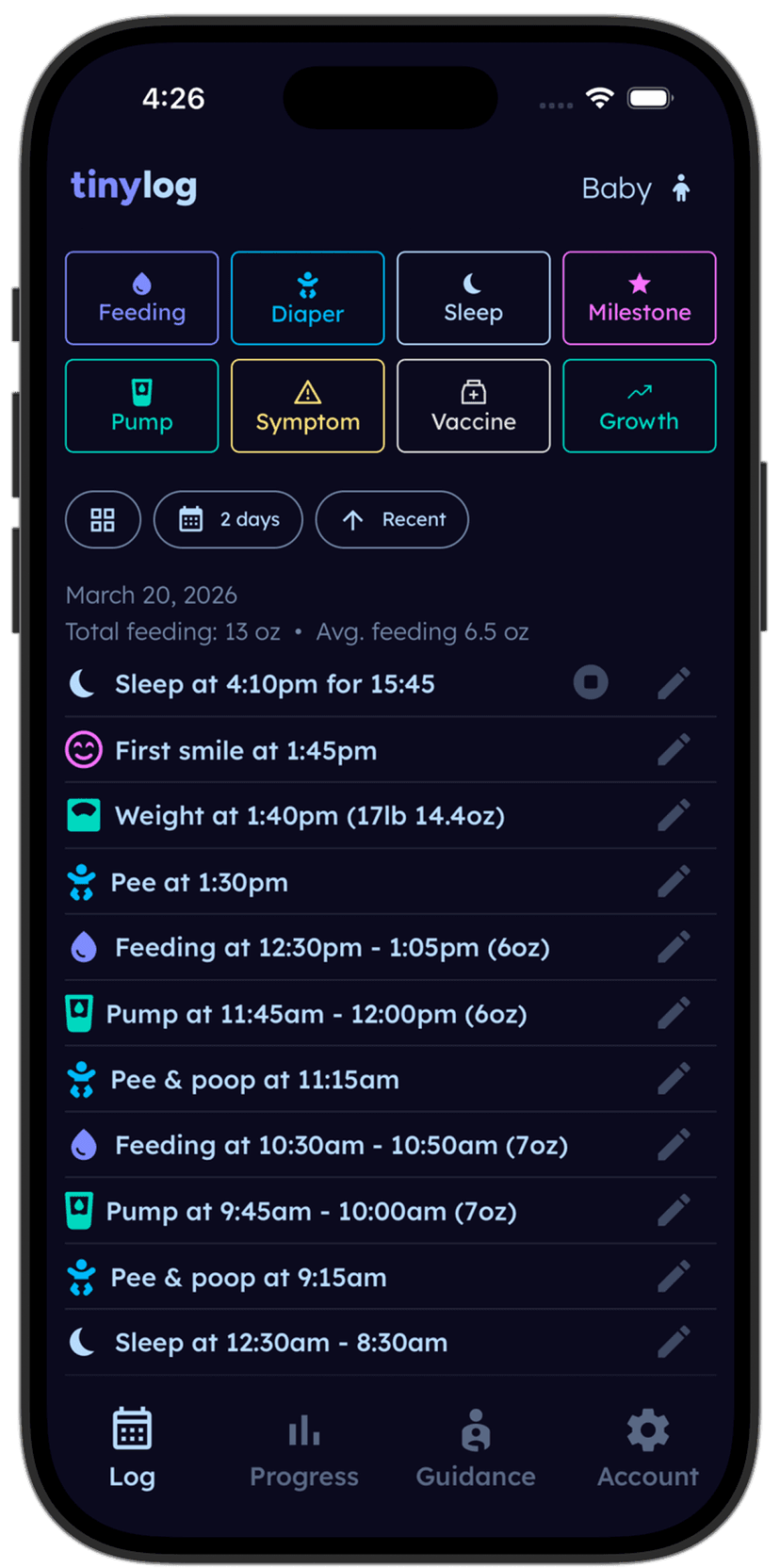
Tinylog tracks your baby's growth so you know when to adjust your carrier.
Log feeds, sleep, milestones, and growth measurements. See patterns over days and weeks. Bring the data to your next pediatrician visit.


The Hip Carry: The Ring Sling's Best Position
If there is one carry position where the ring sling outperforms every structured carrier, it is the hip carry.
Around 5–6 months, many babies start wanting to see the world. They squirm when held facing your chest. They crane their necks. They want to look around. The hip carry — baby sitting on your hip, one arm free — is the natural answer.
The WildBird Ring Sling was practically designed for this position. The fabric cradles baby on your hip, the rings sit at your collarbone, and the tail drapes neatly. It looks natural because it mimics the way parents have carried babies on their hips for thousands of years — the sling just takes the weight off your arm.
The Ergobaby Adapt also offers a hip carry position, and it works. But the buckles, waist belt, and structured panel make it feel more engineered and less fluid. Getting into and out of the hip carry takes longer, and the bulkier design feels less intuitive for quick repositioning.
For dedicated hip carrying — cooking dinner with a baby on your side, walking around a farmers' market, or just moving through your house — the ring sling is the more natural choice.
Portability: No Contest
The WildBird Ring Sling weighs under a pound and rolls into a bundle the size of a rolled-up T-shirt. It fits in a purse. It fits in a stroller cup holder. It fits in a jacket pocket. You can throw it in your bag every single day without thinking about it, and it will be there when you need it.
The Ergobaby Adapt is a well-built structured carrier, and all that padding and structure takes up space. It does not fold small. You either wear it or carry it as a separate item. On days when you are not sure whether you will need a carrier, the Ergobaby stays home. The ring sling comes with you just in case.
This portability difference is the main reason so many parents own both types. The structured carrier lives in the car or by the front door for planned outings. The ring sling lives in the diaper bag for everything else.
| Product | Typical Price | Notes |
|---|---|---|
| Ergobaby Adapt (SoftFlex Mesh) | $149–$169 | Often discounted during sales events. Strong resale value on secondhand markets. |
| WildBird Ring Sling (Linen) | $75–$115 | Price varies by fabric and print. Limited-edition prints can sell out and resell for more. |
| Ergobaby Adapt (secondhand) | $70–$110 | Check buckles, stitching, and recall status before buying used. |
| WildBird Ring Sling (secondhand) | $40–$70 | Linen slings hold up beautifully secondhand — broken-in linen is actually preferred by many parents. |
Price: Both Are Reasonable, But the Math Is Different
The WildBird Ring Sling typically runs $75–$115 depending on the fabric and print. The Ergobaby Adapt typically runs $149–$169. On the surface, the ring sling is the budget-friendly option.
But consider how you will use each one:
- Ergobaby Adapt: $149 over 30+ months of primary use = ~$5/month
- WildBird Ring Sling: $85 over 24 months of regular use = ~$3.50/month
Both are good value for what they do. The ring sling costs less upfront and less per month. The Ergobaby costs more but serves as your only carrier if you need just one.
Here is the move many experienced parents make: buy the Ergobaby as your primary carrier, then add a WildBird ring sling later when you realize you want something faster for around the house and quick errands. Total investment for both: roughly $230–$280 — less than many single premium carriers.
If budget is tight, the Ergobaby covers more ground as a solo carrier. If you already own a structured carrier, the WildBird is the best complement you can add.
Choose the Ergobaby Adapt If
- You want one carrier that works from newborn through toddlerhood
- You plan to carry your baby for longer stretches — walks, hikes, errands over 30 minutes
- Back support matters to you, especially if you have existing back or shoulder issues
- Multiple caregivers will use the carrier and you want something intuitive for everyone
- You prefer a carrier with a clear, buckle-based system over fabric adjustment
- You want a back carry option for older babies and toddlers
Choose the WildBird Ring Sling If
- You want a quick-on, quick-off carrier for short carries and transitions
- Hip carry is your go-to position for an older baby who wants to see the world
- Portability matters — you want a carrier that disappears into your diaper bag
- You value aesthetics and want a carrier that comes in beautiful linen prints
- You plan to nurse while babywearing and want the easiest access
- You already own (or plan to buy) a structured carrier and want a complementary option
Where to Buy
The Ergobaby Adapt (~$149–$169) is the carrier that does everything. Three carry positions, padded lumbar support, a 45 lb weight limit, and the kind of weight distribution that makes hour-long walks comfortable. If you are buying one carrier and want it to last from newborn through toddlerhood, this is the safe bet. Available at Amazon, Target, and the Ergobaby website — check for registry discounts and seasonal sales.
The WildBird Ring Sling (~$75–$115) is the carrier you did not know you needed until you try one. Fast to put on, effortless for hip carries, and small enough to live permanently in your diaper bag. The linen gets softer with every wash, and the prints are genuinely beautiful. Available at wildbirdslings.com — sign up for their email list to catch limited-edition drops and sales.
If you can budget for both, that is the combination most babywearing parents eventually land on. The Ergobaby for planned outings and long carries. The WildBird for everything in between.
Tinylog earns a small commission on purchases made through these links, at no cost to you.
Before you buy, it's worth checking promo.new for a deal. It doesn't cover everything, but we've had good luck with it.
The Bottom Line
The Ergobaby Adapt and WildBird Ring Sling are not really competitors — they are partners that cover different parts of your babywearing life.
Ergobaby Adapt wins on weight distribution, long-carry comfort, lumbar support, carry position variety, and longevity through toddlerhood. It is the workhorse.
WildBird Ring Sling wins on speed, portability, hip carry, nursing access, and the kind of effortless carrying that fits into the flow of your day without a production. It is the everyday tool.
For most families, the simplest decision framework is this: if you want one carrier and one carrier only, buy the Ergobaby Adapt. It covers the widest range of situations. If you already own a structured carrier and want something lighter and faster for daily life, the WildBird Ring Sling is the best addition you can make. And if you can swing both from the start, you will find yourself reaching for each one multiple times a week for different reasons.
If you are tracking your baby's growth and feeding patterns — which helps you know when to adjust your carrier settings or try a new carry position — Tinylog makes it easy to log everything and spot trends over time.
Related Guides
- Baby Growth Percentiles — Understanding your baby's growth curve
- Baby Growth Spurts — When they happen and what to expect
- Baby Development: 6 Months — Milestones during peak babywearing months
- Baby Heat Rash — Causes, treatment, and prevention during babywearing
Sources
- Ergobaby.com. "Adapt Baby Carrier — Product Information." 2026.
- WildBird. "Ring Sling — Product Information and Safety Guidelines." wildbirdslings.com, 2026.
- International Hip Dysplasia Institute. "Hip-Healthy Product Program." hipdysplasia.org, 2026.
- Consumer Reports. "Best Baby Carriers of 2026." consumerreports.org, 2026.
- Wirecutter (The New York Times). "The Best Baby Carriers." nytimes.com/wirecutter, 2026.
- Babywearing International. "Babywearing Safety and Ergonomics." babywearinginternational.org, 2025.
- BabyGearLab. "Best Ring Slings of 2026." babygearlab.com, 2026.
- Mommyhood101. "Best Baby Carriers of 2026, Tested & Reviewed." mommyhood101.com, 2026.
This guide is for informational purposes only. Always follow your carrier manufacturer's instructions for safe use. Ring slings require proper threading and seat formation — practice with a spotter or over a soft surface until you are confident. Never use a baby carrier while cooking, driving, or engaging in activities where a fall could occur. If you have concerns about your baby's hip development or positioning, consult your pediatrician.
Frequently asked questions
- Can I use both the Ergobaby Adapt and WildBird Ring Sling from birth?
- Yes. The Ergobaby Adapt accommodates babies from 7 lbs without a separate infant insert. The WildBird Ring Sling can be used from about 8 lbs when baby has adequate head control support from the fabric. Both support newborns when used correctly, though the ring sling creates a cozier, more tucked-in hold that many newborns prefer.
- Which carrier is easier to learn?
- The Ergobaby Adapt has a moderate learning curve — buckles and straps take about 2–3 uses to feel confident. The WildBird Ring Sling has a steeper initial learning curve for threading and adjusting the fabric through the rings, but once learned, it is actually faster to put on and take off than the Ergobaby. Most parents need 5–8 practice sessions with the ring sling before it feels natural.
- Can I breastfeed in either carrier?
- Yes. The WildBird Ring Sling makes discreet nursing relatively easy — you can loosen the rings slightly to lower baby to breast height, and the fabric tail provides natural coverage. The Ergobaby Adapt also supports nursing in the front inward position by loosening the shoulder straps. Most parents find the ring sling slightly easier to nurse in.
- Which carrier is better for longer walks or hikes?
- The Ergobaby Adapt is the clear winner for extended carries. Its padded waist belt with lumbar support distributes weight across your hips, and the padded shoulder straps reduce strain. The WildBird Ring Sling puts all the weight on one shoulder, which becomes uncomfortable during carries longer than 30–45 minutes, especially with heavier babies.
- Is the WildBird Ring Sling safe for hip development?
- Yes. When used correctly, the WildBird Ring Sling supports the M-position (knees above hips) recommended by the International Hip Dysplasia Institute. The key is proper seat formation — spreading the fabric from knee to knee across baby's bottom to create a deep, supportive pouch. Both carriers are acknowledged as hip-healthy by the IHDI.
- Do I need both a structured carrier and a ring sling?
- You do not need both, but the combination is popular for good reason. The ring sling excels at quick carries — popping into the grocery store, a fussy moment at home, hip carries for curious older babies. The structured carrier excels at longer outings, walks, hikes, and hands-free tasks that take more than 30 minutes. If you can only buy one, the structured carrier offers more versatility.