
GUIDE
Fisher-Price Jumperoo vs. Bright Starts Bounce Bounce Activity Center
Published on
Both are solid jumpers that babies go absolutely feral for. The Jumperoo brings the full sensory party with lights, music, and 360-degree spin at ~$80. The Bright Starts saves you $25, folds flat for storage, and packs in 12+ toys — but starts at 6 months instead of 4.
Baby jumpers are one of those purchases that buy you 20 glorious minutes of hands-free time while your kid loses their mind bouncing. The Fisher-Price Jumperoo and Bright Starts Bounce Bounce Activity Center are the two most popular options, and honestly, your baby will probably love either one. The differences come down to start age, toy variety, storage footprint, and how much you want to spend.
Log developmental milestones and activity
Two Jumpers, One Very Bouncy Baby
OK so your baby has discovered that their legs exist and they want to USE them. They are standing on your thighs at every opportunity. They are doing baby squats during diaper changes. They have entered the bounce era and you need a jumper before your arms fall off.
The Fisher-Price Jumperoo and Bright Starts Bounce Bounce Activity Center are the two jumpers every parent ends up comparing. Both let your baby bounce, spin, and entertain themselves while you eat food with two hands for the first time in months.
Both are good. Your baby will be thrilled with either one. But there are real differences in price, start age, features, and storage that might tip the scales for your family.
We compared the specs, read way too many parent reviews, and broke down the actual costs so you can decide without standing in a Target aisle for 45 minutes Googling on your phone.
| Feature | Fisher-Price Jumperoo | Bright Starts Bounce Bounce | What It Means |
|---|---|---|---|
| Manufacturer | Fisher-Price (Mattel) | Bright Starts (Kids II) | Both are major baby gear brands with long track records. |
| Price | ~$80 | ~$55 | Bright Starts saves you about $25. That's a lot of diapers. |
| Recommended age | 4+ months | 6+ months | Jumperoo gets you in the game two months earlier — a real advantage if your 4-month-old is already trying to stand on your lap. |
| Weight limit | 25 lbs | 25 lbs | Tie. Both max out at 25 lbs. |
| Seat rotation | 360-degree spinning seat | 360-degree rotation | Tie. Both let baby spin to reach all the toys around the tray. |
| Bounce mechanism | Spring-loaded base | Spring-loaded base | Tie. Both use a spring mechanism that lets baby push off the floor to bounce. |
| Toys and activities | Lights, music, sounds, spinning toys | 12+ toys and activities, no electronics | Jumperoo wins on sensory overload. Bright Starts wins on toy quantity and variety without batteries. |
| Height positions | 3 adjustable positions | 4 adjustable positions | Bright Starts gets an extra height setting, which means a slightly longer usable lifespan. |
| Foldability | Does not fold | Folds flat for storage | Bright Starts wins big here. If you live in an apartment or just hate visual clutter, the fold is clutch. |
| Batteries required | Yes (for lights and sounds) | No | One less thing to worry about with the Bright Starts. The Jumperoo eats batteries if your kid finds the music button. |
| Seat pad | Removable, machine-washable | Removable, machine-washable | Tie. Both are easy to toss in the wash when the inevitable spit-up happens. |
The Age Thing Actually Matters
Here is the difference that nobody talks about enough: the Jumperoo lets baby start at 4 months while the Bright Starts says 6 months.
Two months does not sound like a big deal until you are living through it. If your 4-month-old has good head control and is already pushing up on their legs when you hold them, the Jumperoo gives you those extra two months of bounce time. That is two extra months of being able to set baby down in something engaging while you shower, eat, or just stare at a wall in peace.
If your baby is already 6 months old though, this advantage disappears completely. You are comparing them on equal footing and the Bright Starts starts looking real attractive at $25 less.
Either way, always check that your baby has solid head and neck control before putting them in any jumper. If their head is still wobbly, it is not time yet. And regardless of which jumper you pick, most pediatricians recommend capping sessions at 15–20 minutes. Jumpers are for fun, not for parking your baby in all afternoon.
Lights and Music vs. Good Old-Fashioned Toy Chaos
The Jumperoo is basically a baby nightclub. It has lights that flash, music that plays, and sounds that activate when baby bounces. Some babies are absolutely mesmerized by this. Others could not care less and just want to chew on things.
The Bright Starts takes a different approach — 12+ toys and activities with no electronics. Spinners, rattles, textured toys, things to grab and mouth. It is a tactile playground rather than a sensory light show.
Neither approach is better. But here is the real talk: that Jumperoo music will get stuck in your head. You will hear it in your sleep. You will hear it in the shower. Your partner will hum it involuntarily at work. The Bright Starts is blissfully, beautifully silent except for the sound of your baby going absolutely wild.
If you value your sanity and your baby is more of a hands-on explorer, the Bright Starts might save your eardrums. If your baby lights up at music and flashing lights, the Jumperoo is their personal concert venue.
One more thing worth noting: the Jumperoo's electronic components require batteries (usually 3 AA). They drain fast when your baby discovers the cause-and-effect of bouncing = music. Budget for rechargeable batteries or be prepared to make peace with the non-electronic toys on the station when the batteries die and you forget to replace them for a week. The Bright Starts sidesteps this entirely — no batteries, no charging, no nothing. Just pure mechanical bouncing joy.
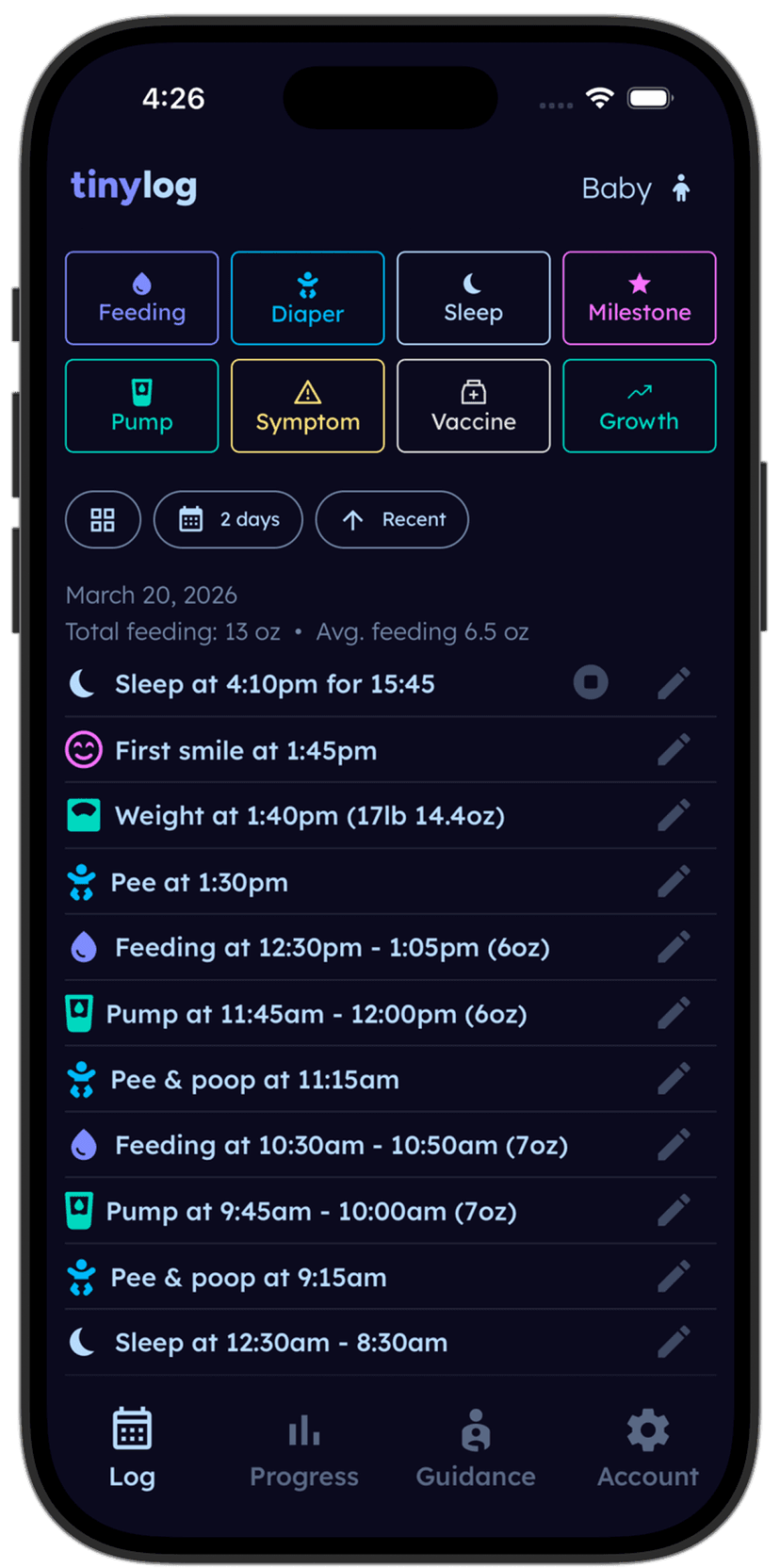
Tinylog tracks milestones so you can spot patterns.
Log when baby starts bouncing, standing, and reaching new motor milestones. Track activity sessions and share progress with your pediatrician.


The Folding Factor Is Underrated
If you live in a house with a dedicated playroom, skip this section. But if you are in an apartment, a small home, or just a person who does not want a giant plastic bounce contraption as permanent living room decor — the Bright Starts folds flat and the Jumperoo does not.
The Jumperoo is a commitment. It sits there. It takes up space. It becomes part of your furniture arrangement. You will stub your toe on it at 3 AM walking to the kitchen. It is not going anywhere until your baby outgrows it.
The Bright Starts folds down and tucks behind a couch or in a closet. Set it up for bounce time, fold it away after. This is genuinely one of the most underrated features in baby gear — the ability to make it disappear when you are not using it.
If you are the type of person who wants your living room to look like adults live there after 7 PM, the Bright Starts respects that. The Jumperoo does not. The Jumperoo is staying right where it is and it would like you to know that this is the baby's house now.
| Product | Typical Price | Cost Per Day of Use | Notes |
|---|---|---|---|
| Fisher-Price Jumperoo | $70–$90 | ~$0.50–$0.75/day | Based on ~4 months of daily use |
| Bright Starts Bounce Bounce Activity Center | $45–$60 | ~$0.40–$0.60/day | Based on ~3 months of daily use (later start age) |
Price: $25 Is $25
The Jumperoo runs about $80 and the Bright Starts runs about $55. That $25 gap is consistent across retailers.
Is the Jumperoo worth $25 more? If you are starting at 4 months instead of 6, you get roughly two extra months of use — so you are paying about $12.50 per extra month. The lights and music are also a genuine differentiator if your baby is into that.
But if your baby is already approaching 6 months, or you just want a solid jumper without the bells and whistles (literally), the Bright Starts gives you everything you need for less.
Both jumpers go on sale regularly. Black Friday, Prime Day, and random Target deals can knock 20–30% off either one. If you are not in a rush, set a price alert and wait.
Also worth mentioning: both of these hold their resale value pretty well. Baby jumpers get used for 3–6 months max, so the secondhand market is full of barely-used units. Check Facebook Marketplace and local parent groups — you might snag either one for half price. Just make sure there are no recalls on the specific model year before buying used.
Choose the Fisher-Price Jumperoo If
- Your baby is 4 months old and already trying to bounce on your lap like a tiny kangaroo
- You want the full lights-and-music sensory experience to keep baby entertained longer
- Storage space is not a concern — you have room for a permanent bounce station
- You do not mind replacing batteries every few weeks
- Your baby is motivated by sounds and lights more than tactile toys
Choose the Bright Starts Bounce Bounce If
- You want to save $25 and put it toward something else (like sleep, if they sold it)
- Storage matters — you need something that folds flat when not in use
- You prefer battery-free toys that will not play the same jingle 400 times a day
- Your baby is already 6 months and you do not need the earlier start age
- You want more individual toy variety — 12+ activities means more things to grab and chew
- You want 4 height positions instead of 3 for a slightly longer window of use
Where to Buy
The Fisher-Price Jumperoo (~$80) is the OG baby jumper for a reason — the lights, music, and 360-degree spin keep babies entertained for impressive stretches, and the 4-month start age gives you an earlier window of use. Grab it on Amazon or Target for the best price.
The Bright Starts Bounce Bounce Activity Center (~$55) is the smart-money pick — 12+ toys, compact fold, 4 height positions, and no batteries required. It does everything you need a jumper to do at a lower price point. Available at Amazon, Walmart, and Target.
Real talk: your baby does not care which one you pick. They just want to bounce. Get whichever fits your budget, your living space, and your personal tolerance for electronic baby music on repeat. Both are well-reviewed, well-built, and will give you those precious hands-free minutes you desperately need.
Pro tip: check if your preferred retailer has a registry completion discount. Many parents add jumpers to their registry and snag an extra 10–15% off even after the baby shower.
Tinylog earns a small commission on purchases made through these links, at no cost to you.
Want to save a few bucks? promo.new is worth a quick look. It won't always have your product, but when it does, the savings are real.
The Bottom Line
The Fisher-Price Jumperoo and Bright Starts Bounce Bounce Activity Center are both excellent jumpers that babies love. The differences are real but come down to your specific situation:
Fisher-Price Jumperoo wins on earlier start age (4 months), lights and music entertainment, and brand recognition.
Bright Starts Bounce Bounce wins on price (~$25 less), storage (folds flat), battery-free operation, toy variety (12+ activities), and an extra height adjustment position.
For most families, the deciding factors will be start age and storage. If your baby is ready at 4 months and you have the space, the Jumperoo is a blast. If you want to save money and need something that folds away, the Bright Starts is the move.
Either way, limit jumper sessions to 15–20 minutes at a time. Jumpers are amazing for entertainment and leg strengthening, but babies also need plenty of floor time for crawling, rolling, and developing core strength. Balance is everything — some bounce time, some tummy time, some free play on the floor.
If you are tracking motor milestones — and you probably should be during this wild 4–12 month window — Tinylog makes it easy to log progress and spot patterns over time. Knowing when baby started bouncing, when they figured out the spin, and when they lost interest is all useful data for your next pediatrician visit.
Related Guides
- Baby Feeding Chart — How much your baby should eat by age
- Tummy Time Guide — Building strength for all that bouncing
- Baby Milestones — What to expect and when
- 4-Month Sleep Regression — Because your jumper-obsessed baby might also be fighting sleep
- Baby Constipation — What is normal and when to call the doctor
Sources
- Fisher-Price.com. "Jumperoo Baby Bouncer Activity Center — Product Information." 2026.
- BrightStarts.com. "Bounce Bounce Baby Activity Center — Product Information." 2026.
- American Academy of Pediatrics. "Baby Walkers, Jumpers, and Exersaucers: Safety Guidance." aap.org, 2025.
- Consumer Reports. "Best Baby Jumpers and Activity Centers." consumerreports.org, 2026.
- Healthline Parenthood. "Are Baby Jumpers Safe? What to Know." healthline.com, 2025.
- WhatToExpect.com. "Best Baby Jumpers and Bouncers of 2026." whattoexpect.com.
This guide is for informational purposes only. Always supervise your baby during jumper use and follow the manufacturer's age, weight, and height guidelines. If you have concerns about your baby's motor development, consult your pediatrician.
Frequently asked questions
- What age can a baby use the Fisher-Price Jumperoo?
- Fisher-Price recommends the Jumperoo for babies 4 months and older who can hold their head up independently. The weight limit is 25 lbs. Most babies outgrow it between 9–12 months when they start pulling to stand on their own.
- What age can a baby use the Bright Starts Bounce Bounce Activity Center?
- Bright Starts recommends 6 months and older for the Bounce Bounce Activity Center. The baby needs to be able to hold their head up steadily and have some trunk control. Weight limit is 25 lbs.
- Are baby jumpers safe for development?
- Baby jumpers are safe in moderation. The AAP recommends limiting jumper time to 15–20 minutes per session. Extended time in jumpers can encourage toe-walking and doesn't promote the natural movement patterns babies need for crawling and walking. Think of it as a fun activity, not a babysitter.
- Does the Fisher-Price Jumperoo fold flat?
- No, the Jumperoo does not fold for storage. It's a fairly large, permanent fixture until your baby outgrows it. The Bright Starts Bounce Bounce Activity Center does fold flat, which is a significant advantage for smaller living spaces.
- Can baby jumpers cause hip problems?
- When used in moderation (15–20 minutes per session), baby jumpers are not associated with hip problems in healthy infants. However, babies with hip dysplasia or other orthopedic concerns should avoid jumpers unless cleared by their pediatrician.
- Which jumper is easier to clean?
- Both have removable, machine-washable seat pads. The Bright Starts has more individual toy attachments that can collect drool and crumbs but are easy to wipe down. The Jumperoo's electronic toy station requires battery replacement but the surrounding toys wipe clean.