
GUIDE
Gerber Organic vs. Primary Onesies
Published on
Both use 100% organic cotton, but they target different buyers. Gerber is the budget-friendly, widely available standard with GOTS certification. Primary costs more per unit but adds convertible foldover cuffs, a no-logo aesthetic, and ethically sourced manufacturing. For most families, Gerber is the practical default; Primary is the upgrade for parents who want the extra design features.
Gerber Organic Cotton Onesies and Primary's Baby Grow-with-Me Onesie Set are two of the more popular organic bodysuit options available today. Gerber offers five bodysuits per pack at a lower price point. Primary offers three per pack with a higher per-unit cost but adds functional details — foldover cuffs that extend sizing range, no logos or graphics, and a transparency-forward supply chain. The differences are real and worth understanding before you stock up.
Two Organic Onesies, Two Very Different Price Points
Gerber and Primary both sell organic cotton onesies. That is where the easy comparison ends.
Gerber's Organic Cotton Onesies have been a staple of the mass-market baby clothing aisle for decades. They carry GOTS certification, come five to a pack, cost $14–$18, and are available at Walmart, Target, and the grocery store down the street. They are the default organic option for most families.
Primary's Baby Grow-with-Me Onesie Set occupies a different category. Three onesies per pack, $25–$30, direct-to-consumer, with convertible foldover cuffs, zero logos, and explicit ethical manufacturing commitments. The per-unit cost is roughly three times higher than Gerber.
The real question is whether Primary's functional additions — especially the foldover cuffs — justify that price gap for your family. This guide breaks down the differences so you can decide clearly.
| Feature | Gerber Organic | Primary Onesies | What It Means |
|---|---|---|---|
| Organic certification | GOTS-certified 100% organic cotton | 100% organic cotton; ethical manufacturing focus | Gerber holds an independently verified GOTS certificate. Primary uses organic cotton with ethical sourcing standards. Both are meaningfully organic. |
| Pack size | 5-pack | 3-pack | Gerber gives you more pieces per purchase. Primary's smaller pack reflects a higher price-per-unit model. |
| Price per pack | ~$14–$18 | ~$25–$30 | Gerber is significantly cheaper per pack. Primary costs more upfront even though it includes fewer pieces. |
| Price per bodysuit | ~$2.80–$3.60 | ~$8.33–$10.00 | Primary costs roughly 2.5–3x more per piece. The premium reflects functional design additions, not just marketing. |
| Foldover cuffs | No | Yes — convertible wrist and ankle cuffs | Primary's foldover cuffs serve two purposes: covering hands and feet in the newborn stage and extending the fit window as baby grows. |
| Neckline design | Lap-shoulder design | Lap-shoulder design | Tie. Both use a standard lap-shoulder construction for easier over-the-head dressing. |
| Closure type | Bottom snap closures | Bottom snap closures | Tie. Both use standard snap closures at the crotch for diaper access. |
| Stitching | Double-stitched seams | Standard construction | Gerber's double-stitched seams add durability — useful when bodysuits go through heavy laundering cycles. |
| Labels | Tagless — printed label | Tagless — printed label | Tie. Both eliminate scratchy tags that can irritate newborn skin. |
| Logos and graphics | Small brand logo; some packs include simple prints or text | No logos, no graphics — solids only | Primary wins for minimal aesthetics. Gerber's graphics are typically subtle, but Primary's intentional no-logo design appeals to parents who prefer clean basics. |
| Color and style options | Classic baby colors, simple prints, solid packs | Wide solid color range; no patterns | Primary offers a broader palette of solid colors. Gerber focuses on classic baby patterns and combinations. |
| Sizing range | Newborn through 24M in standard US sizing | Newborn through 18M; foldover cuffs extend fit window | Gerber covers a slightly longer age range. Primary's foldover cuffs compensate partially by extending the usable fit of each size. |
| Retail availability | Walmart, Target, Amazon, grocery and pharmacy chains | primary.com, Amazon | Gerber is available nearly everywhere. Primary is primarily direct-to-consumer and requires more planning to purchase. |
| Ethical manufacturing claims | Standard industry manufacturing | Explicitly ethically made; supply chain transparency | Primary is more explicit about its manufacturing ethics. Gerber's GOTS certification covers social criteria in the textile production chain. |
Organic Cotton: Both Qualify, But With Different Documentation
Both products use 100% organic cotton — that is not a marketing stretch for either brand.
Gerber Organic Cotton Onesies carry GOTS certification, the Global Organic Textile Standard. GOTS is a third-party verified certification that covers not only the fiber source but also the processing, dyeing, and manufacturing stages. It prohibits a specific list of restricted substances throughout the supply chain and includes minimum social standards for manufacturing facilities. For parents who want documented, independently audited organic credentials, GOTS is the clearest signal available.
Primary uses 100% organic cotton with an emphasis on ethical manufacturing and supply chain transparency. Primary is explicit about avoiding harmful dyes and sourcing responsibly, and the brand publishes information about its manufacturing partners. However, the framing is more values-based than certification-based compared to Gerber's GOTS label.
Neither is a compromise on safety. Both are appropriate for newborn skin. The difference is in how the organic standard is documented and verified: Gerber's GOTS certification is audited by an independent body, while Primary's ethical sourcing claims rest more on brand transparency.
The Foldover Cuffs: Primary's Most Distinctive Feature
Primary's Grow-with-Me onesies include convertible foldover cuffs at the wrists and ankles. Gerber's do not.
This is the functional feature that most clearly separates the two products, and it serves two distinct purposes:
Newborn hand and foot coverage. In the first weeks, newborns cannot control their hand movements and frequently scratch their own faces. Mittens and booties are the standard solution, but they fall off constantly. Foldover cuffs built into the bodysuit stay in place during feeding, sleep, and diaper changes without any extra step.
Extended fit window. When the cuffs are folded back, the onesie fits the normal size. When folded down, they add length — giving the garment another week or two of wearable life as the baby grows. For a product that costs $8–$10 per bodysuit, recouping a few extra weeks of use per size makes a difference.
Gerber does not offer this feature. If foldover cuffs are important to you — and for many parents of newborns, they genuinely are — Primary is the only choice between these two.
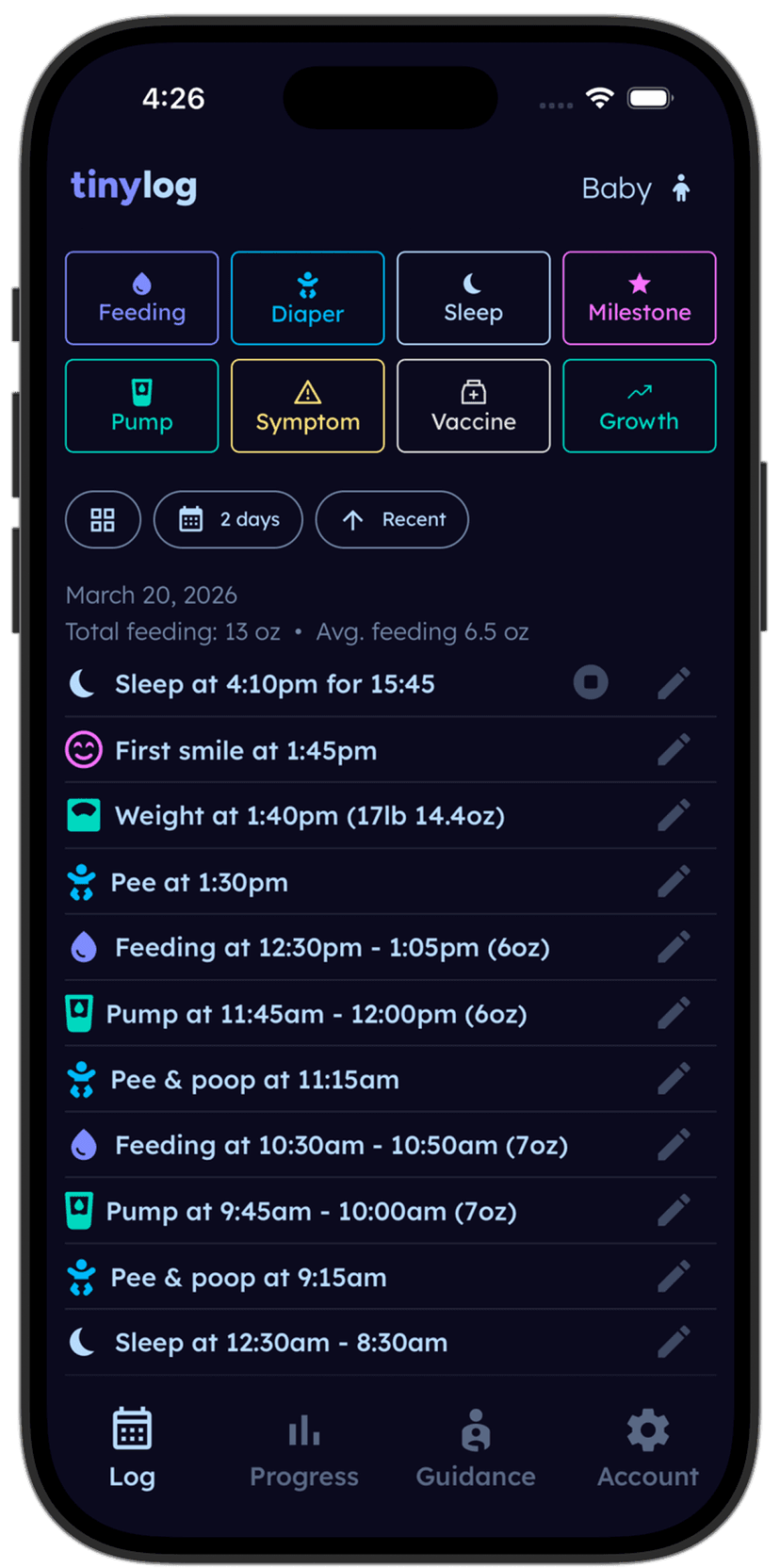
Tinylog tracks milestones so you can spot patterns.


No Logos vs. Simple Branding: An Aesthetic Choice That Matters to Some
Primary builds its brand identity around basics. No logos on the garment, no graphics, no text — just solid colors. The entire product line is designed to work as interchangeable wardrobe pieces that mix and match without visual noise.
Gerber's bodysuits include a brand mark, and some packs feature simple text or printed graphics on the fabric — things like small animals, stars, or phrases. These are generally subtle and not garish, but they are present.
For parents building a mix-and-match wardrobe of basics, Primary's no-logo commitment is a genuine differentiator. For parents who do not mind simple graphics and are primarily concerned with organic fabric and fit, Gerber's prints are not an obstacle.
This is an aesthetic preference, not a safety or quality question. It matters primarily if you care about a particular visual approach to baby clothes.
Construction: Double-Stitching, Fit, and Durability
Baby bodysuits are laundered more often than almost any other garment in the household. Construction quality affects how many wash cycles a bodysuit survives before seams loosen or the fabric pills.
Gerber's double-stitched seams are a specific construction advantage worth noting. Double-stitching reinforces the seams against repeated washing and tugging during diaper changes. For a garment that may be washed daily in the newborn stage, this durability detail matters.
Primary's construction is described as well-made, and the brand's direct-to-consumer model allows it to focus on quality control, but it does not specifically advertise double-stitching in the same way Gerber does.
Both brands use lap-shoulder necklines and standard bottom snap closures — the functional standard for baby bodysuits. Neither brand has reported unusual durability problems in parent reviews, and both hold up to normal use well. Gerber's explicit double-stitching claim is simply a known specification worth acknowledging.
On sizing, both follow standard US baby sizing conventions: Newborn (up to ~7 lbs), 0–3M (7–12 lbs), 3–6M (12–16 lbs), 6–9M (16–20 lbs). Babies move through infant sizes faster than most parents expect. Primary's foldover cuffs can stretch the useful window of each size by one to three weeks, which partially offsets the higher cost per pack.
| Product | Typical Price | Cost Per Bodysuit | Notes |
|---|---|---|---|
| Gerber Organic Cotton Onesies (5-pack, NB–6M) | $14–$18 | ~$2.80–$3.60 | GOTS certified; double-stitched; widely available |
| Primary Baby Grow-with-Me Onesie Set (3-pack, NB–6M) | $25–$30 | ~$8.33–$10.00 | Foldover cuffs; no logos; direct-to-consumer |
| Gerber Organic (buying 4 size runs: NB, 0–3M, 3–6M, 6–9M) | $56–$72 | ~$2.80–$3.60 per piece | Estimated total for a season's worth of bodysuits |
| Primary Onesies (buying 4 size runs: NB, 0–3M, 3–6M, 6–9M) | $100–$120 | ~$8.33–$10.00 per piece | Estimated total; foldover cuffs may reduce sizes needed |
Price: The Gap Is Significant
Gerber costs roughly $2.80–$3.60 per bodysuit. Primary costs roughly $8.33–$10.00 per bodysuit. That is not a marginal difference — Primary is approximately three times more expensive per piece.
Across a full first year, where a baby typically cycles through four or five size runs and needs enough bodysuits to manage laundry, the total cost difference can reach $50–$75 or more. For families watching their budget, that is a meaningful amount.
The higher Primary price reflects real product differences — the foldover cuffs, the no-logo design, the direct-to-consumer model, and the brand's investment in ethical sourcing. These are not empty marketing claims. But they are features, not necessities.
Some practical notes on managing cost:
- Gerber at warehouse clubs. Costco and Sam's Club carry Gerber multi-packs at even lower per-unit costs. If you have a membership, buying in bulk there reduces the gap further.
- Babies outgrow sizes fast. Buying too many bodysuits in any one size is a common first-time parent mistake. Start with one pack per size and restock as needed.
- Primary's foldover cuffs reduce sizes needed. If the foldover feature genuinely extends a size window by two to three weeks, you may need fewer total packs across the first year — partially offsetting the higher per-unit cost.
- Blowout math. Bodysuits take direct hits during blowouts. At $10 per bodysuit, staining Primary onesies feels more consequential than at $3 per Gerber bodysuit. That psychological calculation is real even if it should not be.
Choose Gerber Organic Cotton Onesies If
- You are buying multiple size runs and want to keep clothing costs manageable
- You shop at Walmart, Target, or grocery stores and want to grab bodysuits without ordering online
- GOTS third-party certification is important to you and you want it explicitly documented
- You want double-stitched seams that hold up through aggressive laundering
- You are stocking up before baby arrives and need a large quantity at a lower per-unit cost
Choose Primary Onesies If
- The foldover cuffs matter — you want to cover newborn hands and feet and extend the size window
- A no-logo, no-graphic aesthetic is a priority and you prefer simple, solid-color basics
- Ethical manufacturing transparency is important to your family beyond organic fiber certification
- You are buying a smaller quantity and the higher per-unit cost is acceptable
- You prefer shopping direct-to-consumer and planning purchases in advance rather than grabbing off a store shelf
- You want a wider range of solid color options beyond standard baby pastels
Where to Buy
For the budget-practical option, Gerber Organic Cotton Onesies (~$14–$18 per 5-pack) deliver GOTS-certified organic cotton, double-stitched durability, and wide retail availability at the lowest per-unit cost of the two. Stock up before baby arrives — they are easy to find almost anywhere.
For the design-forward option, Primary Baby Onesies (~$25–$30 per 3-pack) are the right choice if the foldover cuffs, no-logo aesthetic, or ethical manufacturing focus matter to your family. Buy direct at primary.com or through Amazon.
Tinylog earns a small commission on purchases made through these links, at no cost to you.
Looking for a discount? Try checking promo.new. It doesn't always find what you're looking for, but when it does, it works like a charm.
The Bottom Line
Gerber Organic Cotton Onesies and Primary Baby Grow-with-Me Onesies are both legitimate organic cotton bodysuits. The organic quality is real in both cases. The differences are in design, documentation, and price.
Gerber wins on cost, retail availability, GOTS third-party certification, and double-stitched construction. It is the practical default for families buying in volume.
Primary wins on foldover cuffs (a genuinely functional feature), no-logo aesthetics, color variety, and supply chain transparency. It is the right choice for families who want those specific features and are comfortable paying a significant premium for them.
For most families — especially those stocking up on bodysuits before baby arrives — Gerber is the clearer value. For families building a carefully curated minimal wardrobe and willing to pay for functional design details, Primary is worth the investment.
If you are tracking your baby's growth and figuring out when to move up a size, Tinylog makes it easy to log measurements and spot growth patterns over time.
Related Guides
- Burt's Bees Baby vs. Gerber Organic Onesies — Another organic bodysuit comparison at a closer price point
- Baby Growth Spurts — When they happen and how fast babies outgrow clothing sizes
- Baby Diaper Rash — Causes, treatment, and how clothing and detergents play a role
- 1-Month Baby Development — What to expect in the first weeks, including self-scratching and hand control
Sources
- Gerber Childrenswear. "Gerber Organic Cotton Baby Clothing." gerberchildrenswear.com, 2026.
- Primary.com. "Baby Grow-with-Me Onesie Set — Product Information." primary.com, 2026.
- Global Organic Textile Standard (GOTS). "What Is GOTS?" global-standard.org, 2025.
- Babylist. "Best Organic Baby Clothing Brands." babylist.com, 2025.
- WhatToExpect.com. "Best Baby Onesies of 2026." whattoexpect.com, 2026.
- The Bump. "Best Organic Baby Clothes." thebump.com, 2025.
- American Academy of Dermatology. "Baby Skin Care Tips." aad.org.
This guide is for informational purposes only. Clothing choice is a personal preference based on your baby's needs and your family's budget. If your baby develops a skin reaction to any fabric or clothing, consult your pediatrician.
Frequently asked questions
- Are Gerber and Primary onesies both made with organic cotton?
- Yes. Gerber Organic Cotton Onesies are GOTS-certified (Global Organic Textile Standard), the most rigorous organic textile certification available. Primary uses 100% organic cotton and emphasizes ethical manufacturing, though it is less explicit in all marketing materials about which specific certification applies to every item. Both meet a meaningful organic standard, but Gerber's GOTS label is independently verified by a third party.
- What are the foldover cuffs on Primary onesies, and do they make a real difference?
- Primary's Grow-with-Me onesies include convertible foldover cuffs at the wrists and ankles. Folded down, they cover a newborn's hands and feet — useful for warmth and preventing self-scratching in the first weeks. Folded up, they let the onesie fit slightly longer as the baby grows. This design can extend the useful size window by a few weeks, which adds practical value at a higher per-unit price.
- How do Gerber and Primary compare in price per bodysuit?
- Gerber Organic Cotton Onesies run approximately $14–$18 for a 5-pack, which works out to roughly $2.80–$3.60 per bodysuit. Primary Baby Grow-with-Me Onesie Sets run approximately $25–$30 for a 3-pack, or about $8.33–$10.00 per bodysuit. Primary costs roughly 2.5–3x more per piece. Whether that premium is worth it depends on how much the foldover cuffs, no-logo design, and ethical sourcing matter to you.
- Do Gerber organic onesies have logos or graphics on them?
- Gerber bodysuits include a small Gerber logo on the tag and occasionally feature simple printed graphics or text on the fabric depending on the pack. Primary's Grow-with-Me onesies are deliberately logo-free and graphic-free — solids and simple colors only. For parents who prefer a clean, minimal look, Primary wins on aesthetics. For parents who do not mind simple graphics, Gerber's packs often include appealing prints.
- Which onesie is better for newborns with sensitive skin?
- Both are appropriate for sensitive skin — organic cotton, tagless or minimally labeled construction, and no harsh processing chemicals. Gerber's GOTS certification explicitly prohibits toxic dyes and restricted substances. Primary's organic cotton and ethical manufacturing focus reflect similar values. Wash either brand in fragrance-free detergent before the first use. If your baby has a history of eczema or contact dermatitis, consult your pediatrician before introducing any new fabric.
- Where can I buy Gerber Organic and Primary onesies?
- Gerber Organic Cotton Onesies are sold at Walmart, Target, Amazon, and most grocery stores and pharmacies with a baby section. Primary Baby Onesies are sold directly at primary.com and on Amazon. Gerber has considerably broader retail distribution — you can pick up a pack almost anywhere. Primary is primarily a direct-to-consumer brand, which means you usually need to plan ahead rather than grab it at a brick-and-mortar store.