GUIDE

Gripe Water vs. Gas Drops

Neither has strong clinical evidence, but gas drops (simethicone) have a better safety profile. Gripe water ingredients vary widely and some formulations carry real risks. For most babies, gas is developmental and resolves on its own.

Your baby is uncomfortable and you want to do something. Here's what's worth trying and what's not.

Track symptoms with Tinylog

Log gas, fussiness, and what you tried

The problem is there's really no scientific evidence that confirms gripe water is safe or effective. It's not something pediatricians tend to recommend because we can't guarantee that it will work or be safe for your baby.
Dr. Christina VernaceDr. Christina Vernace, DO, Pediatrician, Cleveland Clinic

What the Research Actually Shows

When your baby is screaming and gassy at 2 AM, you'll try almost anything. Gripe water and gas drops are the two most common OTC remedies parents reach for, and they sit next to each other on the pharmacy shelf. But they're very different products with very different evidence behind them.

Simethicone (gas drops like Mylicon or Little Remedies) is an FDA-approved OTC medication with a clear mechanism: it breaks up large gas bubbles into smaller ones that are easier to pass. It's been used in adults and infants for decades with an excellent safety record — it isn't absorbed into the bloodstream, has no known drug interactions, and side effects are extremely rare. The catch? A well-designed randomized controlled trial by Metcalf et al. (1994) found that simethicone was no more effective than placebo for treating infant colic. It may help with isolated gas discomfort, but it's not a magic bullet.

Gripe water is a different story entirely. It's classified as a dietary supplement, not a medication, which means it doesn't go through FDA efficacy or safety testing. Ingredients vary wildly between brands — some contain fennel, ginger, and chamomile; others contain sodium bicarbonate; older formulations historically contained alcohol (now banned in the US for infant products). A 2014 review in the Indian Journal of Pharmacology found no rigorous evidence supporting gripe water's effectiveness for colic. More concerning, sodium bicarbonate can alter stomach pH and interfere with digestion in young infants.

Gripe Water vs. Gas Drops Comparison
Active ingredient
Gripe WaterVaries — typically sodium bicarbonate, fennel, ginger, chamomile, or dill. Formulations differ by brand.
Gas Drops (Simethicone)Simethicone — a single, well-studied compound that breaks up gas bubbles.
FDA status
Gripe WaterNot FDA-approved. Classified as a dietary supplement with no required efficacy testing.
Gas Drops (Simethicone)FDA-approved as an OTC anti-gas medication. Has been used safely for decades.
How it works
Gripe WaterProposed mechanisms vary: sodium bicarbonate neutralizes stomach acid, herbs may relax smooth muscle. Limited clinical evidence for any mechanism.
Gas Drops (Simethicone)Simethicone reduces surface tension of gas bubbles, causing them to merge and pass more easily. Does not get absorbed into the bloodstream.
Evidence of effectiveness
Gripe WaterNo rigorous clinical trials support effectiveness for infant colic or gas. Most evidence is anecdotal.
Gas Drops (Simethicone)Clinical trials show simethicone is safe but not significantly more effective than placebo for colic (Metcalf et al., 1994). May help with gas specifically.
Safety concerns
Gripe WaterSome formulations contain alcohol, sugar, or charcoal. Sodium bicarbonate can affect stomach pH. Herbal ingredients may cause allergic reactions. Quality control varies.
Gas Drops (Simethicone)Excellent safety profile. Not absorbed systemically. No known drug interactions. Very rare side effects.
Cost
Gripe Water$8-15 per bottle. Doses used up quickly.
Gas Drops (Simethicone)$5-12 per bottle. Generally lasts longer due to smaller dose volumes.
Neither product has strong evidence for treating colic. Gas drops have a better safety profile.

Gripe Water Advantages

  • Some parents report immediate calming effect — possibly due to the sweet taste
  • Herbal ingredients like fennel have a long traditional use history for digestive complaints
  • May provide comfort through the act of giving baby something (placebo effect for parents too)
  • Available in many formulations so parents can try different ingredient combinations

The calming effect parents report may be from the sweet taste rather than the active ingredients.

Gripe Water Challenges

  • No FDA regulation means inconsistent quality and ingredients between brands
  • Some formulations contain alcohol, sugar, artificial sweeteners, or sodium bicarbonate
  • Sodium bicarbonate can interfere with stomach acid needed for digestion
  • No clinical evidence of efficacy beyond placebo for colic or gas
  • Risk of allergic reactions to herbal ingredients, especially in young infants

If you choose gripe water, select a brand without alcohol, sugar, or sodium bicarbonate.

Gas Drops Advantages

  • Well-studied safety profile — simethicone is not absorbed into the bloodstream
  • FDA-approved with consistent quality standards across brands
  • No known drug interactions or significant side effects
  • Mechanism of action is clear and logical for gas-specific discomfort
  • Inexpensive and widely available

Simethicone is generally the safer choice if you want to try something.

Gas Drops Challenges

  • Clinical trials don't show significant improvement over placebo for colic
  • Only addresses gas bubbles — won't help if fussiness is from another cause
  • May give parents false confidence that they're 'treating' an issue that just needs time
  • Some brands contain artificial colors or flavors

Safe doesn't mean effective — manage expectations.

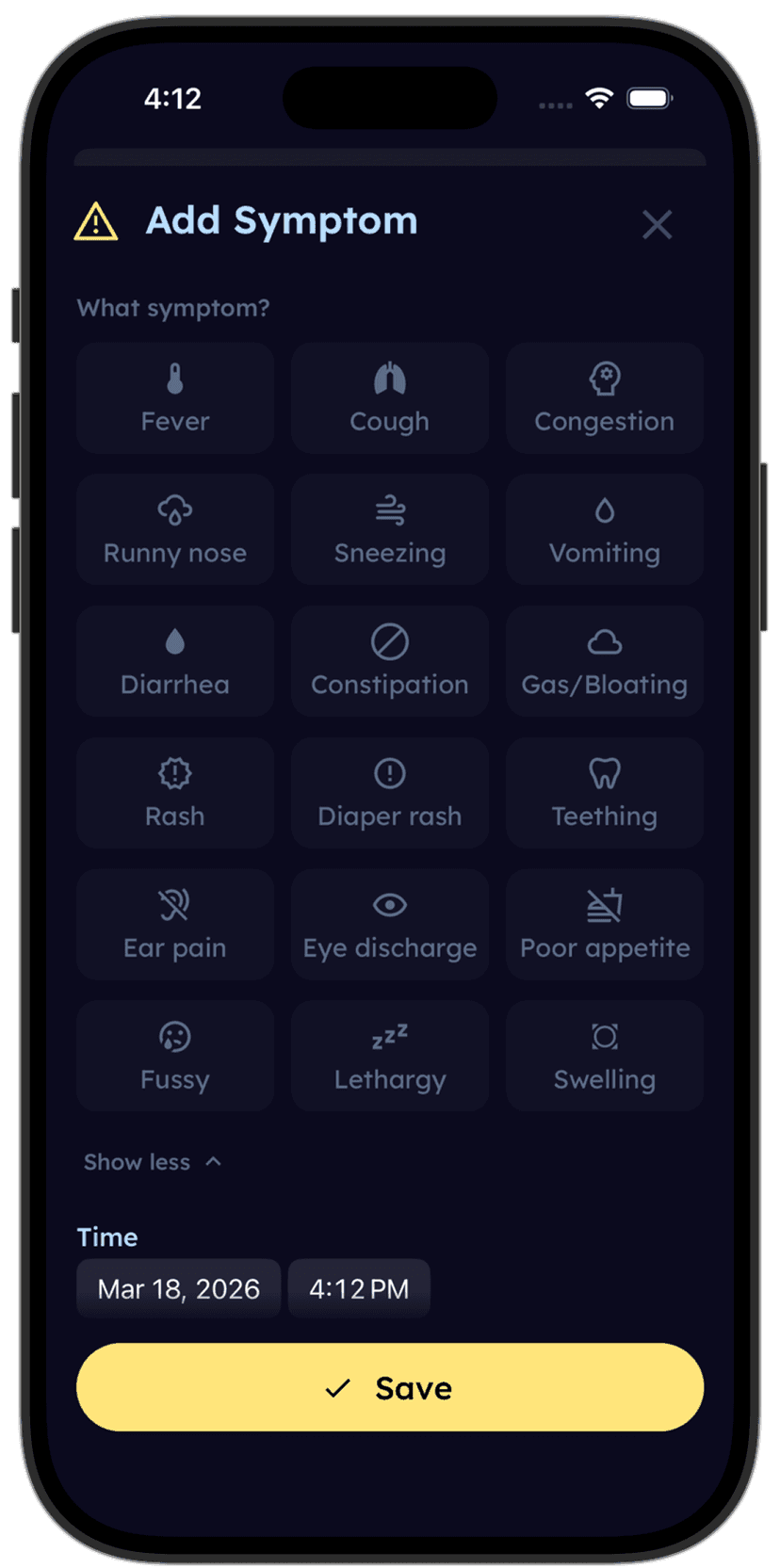
Tinylog symptom tracker showing gas and fussiness logs

Symptom tracking shows you what's actually working

Tinylog lets you log gas episodes, fussiness, and what remedies you tried. After a few days of data, you can see whether a remedy is making a real difference or if you're seeing what you want to see.

Download on the App StoreGet It On Google Play

What Else Might Be Going On

Before spending money on gas remedies, consider whether the issue is actually gas. Infant fussiness has many causes — overtiredness, overstimulation, hunger, and the normal "witching hour" that peaks around 6 weeks. True colic (defined as crying more than 3 hours a day, more than 3 days a week, for more than 3 weeks) affects roughly 10-25% of infants and resolves on its own by 3-4 months regardless of treatment.

If your baby has additional symptoms — blood in stool, projectile vomiting, poor weight gain, or rash — talk to your pediatrician about cow's milk protein intolerance or other conditions that mimic simple gas. Checking our baby poop color chart can help you identify concerning stool changes. These require dietary changes, not gas drops.

For breastfed babies, the evidence on maternal diet elimination is mixed. The idea that everything a mother eats causes gas in baby is largely a myth, but in cases of true cow's milk protein allergy (present in about 2-3% of infants), a maternal dairy elimination trial under medical guidance can help. If you suspect an allergy, review the common food allergy signs in babies to know what to watch for.


Making the Call

If you want to try something, gas drops (simethicone) are the safer bet. They won't cure colic, but they may help with gas-specific discomfort, and the risk is essentially zero. If you choose gripe water, read the label carefully — avoid formulations with sodium bicarbonate, alcohol, or charcoal, and stick to well-known brands with transparent ingredient lists.

But the most effective interventions for infant gas are usually free: better burping, paced bottle feeding, bicycle legs, tummy time, and patience. Some parents also explore whether probiotics might help, though the evidence is limited. Most gas issues resolve by 3-4 months as your baby's digestive system matures. If nothing seems to help and your baby is miserable, talk to your pediatrician rather than working through the supplement aisle.

Tips That Apply Either Way

Burping technique matters more than drops

Before reaching for any remedy, make sure you're burping effectively. Try different positions — over the shoulder, sitting upright on your lap, or lying face-down across your knees. Frequent burping during feeds (every 2-3 oz for bottles) prevents gas buildup.

Check the bottle system

If you're bottle-feeding, slow-flow nipples and anti-colic bottle designs (like Dr. Brown's) can reduce air swallowing. Paced bottle feeding — holding the bottle more horizontally and letting baby control the pace — also helps.

Bicycle legs and tummy time help

Gentle bicycle leg movements and supervised tummy time can help baby pass gas naturally. These physical techniques are free, safe, and often more effective than any drop or water.

Related Guides

Sources

  • Metcalf, T. J., et al. (1994). Simethicone in the treatment of infant colic: a randomized, placebo-controlled, multicenter trial. Pediatrics, 94(1), 29-34.
  • Jain, K., et al. (2014). Gripe water administration in infants 1-6 months of age — a cross-sectional study. Indian Journal of Pharmacology, 46(6), 654-656.
  • Zeevenhooven, J., et al. (2018). The New Rome IV Criteria for Functional Gastrointestinal Disorders in Infants and Toddlers. Pediatric Gastroenterology, Hepatology & Nutrition, 21(1), 1-13.
  • AAP Section on Breastfeeding. (2012). Breastfeeding and the Use of Human Milk. Pediatrics, 129(3), e827-e841.

This guide is for informational purposes only and is not a substitute for professional medical advice. Consult your pediatrician for guidance specific to your baby.

Get this comparison in your inbox.
We'll send you the breakdown so you can discuss options with your pediatrician.
Tracking symptoms before and after helps you see what's actually making a difference.
Download Tinylog to log gas episodes, fussiness patterns, and remedies tried.
Download on the App StoreGet It On Google Play