
Strain matters more than brand
If you decide to try probiotics, look for the specific strain studied in clinical trials — L. reuteri DSM 17938 for colic (sold as BioGaia Protectis). Generic 'baby probiotics' with untested strains are a gamble.
GUIDE
Published on
The evidence is mixed. Certain strains (especially L. reuteri) show promise for colic in breastfed babies, but probiotics aren't a universal solution. For healthy, term infants without specific symptoms, routine probiotic supplementation isn't necessary.
Probiotics are a billion-dollar industry with a lot of marketing and less clinical clarity than you'd expect.
Log symptoms before and after starting probiotics
“There's no data to show that these extra ingredients will make your baby healthier.”
 Dr. Matthew Badgett, MD, Pediatrician, Cleveland Clinic
The infant probiotic market has exploded in recent years, with dozens of products promising better digestion, less fussiness, stronger immunity, and even better sleep. Walk down the baby aisle and you'll find probiotics in drops, powders, formula, and even baby food. The marketing suggests every baby needs them. The science tells a different story.
The strongest evidence exists for one specific strain — Lactobacillus reuteri DSM 17938 — and one specific condition — colic in breastfed infants. A meta-analysis by Sung et al. (2018) in the Journal of Pediatrics analyzed data from four RCTs and found that L. reuteri reduced daily crying time by approximately 50 minutes compared to placebo in breastfed infants. That's meaningful. But the same analysis found the benefit was not significant in formula-fed infants, and the studies had moderate risk of bias.
For everything else — eczema prevention, constipation, general "gut health," immune support — the evidence ranges from weak to nonexistent. A 2019 review by the European Society for Paediatric Gastroenterology, Hepatology and Nutrition (ESPGHAN) concluded that while certain strains show promise for specific conditions, there is insufficient evidence to recommend routine probiotic supplementation for healthy infants. The AAP has not issued a recommendation for or against infant probiotics, noting the evidence is still evolving.
| Condition | With Probiotics | Without Probiotics |
|---|---|---|
| For colic (breastfed) | L. reuteri DSM 17938 reduced crying time by ~50 minutes/day in multiple RCTs. Most consistent evidence. | Colic typically resolves by 3-4 months regardless. Soothing techniques and time are the main 'treatment.' |
| For colic (formula-fed) | Evidence is weak and inconsistent. Some trials show no benefit in formula-fed infants specifically. | Formula changes (hydrolyzed, low-lactose) may be more effective than probiotics for formula-fed colicky babies. |
| For eczema prevention | Some positive signals, especially in high-risk families. Evidence is inconsistent across studies. | Breastfeeding, moisturizing, and avoiding known triggers remain the first-line approach. |
| For constipation | Limited evidence. A few small studies suggest possible benefit. Not well-established. | Dietary changes, adequate fluid intake, and age-appropriate interventions are standard treatment. |
| Cost | $15-40/month depending on brand and formulation. | $0. No additional cost. |
| Safety | Generally safe for healthy term infants. Avoid in preemies or immunocompromised infants without medical guidance. | No risk. Healthy infant gut microbiome develops naturally through breastmilk, food exposure, and environmental contact. |
Benefits are strain-specific. A product with L. reuteri DSM 17938 is not interchangeable with a generic blend.
The supplement industry's lack of regulation means you're often paying for marketing, not proven benefit.
A healthy term baby's gut microbiome develops remarkably well on its own.
For colicky breastfed babies, skipping probiotics means missing one of the few evidence-based interventions.
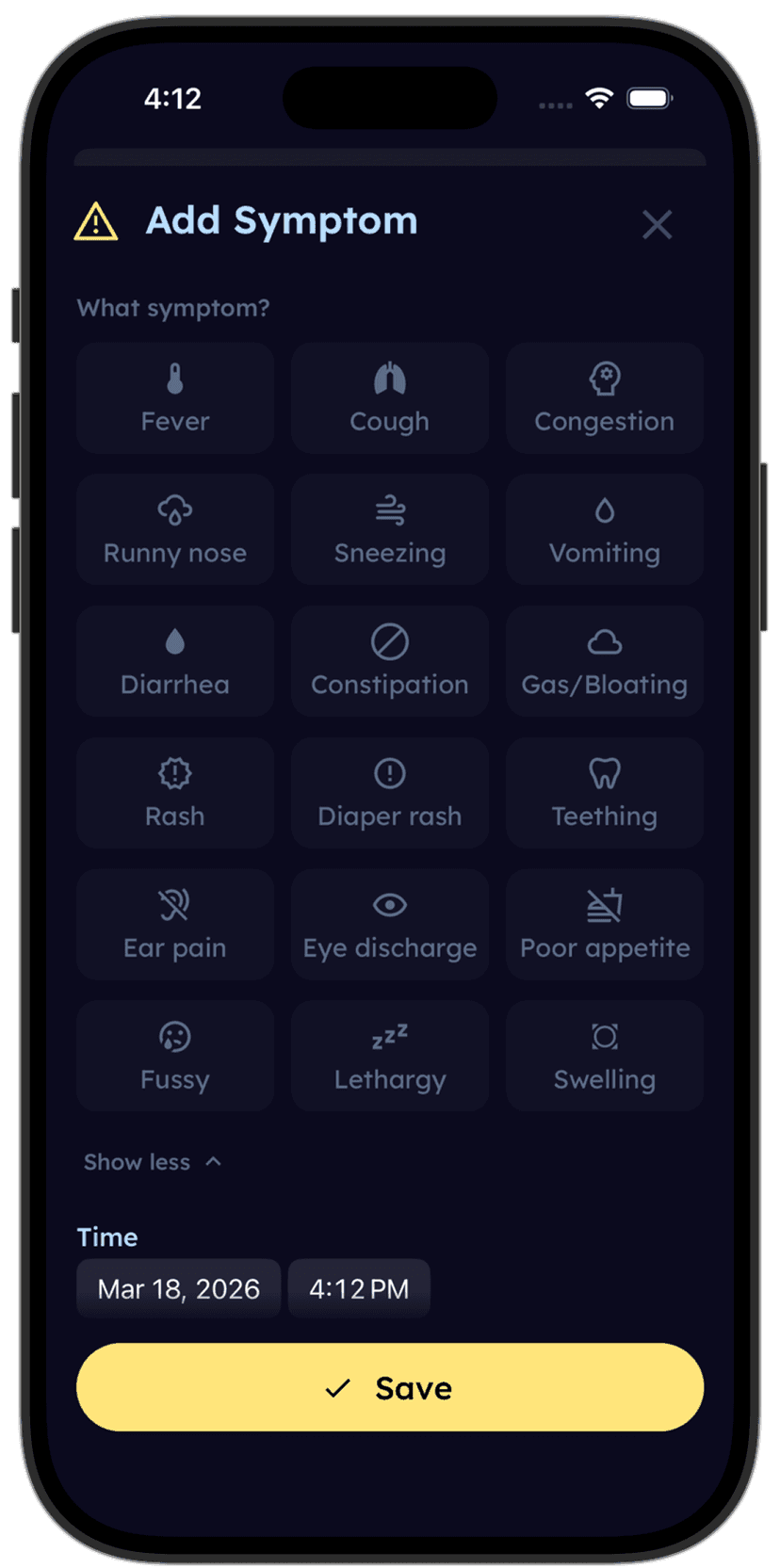
Tinylog lets you track fussiness, gas, spit-up, and stool patterns daily. Start logging before you begin probiotics, then compare — data beats guessing when you're sleep-deprived.


Based on the current evidence, probiotics are worth discussing with your pediatrician if your breastfed baby has colic (excessive crying without another medical explanation), your baby is taking antibiotics and you want to reduce the risk of antibiotic-associated diarrhea, or your family has a strong history of atopic conditions (eczema, allergies, asthma) and you want to explore prevention options during pregnancy and early infancy.
In these situations, the potential benefit is supported by at least some clinical evidence, and the risk for healthy term infants is very low. The key is choosing the right strain for the right indication — not grabbing a generic product off the shelf.
For healthy babies without specific symptoms, routine probiotic supplementation is spending money on a product with no proven benefit. Breastmilk already contains human milk oligosaccharides (HMOs) — prebiotics that selectively feed beneficial gut bacteria. Nature's probiotic delivery system is hard to beat. If you're weighing whether to breastfeed or use formula, our breastfeeding vs. formula feeding guide covers the gut-health angle as well.
If you decide to try probiotics, look for products that list the specific strain (genus, species, and strain designation — e.g., L. reuteri DSM 17938, not just "Lactobacillus"), guarantee colony-forming units (CFUs) through the expiration date rather than just "at time of manufacture," have been tested in published clinical trials for the condition you're targeting, and follow good manufacturing practices.
Be skeptical of products making broad claims like "supports overall gut health" or "boosts immunity" without referencing specific studies. These claims are legal because probiotics are classified as supplements, not drugs, and don't require evidence to support marketing language. For a similar breakdown of another common OTC remedy, see our gripe water vs. gas drops comparison.
If you decide to try probiotics, look for the specific strain studied in clinical trials — L. reuteri DSM 17938 for colic (sold as BioGaia Protectis). Generic 'baby probiotics' with untested strains are a gamble.
Don't expect overnight results. Clinical trials showing benefit used 2-3 week treatment periods. Track symptoms daily so you can objectively assess whether things are improving, staying the same, or getting worse.
This is especially important for premature babies, babies with immune conditions, or babies on medications. Your pediatrician can recommend specific strains and dosing appropriate for your baby's situation.
This guide is for informational purposes only and is not a substitute for professional medical advice. Consult your pediatrician for guidance specific to your baby.