
GUIDE
Hatch Rest+ vs. Yogasleep Dohm
Published on
The Hatch Rest+ is a feature-rich smart device with app control, a customizable nightlight, toddler clock, and a library of sounds. The Yogasleep Dohm is a mechanical fan-based machine with one job: consistent, natural white noise. Both work well. The right pick depends on how much you want technology involved in your child's sleep routine.
The Hatch Rest+ (~$70–$80) and the Yogasleep Dohm (~$35–$45) are two of the most recommended sound machines for babies and toddlers — and they represent completely different philosophies. The Hatch does many things. The Dohm does one thing. Neither is objectively better. The question is which set of tradeoffs fits your life.
Log sleep, wake windows, and more
Two Sound Machines, Two Different Answers to the Same Problem
Both the Hatch Rest+ and the Yogasleep Dohm help babies and toddlers sleep by masking household noise. That is where the overlap ends.
The Hatch Rest+ is a connected device with a full feature set. It has a color nightlight, an app-controlled sound library, programmable schedules, and a toddler time-to-rise clock. It costs $70–$80 and is designed to grow with your child from newborn through preschool.
The Yogasleep Dohm has a motor, a fan, and a power switch. It makes white noise by spinning a real fan inside a housing with adjustable vents. That's the entire device. It costs $35–$45 and has been doing exactly this since 1962.
Neither is wrong. The Hatch does more things. The Dohm does one thing very well without any friction. Your pick depends on whether the extra features are worth double the price — and whether you want a connected device in your child's room at all.
One thing worth saying up front: white noise works for most babies, but the machine delivering it matters less than consistency and placement. Babies who sleep well with either machine usually do so because the sound is present at every sleep — naps and nights — from early on. The machine that is easier for you to use consistently is often the better machine for your household.
For background on why white noise helps infant sleep, see our guide to white noise, pink noise, and brown noise for babies.
| Feature | Hatch Rest+ | Yogasleep Dohm |
|---|---|---|
| Sound type | Digital — curated library of white noise, nature sounds, lullabies, and sleep stories | Mechanical — real fan motor produces analog white noise |
| Sound variety | Large library; dozens of options across sound categories | White noise only; two speed settings (low/high) for minor volume and tone variation |
| Sound quality | Clear digital audio; sounds are recorded or synthesized, non-looping in most modes | Warm, natural, non-looping fan sound with subtle analog variation |
| Nightlight | Built-in LED with adjustable color (full spectrum) and brightness via app | None |
| App control | Yes — full control via Hatch app (iOS and Android); WiFi required | None — physical on/off switch and speed dial only |
| Scheduling | Yes — program sounds, light colors, and brightness on a schedule | None — manual operation only |
| Toddler clock | Yes — time-to-rise feature changes light color to signal okay-to-wake | None |
| Charging | USB-C; built-in battery for portable use (limited battery life) | AC power only; no battery |
| Setup complexity | Moderate — requires app, WiFi setup, and account creation | None — plug in, turn on, adjust speed |
| Grows with child | Yes — toddler clock and customizable routines extend usefulness into preschool years | Partially — works for any age but lacks features that support toddler routines |
| Price range | ~$70–$80 | ~$35–$45 |
Sound Quality: Digital Library vs. Mechanical Fan
This is the most practical difference for day-to-day use, and it comes down to what kind of white noise your baby responds to.
The Hatch Rest+ plays digital audio files. The sound library includes multiple types of white noise, fan sounds, rain, ocean waves, heartbeat sounds, lullabies, and sleep stories. You can pick whatever works. The audio quality is clean and the sounds are well-produced. Some parents note that digital white noise can sound slightly artificial compared to a real fan — though Hatch's fan sounds are among the better digital versions available.
The Yogasleep Dohm makes sound mechanically. A motor spins a fan inside the housing, and two adjustable dials let you change the tone and volume by opening or closing the vents and changing fan speed. The sound is continuous, never loops, and has a subtle organic variation that many families find warmer and more natural than any digital track. It sounds like a fan because it is a fan.
The honest take on sound quality: The Dohm has a slight edge in naturalness for parents who specifically want a fan sound. The Hatch has a significant edge in flexibility — if white noise doesn't work for your baby but rain or womb sounds do, you can switch instantly.
For most babies, both are effective at masking noise and promoting sleep. The difference in sound character matters more to adults than to infants.
One practical note on the Dohm's two speed settings: the high setting is louder and higher-pitched, the low setting quieter and slightly lower in tone. The difference is subtle — you're adjusting vent openings on a fan, not toggling between audio tracks. Most families pick a setting at setup and never touch it again. If you want to tune your child's white noise with the precision of an audio engineer, the Hatch is the better tool.
The Hatch Nightlight and Toddler Clock
The two features that justify the Hatch's price premium over the Dohm — for families who will use them — are the nightlight and the toddler clock.
The nightlight is a full-color LED built into the Hatch. You control color and brightness through the app. Common uses: a warm dim red or amber for nighttime feeds (red light is least disruptive to melatonin production), a gentle glow during bedtime reading, and a neutral white for getting around the room at 3 AM without turning on overhead lights. It replaces a separate plug-in nightlight and is more customizable than any standalone nightlight at a comparable price.
The toddler clock is the feature that extends the Hatch's usefulness well into the toddler years. You program a "wake" time, and the light changes color — typically turning green — to signal that it's okay to get out of bed. This is one of the most effective tools for managing early rising in toddlers old enough to follow simple rules (generally 18–24 months and up). Parents who use it consistently report meaningful improvements in children respecting a wake time. The Hatch app also lets you add an intermediate "rest time" light for children who no longer nap but still need a quiet period in the afternoon.
The Dohm has neither of these. It produces white noise and nothing else. If you already have a nightlight and your child is still an infant, that's fine. But if you're buying a sound machine that you want to use through the toddler years, the Hatch's additional features start to look more cost-effective over time.
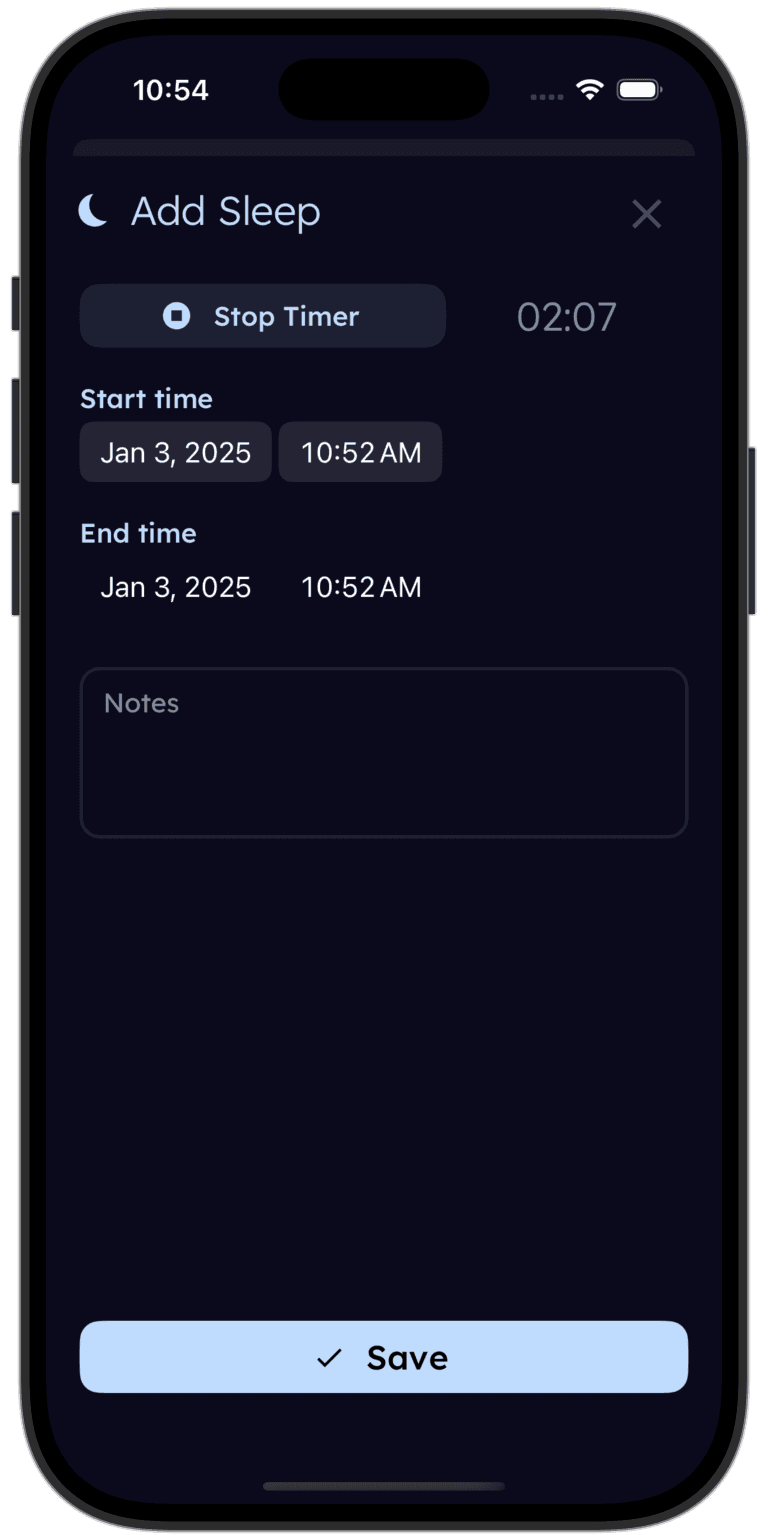
Tinylog tracks sleep so you can spot patterns.


App Control: Helpful or Unnecessary?
The Hatch Rest+ requires a smartphone app and a WiFi connection for full functionality. You create an account, connect the device to your network, and control everything — sound, volume, light color, schedules — from the app. You can adjust settings from another room, which is genuinely useful if your baby falls asleep during a feeding and you don't want to reach over to change the volume.
The downsides of app control are real:
- WiFi dependency means a router reboot or network outage can temporarily break functionality
- Account creation means another service with credentials to manage
- Software updates can occasionally introduce bugs or change the interface
- Setup takes longer than plugging in a Dohm and turning a dial
The Yogasleep Dohm has no app, no WiFi, no account, no updates, and no connectivity. It turns on when you plug it in and flip the switch. It turns off when you flip the switch off. That simplicity is not a limitation for some families — it is the point.
One underrated advantage of the Hatch's scheduling feature: you can build a consistent bedtime routine into the device itself. Set a warm amber light at 7:00 PM to start wind-down, transition to a softer glow at 7:30 PM with a lullaby, and switch to pure white noise and darkness at 8:00 PM. The device runs the routine automatically every night. Consistent environmental cues genuinely support sleep onset in young children, and not having to fiddle with the device manually every evening reduces friction at the end of a long day.
If you want to control your child's sound machine from your phone at 2 AM without getting out of bed, the Hatch wins. If the idea of yet another app and account sounds exhausting, the Dohm wins.
| Product | Typical Price | Notes |
|---|---|---|
| Hatch Rest+ Sound Machine & Nightlight | $70–$80 | Includes nightlight, toddler clock, USB-C charging, app control. No mandatory subscription for core features. |
| Yogasleep Dohm Classic White Noise Machine | $35–$45 | Mechanical fan sound only. Two speed settings. No extras. Requires AC outlet. |
| Hatch+ subscription (optional) | $5–$10/month or ~$40–$50/year | Unlocks expanded content library. Not required for core hardware functionality. |
Price: Is the Hatch Worth Double?
The Hatch Rest+ runs $70–$80. The Yogasleep Dohm runs $35–$45. That's roughly a $35 price gap.
For that gap, the Hatch gives you: a full-color nightlight, app and schedule control, a sound library with dozens of options, USB-C charging for portable use, and a toddler time-to-rise clock.
Whether that's worth it depends on your situation:
- If you need a nightlight anyway, the Hatch is effectively a $35 premium for smart control and a sound machine bundled with a nightlight you'd buy separately. That math starts to make sense.
- If you have a toddler who wakes too early, the time-to-rise clock alone has saved countless parents' mornings. A $35 premium for a tool that actually helps your child stay in bed until a reasonable hour is a reasonable investment.
- If your baby is a newborn and you just need noise, the Dohm at $35–$45 does the job without any overhead.
One real cost consideration: Hatch does offer a paid Hatch+ subscription for expanded content. It is not required for core features — the basic sound library, nightlight, scheduling, and toddler clock all work without it. But if you find yourself wanting more sounds or sleep stories over time, factor in the subscription cost.
The Dohm occasionally goes on sale at Target, Amazon, and Buy Buy Baby for $30–$35. If you're comparison shopping, it's worth checking current prices before buying — the $35–$45 range represents typical retail, not the floor.
Choose the Hatch Rest+ If
- You want a nightlight and sound machine in one device — fewer things plugged in, fewer things to buy
- You plan to use the toddler time-to-rise clock feature as your child grows (it genuinely helps with early waking)
- You like being able to adjust volume and sound type from bed without going into the nursery
- You want flexible scheduling — for example, a wind-down routine that starts automatically before bedtime
- You're starting from scratch with a new nursery and want one device that handles multiple functions through the toddler years
Choose the Yogasleep Dohm If
- You want consistent white noise and nothing else — no apps, no WiFi, no accounts
- Your budget is $35–$45 and you don't need a nightlight or smart features
- You prefer a device with no electronics beyond a motor and a power switch — nothing to update, reboot, or lose connectivity
- You value the natural, mechanical sound quality of a real fan over digital audio tracks
- You already have a nightlight you like and don't want to replace it
- You're adding a sound machine to a room that already has a working setup and just need reliable white noise
Volume and Placement: What Actually Matters for Safety
Neither machine does any good — and can cause harm — if it's too loud or placed too close to the crib.
A 2014 study published in Pediatrics measured several infant sound machines at maximum volume and found levels exceeding 85 dB at 30 cm — above safe limits for infant hearing. This applies to any sound machine, including both the Hatch and the Dohm.
The practical rules for safe use with both machines:
- Place the device at least 2 meters (about 6–7 feet) away from where the baby sleeps, not mounted to or touching the crib
- Keep volume at a level that masks household noise without overpowering the room — a good test is whether you can have a normal conversation in the room with the machine on
- For reference, 50 dB measured at the infant's ear is a commonly cited safe ceiling for continuous nighttime use
- Both machines work well at moderate volumes; there's no need to run either at maximum
The Hatch app displays a decibel reading through the device's microphone, which can help you calibrate volume more precisely. The Dohm has no such feature — you set it by ear and by the two-position dial.
If you're unsure about volume levels, a $15–$20 decibel meter app on your phone gives a reasonable measurement at the sleeping location.
Where to Buy
If you want a full-featured sleep device that grows with your child, Hatch Rest+ (~$70–$80) is the clear choice. The combination of customizable nightlight, app control, scheduling, and the toddler time-to-rise clock make it one of the most versatile sleep tools available — and many families use it daily through the preschool years. The Hatch Rest+ is available directly from Hatch and at major retailers including Amazon, Target, and Buy Buy Baby.
If you want reliable mechanical white noise without any digital overhead, Yogasleep Dohm (~$35–$45) is one of the best-designed single-purpose devices in the baby category. Plug it in, turn it on, and it works. No app, no account, no troubleshooting. The Dohm Classic is widely available at Amazon, Target, Walmart, and most baby specialty retailers. The Dohm Connect adds Bluetooth for phone control if you want a middle ground between the two machines covered here.
Tinylog earns a small commission on purchases made through these links, at no cost to you.
Want to save a few bucks? promo.new is worth a quick look. It won't always have your product, but when it does, the savings are real.
The Bottom Line
The Hatch Rest+ and the Yogasleep Dohm are both genuinely good products. They serve different buyers.
The Hatch Rest+ is for parents who want one device to handle sound, light, and toddler sleep cues — and who are comfortable managing it through an app. Its feature set is hard to match at the price, especially once the toddler clock becomes relevant around 18–24 months. If you're setting up a nursery from scratch, the consolidation of nightlight, sound, and toddler alarm into one $75 device is a real practical benefit.
The Yogasleep Dohm is for parents who want the simplest possible tool that works. Natural mechanical white noise, no WiFi, no apps, no subscriptions. It's been making babies sleep since before smartphones existed, and it still works just as well today. There is something to be said for a device that can't break due to a software update at 11 PM.
If budget is a genuine constraint, start with the Dohm. It does the one thing that matters most — consistent sound masking — without any complications. If you want the nightlight and toddler features and the flexibility to adjust everything from your phone, the Hatch is worth the premium.
Whichever machine you choose, use it at every sleep from the start. Consistency matters more than hardware. A baby who associates the sound of the Dohm's fan with sleep will settle faster than one whose sound machine is used intermittently with a fancier device.
Logging your child's sleep patterns — nap length, night wake frequency, total daily sleep — makes it easier to see whether any change (including adding a sound machine) is actually helping. Tinylog makes that tracking straightforward.
Related Guides
- White Noise vs. Pink Noise vs. Brown Noise for Babies — What each type sounds like and which to try first
- Baby Fighting Sleep — Why it happens and how to handle it
- 4-Month Sleep Regression — What to expect and how to get through it
- 8-Month Sleep Regression — One of the trickier regressions, and what helps
- 2-Year Sleep Regression — Managing the toddler version
- 3-Year-Old Sleep Schedule — What nap and bedtime look like at age 3
- Baby Feeding Chart — Age-by-age reference for feeding amounts
Sources
- Hatch. "Rest+ Sound Machine & Nightlight — Product Information." hatch.co. 2026.
- Yogasleep. "Dohm Classic White Noise Sound Machine — Features and Specifications." yogasleep.com. 2026.
- American Academy of Pediatrics. "Safe Sleep: Recommendations for Infant Sleep Environment." healthychildren.org. 2025.
- Hugh SC, Wolter NE, Propst EJ, et al. "Infant Sleep Machines and Hazardous Sound Pressure Levels." Pediatrics. 2014;133(4):677–681.
- Spencer JA, Moran DJ, Lee A, Talbert D. "White noise and sleep induction." Archives of Disease in Childhood. 1990;65(1):135–137.
- Sleep Foundation. "Best White Noise Machines of 2025." sleepfoundation.org. 2025.
- Wiggs L. "Are children getting enough sleep? Implications for parents." Sozial- und Präventivmedizin. 2001;46(4):227–233.
This guide is for informational purposes only and does not constitute medical advice. If your child has persistent sleep difficulties, consult your pediatrician. Always follow safe sleep guidelines recommended by the American Academy of Pediatrics.
Frequently asked questions
- Is the Hatch Rest+ worth the extra money over the Yogasleep Dohm?
- It depends on what you value. The Hatch Rest+ costs roughly twice as much and offers app control, a customizable color nightlight, a toddler time-to-rise clock, and a curated sound library. If you'll use those features — especially the toddler clock feature as your child grows — the premium is justified. If you just want consistent white noise and nothing else, the Dohm does that at half the price with no app required.
- Does the Yogasleep Dohm actually sound different from digital white noise machines?
- Yes, noticeably so. The Dohm produces sound mechanically using a real fan motor. The sound is non-looping, slightly variable, and has a warm analog quality that most parents describe as more soothing than digital tracks. Digital white noise can have subtle loop artifacts depending on the machine or app. Whether that difference matters to your baby is individual, but the distinction is real.
- Can the Hatch Rest+ replace a nightlight?
- Yes, fully. The Hatch Rest+ has a built-in LED nightlight with adjustable color and brightness controlled through the app. You can set different colors for different routines — a dim warm glow for bedtime wind-down, a soft light for nighttime feeds, and a green light for the toddler time-to-rise feature. It is designed to replace a separate nightlight entirely.
- Does the Hatch Rest+ require a subscription?
- The Hatch Rest+ hardware works without a paid subscription — you can control it through the free app for basic functions. Hatch does offer a paid Hatch+ subscription that unlocks an expanded content library including additional sleep sounds, sleep stories, and guided meditations. The core features most parents use (custom colors, basic sounds, toddler clock, scheduling) are available without a paid subscription.
- Is the Yogasleep Dohm safe to leave on all night?
- Yes. The Dohm is designed for continuous use and has been sold for this purpose since 1962. The mechanical fan motor is built for sustained operation. Many families leave it running through the entire night and through naps without any safety concerns. Keep it at a safe distance from the crib — at least a few feet away — and at a volume that doesn't exceed recommended noise levels for infants (around 50 dB at the child's ear).
- Which sound machine is better for travel?
- Neither is ideal for travel. The Yogasleep Dohm requires AC power and its cord makes it less portable. The Hatch Rest+ is bulkier and depends on WiFi for full functionality. For travel, most families use a dedicated travel sound machine or a white noise app. That said, the Dohm is simpler to pack and use in a new location since it has no app or WiFi setup to manage.