GUIDE

Hypoallergenic Formula vs. Regular Formula

Regular formula works for most babies. Hypoallergenic formula is for babies with confirmed or strongly suspected cow's milk protein allergy (CMPA), which affects 2-3% of infants. The proteins are broken down so the immune system doesn't react to them.

Switching to hypoallergenic formula is a medical decision, not a preference. Here's what actually differs and how to know if your baby needs one.

Track symptoms during formula trials

Log feeds, diapers, and reactions

Most babies don't need extensively hydrolyzed formula, so only use this kind if your pediatrician recommends it. It's not healthier or better for babies without allergies, and it costs more.
Dr. Matthew BadgettDr. Matthew Badgett, MD, Pediatrician, Cleveland Clinic

The Real Question: Does Your Baby Actually Need It?

Here is the uncomfortable truth about hypoallergenic formula: most babies who are switched to it don't need it. Studies suggest that CMPA affects 2-3% of infants, but hypoallergenic formula use is far higher than that. A 2016 review in Clinical and Experimental Allergy found that CMPA is frequently overdiagnosed, with parents and sometimes clinicians attributing normal infant symptoms — fussiness, gas, spit-up — to milk allergy when they aren't.

That matters because hypoallergenic formula costs 2-3 times more, tastes worse, and creates unnecessary dietary restriction. If your baby genuinely has CMPA, hypoallergenic formula is essential and potentially life-changing. If they don't, you're spending hundreds of extra dollars per month on a formula that tastes bitter for no medical benefit.

The symptoms that actually suggest CMPA: blood or mucus in stools, persistent vomiting (not occasional spit-up), failure to gain weight appropriately, severe eczema that doesn't respond to topical treatment, and chronic diarrhea lasting more than two weeks. Our guide to food allergy signs in babies covers these red flags in more detail. If your baby has one or more of these, see your pediatrician for evaluation before switching formulas.


Regular Formula vs. Hypoallergenic Formula
Protein
Regular FormulaIntact cow's milk proteins (whey and/or casein)
Hypoallergenic FormulaExtensively broken down (hydrolyzed) proteins or free amino acids
Who it's for
Regular FormulaHealthy babies without milk protein sensitivity
Hypoallergenic FormulaBabies with confirmed or suspected CMPA (2-3% of infants)
Cost
Regular Formula$0.80-$1.20 per oz prepared (~$100-150/month)
Hypoallergenic Formula$1.80-$3.50 per oz prepared (~$210-380/month)
Taste
Regular FormulaMild, well-accepted by most babies
Hypoallergenic FormulaBitter taste due to hydrolyzed proteins — harder for older babies to accept
Stool changes
Regular FormulaVaries by brand — generally yellow-brown, formed
Hypoallergenic FormulaOften greenish, looser, and stronger-smelling — this is normal
Availability
Regular FormulaWidely available at all retailers; many store-brand options
Hypoallergenic FormulaAvailable at most retailers; fewer store-brand options; amino acid formulas may need ordering
Insurance coverage
Regular FormulaNot typically covered — considered standard nutrition
Hypoallergenic FormulaMay be covered with prescription or letter of medical necessity
Hypoallergenic includes extensively hydrolyzed (Alimentum, Nutramigen) and amino acid-based (PurAmino, EleCare). 'Gentle' or 'sensitive' formulas are NOT hypoallergenic.

Regular Formula Advantages

  • Costs significantly less — roughly half to one-third the price of hypoallergenic options
  • Better taste profile — most babies accept it readily
  • Wide variety of brands and formulations to choose from
  • Readily available everywhere, including store-brand equivalents
  • Contains intact proteins that support normal immune development in non-allergic babies

Regular formula is the appropriate choice for the vast majority of babies.

Regular Formula Limitations

  • Contains intact cow's milk proteins that trigger immune reactions in CMPA babies
  • Not suitable for babies with confirmed milk protein allergy or intolerance
  • Symptoms of allergy may be subtle and easy to miss (chronic eczema, fussiness, poor growth)
  • Some parents unnecessarily switch to 'gentle' formulas when the issue is actually CMPA requiring hypoallergenic

The issue isn't with regular formula itself — it's about recognizing when a baby's symptoms indicate a genuine allergy.

Hypoallergenic Formula Advantages

  • Proteins broken small enough that 90%+ of CMPA babies tolerate extensively hydrolyzed formulas
  • Amino acid-based options available for the most severe cases
  • Can resolve bloody stools, eczema, and GI symptoms when allergy is the cause
  • LGG probiotic added to some brands (Nutramigen) may help develop tolerance faster
  • Some insurance plans cover with medical documentation

When a baby truly has CMPA, hypoallergenic formula resolves symptoms effectively.

Hypoallergenic Formula Challenges

  • Significantly more expensive — $100-250 more per month than regular formula
  • Bitter taste can make transitioning difficult for older babies
  • Stool appearance changes (green, loose) can cause unnecessary worry
  • Often used unnecessarily — fussiness alone is not an indication for hypoallergenic formula

These trade-offs are worth it when allergy is confirmed. They're not worth it when the switch is based on a guess.

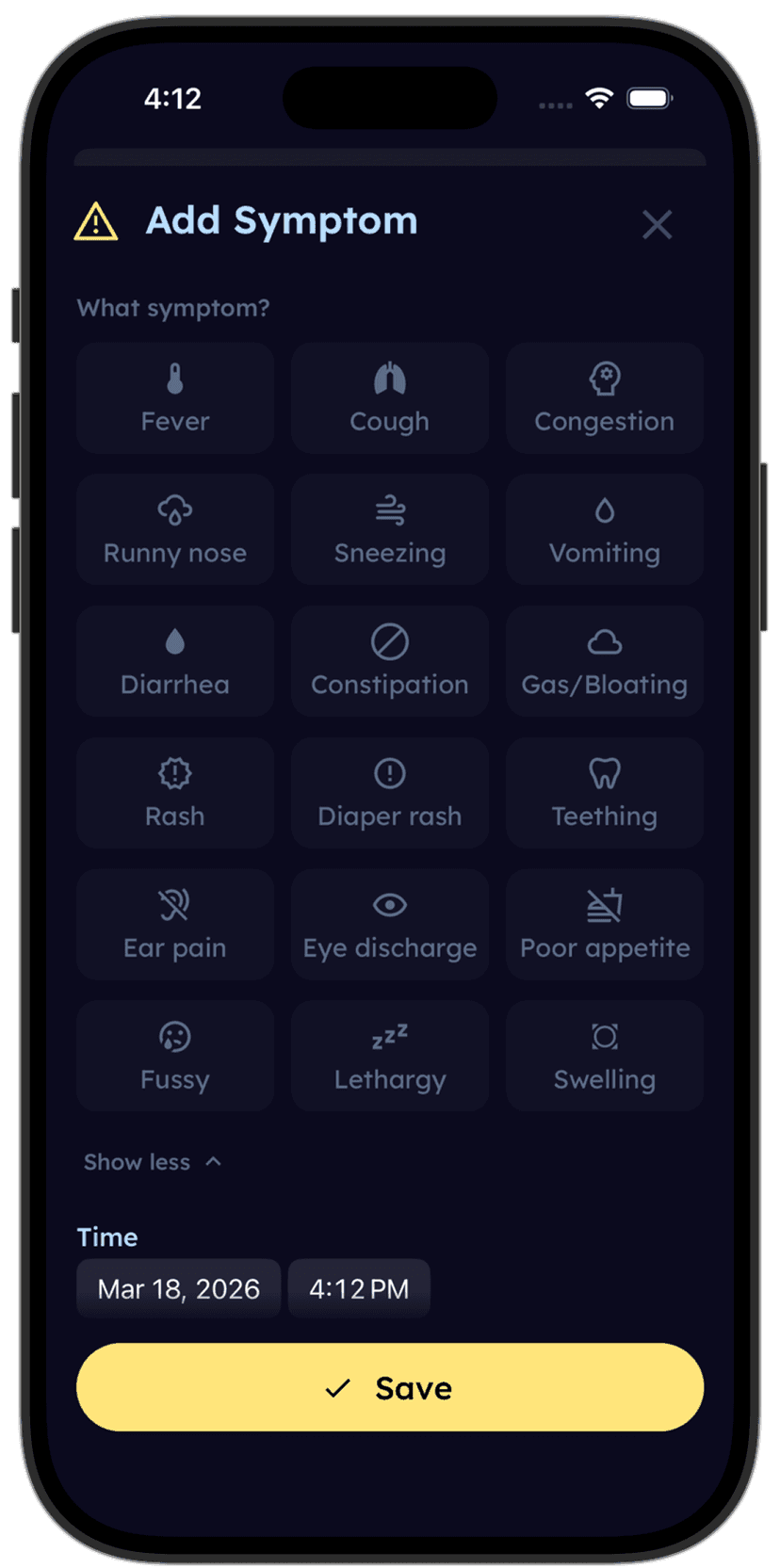
Tinylog app showing symptom tracking log for monitoring formula changes

Tracking symptoms during a formula switch gives your pediatrician real data.

Tinylog lets you log every feeding, diaper, and symptom during a formula trial. After two weeks, you'll have a clear picture of whether the switch is helping — no guessing required.

Download on the App StoreGet It On Google Play

How the Proteins Actually Differ

The core difference between regular and hypoallergenic formula is protein size. Regular formula contains intact cow's milk proteins — whey and casein chains that are nutritionally complete and well-tolerated by most babies. In babies with CMPA, the immune system mistakenly identifies these protein chains as threats and mounts an inflammatory response.

Extensively hydrolyzed formulas (like Alimentum and Nutramigen) use enzymes to break these proteins into very small fragments — peptides that are too small to trigger an immune response in approximately 90% of allergic babies. Our best hypoallergenic baby formula guide compares these options in detail. Amino acid-based formulas (like PurAmino and EleCare) go further, providing protein as individual free amino acids with no chains at all.

Partially hydrolyzed formulas — the "gentle" category — break proteins into medium-sized fragments. These may be easier to digest for non-allergic babies with fussiness, but the fragments are still large enough to trigger immune reactions in CMPA babies. This is a critical distinction that marketing often blurs.

How to Decide: A Practical Framework

Start with your pediatrician. CMPA diagnosis should be guided by a medical professional who can evaluate symptoms, rule out other causes, and recommend the appropriate formula type. Self-switching based on internet symptom-matching leads to unnecessary expense and dietary restriction more often than it leads to answers.

If your pediatrician recommends a trial: Commit to 2-4 weeks of consistent use with daily symptom tracking. Our guide to switching baby formulas walks through how to transition safely. Don't mix hypoallergenic with regular formula during the trial — it defeats the purpose. Track stools, skin, vomiting, and overall fussiness so you have objective data.

If symptoms resolve: Your baby likely has CMPA. Continue the hypoallergenic formula and discuss a timeline for re-challenge with your pediatrician. Most babies outgrow CMPA by age 3.

If symptoms don't improve after 2-4 weeks: Talk to your doctor about whether to escalate to an amino acid-based formula or reconsider the diagnosis. Persistent symptoms despite hypoallergenic formula may indicate a different condition entirely.

Tips That Apply Either Way

Track symptoms before and after switching

The only way to know if hypoallergenic formula is helping is to have a clear picture of symptoms before the switch. Log diapers (blood, mucus, frequency), skin appearance, vomiting episodes, and fussiness for a few days on the old formula, then continue tracking on the new one. This gives your pediatrician data instead of impressions.

Don't confuse 'gentle' formulas with hypoallergenic

Formulas labeled 'gentle,' 'sensitive,' or 'comfort' use partially hydrolyzed proteins — they're easier to digest but still contain protein chains large enough to trigger allergic reactions. If your baby has CMPA, these won't solve the problem. True hypoallergenic formulas use extensively hydrolyzed or amino acid-based proteins.

Give the trial enough time

GI symptoms like bloody stools may resolve within a few days of switching, but skin symptoms like eczema can take 2-6 weeks to improve. Don't give up on a hypoallergenic formula after three days because the eczema hasn't cleared. Conversely, if GI symptoms don't improve within 2 weeks, talk to your pediatrician about escalating to an amino acid-based formula.

Related Guides

Sources

  • Koletzko, S., et al. (2012). Diagnostic Approach and Management of Cow's-Milk Protein Allergy in Infants and Children. Journal of Pediatric Gastroenterology and Nutrition, 55(2), 221-229.
  • Vandenplas, Y., et al. (2007). Guidelines for the diagnosis and management of cow's milk protein allergy in infants. Archives of Disease in Childhood, 92(10), 902-908.
  • Boyle, R. J., et al. (2016). Hydrolysed formula and risk of allergic or autoimmune disease: systematic review and meta-analysis. BMJ, 352, i974.
  • American Academy of Pediatrics Committee on Nutrition. (2000). Hypoallergenic Infant Formulas. Pediatrics, 106(2), 346-349.

This guide is for informational purposes only and is not a substitute for professional medical advice. Consult your pediatrician for guidance specific to your baby.

Get this comparison in your inbox.
Save this breakdown to share with your pediatrician or partner.
Switching formulas? Logging symptoms makes the difference between guessing and knowing.
Download Tinylog — track feeds, stools, skin changes, and fussiness day by day.
Download on the App StoreGet It On Google Play