
Time the transition right
Stop swaddling when your baby shows signs of rolling — usually around 3-4 months. Don't wait until they actually roll in the swaddle. The AAP recommends stopping swaddling at the first sign of rolling attempts.
GUIDE
Published on
The Merlin dampens the startle reflex with padded layers, helping some babies transition from the swaddle. A standard sleep sack offers arms-free warmth without muffling movement. Both are safe when used correctly for the right age.
The swaddle transition can be rough. These two products take very different approaches to solving the same problem.
Log sleep changes day by day
“You really want to have your infant's arms free, so if they do roll over onto their belly while in bed they can use their arms to roll themselves back.”
 Dr. Heidi Szugye, DO, IBCLC, Pediatrician, Cleveland Clinic
Here is the scenario: your baby has been sleeping beautifully in a swaddle. Then they start showing signs of rolling, which means the swaddle has to go — it is not safe for a baby who can roll to have their arms restricted. You unswaddle, and suddenly sleep falls apart. The startle reflex (Moro reflex) jolts them awake, arms flail, and everyone is miserable.
The Merlin Magic Sleep Suit was designed specifically for this moment. Its padded layers dampen arm and leg movements without wrapping them tight like a swaddle. Baby's arms are free but muffled — the startle still happens, but it is less likely to fully wake them. For some babies, it works like magic (hence the name). For others, it is an expensive onesie.
A standard sleep sack takes a different approach: it does not address the startle reflex at all. It just keeps baby warm and replaces loose blankets. Arms are fully free. The philosophy is simple — baby needs to learn to sleep with free arms eventually, so you might as well start now.
Both approaches have merit. The question is whether your baby needs the bridge or can handle the direct transition.
| Aspect | Merlin Sleep Suit | Sleep Sack |
|---|---|---|
| Purpose | Bridge between swaddle and free arms — dampens startle reflex | Wearable blanket — keeps baby warm with arms free |
| Age range | ~3-6 months (pre-rolling only) | Birth through toddlerhood (varies by brand) |
| Startle reflex | Padded layers muffle the Moro reflex significantly | Does not dampen the startle reflex — arms move freely |
| Rolling safety | Must stop immediately when baby starts rolling | Safe to use once baby can roll — does not restrict movement |
| Temperature regulation | Runs warm — multiple padded layers can cause overheating | Available in multiple TOG ratings for different room temperatures |
| Price | ~$40 for a few weeks to months of use | $25-40, usable for many months per size |
| Long-term use | Short-term bridge only | Can be used through age 2-3 in larger sizes |
The Merlin works best for babies with a strong startle reflex who are not yet rolling.
The short lifespan and second transition are the biggest downsides.
The sleep sack is the long-term solution regardless of whether you use the Merlin first.
Most babies adjust to the sleep sack within 3-5 nights, even without a Merlin transition.
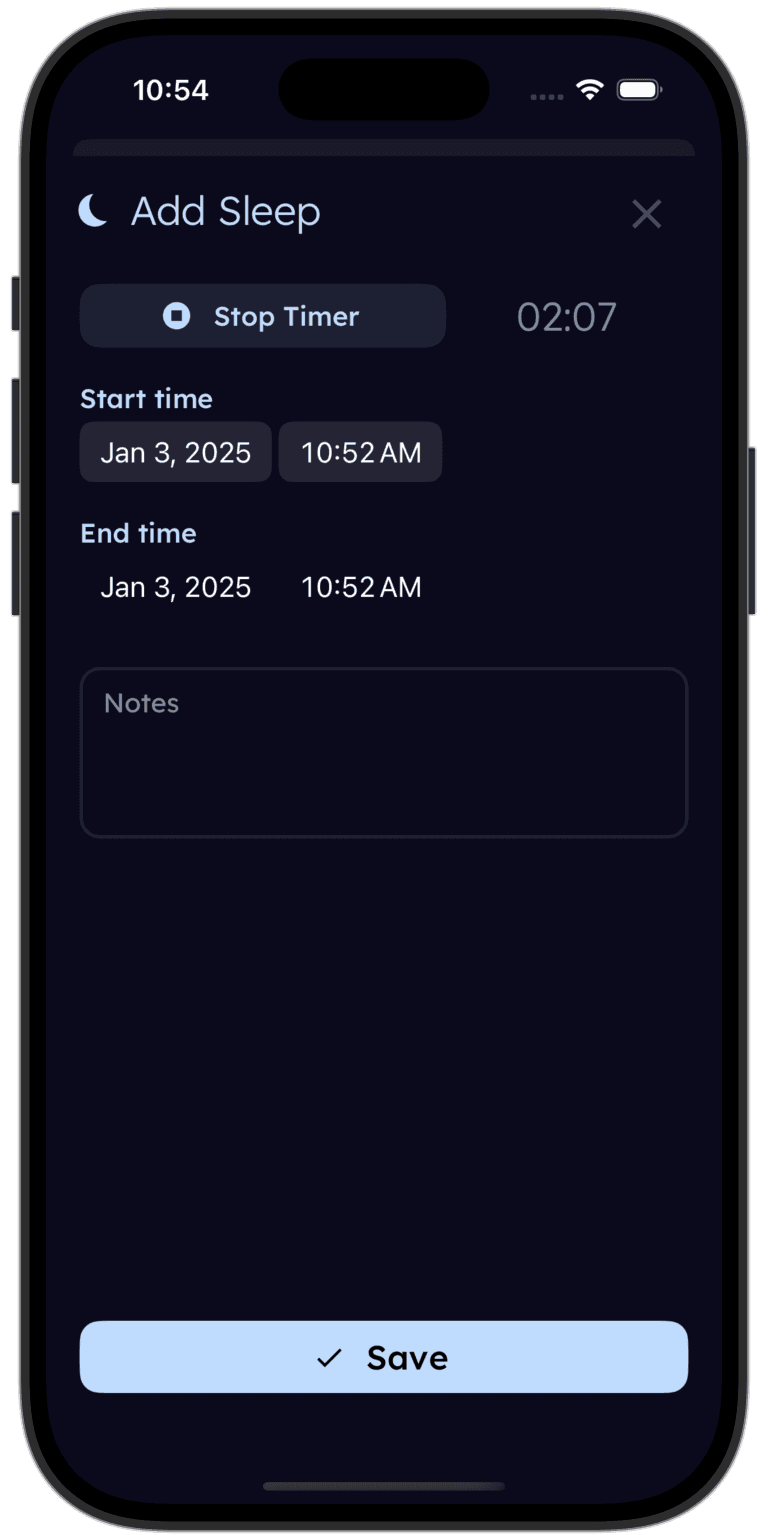
Log sleep times before, during, and after the switch in Tinylog. You'll see exactly how many nights the adjustment takes — and whether the Merlin or sleep sack is working better.


The Merlin makes the most sense if your baby has a very strong startle reflex that is genuinely disrupting sleep, not just causing the occasional arm fling. Signs that the Merlin might help: baby wakes fully every time their arms jolt, baby cannot settle after the startle without being re-swaddled, and the startle happens multiple times per sleep cycle.
If your baby has a mild startle that causes a brief stir but they resettle on their own, a sleep sack is probably enough. Most babies' startle reflex naturally fades between 4-6 months, so the window where the Merlin helps is genuinely short — check your baby's age-appropriate sleep schedule to see what to expect during this period. You are buying a few weeks of better sleep during a transition — which, to be fair, might be worth every penny.
Try the sleep sack first. Seriously. Give it 3-5 nights. Many babies adjust faster than parents expect, and you skip the Merlin altogether (saving money and avoiding a second transition later). If after a full week the startle reflex is still causing major disruptions — multiple full wake-ups per night directly caused by arm flailing — then the Merlin is worth trying. If sleep falls apart entirely, our guide on why babies stop sleeping through the night covers other factors to investigate.
If you go the Merlin route, start watching for rolling immediately. The moment you see rolling attempts in the suit, it is time to transition to the sleep sack. This typically gives you 4-8 weeks in the Merlin — enough time for the startle reflex to fade naturally before you move to arms-free sleeping.
Stop swaddling when your baby shows signs of rolling — usually around 3-4 months. Don't wait until they actually roll in the swaddle. The AAP recommends stopping swaddling at the first sign of rolling attempts.
Many sleep consultants recommend going straight to arms-out rather than one-arm-out transitions. Yes, the first 2-3 nights may be rough. But most babies adjust within 3-5 nights regardless of method.
The Merlin runs warm. If you use it, dress baby lightly underneath — typically just a diaper or a thin onesie. Sleep sacks are more temperature-flexible, but still check that baby's chest is warm without being sweaty.
This guide is for informational purposes only and is not a substitute for professional medical advice. Consult your pediatrician for guidance specific to your baby.