
The transition is temporary
Switching from swaddle to sleep sack almost always causes a rough few nights. Most babies adjust within 3-7 days. Don't go back to the swaddle if rolling has started — ride it out.
GUIDE
Published on
Swaddling works best from birth to about 8 weeks (or first signs of rolling). Sleep sacks take over from there and can be used through toddlerhood. Most babies use both — just at different stages.
The transition between the two is often the trickiest part. Here's how to handle it.
Log naps, night sleep, and what worked
“Sleeveless sleep sacks, meanwhile, don't generate the same level of suffocation worry. Given that, they make a safe 'next step' once newborns are ready to transition out of a swaddle.”
 Dr. Heidi Szugye, DO, IBCLC, Pediatrician, Cleveland Clinic
Swaddling and sleep sacks aren't really competing products — they're sequential ones. Most babies use a swaddle first, then transition to a sleep sack. The confusion comes from the overlap period and the transition itself.
Swaddling works by suppressing the Moro (startle) reflex, an involuntary arm-fling that wakes newborns up constantly. A 2007 review by van Sleuwen et al. in Pediatrics found that swaddled newborns had longer sleep periods and cried less than unswaddled ones. The reflex typically fades by 3-4 months, but the swaddle window closes earlier than that — you must stop at the first sign of rolling, which can happen as early as 8 weeks. Understanding how baby sleep cycles work helps explain why the startle reflex causes so many wake-ups during light sleep phases.
Sleep sacks take over where swaddles leave off. Arms are free, hips can move, and the baby can roll safely. They function as a wearable blanket, replacing loose blankets in the crib (which the AAP says should never be there). The beauty of a sleep sack is that there's no hard stop date — some toddlers use them until age 3 or 4.
| Aspect | Swaddling | Sleep Sack |
|---|---|---|
| Age range | Birth to ~8-12 weeks or first sign of rolling | Birth through toddlerhood (some up to age 3-4) |
| Arm position | Arms wrapped snugly against the body. Prevents Moro reflex wake-ups. | Arms free. Baby can self-soothe by sucking fingers or repositioning. |
| Moro reflex | Effectively suppresses the startle reflex, reducing spontaneous wake-ups in newborns. | Does not suppress the reflex. Baby may startle awake more often in early weeks. |
| Rolling safety | Must stop before rolling begins. Swaddled babies who roll face-down cannot push up. | Safe for rolling babies — arms are free to reposition. No upper limit on use. |
| Hip safety | Must allow hip flexion and movement. Too-tight swaddling is linked to hip dysplasia risk. | Roomy around the hips by design. International Hip Dysplasia Institute approves most sleep sacks. |
| Temperature regulation | Extra layer around upper body. Risk of overheating in warm environments. | Available in various TOG ratings for different seasons. Easier to regulate temperature. |
| Ease of diaper changes | Must unwrap and rewrap. Night changes fully wake a swaddled baby. | Most have bottom zippers. Diaper changes without removing the sack. |
Benefits are strongest in the newborn period when the Moro reflex is most active.
The mandatory stop date is the biggest downside — it often comes right when parents feel like sleep is finally improving.
Sleep sacks are one of the simplest, safest sleep products available.
Most challenges are temporary or solved by proper sizing.
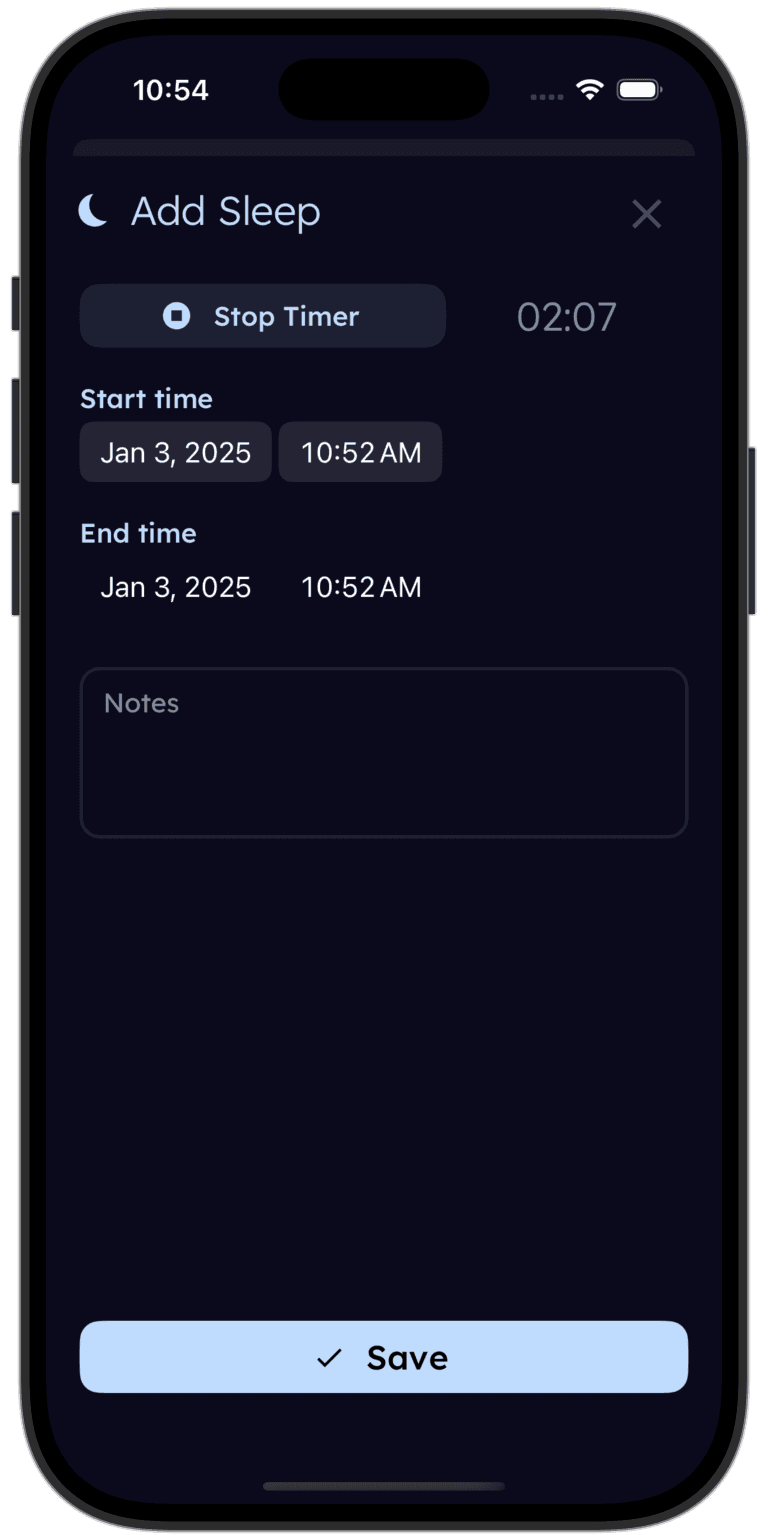
Log sleep stretches with Tinylog so you can see exactly how the switch from swaddle to sleep sack affects your baby's sleep — and when things normalize.


The swaddle-to-sleep-sack transition is one of those parenting milestones that nobody warns you about until you're in it. Your baby has been sleeping well in a swaddle, you notice them trying to roll, and suddenly you need to take away the thing that's been working.
There are three common approaches. Cold turkey — stop swaddling and put baby in a sleep sack immediately. This often causes 3-5 rough nights but tends to resolve fastest. One arm out — free one arm for a few nights, then the other, then move to a sleep sack. This is gentler but takes longer. Transitional products — items like the Zipadee-Zip or Love to Dream Swaddle Up allow some arm movement while still providing containment. These can bridge the gap for babies who really struggle.
Whichever approach you use, expect some regression. Your baby has been sleeping with arms contained for their entire life. Arms-free sleep is genuinely different for them — and if a sleep regression happens to coincide with the swaddle transition, the disruption can feel worse than it is. But babies are adaptable, and most figure it out within a week.
If your baby is under 8 weeks and not showing any signs of rolling, a swaddle is likely the right choice. The Moro reflex is strongest in the first two months, and swaddling directly addresses the most common cause of newborn self-waking. Pairing a swaddle with white noise can further improve sleep onset in those early weeks.
If your baby is showing any sign of rolling — even just attempting — stop swaddling immediately and move to a sleep sack. This is not flexible. A swaddled baby who rolls face-down cannot use their arms to lift their head or reposition, creating a suffocation risk.
If your baby is past the newborn phase, already in a sleep sack, and sleeping well, there's no reason to change anything. Sleep sacks can be used for as long as your child is comfortable in one.
Switching from swaddle to sleep sack almost always causes a rough few nights. Most babies adjust within 3-7 days. Don't go back to the swaddle if rolling has started — ride it out.
A sleep sack should be snug around the neck and armholes so it can't ride up over the face, but roomy around the hips and legs. The International Hip Dysplasia Institute provides a list of approved products.
Log sleep stretches before, during, and after the switch. You'll see the dip and recovery in your data — and it's reassuring to see improvement when you're in the middle of it.
This guide is for informational purposes only and is not a substitute for professional medical advice. Consult your pediatrician for guidance specific to your baby.