GUIDE

White Noise vs. Silence for Baby Sleep

White noise helps most babies fall asleep faster and stay asleep longer — especially newborns. But it's a tool, not a requirement. Some babies sleep perfectly well in silence.

The real question isn't which is better — it's which works for your baby.

Track what works in the app

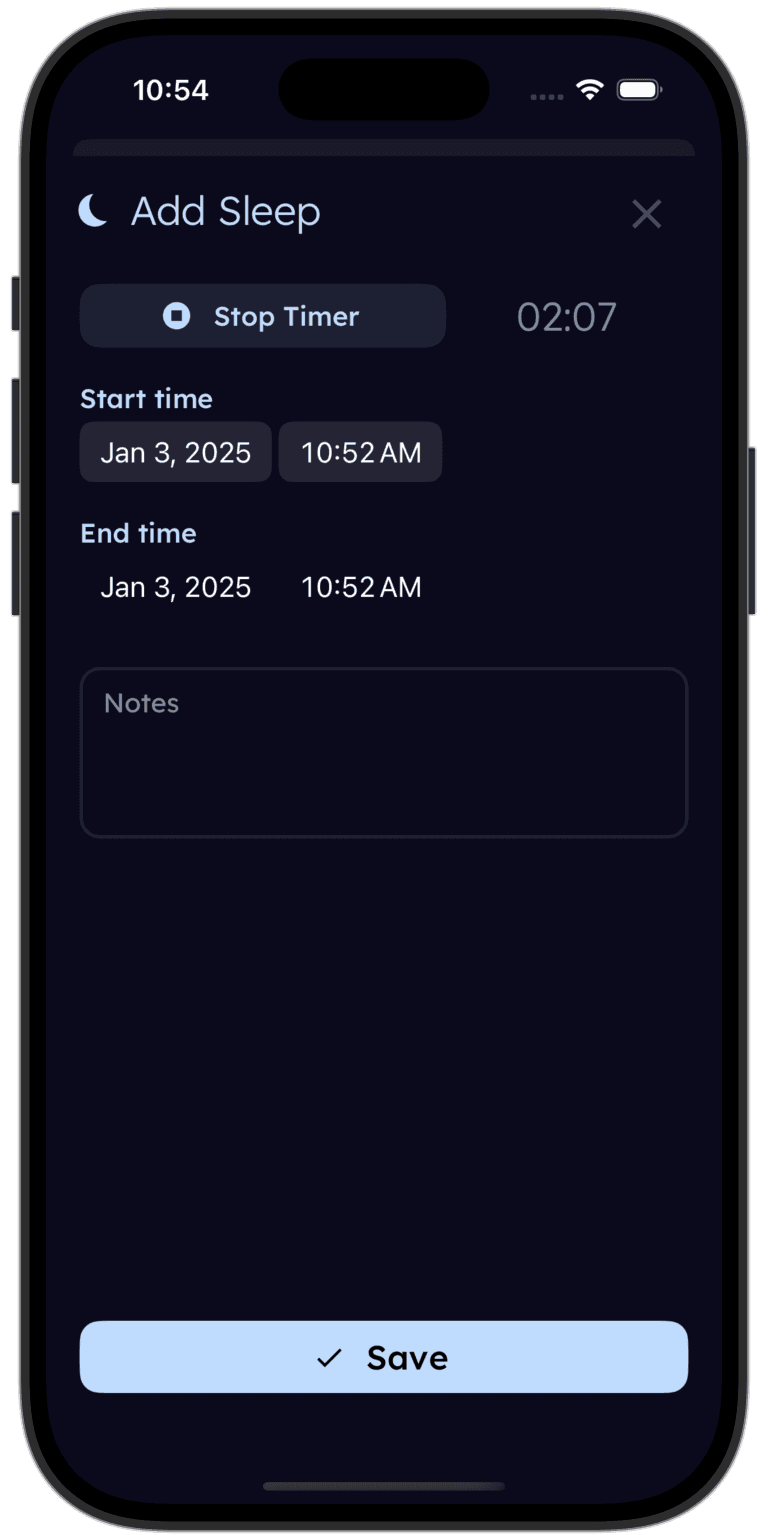
Log sleep with and without sound

Making children feel sleepy requires decreasing their level of cortisol, the hormone that keeps them revved up and ready to go. To decrease cortisol, calm their senses.
Dr. Maureen AhmannDr. Maureen Ahmann, DO, Pediatrician, Cleveland Clinic

Sound vs. Silence — What the Research Says

The uterus is not a quiet place. Inside the womb, babies are exposed to a constant 70-90 dB soundscape of blood flow, heartbeat, digestive sounds, and muffled external noise. That's roughly the volume of a vacuum cleaner. After birth, a silent nursery is actually the unfamiliar environment.

This is why white noise works so well for newborns. Spencer et al. (1990) found that 80% of newborns fell asleep within five minutes when exposed to white noise, compared to only 25% who fell asleep in the same timeframe without it. The study was small but the effect was large, and it aligns with what millions of parents observe: white noise calms fussy babies and helps them fall asleep faster. For a deeper look at safe usage, see our guide on sound machine volume recommendations.

But "helps most newborns" doesn't mean "required for all babies." Some infants sleep perfectly well in a quiet room from the start. And as babies get older and their nervous systems mature, the gap between white noise and silence narrows. By 6-12 months, many babies who needed white noise as newborns can sleep fine without it.


White Noise vs. Silence — Side by Side
Falling asleep
White NoiseBabies fall asleep faster — Spencer et al. (1990) found 80% of newborns fell asleep within 5 minutes with white noise.
SilenceTakes longer on average, especially for newborns who are used to the constant sound of the womb.
Staying asleep
White NoiseMasks household sounds (siblings, pets, traffic) that would otherwise cause wake-ups during light sleep phases.
SilenceEvery sound reaches the baby unfiltered. Light sleepers may wake more often.
Womb comparison
White NoiseMimics the 70-90 dB continuous sound environment of the uterus — familiar and calming for newborns.
SilenceA quiet room is a very different environment from the womb. Some newborns find silence unsettling.
Sleep associations
White NoiseCan become a sleep association, but it's passive and easy to wean gradually by reducing volume.
SilenceNo association formed — baby learns to sleep without an auditory cue from the start.
Hearing safety
White NoiseSafe at appropriate volume (<50 dB at ear level, 7+ feet away). Risk only at high volumes or close placement.
SilenceZero hearing risk from the environment itself.
Practicality
White NoiseUseful for travel, napping on the go, multi-child households, and noisy environments.
SilenceNothing to set up, charge, or pack. Works anywhere by default.
White noise should always be kept below 50 dB at the baby's ear level and placed 7+ feet from the crib.

White Noise Advantages

  • Strong evidence for faster sleep onset in newborns — 80% asleep within 5 minutes in Spencer et al. (1990)
  • Masks disruptive sounds — especially useful in apartments, multi-child homes, or near busy streets
  • Mimics the constant sound of the womb, which was 70-90 dB of blood flow, heartbeat, and digestive noise
  • Reduces parental anxiety about tiptoeing — you don't have to keep the house silent
  • Easy to use as a portable sleep cue for naps, travel, and unfamiliar environments

Benefits are most pronounced in the newborn period and in noisy environments.

White Noise Challenges

  • Hearing risk at high volumes — must stay below 50 dB at baby's ear level and be placed 7+ feet away
  • Creates a sleep association — baby may have difficulty sleeping without it initially
  • Some machines produce sounds that are too harsh or variable (avoid machines with chirps, melodies, or intermittent sounds)
  • One more thing to remember, charge, and pack when traveling

All hearing risks are eliminated by keeping volume at or below 50 dB at baby's ear level.

Silence Advantages

  • No hearing risk whatsoever from the sleep environment
  • No sleep association to wean later — baby learns to sleep in ambient conditions
  • Zero setup, zero cost, zero maintenance
  • Baby may develop tolerance for sleeping through normal household noise levels
  • Some older babies and toddlers genuinely prefer quiet — especially light nappers

Silence is the default — it only becomes a problem if your environment is noisy or your baby struggles to settle.

Silence Challenges

  • Household noises (doors, voices, pets, siblings) can disrupt light sleep phases
  • Newborns may find silence unsettling after nine months of constant womb noise
  • Parents may feel pressure to keep the house unnaturally quiet during naps and nighttime
  • Doesn't mask environmental noise in apartments, urban settings, or shared walls

Many of these challenges are environment-specific. A quiet house in a quiet neighborhood may work perfectly.

Tinylog sleep tracker showing sleep stretch data with notes

Test both and let the data decide.

Log sleep conditions in Tinylog — note whether white noise was on, the volume, and your baby's sleep stretches. After a week of each, you'll see which approach gives your baby longer, more consistent sleep.

Download on the App StoreGet It On Google Play

The Volume Question

The safety concern around white noise is real but entirely solvable. A 2014 study by Hugh et al. in Pediatrics tested 14 commercially available infant sound machines at maximum volume. All 14 exceeded 85 dB — a level that can cause hearing damage with prolonged exposure — when placed close to the crib.

But the study also showed that at moderate volume settings and at a distance of 7 feet (about 2 meters), sound levels dropped well below 50 dB. The AAP's recommendation is straightforward: keep the machine at least 7 feet from the crib, use a moderate volume setting, and you're within safe limits.

In practical terms, 50 dB is about the volume of a quiet conversation or light rain. You should be able to comfortably talk over the white noise without raising your voice. If you have to shout, it's too loud.

How to Decide What's Right for Your Baby

If your baby is a newborn, try white noise first. The womb-mimicking effect is strongest in the first three months, and there's good evidence it helps with both sleep onset and crying — especially when combined with swaddling to suppress the startle reflex. Set the volume appropriately (below 50 dB at ear level) and place the machine across the room.

If your baby is older and sleeping well without white noise, there's no reason to add it. You're not missing out on anything. White noise solves a problem — if the problem doesn't exist, you don't need the solution.

If your baby is struggling to stay asleep and you live in a noisy environment — apartment building, busy street, older siblings — white noise is one of the simplest interventions you can try. It costs nothing if you use a phone app, and the results are usually obvious within a night or two. If the disruptions persist, it may be worth checking whether a sleep regression or growth spurt is the real culprit.

Tips That Apply Either Way

Volume matters more than anything

Keep white noise below 50 dB at your baby's ear level — roughly the volume of a quiet conversation. Place the machine at least 7 feet from the crib. Too loud is genuinely harmful; at the right volume, it's safe and effective.

Consistency beats perfection

If you use white noise, use it for all sleep — naps and nighttime. If you don't, commit to that too. The worst approach is random — some naps with, some without — because your baby can't build predictable sleep cues.

Test it empirically

Try a few nights with white noise and a few without. Track sleep stretches. The data will tell you whether it makes a meaningful difference for your specific baby. Some babies respond dramatically; others don't care at all.

Related Guides

Sources

  • Spencer, J. A., et al. (1990). White Noise and Sleep Induction. Archives of Disease in Childhood, 65(1), 135-137.
  • Hugh, S. C., et al. (2014). Infant Sleep Machines and Hazardous Sound Pressure Levels. Pediatrics, 133(4), 677-681.
  • American Academy of Pediatrics. (2022). Sleep-Related Infant Deaths: Updated 2022 Recommendations. Pediatrics, 150(1).
  • Forquer, L. M., & Johnson, C. M. (2005). Continuous White Noise to Reduce Resistance Going to Sleep and Night Wakings in Toddlers. Child & Family Behavior Therapy, 27(2), 1-10.

This guide is for informational purposes only and is not a substitute for professional medical advice. Consult your pediatrician for guidance specific to your baby.

Get this comparison in your inbox.
We'll send you this breakdown so you can test each approach with confidence.
Track sleep with and without white noise to see the difference.
Download Tinylog — log sleep conditions and spot what helps your baby sleep longest.
Download on the App StoreGet It On Google Play