GUIDE

Milk Allergy vs. Lactose Intolerance

Cow's milk protein allergy (CMPA) is an immune reaction to proteins in milk. Lactose intolerance is a digestive issue caused by insufficient lactase enzyme. They produce overlapping GI symptoms but have different causes, different severity, and different management.

These get confused constantly — even by some providers. The distinction matters for treatment.

Track symptoms after feeds

Log reactions and patterns

Parents sometimes confuse lactose intolerance with milk allergy. Although the two have similar symptoms, they are very different conditions.
Dr. Kadakkal RadhakrishnanDr. Kadakkal Radhakrishnan, MD, Pediatric Gastroenterologist, Cleveland Clinic

Why This Distinction Matters

These two conditions get conflated constantly — by parents, by social media, and sometimes by providers. The confusion is understandable: both involve milk, both cause GI symptoms, and both sound like "baby can't handle milk." But the underlying problem is completely different, and the treatment for one won't work for the other.

Cow's milk protein allergy (CMPA) is an immune reaction. The baby's immune system identifies cow's milk proteins (casein and whey) as threats and mounts a response. This can produce GI symptoms (blood in stool, vomiting, diarrhea) AND non-GI symptoms (eczema, hives, respiratory issues). For a broader look at how allergic reactions present in infants, see our guide on food allergy signs in babies. Treatment requires complete avoidance of cow's milk protein.

Lactose intolerance is an enzyme deficiency. The baby doesn't produce enough lactase to break down lactose (a sugar in milk). Undigested lactose ferments in the gut, producing gas, bloating, and watery diarrhea. There's no immune involvement, no blood in stool, no skin symptoms, and no risk of severe reactions. The critical point: primary lactose intolerance is extremely rare in infants. Babies are born producing abundant lactase — they need it to digest breast milk.


Milk Allergy vs. Lactose Intolerance: Side-by-Side
What it is
Cow's Milk Protein AllergyImmune system reaction to cow's milk proteins (casein, whey)
Lactose IntoleranceInability to digest lactose (milk sugar) due to low lactase enzyme
Mechanism
Cow's Milk Protein AllergyImmune-mediated — IgE (immediate) or non-IgE (delayed) response
Lactose IntoleranceEnzyme deficiency — undigested lactose ferments in the gut
Prevalence in infants
Cow's Milk Protein Allergy2-3% of infants
Lactose IntoleranceExtremely rare — primary lactose intolerance almost never occurs in infancy
GI symptoms
Cow's Milk Protein AllergyBlood/mucus in stool, vomiting, diarrhea, severe fussiness
Lactose IntoleranceGas, bloating, watery diarrhea, cramping (no blood)
Non-GI symptoms
Cow's Milk Protein AllergyEczema, hives, respiratory symptoms, failure to thrive
Lactose IntoleranceNone — lactose intolerance is digestive only
Onset timing
Cow's Milk Protein AllergyMinutes to hours (IgE) or hours to days (non-IgE) after milk protein exposure
Lactose Intolerance30 minutes to 2 hours after consuming lactose
Severity
Cow's Milk Protein AllergyCan range from mild to severe; anaphylaxis possible (rare) with IgE-type
Lactose IntoleranceUncomfortable but not dangerous
Treatment
Cow's Milk Protein AllergyComplete avoidance of cow's milk protein — hypoallergenic formula or maternal dairy elimination
Lactose IntoleranceLactose-free formula or lactase supplement (but true infant lactose intolerance is exceedingly rare)
CMPA is common in infants (2-3%). True primary lactose intolerance in infancy is exceedingly rare. If your infant has milk-related symptoms, CMPA is far more likely.

CMPA: Key Points

  • Well-defined diagnostic criteria — blood/mucus in stool is a strong indicator
  • Responds clearly to cow's milk protein elimination (dietary or formula change)
  • Most children outgrow it — 80% by age 3, 90% by age 6
  • Hypoallergenic formulas are effective for the vast majority of CMPA babies
  • Breastfeeding can continue with maternal dietary elimination of dairy

CMPA is manageable with the right formula and usually outgrown. The key is correct diagnosis.

CMPA: Challenges

  • Requires strict protein avoidance — cow's milk protein is in many foods
  • Hypoallergenic formulas are expensive ($200-380/month)
  • Diagnosis can take time — non-IgE CMPA symptoms are delayed and vague
  • Maternal elimination diet is restrictive and requires nutritional monitoring

Non-IgE CMPA (the more common type in infants) can take 2-4 weeks of elimination to confirm.

Lactose Intolerance: Key Points

  • Manageable with lactose-free products or lactase supplements
  • Not dangerous — symptoms are uncomfortable but not harmful
  • Easy to diagnose with a lactose-free trial
  • Doesn't involve the immune system — no risk of severe reactions
  • Temporary secondary lactose intolerance resolves as the gut heals

Secondary lactose intolerance after a stomach bug is the only form commonly seen in infants — and it's temporary.

Lactose Intolerance: Challenges

  • Extremely rare in infants — often misdiagnosed when the real issue is CMPA
  • Switching to lactose-free formula won't help if the problem is actually milk protein allergy
  • Parents may delay proper diagnosis of CMPA by treating for lactose intolerance first
  • Secondary lactose intolerance requires identifying and treating the underlying cause

If your pediatrician suspects lactose intolerance in a young infant, ask whether CMPA has been ruled out.

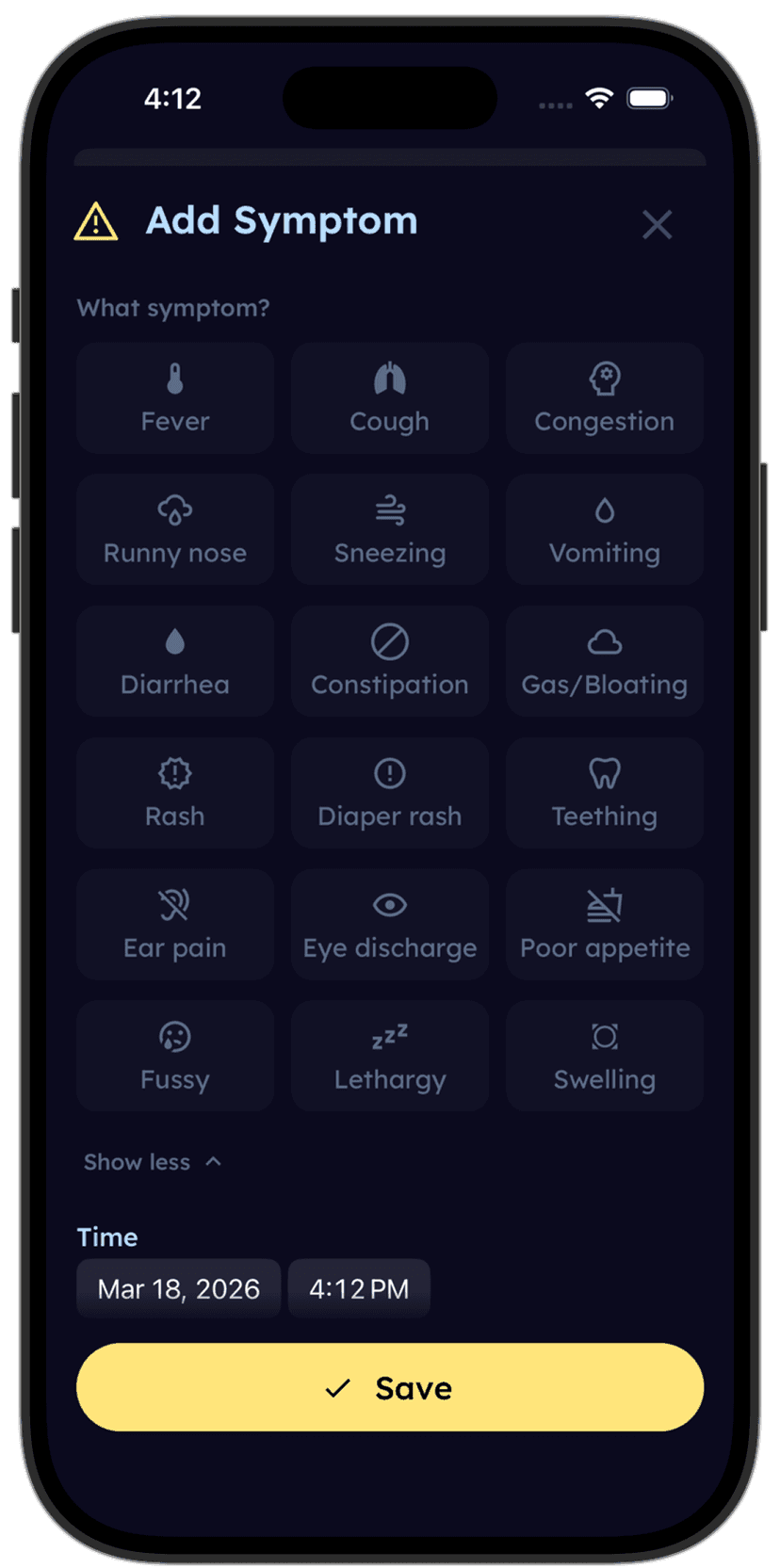
Tinylog symptom tracker showing feeding and reaction data

Track feeds and reactions to show your pediatrician the pattern.

Tinylog lets you log what baby ate, when symptoms appeared, and what they looked like. This timeline helps your pediatrician distinguish between allergy and intolerance faster.

Download on the App StoreGet It On Google Play

The Secondary Lactose Intolerance Exception

While primary lactose intolerance is nearly nonexistent in infants, secondary (temporary) lactose intolerance can occur. This happens when a GI illness (stomach virus, bacterial infection) damages the intestinal lining where lactase is produced. The result is temporary inability to digest lactose until the lining heals — usually 2-4 weeks.

Signs of secondary lactose intolerance include watery, explosive diarrhea that persists after a stomach bug has otherwise resolved. Your pediatrician may recommend a brief period of lactose-free formula until the gut heals. This is different from CMPA and from primary lactose intolerance — it's temporary and resolves on its own as the intestinal villi regenerate.

If your baby has persistent GI symptoms after a stomach illness, this is worth mentioning to your pediatrician. But note: even in this scenario, the first priority is ruling out ongoing infection or CMPA before attributing symptoms to secondary lactose intolerance.

How Your Pediatrician Decides

For suspected CMPA: Your pediatrician will likely recommend an elimination trial — removing cow's milk protein from baby's diet (switching to a hypoallergenic formula or maternal dairy elimination for breastfed babies) for 2-4 weeks. If symptoms improve, a supervised reintroduction challenge may confirm the diagnosis. Blood or skin prick testing can detect IgE-mediated CMPA but will miss non-IgE forms.

For suspected lactose intolerance: A stool acidity test can detect undigested lactose. A trial of lactose-free formula for 1-2 weeks is both diagnostic and therapeutic — our guide on switching baby formulas walks you through how to transition safely. If symptoms resolve and return when lactose is reintroduced, the diagnosis is confirmed. Again — this is almost exclusively secondary (post-illness) in infants.

Tips That Apply Either Way

Blood in stool means allergy, not intolerance

If you see blood or mucus in your baby's stool, this is an immune/inflammatory response — it points to cow's milk protein allergy, not lactose intolerance. Lactose intolerance causes gas and watery stool, never blood. Report blood in stool to your pediatrician.

Lactose-free formula still has milk protein

This is the most common misconception. Lactose-free formula removes the sugar (lactose) but keeps the protein (casein, whey). If your baby has CMPA, lactose-free formula will not help. You need an extensively hydrolyzed or amino acid-based formula that breaks down the protein.

Track symptoms with feed timing

Note what baby ate and when symptoms appear. IgE-mediated CMPA reactions occur within minutes to 2 hours. Non-IgE reactions take hours to days. Lactose intolerance symptoms appear 30 minutes to 2 hours after ingestion. The timing helps differentiate.

Related Guides

Sources

  • Koletzko, S., et al. (2012). "Diagnostic Approach and Management of Cow's-Milk Protein Allergy in Infants and Children." Journal of Pediatric Gastroenterology and Nutrition, 55(2), 221-229.
  • Heyman, M. B. (2006). "Lactose Intolerance in Infants, Children, and Adolescents." Pediatrics, 118(3), 1279-1286.
  • Vandenplas, Y., et al. (2007). "Guidelines for the Diagnosis and Management of Cow's Milk Protein Allergy in Infants." Archives of Disease in Childhood, 92(10), 902-908.
  • Fiocchi, A., et al. (2010). "World Allergy Organization Diagnosis and Rationale for Action Against Cow's Milk Allergy Guidelines." World Allergy Organization Journal, 3(4), 57-161.

This guide is for informational purposes only and is not a substitute for professional medical advice. Consult your pediatrician for guidance specific to your baby.

Get this comparison in your inbox.
We'll send you this breakdown so you can reference the key differences when discussing symptoms with your pediatrician.
Timing and symptoms tell the story.
Download Tinylog — track what baby eats and how they react afterward, so your pediatrician has real data to work with.
Download on the App StoreGet It On Google Play