
GUIDE
Miracle Blanket Swaddle vs. Burt's Bees Beekeeper Wearable Blanket
Published on
These are two different products for two different stages. The Miracle Blanket is a structured swaddle for newborns who need that snug, womb-like hold. The Burt's Bees Beekeeper is a wearable blanket (sleep sack) for older babies who have outgrown swaddling. Many families end up buying both.
Comparing a swaddle to a sleep sack is a bit like comparing a crib to a toddler bed — they serve the same broad purpose (safe sleep) but are designed for different developmental windows. The Miracle Blanket keeps newborn arms tucked and startle reflexes in check. The Burt's Bees Beekeeper lets older babies sleep safely with arms free and legs mobile. Understanding when to use each one is the real decision.
Log naps, bedtime, and wake windows
A Swaddle and a Sleep Sack Walk Into a Nursery
Let's get this out of the way: the Miracle Blanket and the Burt's Bees Beekeeper are not direct competitors. One is a swaddle. The other is a wearable blanket. They solve different problems at different stages of your baby's first year.
But parents search for this comparison all the time, and it makes sense. Both go on your baby at bedtime. Both replace loose blankets (which are a SIDS risk and should never be in the crib). Both promise better sleep. And many families end up owning both.
So here is the honest breakdown: what each one does well, when to use it, and whether you actually need both.
For more on safe sleep guidelines, see our newborn sleep schedule guide.
| Feature | Miracle Blanket | Burt's Bees Beekeeper | What It Means |
|---|---|---|---|
| Product type | Swaddle wrap | Wearable blanket (sleep sack) | Different categories entirely. Swaddles restrain arms; sleep sacks allow free movement. |
| Age range | Newborn to ~3–4 months (pre-rolling) | Newborn through 18+ months (multiple sizes) | The Miracle Blanket has a shorter use window. The Beekeeper grows with your baby. |
| Material | 100% breathable cotton | 100% GOTS-certified organic cotton | Both cotton, but Burt's Bees carries the organic certification. |
| Closure system | Arm flaps + foot pouch (no velcro, no zippers) | Full-length zipper with top-to-bottom opening | The Miracle Blanket's wrap design is harder for babies to escape. The Beekeeper's zipper makes diaper changes easier. |
| Arms | Secured down against body with interior arm flaps | Free — arms out through armholes | Swaddled arms calm the startle reflex in newborns. Free arms are required once rolling begins. |
| Legs and hips | Foot pouch allows natural frog-leg position | Roomy sack allows full hip and leg movement | Both allow healthy hip positioning. The International Hip Dysplasia Institute recognizes both designs as hip-healthy. |
| Escape resistance | Very high — the double arm-flap system is notoriously hard to break out of | N/A — arms are free by design | If your baby is a Houdini who busts out of every swaddle, the Miracle Blanket is the go-to. |
| Temperature regulation | Single-layer cotton, breathable but snug | Single-layer cotton, very breathable with open armholes | The Beekeeper runs slightly cooler due to more airflow. Both work well in a 68–72 degree room. |
| Ease of use | Moderate learning curve — takes a few tries to master the wrap technique | Very easy — zip up and done | The Beekeeper wins hands down on convenience. The Miracle Blanket rewards the effort once you get the hang of it. |
| Washing | Machine washable, tumble dry low | Machine washable, tumble dry low | Tie. Both hold up well after repeated washes. |
| Available sizes | One size (fits ~7–14 lbs) | S, M, L, XL (fits ~7–36 lbs depending on size) | Burt's Bees offers much more size range for long-term use. |
The Swaddle Stage: Why the Miracle Blanket Has a Cult Following
The Miracle Blanket is not the cheapest swaddle and it is not the easiest to use. But it has earned a devoted following among parents of particularly fussy, wiggly, or colicky newborns — and there is a reason for that.
The design uses two interior arm flaps that wrap each arm separately against the baby's torso, plus a foot pouch that keeps legs gently contained in a natural frog position. There is no velcro, no zipper, no snaps. Just fabric and technique.
This matters because many babies who bust out of velcro swaddles in thirty seconds flat cannot escape the Miracle Blanket. The double-wrap arm system distributes pressure evenly and stays put. For a baby whose startle reflex is sabotaging every nap, that security can be transformative.
The trade-off: it takes a few practice sessions to get the wrapping right. Watch a video or two before your first attempt. By the third or fourth try, most parents can do it in under a minute.
The Sleep Sack Stage: Why the Beekeeper Is a Parent Favorite
Once your baby starts rolling — or once you are ready to transition out of swaddling — the Burt's Bees Beekeeper Wearable Blanket is one of the most popular sleep sacks on the market. And the reasons are straightforward.
100% GOTS-certified organic cotton. No synthetic fragrances, no flame retardant chemicals, no weird coatings. Just cotton. For parents who care about what touches their baby's skin for 10+ hours a day, this matters.
Dead-simple design. Unzip, put baby in, zip up. That is it. At 3 AM when your brain is running on fumes, simplicity is a feature.
Multiple sizes that actually last. The Beekeeper comes in sizes from small through extra-large, covering roughly 7 to 36 pounds. Most babies can use some version of this product from birth through 18 months or beyond.
The fabric is lightweight and breathable, which makes it a good year-round option in a room kept at the AAP-recommended 68 to 72 degrees. If your house runs cold, layer warmer pajamas underneath or look at the quilted Beekeeper version.
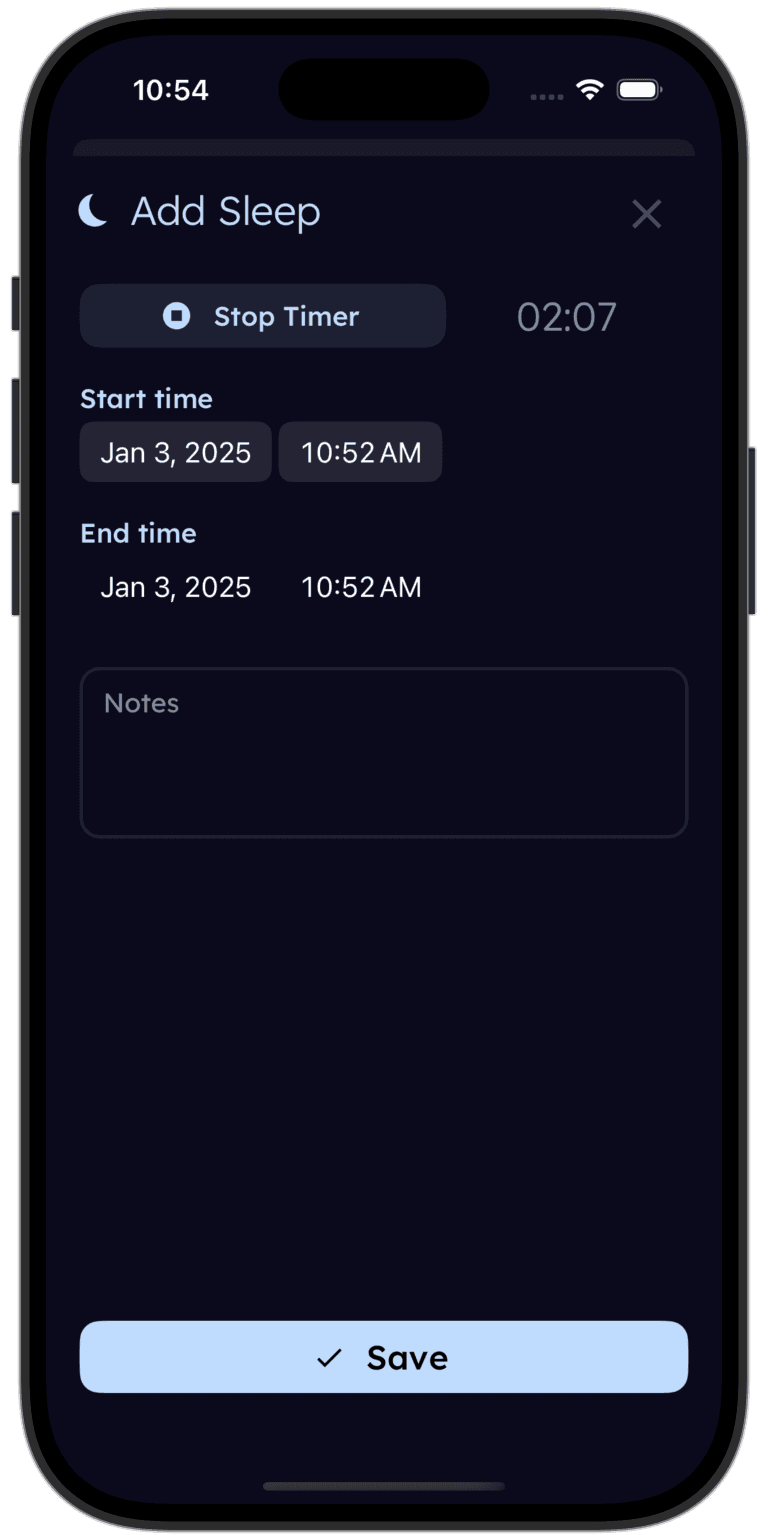
Tinylog tracks sleep so you can find what works.
Log naps, bedtime, wake windows, and night wakings. See patterns over days and weeks. Bring the data to your next pediatrician visit.


When to Transition From Swaddle to Sleep Sack
This is the question that actually matters for most parents reading this guide. The answer is clear-cut:
Stop swaddling the moment your baby shows any sign of rolling. This is not a suggestion — it is the AAP's safety recommendation. A swaddled baby who rolls to their stomach cannot use their arms to reposition, which creates a suffocation risk.
Most babies start attempting to roll between 2 and 4 months, but some start earlier. Watch for these signs:
- Rocking side to side during tummy time
- Rolling from back to side during play
- Increased leg and hip strength
- Breaking one or both arms out of the swaddle consistently
When you see any of these, it is time to move to a wearable blanket. The transition can be bumpy — expect a few rougher nights as your baby adjusts to having their arms free. Some parents do a gradual transition by swaddling with one arm out for a few nights first.
| Product | Typical Price | Cost Per Use | Notes |
|---|---|---|---|
| Miracle Blanket Swaddle (one size) | $30–$35 | ~$0.25–$0.35/night over 3 months | One blanket is usually enough, but having two for laundry rotation is ideal |
| Burt's Bees Beekeeper Wearable Blanket (single) | $15–$22 | ~$0.05–$0.10/night over 6+ months | Lower upfront cost and longer use window make this the better per-night value |
| Burt's Bees Beekeeper 2-pack | $28–$36 | ~$0.04–$0.06/night over 6+ months | The 2-pack is the sweet spot — always have a clean one ready |
Price: The Beekeeper Is the Better Long-Term Value
On a per-night basis, the Burt's Bees Beekeeper is significantly cheaper because you use it for many more months. A single Beekeeper at $18 used for six months works out to about ten cents a night. The Miracle Blanket at $32 used for three months is closer to thirty-five cents a night.
But this is not really an apples-to-apples comparison. You need a swaddle during the swaddle stage and a sleep sack during the sleep sack stage. The real question is whether these specific products are worth it compared to their alternatives.
The Miracle Blanket is premium-priced compared to basic muslin swaddles ($10–$15) or velcro swaddles like the Halo ($20–$28). The premium is justified if your baby breaks out of cheaper swaddles. If a basic swaddle works fine for your baby, save the money.
The Burt's Bees Beekeeper is competitively priced for an organic sleep sack. Non-organic alternatives run $12–$18, so you are paying a small premium for the organic certification — usually just a few dollars.
Choose the Miracle Blanket If
- Your newborn fights sleep and the startle reflex wakes them up constantly
- Your baby breaks out of every other swaddle you have tried
- You are dealing with colic or excessive fussiness and need that tight, womb-like hold
- Your baby is under 3–4 months old and not yet showing signs of rolling
- You are willing to learn a slightly more involved wrapping technique for better results
Choose the Burt's Bees Beekeeper If
- Your baby is starting to roll or has already outgrown swaddling
- You want organic, certified-safe materials with no synthetic additives
- Easy on-and-off for middle-of-the-night diaper changes is a priority
- You want one product that works from infancy through toddlerhood
- Your baby sleeps warm and you need something lightweight and breathable
- You prefer a simpler product with zero learning curve
Where to Buy
If your newborn is fighting sleep and busting out of every swaddle, the Miracle Blanket Swaddle (~$32) is the one parents reach for when nothing else works. The no-velcro, double arm-flap design keeps even the most determined escape artists snugly wrapped. Pick one up and grab a second for laundry days.
Once your baby outgrows swaddling, the Burt's Bees Beekeeper Wearable Blanket (~$18) is a reliable, organic cotton sleep sack that takes you from the swaddle transition all the way through toddlerhood. The 2-pack is the best value if you want a backup always ready to go.
Many families end up buying both — the Miracle Blanket for the first few months, then the Beekeeper for the long haul. That is a solid plan.
Tinylog earns a small commission on purchases made through these links, at no cost to you.
Looking for a discount? Try checking promo.new. It doesn't always find what you're looking for, but when it does, it works like a charm.
The Bottom Line
The Miracle Blanket and the Burt's Bees Beekeeper are not competing products — they are complementary ones that serve different stages of your baby's first year.
The Miracle Blanket is the best swaddle for babies who fight sleep, startle awake, or escape from other wraps. It has a learning curve, but parents who master it tend to swear by it. Use it from birth until the first signs of rolling.
The Burt's Bees Beekeeper is a well-made, organic, affordable sleep sack that works from the swaddle transition through toddlerhood. Simple to use, easy to wash, and gentle on sensitive skin.
If your baby is a newborn, start with whichever product fits their current stage. If you are planning ahead, budget for both — they cover different windows and neither one is a wasted purchase.
If you are tracking your baby's sleep patterns — which is genuinely useful for figuring out what works and what does not — Tinylog makes it easy to log naps, bedtime, and night wakings so you can spot trends over time.
Related Guides
- Newborn Sleep Schedule — What to expect in the first 12 weeks
- 2-Month-Old Sleep Schedule — Nap timing, wake windows, and night sleep
- Baby Sleep Regression — Why sleep falls apart and how to handle it
- Sleep Training Methods — An honest look at the different approaches
Sources
- American Academy of Pediatrics. "Safe Sleep: Back Is Best." HealthyChildren.org, 2025.
- International Hip Dysplasia Institute. "Hip-Healthy Swaddling." hipdysplasia.org, 2025.
- MiracleBlanket.com. "Miracle Blanket — Product Information." 2026.
- BurtsBeesBaby.com. "Beekeeper Wearable Blanket — Product Information." 2026.
- Moon, R.Y. et al. "Sleep-Related Infant Deaths: Updated 2022 Recommendations." Pediatrics, 2022.
- Consumer Reports. "Best Swaddles and Sleep Sacks." consumerreports.org, 2026.
This guide is for informational purposes only and does not constitute medical advice. Always follow the AAP's safe sleep guidelines. If you have concerns about your baby's sleep, consult your pediatrician.
Frequently asked questions
- Can I use the Miracle Blanket and Burt's Bees Beekeeper at the same time?
- Not simultaneously, but many families use them sequentially. The Miracle Blanket works well from birth until your baby starts showing signs of rolling (typically 2–4 months). Once you transition out of swaddling, the Burt's Bees Beekeeper wearable blanket picks up where the swaddle left off and can be used through toddlerhood.
- When should I stop using the Miracle Blanket swaddle?
- Stop swaddling as soon as your baby shows any signs of rolling over, which typically happens between 2 and 4 months. The AAP recommends discontinuing swaddling at the first sign of rolling attempts. At that point, transition to a wearable blanket like the Burt's Bees Beekeeper.
- Is the Burt's Bees Beekeeper warm enough for winter?
- The standard Beekeeper is a single layer of organic cotton, which works well in rooms kept at the recommended 68–72 degrees Fahrenheit. For colder rooms, Burt's Bees makes a quilted version with more insulation. You can also dress your baby in warmer pajamas underneath.
- Why is the Miracle Blanket more expensive than other swaddles?
- The Miracle Blanket uses a unique arm-flap design with interior pouches that keep arms securely down — it is harder for babies to break out of compared to simpler velcro or zipper swaddles. The construction is more involved, and the brand has a loyal following among parents of fussy or colicky babies who bust out of everything else.
- Is the Burt's Bees Beekeeper organic?
- Yes. The Burt's Bees Beekeeper Wearable Blanket is made from 100% GOTS-certified organic cotton. It is also free of synthetic fragrances, dyes, and flame retardants. The fabric is breathable and soft on sensitive skin.
- Can my newborn use the Burt's Bees Beekeeper instead of a swaddle?
- Technically yes — a sleep sack is safe for newborns. However, most newborns sleep better when swaddled because the snug wrap calms the Moro (startle) reflex. If your baby seems content without swaddling, a wearable blanket is a perfectly safe alternative from day one.