
GUIDE
Miracle Blanket vs. Nested Bean Zen Sack
Published on
Both help babies sleep longer, but they work very differently. The Miracle Blanket is a snug, traditional swaddle that pins arms down securely. The Nested Bean Zen Sack is a lightly weighted wearable blanket that mimics a parent's touch. Your pick depends on your baby's age, startle reflex, and rolling status.
The Miracle Blanket and Nested Bean Zen Sack are two of the most recommended sleep products in parenting forums and pediatrician offices alike. They solve the same problem — helping babies sleep longer stretches — but through completely different mechanisms. One wraps tight. The other adds gentle pressure. Understanding the difference saves you money and midnight frustration.
Log naps, night sleep, and wake windows
Two Popular Sleep Products — Completely Different Approaches
The Miracle Blanket and Nested Bean Zen Sack both promise better baby sleep. They both deliver. But they do it in ways that have almost nothing in common.
The Miracle Blanket is a no-Velcro, no-zipper swaddle wrap with interior arm flaps that pin your baby's arms securely at their sides. It is one of the most escape-proof swaddles ever made. Babies who Houdini their way out of everything else tend to stay wrapped in this one.
The Nested Bean Zen Sack is a wearable blanket with a lightly weighted pad on the chest. It does not restrict arm movement at all. Instead, it uses the gentle pressure of the weighted insert to mimic the feeling of a parent's hand — which can help babies self-soothe and fall back asleep during partial wake-ups.
Same goal, totally different philosophy. Which one works better depends almost entirely on your baby's age, sleep issues, and developmental stage.
We tested both, talked to parents who have used them, and looked at the design details so you can pick the right one — or decide you need both.
For more on age-appropriate sleep patterns, check out our baby sleep schedule guides.
| Feature | Miracle Blanket | Nested Bean Zen Sack | What It Means |
|---|---|---|---|
| Product Type | Traditional arm-down swaddle wrap | Lightly weighted wearable blanket | Fundamentally different products solving the same problem through different mechanisms. |
| Age Range | Birth to ~3–4 months (pre-rolling) | Birth through 24 months (multiple sizes) | Zen Sack has a much longer usable lifespan. Miracle Blanket is newborn-phase only. |
| Arm Position | Arms pinned snugly at sides with interior flaps | Arms free (sleeveless or with arm holes) | Miracle Blanket restricts arms to prevent startle reflex. Zen Sack leaves arms free. |
| Startle Reflex Control | Excellent — arms fully secured | Minimal — arms are unrestricted | Miracle Blanket wins here. If the Moro reflex is your main problem, it is the better choice. |
| Weighted Element | None | Lightly weighted pad on chest (~3–5 oz) | Zen Sack's weighted pad mimics a parent's hand on the chest. Miracle Blanket uses compression instead. |
| Ease of Use | Moderate — requires a specific wrapping technique | Very easy — zip up like a sleep sack | Zen Sack is simpler. The Miracle Blanket has a learning curve, though most parents get it in 2–3 tries. |
| Escape-Proof Rating | Very high — interior arm flaps prevent Houdini escapes | Not applicable — arms are not restrained | Miracle Blanket is one of the hardest swaddles for babies to break out of. |
| Fabric | Breathable cotton/spandex blend | 100% cotton (inner and outer layers) | Both are breathable and soft. Zen Sack is slightly lighter for warmer rooms. |
| Safe for Rolling Babies | No — must stop at first signs of rolling | Yes — arms are free, meets safe sleep guidelines | Zen Sack is safe for older babies. Miracle Blanket must be retired once rolling begins. |
| Available Sizes | One size (fits ~7–18 lbs) | Multiple sizes (0–6 mo, 6–15 mo, 15–24 mo) | Zen Sack grows with your baby. Miracle Blanket is a single-size product. |
| Machine Washable | Yes | Yes (gentle cycle) | Tie. Both hold up well through repeated washing. |
The Startle Reflex Question
This is usually the deciding factor for parents of newborns.
The Moro reflex (startle reflex) causes babies to fling their arms outward suddenly during sleep. It is involuntary, totally normal, and can wake a baby up dozens of times per night. It typically fades between 3–5 months of age.
The Miracle Blanket directly addresses this. Its interior arm flaps wrap each arm individually before the outer layer secures everything in place. Your baby physically cannot fling their arms. For babies with a severe startle reflex, this is often the difference between 45-minute sleep stretches and 3–4 hour stretches.
The Zen Sack does not prevent the startle. Arms are free. The weighted chest pad may help a baby settle after startling, but it will not stop the reflex itself. If the Moro reflex is your primary sleep disruptor, the Miracle Blanket is the more effective tool for the newborn months.
Once that reflex fades (usually around 4 months), the Miracle Blanket loses its main advantage — and needs to be retired anyway for rolling safety.
The Rolling Milestone Changes Everything
Here is where the Zen Sack pulls ahead.
The AAP recommends stopping any swaddle that restricts arm movement once a baby shows signs of rolling — which can happen as early as 3 months. This means the Miracle Blanket has a hard expiration date. One day your baby is sleeping beautifully in it; the next week, you need to stop cold turkey.
The Zen Sack has no such limitation. Because arms are free, it meets safe sleep guidelines for babies who roll. You can use it from birth through 24 months if you buy the appropriate sizes. Many parents find the Zen Sack is the perfect transition product after graduating from a traditional swaddle.
A practical approach that many families use: Miracle Blanket from birth to 3–4 months, then switch to the Zen Sack from 3–4 months onward. You get the startle-reflex benefits early and the long-term comfort later.
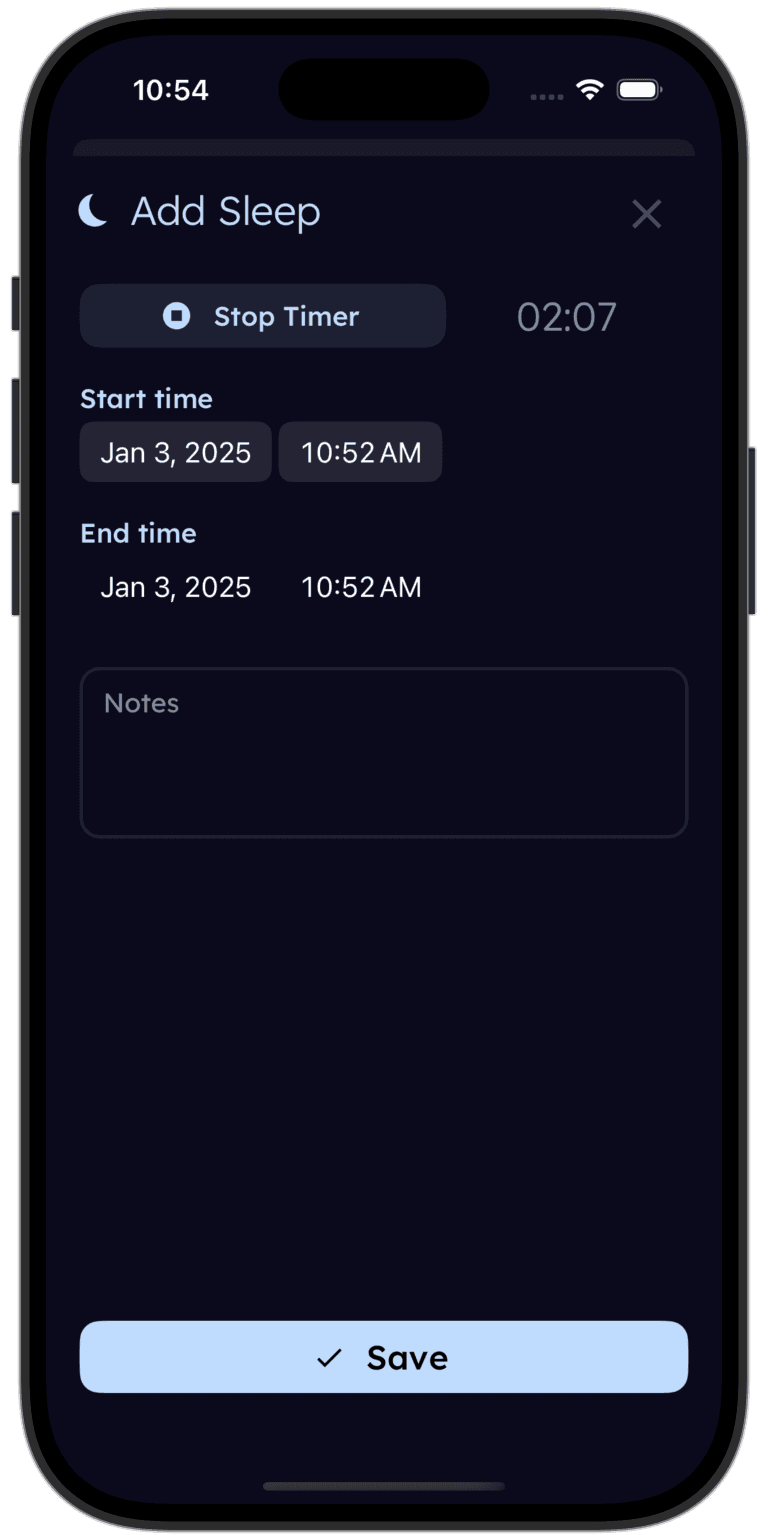
Tinylog tracks sleep so you can spot what's working.
Log naps and night sleep, track wake windows, note which sleep products you're using. See patterns over days and weeks so you know whether that new swaddle is actually helping.


Ease of Use: Not a Small Thing at 2 AM
The Miracle Blanket has a learning curve. It uses a specific folding and wrapping technique — no Velcro, no zippers, no snaps. You fold the arm flaps around each arm, tuck the bottom up, and wrap the outer flap around the body. Most parents get it down in 2–3 attempts, and there are helpful videos online. But at 2 AM with a screaming baby, simplicity matters.
The Zen Sack is dead simple. Put your baby's legs in, zip it up. Done. There is no technique. There is no wrong way to do it. A sleep-deprived grandparent or babysitter can figure it out immediately.
If multiple caregivers are putting your baby to sleep, the Zen Sack's simplicity is a real advantage. You will never have to text a tutorial video to the babysitter.
| Product | Typical Price | Cost Per Night | Usable Lifespan |
|---|---|---|---|
| Miracle Blanket Swaddle (single) | $30–$35 | ~$0.25–$0.35/night | ~3–4 months |
| Nested Bean Zen Sack (single, 0–6 mo) | $38–$42 | ~$0.20–$0.25/night | ~6 months |
| Nested Bean Zen Sack (all sizes, birth–24 mo) | $100–$126 | ~$0.14–$0.17/night | ~24 months |
Price: Short-Term vs. Long-Term Value
The Miracle Blanket costs less upfront ($30–$35) but only works for about 3–4 months. The Zen Sack costs more per unit ($38–$42 per size) but each size lasts longer, and the product line covers birth through 24 months.
If you only buy one Zen Sack size, the per-night cost is comparable. If you buy all three sizes to cover the full age range, the total investment is higher ($100–$126) but the cost per night actually drops because you are spreading it across nearly two years.
Both products hold their resale value well on secondhand markets. Miracle Blankets in good condition sell for $15–$20. Zen Sacks sell for $20–$30. Factor that in if you plan to resell after your baby outgrows them.
Choose the Miracle Blanket If
- Your baby has a strong Moro (startle) reflex that wakes them up constantly
- Your newborn breaks out of every other swaddle you have tried
- Your baby is under 3 months old and not yet showing signs of rolling
- You want the most secure arm-down swaddle on the market
- Your baby sleeps noticeably better with tight, womb-like compression
Choose the Nested Bean Zen Sack If
- Your baby is approaching the rolling milestone or already rolling
- You want a product that works from birth through toddlerhood
- Ease of use matters to you — you want a simple zip-up design
- Your baby responds well to gentle pressure on the chest (like a hand resting there)
- You are looking for a swaddle transition product after outgrowing a traditional swaddle
- Your baby sleeps in a warmer room and needs a lighter, breathable option
Where to Buy
If the startle reflex is ruining everyone's sleep, the Miracle Blanket (~$32) is one of the most effective arm-down swaddles on the market. It has a devoted following among parents of strong-startle babies and is frequently recommended by pediatric sleep consultants. Grab it on Amazon or directly from the manufacturer's site.
If you want a product with a longer usable lifespan — or you need a swaddle transition solution — the Nested Bean Zen Sack (~$40 per size) provides gentle weighted comfort from birth through toddlerhood. The lightly weighted chest pad is a unique feature that genuinely helps some babies self-soothe. Available on Amazon and the Nested Bean website.
If your baby is under 3 months with a strong startle reflex, start with the Miracle Blanket. If your baby is older or you want one product for the long haul, go with the Zen Sack. And if budget allows, buying both and using them in sequence is arguably the best strategy.
Tinylog earns a small commission on purchases made through these links, at no cost to you.
We've found promo.new handy for finding discounts on baby gear. Doesn't always have what you need, but it's worth a shot.
The Bottom Line
The Miracle Blanket and Nested Bean Zen Sack are both well-made products that genuinely help babies sleep. They are not interchangeable though — they solve different problems at different stages.
Miracle Blanket is the better choice for newborns (0–3 months) with a strong startle reflex who need secure, escape-proof swaddling. It has a short usable window but delivers significant results during that window.
Nested Bean Zen Sack is the better choice for babies approaching the rolling milestone, for swaddle transitions, and for families who want a single product line from birth to 24 months. The weighted chest pad is a unique comfort feature that works well for many babies.
For many families, the smartest play is using both: Miracle Blanket first, Zen Sack second. That gives you the strongest startle-reflex control early and a safe, comforting sleep product for the months (and year+) after.
If you are tracking your baby's sleep to figure out what is working, Tinylog makes it easy to log naps and night sleep alongside notes about which products you are using.
Related Guides
- 1-Month-Old Sleep Schedule — How much sleep to expect and sample routines
- 3-Month-Old Sleep Schedule — Nap transitions and wake windows
- 4-Month Sleep Regression — Why sleep falls apart and how to handle it
- Baby Feeding Chart — How much your baby should eat by age
Sources
- Miracle Blanket. "How It Works — Miracle Blanket Swaddle." miracleblanket.com, 2026.
- Nested Bean. "Zen Sack — Gently Weighted Sleep Sack." nestedbean.com, 2026.
- American Academy of Pediatrics. "Safe Sleep: Back Is Best." healthychildren.org, 2025.
- Moon, R.Y. et al. "Sleep-Related Infant Deaths: Updated 2022 Recommendations." Pediatrics, 2022.
- Consumer Reports. "Best Swaddles and Sleep Sacks." consumerreports.org, 2026.
- Mommyhood101. "Best Swaddles of 2026, Tested & Reviewed." mommyhood101.com.
- TakingCaraBabies. "When to Stop Swaddling." takingcarababies.com, 2025.
This guide is for informational purposes only and is not medical advice. Always follow the AAP's safe sleep guidelines. If your baby has trouble sleeping or you have concerns about their development, consult your pediatrician.
Frequently asked questions
- Can you use the Miracle Blanket once a baby starts rolling?
- No. Once your baby shows signs of rolling (typically around 3–4 months), you need to stop using any swaddle that restricts arm movement, including the Miracle Blanket. Babies need free arms to push up if they roll onto their stomach during sleep. The AAP recommends transitioning out of swaddles at the first signs of rolling.
- Is the Nested Bean Zen Sack safe for newborns?
- Yes. The Zen Sack is designed for use from birth onward. The weighted pad on the chest is very light (around 3–5 oz depending on the size) and does not pose a suffocation risk according to the manufacturer. It meets CPSC safety standards and ASTM International guidelines for wearable blankets.
- Which product helps with the Moro (startle) reflex?
- The Miracle Blanket is significantly better for the startle reflex. Its snug arm wrapping prevents the sudden arm-fling motion that wakes babies up. The Zen Sack does not restrict arm movement, so it does not suppress the Moro reflex directly — though the gentle chest weight may help some babies settle back down after startling.
- Can you use both products together or in sequence?
- Many parents use the Miracle Blanket during the newborn phase (0–3 months) and then transition to the Nested Bean Zen Sack once their baby starts showing signs of rolling. This is actually a popular and practical strategy because the Zen Sack provides comfort without restricting arm movement.
- How do you wash the Miracle Blanket and Zen Sack?
- Both are machine washable. The Miracle Blanket can be washed in warm water and tumble dried on low. The Nested Bean Zen Sack should be washed on a gentle cycle in cold water and tumble dried on low. Both hold up well through repeated washing, though the Zen Sack's weighted insert can shift slightly over time.
- Are these products worth the price compared to cheaper swaddles?
- It depends on your baby. Some babies sleep fine in a $12 muslin swaddle. Others need the secure wrap of the Miracle Blanket or the gentle pressure of the Zen Sack. If your baby fights sleep or wakes frequently from the startle reflex, these products can pay for themselves in recovered sleep within days. Most parents consider them worthwhile investments.