GUIDE

Molars Coming In

First molars typically arrive between 13 and 19 months. They are bigger, broader, and often more uncomfortable than front teeth.

Molars are the teeth parents dread — and for good reason. The larger surface area means more gum tissue has to break, and many toddlers have a rougher time. Here is what to expect and what actually helps.

What Makes Molars Different

Molars are not just bigger teeth — they are a fundamentally different teething experience. Front teeth are narrow, thin edges that push through a relatively small area of gum. Molars are flat, broad surfaces that need a much larger area of gum tissue to stretch and break before they can emerge. More tissue breaking means more inflammation, more soreness, and often more visible discomfort.

There are two sets of molars in the primary (baby) dentition. The first molars typically arrive between 13 and 19 months — right in the thick of toddlerhood, when your child is already dealing with the normal challenges of growing independence, potential sleep changes, and expanding their diet. The second molars come later, between 23 and 33 months, and complete the full set of 20 baby teeth.

Not every toddler has a hard time with molars. Individual variation is significant. Some children barely seem to notice when molars come through, while others have several difficult days per tooth. If your toddler seems particularly bothered, the size and anatomy of molars provides a straightforward explanation — and there are effective ways to help.

Molar Eruption Timeline
First molars (upper)
Typical Age Range13–19 months
NotesUsually arrive slightly before or around the same time as lower first molars
First molars (lower)
Typical Age Range14–18 months
NotesThe four first molars may arrive in any order
Second molars (upper)
Typical Age Range25–33 months
NotesThe last teeth to complete the primary dentition
Second molars (lower)
Typical Age Range23–31 months
NotesSometimes called '2-year molars'
As with all teething, individual timing varies. Some toddlers get first molars as early as 12 months or as late as 20+ months.
Molars vs. Front Teeth: How the Experience Differs
Surface area
Front Teeth (Incisors)Small, narrow edge
MolarsBroad, flat surface — more gum tissue must break
Typical discomfort level
Front Teeth (Incisors)Mild to moderate for most babies
MolarsOften more noticeable — many parents report worse symptoms
Drooling
Front Teeth (Incisors)Usually significant
MolarsMay be less dramatic — toddlers manage saliva better
Sleep disruption
Front Teeth (Incisors)Variable
MolarsOften more disruptive, possibly due to greater discomfort
Duration of symptoms
Front Teeth (Incisors)Usually a few days around eruption
MolarsMay last slightly longer due to tooth size
Age at eruption
Front Teeth (Incisors)6–16 months (infants)
Molars13–33 months (toddlers who can communicate more)
Many parents report that molars cause more disruption than front teeth, but this is not universal. Some toddlers handle molars better than incisors.

Signs That Molars Are Coming

  • Chewing on fingers or fist further back in the mouth (not just the front)
  • Increased drooling — may have subsided after front teeth and now returns
  • Irritability and clingy behavior, especially in the afternoon and evening
  • Disrupted sleep — waking at night after previously sleeping through
  • Reduced appetite or refusal of certain foods, especially crunchy or hard textures
  • Pulling or rubbing at ears or cheeks on the side where the molar is coming in
  • A visible or palpable bump on the gum behind the existing teeth
  • Low-grade temperature elevation (below 100.4°F / 38°C) — NOT true fever

These signs suggest molar teething, but remember: true fever (100.4°F / 38°C or higher), persistent diarrhea, or significant illness symptoms are NOT caused by teething — even molar teething — and should be evaluated by your pediatrician.

First Molars (13 to 19 Months)

The first molars are usually the teeth that catch parents off guard. After months of front teeth arriving with varying degrees of fuss, the first molar can feel like a new ballgame. Your toddler may suddenly become clingy, refuse foods they normally love, or start waking at night after months of sleeping through.

The good news is that by 13 months, your toddler has several advantages over the infant who was cutting front teeth. They can communicate better — pointing to their mouth, saying "ow," or indicating discomfort in ways a 6-month-old cannot. They can eat cold foods that provide relief. And they are generally more resilient and distractible, which means you have more tools in your comfort arsenal.

You may notice that your toddler is chewing on their fingers further back in their mouth than usual, or that they are drooling more after a period of relatively dry shirts. Some parents can feel or see a raised, whitish bump on the gum behind the last visible tooth — this is the molar working its way through.

First molars are also important functionally. These are the teeth that allow your toddler to actually grind food rather than just biting and mashing. Once first molars are in, your toddler can handle a wider variety of food textures more effectively.

Second Molars: The 2-Year Molars (23 to 33 Months)

Second molars are the last baby teeth to arrive, completing the full set of 20 primary teeth. They typically appear between 23 and 33 months — which is why they are sometimes called "2-year molars."

By the time second molars arrive, you are a teething veteran. You know what your child's teething pattern looks like and have your strategies ready. One advantage at this stage is that your 2-year-old can tell you something hurts, which removes a lot of the guesswork.

Some parents barely notice second molars coming in. Others find them to be as disruptive as first molars. There is no predicting how your child will respond — even within the same child, one second molar might arrive quietly while the other causes a few rough days.

Once the second molars are in, teething is done. Your child will not cut another tooth until their 6-year molars (permanent teeth) start arriving around kindergarten. The full set of 20 baby teeth will serve them well for the next several years.

What Helps With Molar Pain
Cold foods
DetailsChilled fruit (banana, melon, berries in a mesh feeder), cold yogurt, frozen breast milk popsicles. Your toddler is old enough to eat these safely and they provide counter-pressure plus cold numbing.
Appropriate Age12+ months
Back-of-mouth teething toys
DetailsLook for teething toys specifically designed to reach the back molars — flat, broad surfaces that your toddler can bite down on. Standard infant teething rings are often too small to reach where molars erupt.
Appropriate Age12+ months
Cold washcloth
DetailsWet a clean washcloth, twist it, and refrigerate for 30 minutes. The texture and cold provide both pressure and pain relief. Some parents tie a knot in the washcloth to create a bumpy surface.
Appropriate AgeAny age
Acetaminophen (Tylenol)
DetailsAppropriate doses based on weight can help manage molar discomfort, especially at bedtime. Consult your pediatrician for dosing.
Appropriate AgeAny age (per pediatrician guidance)
Ibuprofen (Motrin/Advil)
DetailsFor children 6 months and older. Has anti-inflammatory properties that may be especially helpful for the swelling associated with molar eruption. Lasts 6-8 hours vs. 4-6 for acetaminophen.
Appropriate Age6+ months
Distraction
DetailsAt this age, your toddler can be distracted with activities, toys, and outings. Sometimes the best teething remedy is simply getting their mind off their mouth.
Appropriate Age12+ months
Avoid benzocaine gels (Orajel Baby, etc.) — the FDA has warned against their use in children under 2 due to the risk of methemoglobinemia. Avoid amber necklaces (strangulation/choking hazard with no evidence of effectiveness).
tinylog tracking screen showing sleep and milestone data together

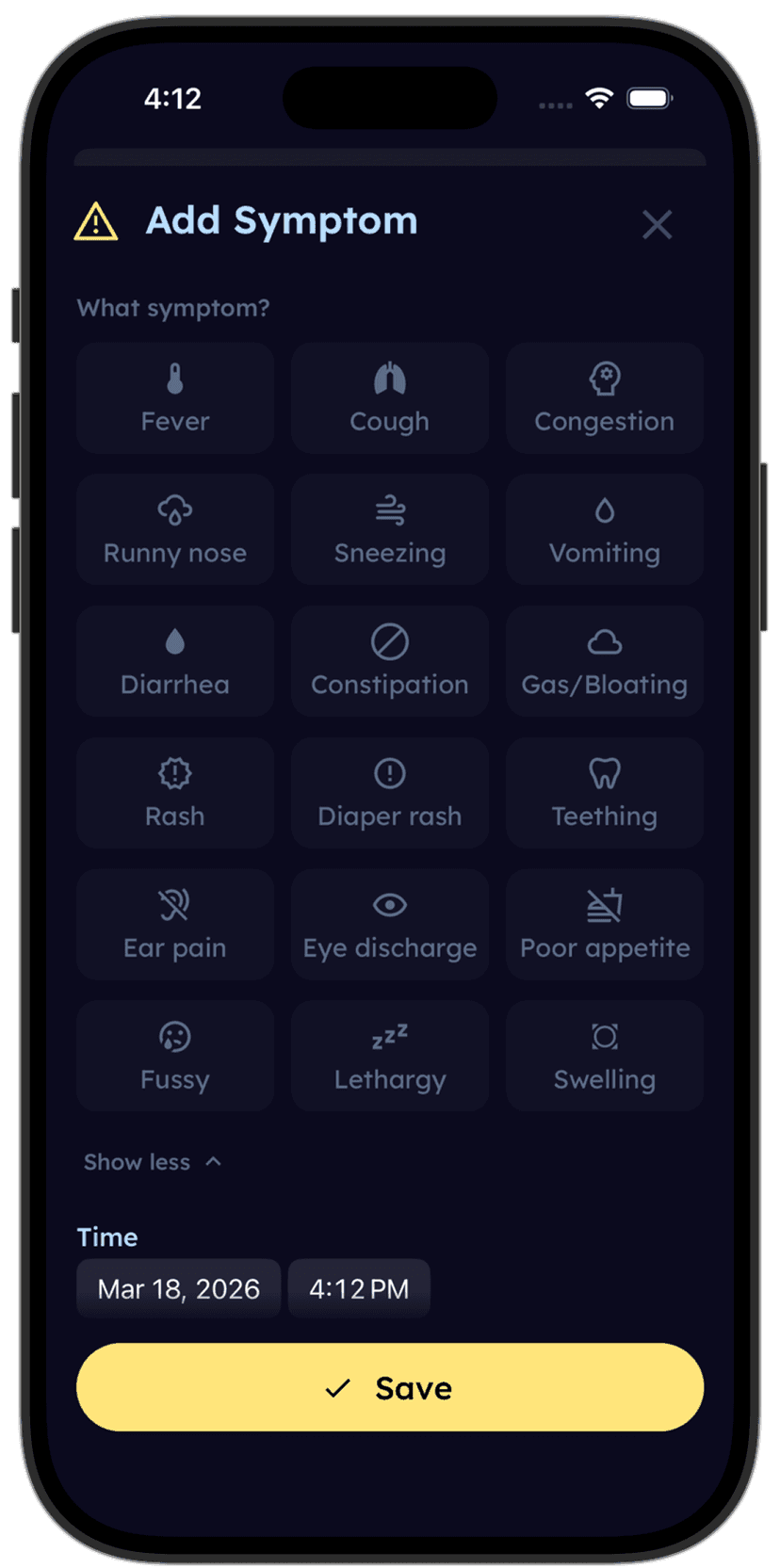
Is it the molar or something else? Data helps you tell.

When your toddler's sleep suddenly falls apart or they refuse food, having tracked data helps you connect the dots. If the disruption started right when you noticed a bump on the gum, you have your answer. tinylog tracks sleep, feeding, and milestones in one place — so you can see the full picture.

Download on the App StoreGet It On Google Play

What Your Pediatrician Wants You to Know

Even during molar teething — which can admittedly be more uncomfortable than front teeth — the evidence on what teething does and does not cause holds firm.

Molars do not cause high fever. A toddler with a temperature of 102°F who also happens to be cutting a molar likely has a viral illness. The molar might be adding to their misery, but the fever has a separate cause that may need attention.

It is okay to medicate for pain. If your toddler is clearly uncomfortable — disrupted sleep, reduced appetite, visible distress — appropriate doses of acetaminophen or ibuprofen are safe and appropriate. You do not need to "tough it out" or save medication for only the worst moments. Managing pain is good parenting, not overmedication.

Molar teething does not last forever. The worst of each molar's eruption typically lasts a few days. The tooth breaks through the gum, the inflammation subsides, and your toddler returns to baseline. If symptoms persist for more than a week, consider whether something else is going on.

Keep up with dental visits. Now that your toddler has a growing set of teeth including molars with crevices where food and bacteria can collect, regular dental care becomes increasingly important. Brushing all tooth surfaces twice daily and maintaining regular dental visits are the best protection.


Practical Tips

Molars are a different beast — and that is okay

If front teeth were relatively easy for your baby, molars may feel like a regression. They are not. Molars are simply bigger teeth breaking through more gum tissue, and the increased discomfort is a straightforward consequence of anatomy. It does not mean something is wrong, and it does not mean your toddler is overly sensitive. It means their mouth is doing a big job.

Ear pulling does not always mean ear infection

Many toddlers pull at their ears during molar teething because the pain can radiate along the jaw and refer to the ear. If your toddler is pulling at their ear but does not have a fever, is not excessively fussy beyond normal teething behavior, and has no other signs of illness, molar teething is a likely explanation. That said, if you are unsure, a quick check at the pediatrician can rule out an ear infection.

Food refusal during molar teething is normal

A toddler whose back gums are sore may refuse crunchy, hard, or textured foods because chewing hurts. This is temporary. Offer softer alternatives — yogurt, mashed potatoes, pasta, smoothies, soup — and do not stress about nutritional balance for a few days. Once the tooth is through, appetite typically returns to normal.

It is okay to use pain relief

Some parents feel guilty about giving medication for teething. There is no need. If your toddler is clearly in pain — disrupted sleep, refusing food, visibly uncomfortable — appropriate doses of acetaminophen or ibuprofen are safe and effective. You are not overmedication your child by managing legitimate pain. Your pediatrician will agree.

Related Guides

Sources

  • American Academy of Pediatric Dentistry (AAPD). Guideline on infant oral health care.
  • Macknin, M. L., et al. (2000). Symptoms associated with infant teething: a prospective study. Pediatrics, 105(4), 747-752.
  • Massignan, C., et al. (2016). Signs and symptoms of primary tooth eruption: A meta-analysis. Pediatrics, 137(3), e20153501.
  • U.S. Food and Drug Administration (FDA). (2018). Safety communication: Benzocaine and babies — not a good mix.
  • American Academy of Pediatrics (AAP). Teething pain. HealthyChildren.org.

Medical Disclaimer

This guide is for informational purposes only and is not a substitute for professional medical advice. If your baby has a fever of 100.4°F (38°C) or higher, is refusing to eat, or seems unusually unwell, contact your pediatrician — these symptoms are not typical of teething alone.

Get this guide in your inbox.
We'll email you this guide so you have the comfort strategies and timeline ready when molars start.
Track teething symptoms alongside sleep and feeding.
Download tinylog free — see the full picture with a single tap.
Download on the App StoreGet It On Google Play