
GUIDE
Momcozy M5 vs. Medela Pump In Style Hands-Free
Published on
Both are hands-free double electric pumps that let you pump without being tied to a wall. The Medela has stronger suction, a trusted hospital-grade heritage, and better durability. The Momcozy M5 costs a fraction of the price and delivers surprisingly solid performance for everyday pumping.
Medela has been the default name in breast pumps for decades — hospitals stock their equipment, and the Pump In Style is one of the most recommended models in the US. The Momcozy M5 is the scrappy upstart that keeps showing up in Amazon bestseller lists because it works well and costs way less. Both are wearable, both are cordless, and both promise hands-free pumping. The real question is whether the Medela's reputation and build quality justify spending four to five times more.
Log sessions, output, and feeding patterns
A Budget Favorite Meets the Industry Standard
The Momcozy M5 and the Medela Pump In Style Hands-Free represent two very different approaches to the same problem: how do you pump breast milk without being chained to a wall outlet and a tangle of tubes?
Medela answers that question with six decades of medical device experience, refined suction technology, and a price tag to match. The Pump In Style has been recommended by lactation consultants for years, and the hands-free version brings wearable convenience to a proven platform.
Momcozy answers that question by asking: what if the pump just costs $60? The M5 skips the legacy brand markup, ships from Amazon with two-day delivery, and quietly became one of the best-selling wearable pumps in the country.
Both pumps work. The question is whether the Medela's engineering pedigree is worth four to five times the price — or whether the M5 gives you everything you actually need.
For tips on building a pumping routine, see our exclusive pumping guide.
| Feature | Momcozy M5 | Medela Pump In Style | What It Means |
|---|---|---|---|
| Manufacturer | Momcozy | Medela | Medela is a 60-year-old Swiss medical device company. Momcozy is a fast-growing baby tech brand out of China. |
| Type | Wearable, in-bra, cordless | Wearable, in-bra, cordless | Tie. Both slip inside a nursing bra and operate without tubes or cords. |
| Max suction | ~300 mmHg | ~270 mmHg | M5 is stronger on paper. Medela's cycling rhythm is more refined and closer to a baby's natural pattern. |
| Suction modes | 2 modes (stimulation + expression), 9 levels | 2 modes (stimulation + expression), adjustable intensity | M5 offers more granular control. Medela focuses on its patented 2-Phase Expression technology. |
| Noise level | ~48-50 dB (quiet conversation) | ~45 dB (between library and conversation) | Medela is a bit quieter. Neither is silent, but both are much quieter than traditional plug-in pumps. |
| Capacity | 180 mL (6 oz) per cup | 160 mL (5.3 oz) per cup | M5 holds more per session. Helpful if you produce high volumes and hate pausing to empty. |
| Battery life | ~2 hours (3-4 sessions) | ~2 hours (3-4 sessions) | Roughly equal. Both charge via USB. Keep a portable power bank handy for long days. |
| Weight per cup | ~220 g (7.8 oz) | ~200 g (7.1 oz) | Medela is slightly lighter. The difference is small but adds up over a long pumping day. |
| Flange sizes included | 24 mm (others sold separately) | 21 mm and 24 mm included | Medela includes two sizes. Correct flange fit matters more than any other spec on this list. |
| Closed system | Yes — backflow protector | Yes — backflow protector | Tie. Both prevent milk from entering the motor. More hygienic and easier to keep clean. |
| Parts to clean | 5 parts per cup | 5 parts per cup | Tie. Both disassemble easily. Plan for about three minutes of washing per side per session. |
Suction: Raw Power vs. Refined Rhythm
The Momcozy M5 technically has stronger max suction — about 300 mmHg compared to Medela's 270 mmHg. On paper, that looks like the M5 wins. In practice, suction strength is only part of the story.
Medela's 2-Phase Expression technology is the result of years of clinical research into how babies actually nurse. The cycling pattern — fast and light to trigger letdown, then slower and deeper to extract milk — is calibrated to mimic a baby's natural rhythm. Many lactation consultants say this matters more than raw mmHg.
The M5 also has a two-phase system, and it works. But the transition between phases feels less refined. Some parents report needing to manually switch modes on the M5, while the Medela auto-transitions more reliably.
Here's what matters most, though: flange fit trumps everything. A pump with 300 mmHg and the wrong flange size will underperform a pump with 200 mmHg and a perfect fit. If you haven't been sized by a lactation consultant, do that before obsessing over suction specs.
Durability: Where Medela Pulls Ahead
This is where the price difference starts making sense. The Medela Pump In Style is built like a medical device — because it is one. The motor maintains consistent suction across months of daily use. Parents who pump 6-8 times per day for a year regularly report that their Medela still performs like new at the end.
The Momcozy M5 holds up well for light to moderate use. But some heavy users — particularly exclusive pumpers doing 6+ sessions daily — report that suction starts declining after 3-4 months. Silicone parts may need replacing sooner, and the motor can lose power over time with intensive use.
If you pump once or twice a day as a supplement, the M5's durability is perfectly fine. If you pump full-time and need a workhorse that won't fade, the Medela is the safer bet.
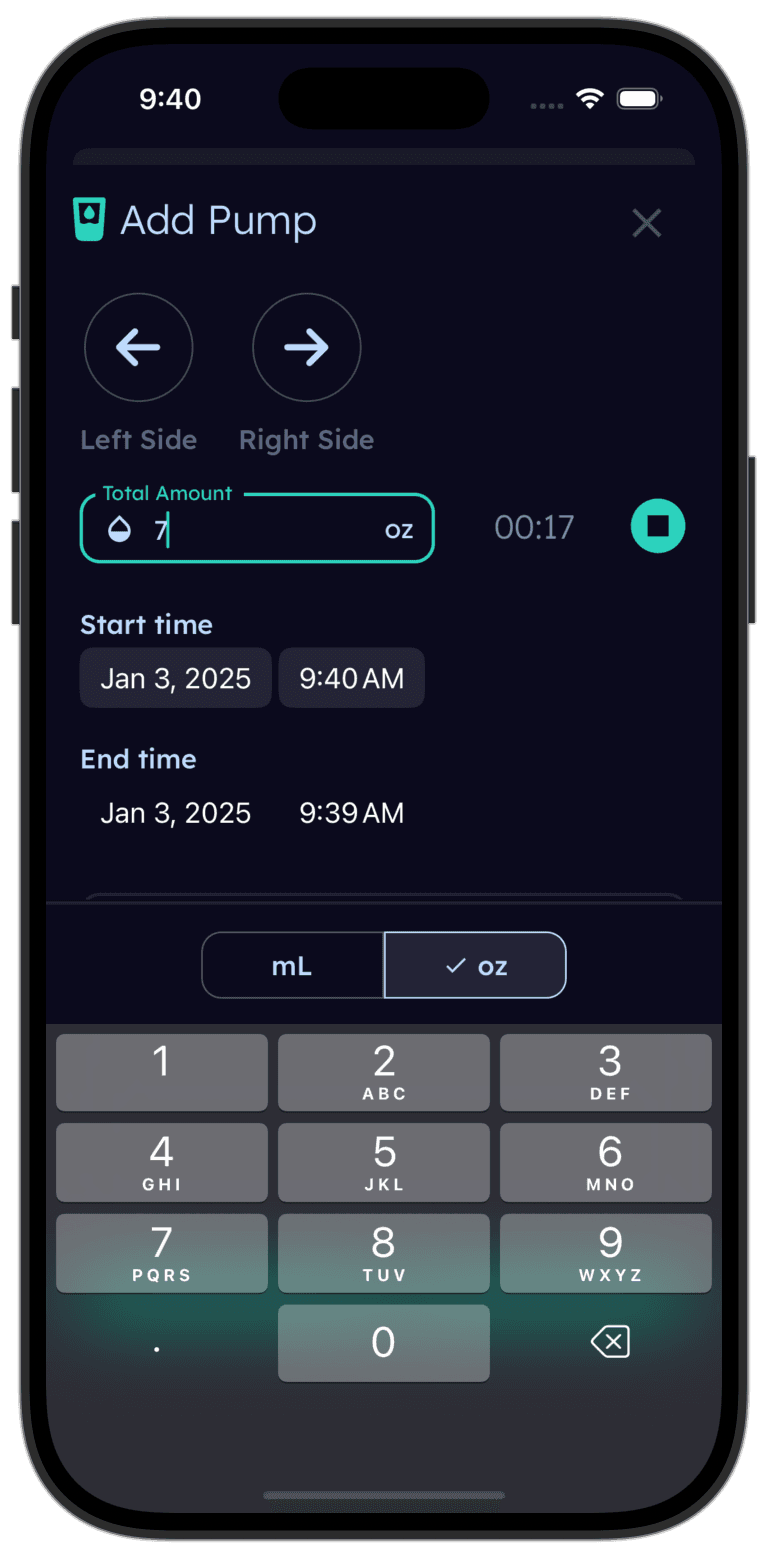
Tinylog tracks pumping sessions so you can spot supply trends.
Log each pump with duration and volume, see daily and weekly output totals, and bring the data to your lactation consultant. Works whether you pump with a Momcozy, Medela, or any other pump.


Noise and Comfort: Small Differences That Add Up
The Medela runs at about 45 dB — noticeably quieter than the M5's 48-50 dB. That 3-5 dB gap sounds small, but decibels are logarithmic. The Medela is roughly 30-40% quieter in perceived volume. In a silent room, you'll hear both. In a busy office, neither will stand out.
Weight is close — the Medela is about 20 grams lighter per cup. Not a dramatic difference, but when you're wearing these in your bra for 20-30 minutes at a time, multiple times a day, small weight savings add up.
The Medela also ships with two flange sizes (21 mm and 24 mm), so you can test fit right out of the box. The M5 comes with 24 mm only. Since roughly half of pumping parents need a size other than 24 mm, there's a decent chance you'll need to buy a separate flange for the M5 anyway — which eats into the cost savings.
| Product | Typical Price | Frequency | Ongoing Cost |
|---|---|---|---|
| Momcozy M5 (double, wearable) | $55-$70 | One-time cost | $0 after purchase |
| Medela Pump In Style Hands-Free (double, wearable) | $280-$350 | One-time cost | $0 after purchase |
| Replacement parts (M5, per set) | $12-$18 | Every 2-3 months | ~$5-$9/mo |
| Replacement parts (Medela, per set) | $18-$28 | Every 2-3 months | ~$7-$14/mo |
Price: The Real Deciding Factor for Most Families
The M5 costs $55-$70. The Medela Pump In Style Hands-Free costs $280-$350. That's a $210-$280 difference for a product you'll use for six to twelve months.
A few things that change the math:
- Insurance coverage. This is the big one. If your plan covers the Medela, get the Medela. The price gap vanishes and you get the better-built pump for free (or close to it). Check with Aeroflow or Edgepark to see your options.
- Replacement parts. Medela parts cost a bit more per set ($18-$28 vs $12-$18). Over six months, that adds $10-$30 to the running cost difference.
- How often you pump. If you pump once or twice a day, the M5 will last the distance just fine. If you pump 6+ times daily, the Medela's durability could save you from buying a replacement pump midway through.
- Second pump strategy. Some parents buy the Medela as their primary daily pump and the M5 as a travel or backup pump. At $60, the M5 is cheap enough to be a spare.
If you're paying out of pocket and pumping part-time, the M5 is hard to beat on value. If insurance covers the Medela, there's no reason not to take it.
Choose the Momcozy M5 If
- Budget is a top priority and you want a capable pump without spending $300+
- You prefer a larger collection cup (180 mL vs 160 mL) so you can pump longer without emptying
- You want more suction levels to fine-tune intensity for comfort
- You already use a separate tracking app and don't need built-in smart features
- You want an affordable second pump for on-the-go while keeping a stronger pump at home
- Your insurance does not cover wearable pumps and you're paying out of pocket
Choose the Medela Pump In Style If
- You want a pump from a company with decades of clinical research behind its suction technology
- Your insurance covers the Medela Pump In Style — making the price gap irrelevant
- You plan to exclusively pump and need a motor that holds up across 6-8 sessions per day for months
- You want two flange sizes in the box so you can test fit right away
- Quieter operation matters because you pump in meetings, shared offices, or near a sleeping baby
Where to Buy
The Momcozy M5 Wearable Breast Pump (~$60 on Amazon) delivers strong suction, a roomy 180 mL cup, and genuine hands-free convenience at a price that feels almost too good. It's an ideal pick for part-time pumping, as a backup pump, or when you're paying out of pocket and need something that works without breaking the bank.
The Medela Pump In Style Hands-Free (~$300 retail) is the pump lactation consultants have recommended for years, now in a wearable form factor. Medela's 2-Phase Expression technology, durable motor, and included flange sizes make it the stronger choice for heavy daily use. Check your insurance first — many plans cover it fully.
Our honest advice: call your insurance before you buy anything. If the Medela is covered, take it. If you're paying cash, the M5 punches well above its price.
Tinylog earns a small commission on purchases made through these links, at no cost to you.
Before you buy, it's worth checking promo.new for a deal. It doesn't cover everything, but we've had good luck with it.
The Bottom Line
The Momcozy M5 and the Medela Pump In Style Hands-Free are both capable wearable breast pumps, but they serve different situations:
Momcozy M5 wins on price, cup capacity, and suction granularity. It's the practical choice for parents who pump a few times a day, want an affordable second pump, or need something good without the premium price tag.
Medela Pump In Style wins on motor durability, suction refinement, noise level, flange inclusion, and the confidence that comes from decades of clinical research. It's the workhorse choice for exclusive pumpers and anyone whose insurance picks up the tab.
For most families, the deciding factor is insurance. Covered Medela? Easy call. Paying out of pocket? The M5 does the job well for a fraction of the cost.
If you're tracking pumping output — which is especially helpful when building supply or troubleshooting low output — Tinylog makes it easy to log sessions, spot trends, and share data with your lactation consultant.
Related Guides
- Exclusive Pumping — How to build and maintain supply when you pump full-time
- Pumping Schedule for Working Parents — Realistic schedules for the office, hybrid, and remote work
- How Much Milk Should I Be Pumping? — Output expectations by age and frequency
- How to Increase Milk Supply — Evidence-based strategies that actually work
Sources
- Medela.com. "Pump In Style with MaxFlow Hands-Free Breast Pump — Product Specifications." 2026.
- Momcozy.com. "Momcozy M5 Wearable Breast Pump — Product Information." 2026.
- Journal of Human Lactation. "Comparison of Milk Output Using Wearable vs. Traditional Electric Breast Pumps." 2025.
- Wirecutter (NYT). "The Best Breast Pumps." nytimes.com/wirecutter, 2026.
- Exclusive Pumping. "Medela Pump In Style Review." exclusivepumping.com, 2025.
- Healthline Parenthood. "Momcozy M5 Review." healthline.com, 2025.
- ACA Breast Pump Coverage Guide. healthcare.gov, 2026.
This guide is for informational purposes only. Breast pump selection depends on your individual anatomy, supply needs, and pumping goals. If you have concerns about milk supply or pumping effectiveness, consult a board-certified lactation consultant (IBCLC).
Frequently asked questions
- Is the Momcozy M5 strong enough compared to the Medela Pump In Style?
- The Momcozy M5 actually has a slightly higher maximum suction rating (around 300 mmHg) than the Medela Pump In Style (around 270 mmHg). However, Medela's motor cycling pattern is more refined and tends to mimic a baby's natural nursing rhythm more effectively. Real-world output depends heavily on flange fit, not just raw suction numbers.
- Can I use the Medela Pump In Style Hands-Free with standard Medela bottles?
- The Pump In Style MaxFlow Hands-Free is designed around its own wearable collection cups. You cannot swap in standard Medela PersonalFit flanges and bottles the way you could with the older Pump In Style Advanced. If you need that flexibility, consider the Medela Freestyle Flex instead.
- Does insurance cover the Momcozy M5 or Medela Pump In Style?
- Most US insurance plans cover at least one breast pump under the ACA. The Medela Pump In Style is widely covered because it is a well-established medical device. The Momcozy M5 has less insurance coverage since it is newer and less established with insurers. Check with your provider or a pump-through-insurance service like Aeroflow to see which models qualify.
- Which pump is better for exclusive pumping?
- The Medela Pump In Style generally has the edge for exclusive pumping due to its more refined suction cycling and stronger motor durability across 6-8 daily sessions. The Momcozy M5 works well for occasional or supplemental pumping but some exclusive pumpers report declining suction after several months of heavy use.
- How do you clean the Momcozy M5 and Medela Pump In Style?
- Both pumps disassemble into about five parts per cup for cleaning. The M5 parts are dishwasher-safe on the top rack. Medela recommends hand washing with their Quick Clean soap, though many parents use the dishwasher anyway. Both should be cleaned after every session to prevent bacteria growth.
- Can I pump with one side while nursing on the other?
- Yes, both pumps are compact enough to wear in one cup while nursing your baby on the other breast. This is a great way to collect letdown milk and increase total output per feeding. The Medela sits slightly lower-profile in the bra, making it a bit easier to hold baby close while wearing it.