
GUIDE
Momcozy S12 Pro vs. Medela Pump In Style Hands-Free
Published on
The Medela Pump In Style is the stronger, more established pump with better insurance coverage. The Momcozy S12 Pro is lighter, simpler, and dramatically cheaper. For casual pumpers on a budget, the Momcozy wins. For exclusive pumpers who need raw suction power, the Medela is the safer bet.
These two pumps sit at opposite ends of the wearable breast pump market. The Momcozy S12 Pro is the budget darling that took social media by storm. The Medela Pump In Style Hands-Free is the latest evolution of one of the most trusted pump brands in the US. They both go in your bra, they both free your hands — but the similarities end there.
Log sessions, output, and feeding patterns
Two Very Different Pumps That Go in the Same Bra
The Momcozy S12 Pro and the Medela Pump In Style Hands-Free are both wearable breast pumps. They both tuck inside your nursing bra, they both run on rechargeable batteries, and they both let you pump while eating a sandwich or answering emails. That is roughly where the overlap ends.
The Momcozy is the scrappy budget option that blew up on social media. The Medela is the veteran — backed by hospital lactation programs and decades of R&D. They solve the same problem at wildly different price points, and the "right" choice depends on how you pump, how often, and who is paying for it.
We compared suction power, noise, capacity, portability, and cost so you can spend less time researching and more time doing literally anything else.
For tips on building a pumping routine around your work schedule, see our pumping schedule for working parents guide.
| Feature | Momcozy S12 Pro | Medela Pump In Style | What It Means |
|---|---|---|---|
| Manufacturer | Momcozy | Medela | Medela has been in the pump game for decades. Momcozy is a fast-growing direct-to-consumer newcomer. |
| Price (MSRP) | ~$55–$70 (double) | ~$180–$230 (double) | The Momcozy costs about a third of the Medela. This is the single biggest difference. |
| Max suction | ~180–200 mmHg | ~270 mmHg | Medela pulls harder. Matters for exclusive pumpers and parents who need strong suction to trigger letdown. |
| Suction levels | 12 levels | 9 levels | Momcozy offers more granularity for fine-tuning comfort. Both cover an adequate range. |
| Pumping modes | Stimulation + expression (manual switch) | Stimulation + expression (manual switch) | Tie. Both require you to toggle between modes yourself. |
| Noise level | ~48 dB | ~55–60 dB | The Momcozy is noticeably quieter. The Medela has a distinct motor hum at higher settings. |
| Battery life | ~120 min (3–4 sessions) | ~120 min (3–4 sessions) | Roughly the same. Both get through a day of pumping on a single charge. |
| Capacity per cup | 6 oz | 5 oz | Momcozy holds a bit more milk per cup. Helpful for high-output sessions. |
| Weight per cup | ~7.4 oz | ~9.2 oz | The Momcozy is lighter. Less strain on your bra and less noticeable to wear. |
| Parts to clean | ~5 parts | ~7–8 parts | Fewer parts for the Momcozy means less time standing at the sink between sessions. |
| Flange sizes included | 24mm (others sold separately) | 21mm, 24mm | Medela includes two sizes. Momcozy ships one — you may need to buy extras for proper fit. |
| Insurance coverage | Limited — growing slowly | Widely covered by US insurance plans | Medela wins here. Many parents get the Pump In Style for free or with a small copay through insurance. |
Suction Power: Where the Medela Earns Its Price Tag
This is the spec where the Medela clearly leads. The Pump In Style Hands-Free maxes out around 270 mmHg of suction. The Momcozy S12 Pro tops out closer to 180–200 mmHg. That gap is meaningful if you rely on strong suction to trigger your letdown reflex.
For exclusive pumpers doing 6–8 sessions a day, that extra pulling power can make the difference between emptying the breast efficiently and leaving milk behind — which over time affects supply. Lactation consultants will often point parents toward the Medela (or a Spectra S1) for exactly this reason.
But here is the thing most pump spec sheets leave out: suction strength is not the only variable that determines output. Flange fit, pump cycling speed, and your body's individual response all matter at least as much. Plenty of parents pull the same volume on a Momcozy that they do on a Medela. You just will not know until you try.
If you are an occasional pumper — a few sessions a day, building a small freezer stash, supplementing daycare bottles — the Momcozy's suction is likely more than enough.
Noise: The Momcozy Takes This One
The Momcozy S12 Pro runs at about 48 dB. The Medela Pump In Style Hands-Free sits closer to 55–60 dB depending on the suction level. That difference is noticeable.
At 48 dB, the Momcozy sounds like a quiet conversation across the room. At 55–60 dB, the Medela has a distinct rhythmic motor hum that anyone nearby will hear. Neither pump is as loud as a traditional tabletop pump (which can hit 65+ dB), but the Momcozy is clearly the better choice if you pump during meetings, in shared spaces, or while your baby naps in the same room.
The Medela does get quieter at lower suction settings, but if you need the higher levels for adequate output, you are stuck with the louder motor.
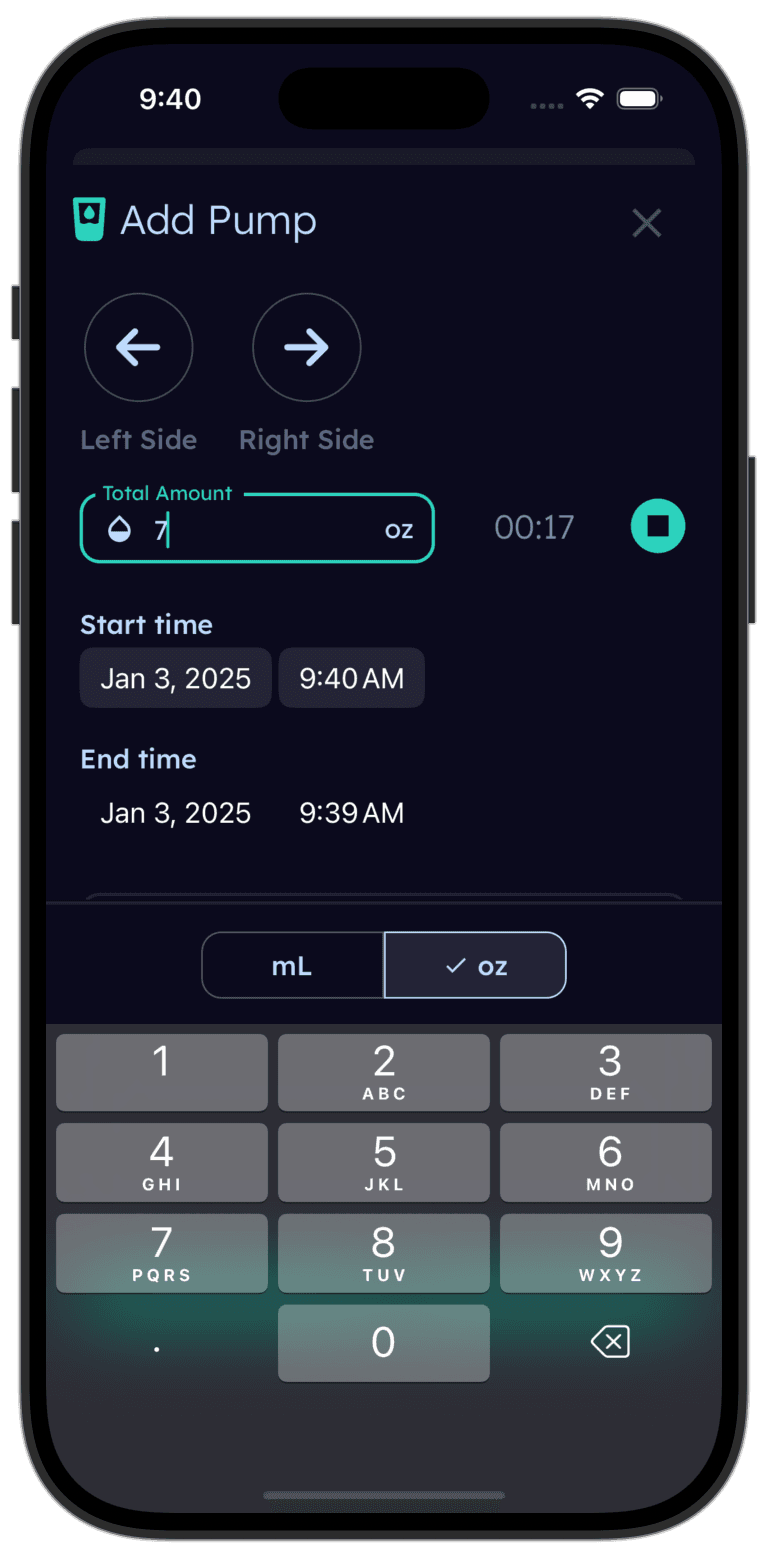
Tinylog tracks pumping sessions so you can spot supply trends.
Log pump times and output, track ounces per day across weeks, and share your data with your lactation consultant. Works whether your pump has an app or not.


Portability and Comfort
Both pumps are wearable, but the Momcozy is lighter and more compact. Each Momcozy cup weighs about 7.4 oz, while the Medela cups come in around 9.2 oz. That might not sound like a big deal on paper, but when the cups are hanging off your chest for 20–30 minutes, the extra weight adds up. A heavier pump also puts more strain on your bra elastic and is more likely to shift during movement.
The Momcozy is also slightly less bulky in profile. Under a hoodie or nursing top, it basically vanishes. The Medela is a touch wider and may be visible under tighter clothing.
For air travel, car pumping, or tossing a pump in your diaper bag, the Momcozy wins on convenience. There is no external tubing, fewer parts to keep track of, and the whole setup fits in a ziplock bag.
The Medela does ship with two flange sizes (21mm and 24mm) compared to the Momcozy's single 24mm insert. Getting your flange size right is the most important thing you can do for comfort and output, so the Medela saves you a step. If 24mm fits you perfectly, this does not matter. If it does not, you will need to order Momcozy-compatible flanges separately.
| Product | Typical Price | Cost Structure | Notes |
|---|---|---|---|
| Momcozy S12 Pro (double, retail) | $55–$70 | One-time cost | Replacement parts ~$10–$15 per set |
| Medela Pump In Style Hands-Free (double, retail) | $180–$230 | One-time cost | Replacement parts ~$15–$25 per set |
| Momcozy S12 Pro (via insurance / DME) | $0–$50 copay | One-time cost | Coverage varies — fewer plans list the Momcozy |
| Medela Pump In Style (via insurance / DME) | $0–$40 copay | One-time cost | One of the most commonly covered pumps in the US |
The Insurance Factor
Here is the thing that can flip the entire calculation: insurance coverage. Under the ACA, most US health plans cover at least one breast pump. The Medela Pump In Style is one of the most commonly listed pumps in insurance formularies. Many parents get it for free or with a copay under $40.
The Momcozy S12 Pro has less insurance coverage. Some DME suppliers are starting to carry it, but availability is spotty. If your plan does not list the Momcozy, you are paying the full $55–$70 out of pocket.
So the math can go like this: if your insurance covers the Medela, you might pay $0–$40 for a pump that retails for $200+. That is hard to beat — even with the Momcozy's lower retail price.
Before you buy anything, check your insurance. Use a service like Aeroflow or Edgepark to see what your plan covers. It takes five minutes and can save you real money.
Choose the Momcozy S12 Pro If
- You are paying out of pocket and want a reliable wearable pump without dropping $200+
- Quiet pumping matters — you pump near a sleeping baby or during calls
- You want the lightest possible pump that disappears under your clothes
- Fewer parts to wash is a priority (because who has time for that)
- You already have a hospital-grade pump and need a portable backup
- You want more suction levels to fine-tune comfort during sessions
Choose the Medela Pump In Style If
- You need strong suction — you are an exclusive pumper or have a harder time triggering letdown
- Your insurance covers the Medela and brings your out-of-pocket cost close to zero
- You trust the brand and want a pump backed by decades of clinical use
- You want two flange sizes in the box without ordering extras separately
- You plan to pump 6+ times a day and need a motor that holds up to heavy daily use
Where to Buy
The Momcozy S12 Pro (~$60 for the double set) is one of the best deals in wearable pumping — quiet motor, lightweight design, solid suction for the price, and minimal parts to clean. If you are paying out of pocket and want to try wearable pumping without a major financial commitment, this is the one to grab.
The Medela Pump In Style Hands-Free (~$200 retail, often free through insurance) brings noticeably stronger suction, two flange sizes in the box, and the weight of a brand that has been in hospitals for decades. If your insurance covers it, this is likely the smarter pick — you get a more powerful pump at little or no cost to you.
Our honest advice: check your insurance first. If the Medela is covered, take it. If you are paying out of pocket and do not need maximum suction, the Momcozy gets the job done at a fraction of the cost.
Tinylog earns a small commission on purchases made through these links, at no cost to you.
Before you buy, it's worth checking promo.new for a deal. It doesn't cover everything, but we've had good luck with it.
The Bottom Line
The Momcozy S12 Pro and Medela Pump In Style Hands-Free serve different pumping parents well. The differences are real:
Medela Pump In Style edges out on suction power, insurance availability, flange size options, and durability for heavy daily use.
Momcozy S12 Pro edges out on price, noise level, weight, portability, and simplicity of cleanup.
If you pump occasionally and want something lightweight and affordable, the Momcozy is a great buy. If you pump frequently, need strong suction, or your insurance covers the cost, the Medela is the better tool for the job.
If you are tracking your pump output — which is worth doing to catch supply dips early — Tinylog makes it easy to log sessions and watch your numbers over time, regardless of which pump you use.
Related Guides
- Pumping Schedule for Working Parents — How to maintain supply when you go back to work
- Exclusive Pumping — A complete guide to EP life
- How Much Milk Should I Be Pumping? — Output expectations by age
- How to Increase Milk Supply — Evidence-based strategies that actually work
Sources
- Momcozy.com. "Momcozy S12 Pro Wearable Breast Pump — Product Specifications." 2026.
- Medela.com. "Medela Pump In Style with MaxFlow Hands-Free — Product Information." 2026.
- Mommyhood101. "Best Wearable Breast Pumps of 2026, Tested & Reviewed." mommyhood101.com.
- Wirecutter (New York Times). "The Best Breast Pumps." nytimes.com/wirecutter, 2026.
- Aeroflow Breastpumps. "Insurance-Covered Breast Pumps — Eligibility Guide." aeroflowbreastpumps.com, 2026.
- Consumer Reports. "Breast Pump Buying Guide." consumerreports.org, 2026.
- Exclusive Pumping. "Wearable Breast Pump Comparison." exclusivepumping.com, 2025.
This guide is for informational purposes only and is not medical or lactation advice. Pump performance varies based on individual anatomy, flange fit, and supply. If you are experiencing low supply or pain while pumping, consult a board-certified lactation consultant (IBCLC).
Frequently asked questions
- Is the Medela Pump In Style stronger than the Momcozy S12 Pro?
- Yes. The Medela Pump In Style maxes out around 270 mmHg, while the Momcozy S12 Pro tops out around 180–200 mmHg. In practice, output depends on flange fit and your body's response to the pump cycle, but parents who need strong suction to trigger letdown tend to get more from the Medela.
- Can I use the Momcozy S12 Pro as my only pump?
- Many parents do. The Momcozy S12 Pro works as a primary pump for parents who respond well to it. However, lactation consultants often recommend keeping a hospital-grade or traditional electric pump on hand during the first 6–8 weeks while supply is being established.
- Does insurance cover the Momcozy S12 Pro or Medela Pump In Style?
- Most US insurance plans cover at least one breast pump under the ACA. The Medela Pump In Style is widely available through DME suppliers and insurance formularies. The Momcozy S12 Pro has less insurance coverage but is gaining ground. Check with your provider or use Aeroflow to see what is available under your plan.
- Which pump is quieter?
- The Momcozy S12 Pro is quieter at around 48 dB compared to the Medela Pump In Style at roughly 55–60 dB. Neither is whisper-quiet, but the Momcozy is noticeably less audible in a quiet room.
- How many parts do I have to clean with each pump?
- The Momcozy S12 Pro has about 5 parts to disassemble and clean. The Medela Pump In Style Hands-Free has about 7–8 parts including the collection cups, membranes, and valves. More parts means more time at the sink after every session.
- Can I travel with both pumps?
- Both pumps are portable and battery-powered. The Momcozy S12 Pro is lighter and more compact — it fits entirely inside your bra with no external tubing. The Medela Pump In Style Hands-Free is also wearable but slightly bulkier. For airplane and car travel, the Momcozy is easier to pack and use on the go.