
Follow the AAP minimum, not the internet's opinion
Room-share for at least six months. That's the evidence-based minimum. After that, the decision is yours. Don't let anyone guilt you in either direction.
GUIDE
Published on
The AAP recommends room-sharing for at least six months to reduce SIDS risk. After that, moving to a separate room is safe and may improve sleep for both parents and baby.
The timeline is clearer than the internet makes it seem. Here's the research.
Log sleep before and after the move
“Room sharing has been shown to decrease the risk of SIDS by about 50%.”
 Dr. Heidi Szugye, DO, Board-Certified Pediatrician, Cleveland Clinic
The AAP's room-sharing recommendation is one of the clearest guidelines in pediatric sleep: share a room with your baby for at least the first six months, ideally twelve, but on a separate sleep surface. The evidence for this comes from multiple studies showing that room-sharing reduces SIDS risk by approximately 50%.
What the AAP doesn't always emphasize is what happens after six months. A 2017 study by Paul et al. in Pediatrics followed 230 families and found that babies who were still room-sharing at 9 months slept an average of 40 fewer minutes per night than babies who had transitioned to their own room. They also had later bedtimes and were more likely to be brought into the parents' bed during the night.
This doesn't mean you should rush the transition. SIDS risk drops significantly after six months but doesn't reach near-zero until after one year. The sweet spot for most families — based on both safety data and sleep quality research — is somewhere between six and nine months, roughly when many babies are also starting to sleep through the night. Your pediatrician can help you decide based on your baby's specific risk factors.
| Aspect | Room-Sharing | Separate Room |
|---|---|---|
| SIDS risk reduction | Associated with up to 50% lower SIDS risk. AAP recommends for at least 6 months. | Safe after 6 months when SIDS risk has dropped. No significant added risk for healthy babies past this age. |
| Baby sleep duration | Babies may sleep slightly less — Paul et al. (2017) found 40 fewer minutes per night at 9 months. | Babies tend to sleep longer — fewer disruptions from parental movement and sounds. |
| Night feeds | Easier and faster — baby is right there. Supports breastfeeding duration. | Requires getting up and walking to baby's room. May feel like more effort per feed. |
| Parent sleep quality | Often worse — parents wake to every baby sound, including normal sleep noises. | Often better — parents don't hear every grunt and sigh. Only wake for real cries. |
| Self-settling | Parents tend to respond quickly to every noise, which may prevent baby from learning to self-settle. | Slight delay in response gives baby a chance to self-settle before parent intervenes. |
| Convenience | Everything happens in one room — easier for night feeds and quick checks. | Requires a monitor and more walking. Less convenient but more separation. |
| Intimacy | Baby in the room can affect the parents' relationship and sense of private space. | Parents regain their bedroom. This matters more than people admit. |
The SIDS risk reduction alone makes this the right choice for at least the first six months.
These challenges tend to intensify as babies get older and more sensitive to environmental stimuli.
Most families report improved sleep for everyone within 1-2 weeks of the transition.
The initial anxiety is normal and usually resolves within the first week.
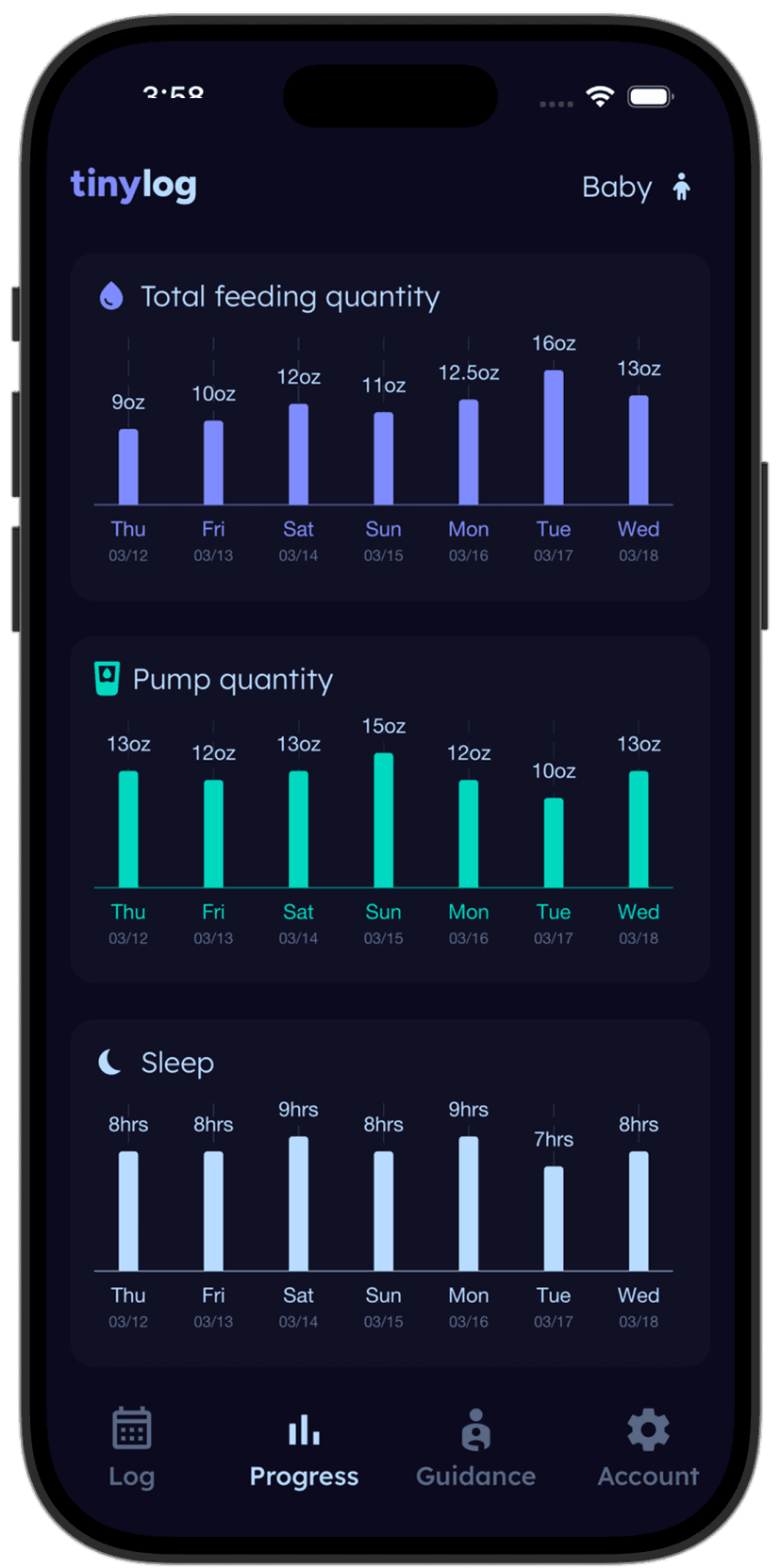
Track sleep stretches with Tinylog before and after the room transition. The trends view shows you exactly how sleep duration changes — no guessing required.


Most parents overthink this transition. Here's what typically happens: you move the crib to baby's room, keep the same bedtime routine, use a monitor, and wait. Some babies sleep better from the very first night — because they're no longer woken by your movements, snoring, or phone notifications. Others take 3-7 days to adjust to the new environment.
The key factors for a smooth transition are consistency and timing. Keep the bedtime routine identical — same bath, same book, same sleep sack, same sound machine if you use one. The only thing that changes is the room. If your baby has positive sleep associations (a dark room, white noise, a familiar sleep sack), those travel with them.
Timing matters too. Don't transition during a sleep regression, illness, or major developmental leap. Pick a boring week where nothing else is changing. And start on a Friday night if you can — that gives you the weekend to adjust before the workweek hits.
If your baby is under six months, room-share. The SIDS data is clear enough that this isn't really a debate. After six months, consider these factors:
Is everyone sleeping poorly? If you and your baby are waking each other up multiple times a night with normal sleep sounds, the room-sharing may be hurting more than helping at this point.
Is your baby developmentally ready? Babies who can roll both ways, have good head control, and are past the highest-risk SIDS window (under 4 months) are generally safer in their own room.
Are you ready? Parental readiness matters. A video monitor helps enormously with the anxiety. Most parents report that after the first few nights, they wonder why they waited so long.
Room-share for at least six months. That's the evidence-based minimum. After that, the decision is yours. Don't let anyone guilt you in either direction.
Log a week of sleep data while room-sharing, then a week after the transition. Most families are surprised by how much sleep improves for everyone — the data removes the guesswork.
If you're nervous about the transition, start by having your baby nap in their own room for a week. This builds familiarity with the space before the bigger change of overnight sleep.
This guide is for informational purposes only and is not a substitute for professional medical advice. Consult your pediatrician for guidance specific to your baby.