
GUIDE
Similac 360 Total Care vs. Enfamil NeuroPro
Published on ·Updated on
Both are excellent, nutritionally complete infant formulas. Similac 360 Total Care stands out with 5 HMOs for immune support and no palm olein oil. Enfamil NeuroPro leads with MFGM and higher DHA for brain development. Most babies thrive on either one.
Similac and Enfamil together make up roughly 70–80% of the US infant formula market. Both are safe, FDA-regulated, and backed by decades of research. The real differences come down to their approach to brain development support and immune ingredients — and how your specific baby tolerates each one. Your pediatrician can help you choose, but you honestly cannot go wrong with either.
Log bottles, amounts, and feeding times
“You usually don't need the most expensive formula to have a healthy, happy baby.”
 Dr. Matthew Badgett, MD, Pediatrician, Cleveland Clinic
Two Excellent Formulas — One Real Decision
First things first: if you're formula feeding, you're doing a great job. Full stop. Whether it's by choice, by necessity, or a combination of both — your baby is getting complete nutrition, and that's what matters.
Now, let's talk about the two formulas you're probably staring at in the store aisle at this very moment.
Similac 360 Total Care and Enfamil NeuroPro are the two best-selling standard infant formulas in America. Both are nutritionally complete, FDA-regulated, and backed by extensive clinical research. Your baby will thrive on either one.
But they take meaningfully different approaches to two things parents care about most: brain development and immune support. Enfamil bets on MFGM and higher DHA for the brain. Similac bets on 5 HMOs for the immune system. That's the core tradeoff, and the rest of the differences flow from there.
For more on how much formula your baby needs by age, check out our baby feeding chart.
| Feature | Similac 360 Total Care | Enfamil NeuroPro | What It Means |
|---|---|---|---|
| Manufacturer | Abbott | Reckitt / Mead Johnson | Both are well-established, FDA-regulated formula manufacturers with decades of research. |
| Protein source | Nonfat milk + whey protein concentrate (48:52 whey-to-casein) | Nonfat milk + whey protein concentrate (60:40 whey-to-casein) | Enfamil's 60:40 ratio is closer to mature breast milk. Similac has more casein, which digests more slowly. |
| Carbohydrate source | Lactose | Lactose | Tie. Both use lactose as the sole carbohydrate — no corn syrup solids or maltodextrin. |
| Fat sources | High oleic safflower oil, soy oil, coconut oil — no palm olein oil | Palm olein oil, coconut oil, soy oil, high oleic sunflower oil | Similac's no-palm-oil blend may support better calcium absorption and softer stools. |
| DHA content | DHA included (lower amount) + Lutein + Vitamin E (OptiGRO blend) | 17 mg DHA per 100 kcal — higher amount | Enfamil has more DHA. Both source DHA from C. cohnii oil (algal). |
| Brain development focus | OptiGRO (DHA, Lutein, Vitamin E) | MFGM (Milk Fat Globule Membrane) + DHA | Enfamil's MFGM is a unique component found in breast milk, clinically studied for cognitive benefits. |
| Immune support / Prebiotics | 5 HMOs (Human Milk Oligosaccharides) | 2 HMOs + dual prebiotic blend (PDX/GOS) | Similac has more HMO types. Enfamil uses a different prebiotic approach. Both support gut and immune health. |
| Palm olein oil | No | Yes | Palm olein oil may reduce calcium absorption and cause firmer stools in some babies. |
| Mixing quality | Dissolves more completely, less foam | Can be foamier when shaken | Similac mixes more smoothly. Enfamil's foam can cause babies to swallow air and get gassy. |
| Taste | Slightly sweeter taste | Slightly more neutral/milky taste | Babies often have a preference. Some take to one immediately and reject the other. Trial and error. |
| Available forms | Powder, ready-to-feed, concentrated liquid | Powder, ready-to-feed, single-serve packets | Both offer multiple formats. Ready-to-feed is most convenient (and expensive). Powder is best value. |
| Non-GMO | Yes — non-GMO ingredients | No non-GMO claim on standard NeuroPro | If non-GMO matters to you, Similac has a slight edge here. |
The Ingredient Difference That Matters Most: HMOs vs. MFGM
This is where the two formulas genuinely diverge, and it's worth understanding what each one is actually doing.
Similac 360 Total Care includes 5 types of HMOs (Human Milk Oligosaccharides). HMOs are prebiotics naturally found in breast milk that feed beneficial gut bacteria and support immune development. Breast milk contains over 150 types of HMOs — Similac includes 5 of the most studied ones. This is the highest HMO count in any US formula as of this writing.
Enfamil NeuroPro includes MFGM (Milk Fat Globule Membrane), a fat-protein complex naturally found in breast milk that surrounds milk fat droplets. Research suggests MFGM supports cognitive development — in clinical studies, babies fed formula with MFGM scored comparably to breastfed babies on certain cognitive assessments. Enfamil also includes 2 HMOs, plus a dual prebiotic blend (PDX and GOS) for digestive support.
The honest take: both ingredients are genuinely backed by science, and both are found naturally in breast milk. If you had to oversimplify — Similac leans immune, Enfamil leans brain. But both formulas provide complete nutrition for healthy infant development. Talk to your pediatrician if you want guidance based on your baby's specific needs.
The Palm Oil Question
This one comes up constantly, and it's worth addressing directly.
Enfamil NeuroPro contains palm olein oil. Similac 360 Total Care does not.
Why does this matter? Some clinical studies have shown that palm olein oil can form insoluble calcium soaps in the gut, which may reduce calcium absorption and lead to firmer, harder stools. This is why some parents report more constipation with Enfamil compared to Similac.
However — and this is an important however — Enfamil is formulated to account for this. The total calcium in the formula is adjusted to ensure adequate absorption. Millions of babies drink Enfamil NeuroPro with perfectly normal stools.
If your baby tends toward constipation, Similac's no-palm-oil formula might be worth trying. If your baby has no stool issues on Enfamil, there's no reason to switch. Your pediatrician can help you sort this out if stools become a concern.
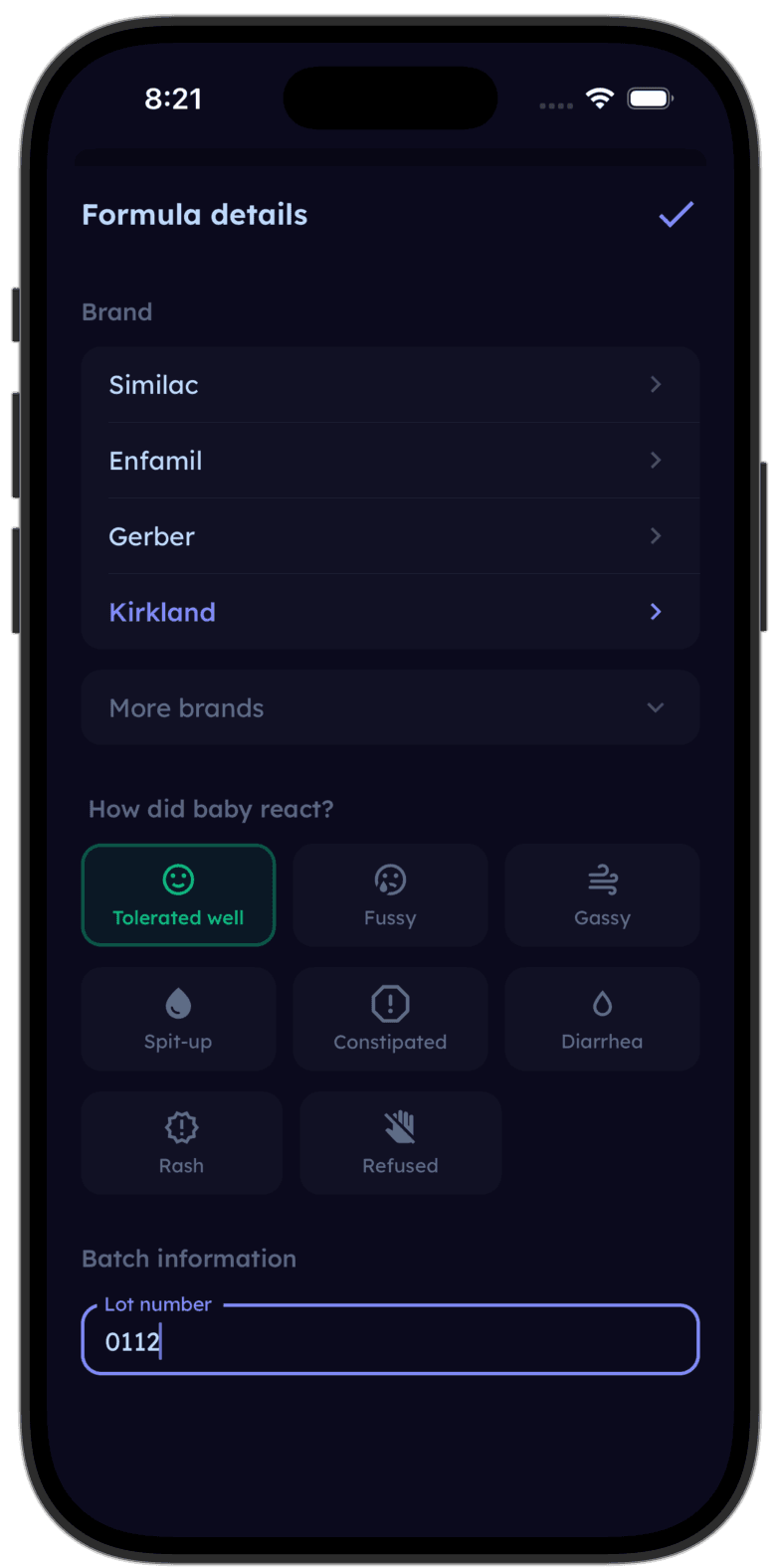
Tinylog tracks formula feedings so you can spot patterns.
Log every bottle — time, amount, and how baby tolerated it. Track spit-up, gas, and fussiness. Bring real data to your pediatrician instead of guessing from memory.


Mixing, Taste, and the Practical Stuff
You can read ingredient lists all day, but what actually matters at 2 AM is: does it mix easily, does baby drink it, and does it stay down?
Mixing: Similac 360 Total Care dissolves more completely and produces less foam when shaken. Enfamil NeuroPro can get foamy, which means your baby swallows more air, which means more gas and spit-up. A simple fix: mix Enfamil by swirling instead of shaking, or let it sit for a minute after shaking to let bubbles settle.
Taste: Similac tends to be slightly sweeter. Enfamil has a more neutral, milky flavor. Babies don't read reviews — some will take to one immediately and refuse the other. If your baby rejects a formula, try it again in a few days before giving up. Taste preferences can shift.
Spit-up: Both formulas can cause spit-up — that's normal infant physiology, not a formula problem. If spit-up is excessive (soaking through clothes at every feeding, or baby seems in pain), talk to your pediatrician. They may recommend a reflux-specific formula variant from either brand.
Gas: Enfamil's foamier mixing can contribute to gas. Similac's smoother mixing may reduce air intake. But gas is also caused by swallowing air while crying, an immature digestive system, or just being a baby. If gas is persistent and causing visible discomfort, your pediatrician might suggest a gentle or sensitive version of either formula.
| Product | Typical Price | Cost Per Ounce | Monthly Estimate |
|---|---|---|---|
| Similac 360 Total Care (20.6 oz powder tub) | $33–$37 | ~$1.40–$1.60/oz powder | ~$150–$200 |
| Enfamil NeuroPro (20.7 oz powder tub) | $31–$36 | ~$1.30–$1.50/oz powder | ~$140–$185 |
| Similac 360 Total Care (ready-to-feed, 32 oz) | $10–$13 | ~$0.31–$0.41/fl oz prepared | ~$250–$330 |
| Enfamil NeuroPro (ready-to-feed, 32 oz) | $10–$12 | ~$0.31–$0.38/fl oz prepared | ~$240–$310 |
Price: Enfamil Has a Slight Edge
Enfamil NeuroPro is typically 5–10% cheaper than Similac 360 Total Care. Over a year of formula feeding, that can add up to $150–$350 in savings depending on how much your baby eats and where you shop.
Ways to reduce formula costs with either brand:
- Subscribe & Save on Amazon — 5–15% off recurring deliveries
- Warehouse clubs — Costco and Sam's Club offer the best per-ounce pricing for both brands
- Manufacturer loyalty programs — Similac StrongMoms and Enfamil Family Beginnings both offer coupons and rewards
- WIC — If you qualify, WIC covers infant formula. Check your state's approved brand list
- Generic/store brand equivalents — Kirkland (Costco), Parent's Choice (Walmart), and Up & Up (Target) make nutritionally equivalent formulas at 30–50% less. Ask your pediatrician if a store brand is right for your baby
The price difference between Similac and Enfamil is real but not dramatic. Don't choose a formula based on cost alone — choose based on how your baby tolerates it, then optimize for price within that choice.
Choose Similac 360 Total Care If
- Your baby has firmer stools or constipation tendencies (no palm olein oil helps)
- You want more HMO types for immune support (5 HMOs vs. 2)
- Your baby gets gassy easily (Similac mixes with less foam)
- Non-GMO ingredients are a priority for your family
- Your baby seemed to prefer the slightly sweeter taste
Choose Enfamil NeuroPro If
- Brain development support is your top priority (MFGM + higher DHA)
- You want a whey-to-casein ratio closer to breast milk (60:40)
- Budget is a factor (Enfamil is typically 5–10% cheaper)
- Your baby tolerates palm olein oil fine and has no stool issues
- Your baby preferred the taste during a trial (some babies are picky — that's normal)
- You want single-serve powder packets for on-the-go convenience
Where to Buy
If immune support and easier mixing are your priorities, Similac 360 Total Care (~$35/tub) delivers 5 HMOs, no palm olein oil, and one of the smoothest-mixing powders on the market. It's a solid default for parents who want to minimize gas and support softer stools.
If brain development and value matter most, Enfamil NeuroPro (~$35/tub) brings MFGM and the highest DHA content of any standard US formula. It's typically a few dollars cheaper per tub and is the #1 pediatrician-recommended brand in the US.
Our honest advice: if your baby hasn't tried either yet, buy one tub of each and see which one your baby takes to and tolerates better. The "best" formula is whichever one your baby drinks happily and digests comfortably. And seriously — talk to your pediatrician if you're unsure. That's literally what they're there for.
Tinylog earns a small commission on purchases made through these links, at no cost to you.
Before you buy, it's worth checking promo.new for a deal. It doesn't cover everything, but we've had good luck with it.
The Bottom Line
Both Similac 360 Total Care and Enfamil NeuroPro are premium, evidence-backed infant formulas. Your baby will get complete nutrition from either one.
Similac 360 Total Care edges out on immune support (5 HMOs), no palm olein oil (softer stools, better calcium absorption), smoother mixing (less gas from foam), and non-GMO ingredients.
Enfamil NeuroPro edges out on brain development (MFGM + higher DHA), a whey-to-casein ratio closer to breast milk (60:40), slightly lower price, and single-serve packets for travel.
The real answer? Try one. If your baby is happy, gaining weight, and not having digestive issues — you found your formula. If something seems off, try the other one. And always, always loop in your pediatrician for anything that feels concerning.
If you're tracking formula intake — which is really helpful for making sure your baby is eating enough and for spotting patterns in fussiness or spit-up — Tinylog makes it easy to log every bottle and share the data with your doctor. And once you've chosen your formula, sign up for free recall alerts so you'll know immediately if it's ever recalled.
Related Guides
- Baby Feeding Chart — How much formula your baby needs by age and weight
- Enfamil vs. Similac — A broader comparison across all product lines
- Baby Eating Less — When reduced intake is normal vs. when to worry
- Baby Formula Recalls 2026 — Current recall information and safety updates
Sources
- Abbott Nutrition. "Similac 360 Total Care — Product Information." similac.com, 2026.
- Reckitt / Mead Johnson. "Enfamil NeuroPro Infant Formula — Product Information." enfamil.com, 2026.
- Timby, N. et al. "Neurodevelopment, nutrition, and growth until 12 mo of age in infants fed a low-energy, low-protein formula supplemented with bovine milk fat globule membranes." American Journal of Clinical Nutrition, 2014.
- Bode, L. "Human Milk Oligosaccharides: Every Baby Needs a Sugar Mama." Glycobiology, 2012.
- Nelson, S.E. et al. "Palm olein in infant formula: Absorption of fat and minerals by normal infants." American Journal of Clinical Nutrition, 1996.
- FormulaSeek. "Similac 360 Total Care vs. Enfamil NeuroPro — Side-by-Side Comparison." formulaseek.com, 2026.
- BabyPost. "Enfamil NeuroPro vs. Similac 360 Total Care (2025 Review)." babypost.com, 2025.
This guide is for informational purposes only and is not a substitute for medical advice. Infant formula selection should be discussed with your pediatrician, especially if your baby has allergies, reflux, or other health concerns. All formula sold in the United States must meet FDA nutritional requirements. If your baby is not tolerating a formula well, consult your pediatrician before making changes.
Frequently asked questions
- Is Similac 360 Total Care or Enfamil NeuroPro closer to breast milk?
- Both aim to mimic breast milk, but in different ways. Enfamil NeuroPro has a 60:40 whey-to-casein protein ratio that matches mature breast milk and includes MFGM, a component found naturally in breast milk. Similac 360 Total Care includes 5 HMOs (Human Milk Oligosaccharides), which are prebiotics found in breast milk that support immune development. Neither is a perfect match — breast milk is extraordinarily complex — but both are nutritionally complete.
- Does Enfamil NeuroPro cause more constipation than Similac?
- It can. Enfamil NeuroPro contains palm olein oil, which some studies suggest may reduce calcium absorption and lead to firmer stools. Similac 360 Total Care does not contain palm olein oil, and some parents report softer stools with Similac. However, every baby is different. If your baby is constipated on either formula, talk to your pediatrician before switching.
- Which formula has more DHA for brain development?
- Enfamil NeuroPro contains more DHA (17 mg per 100 kcal) compared to Similac 360 Total Care. Enfamil also includes MFGM (Milk Fat Globule Membrane), which has been clinically studied for cognitive development benefits. Similac includes DHA plus Lutein and Vitamin E in its OptiGRO blend.
- Is Similac or Enfamil cheaper?
- Enfamil NeuroPro is typically 5–10% cheaper than Similac 360 Total Care. A standard tub of either costs around $33–$37, but Enfamil's cost per prepared ounce is slightly lower. Both brands offer Subscribe & Save discounts on Amazon, loyalty programs, and frequent coupons that can reduce costs further.
- Can I switch between Similac and Enfamil?
- Yes. There is no medical reason you cannot switch between formulas, though some babies may need a few days to adjust. If your baby is doing well on one formula, there is generally no reason to switch. If you do switch, a gradual transition (mixing the two for a few days) can help reduce temporary fussiness or digestive changes. Always consult your pediatrician if you have concerns.
- Which formula is better for gassy babies?
- Neither standard formula is specifically designed for gas. However, Similac 360 Total Care may cause less gas for some babies because it mixes with less foam than Enfamil NeuroPro. Foamy formula means swallowed air, which means gas. If your baby has persistent gas issues, your pediatrician may recommend a sensitive or gentle version of either brand.