
GUIDE
Similac Soy Isomil vs. Enfamil ProSobee
Published on ·Updated on
Both are soy-based, lactose-free formulas for babies who cannot tolerate cow's milk. The differences are in fat sources and taste. But soy formula is NOT appropriate for cow's milk protein allergy — 40–60% of allergic babies cross-react.
Soy formula has a specific, narrow role in infant feeding. It is appropriate for galactosemia, certain cultural or dietary preferences, and some forms of lactose intolerance. It is NOT appropriate as a first-line treatment for fussiness or cow's milk allergy. Here is what parents need to know.
Log formula and bottles
The Honest Starting Point
Before comparing Similac Soy and Enfamil ProSobee, we need to address when soy formula is and is not appropriate — because many parents are steered toward soy for the wrong reasons.
When soy formula IS appropriate: Galactosemia (a rare metabolic disorder where babies cannot process galactose), families who prefer plant-based feeding for cultural, religious, or ethical reasons, and confirmed lactose intolerance (very rare in infants).
When soy formula is NOT appropriate: Cow's milk protein allergy (CMPA) — approximately 40–60% of babies allergic to cow's milk also react to soy protein. The AAP and ESPGHAN (European Society for Paediatric Gastroenterology) both recommend extensively hydrolyzed or amino acid-based formulas for CMPA, not soy. Soy formula is also not recommended for premature infants due to potential effects on bone mineralization.
If your pediatrician has specifically recommended soy formula, both Similac Soy Isomil and Enfamil ProSobee are well-established options. Here is how they compare.
For more on feeding schedules, see our baby feeding chart.
| Feature | Similac Soy Isomil | Enfamil ProSobee | What It Means |
|---|---|---|---|
| Protein source | Soy protein isolate | Soy protein isolate | Same protein source. Both are 100% plant-based protein. |
| Fat source | High oleic safflower, soy, coconut oils (no palm olein) | Palm olein, soy, coconut, high oleic sunflower oils | Similac is palm-free. ProSobee uses palm olein. |
| Carbohydrate source | Corn syrup and sucrose | Corn syrup solids | Both are lactose-free. Different corn-derived carbohydrate sources. |
| Lactose-free | Yes | Yes | Both are completely lactose-free. |
| DHA/ARA | Yes | Yes | Both include DHA and ARA. |
| Hypoallergenic | No | No | Neither is hypoallergenic. Soy protein can trigger allergic reactions in babies with CMPA. |
| FDA approved | Yes | Yes | Both meet all FDA requirements under 21 CFR 107 |
| Price per oz (powder) | ~$1.10–$1.30/oz prepared | ~$1.10–$1.30/oz prepared | Similar pricing to standard cow's milk formulas. |
The Ingredient Differences That Actually Matter
These formulas are very similar. The meaningful differences are limited.
Fat source: the palm olein difference (again)
Similac Soy Isomil does not use palm olein. Enfamil ProSobee does. The same palm olein research applies: potential for firmer stools and slightly reduced calcium absorption. If your baby has firm stools on soy formula, the palm-free option may help.
Carbohydrate source: both are corn-based
Neither formula uses lactose. Similac Soy uses corn syrup and sucrose. ProSobee uses corn syrup solids. Both are FDA-approved carbohydrate sources for infant formula. The EU does not permit sucrose in Stage 1 infant formula — if this matters to you, ProSobee's corn syrup solids are arguably more aligned with EU standards, though neither would qualify.
Phytoestrogens: the elephant in the room
Both formulas contain isoflavones (phytoestrogens) from soy protein. This has been a concern for some parents and researchers. The evidence is reassuring: a 2012 study in Pediatrics followed children fed soy formula through adolescence and found no adverse effects on growth, development, bone health, or reproductive outcomes. The AAP considers soy formula safe for term infants.
That said, if the phytoestrogen concern bothers you and your baby does not have a specific medical need for soy, a cow's milk-based formula (standard or gentle) may be a simpler choice.
What the Marketing Doesn't Tell You
The most important thing neither brand says clearly: soy formula is not the right choice for most babies with fussiness, gas, or suspected cow's milk issues. The 40–60% cross-reactivity rate between cow's milk protein allergy and soy protein allergy means that switching to soy often does not solve allergy-related symptoms.
If your baby has blood in stool, persistent vomiting, or failure to gain weight, these are signs of possible CMPA that require a hypoallergenic formula (Alimentum, Nutramigen, or PurAmino) — not soy.
Store-brand soy formulas exist and meet the same FDA requirements. Parent's Choice Soy, Up & Up Soy, and Kirkland Soy are available at 30–40% less per ounce.
Both Similac Soy and ProSobee use corn-derived carbohydrates as their primary sugar source. If you switched to soy to avoid certain ingredients in cow's milk formula, be aware that the carbohydrate profile is heavily corn-based.
| Product | Typical Price | Cost Per Oz (Prepared) | Monthly Estimate |
|---|---|---|---|
| Similac Soy Isomil (powder, 20.6 oz) | $28–$34 | ~$1.20/oz prepared | ~$145–$170/month |
| Enfamil ProSobee (powder, 20.9 oz) | $28–$34 | ~$1.20/oz prepared | ~$145–$170/month |
| Store-brand soy formula (for reference) | $18–$24 | ~$0.75–$0.90/oz prepared | ~$95–$120/month |
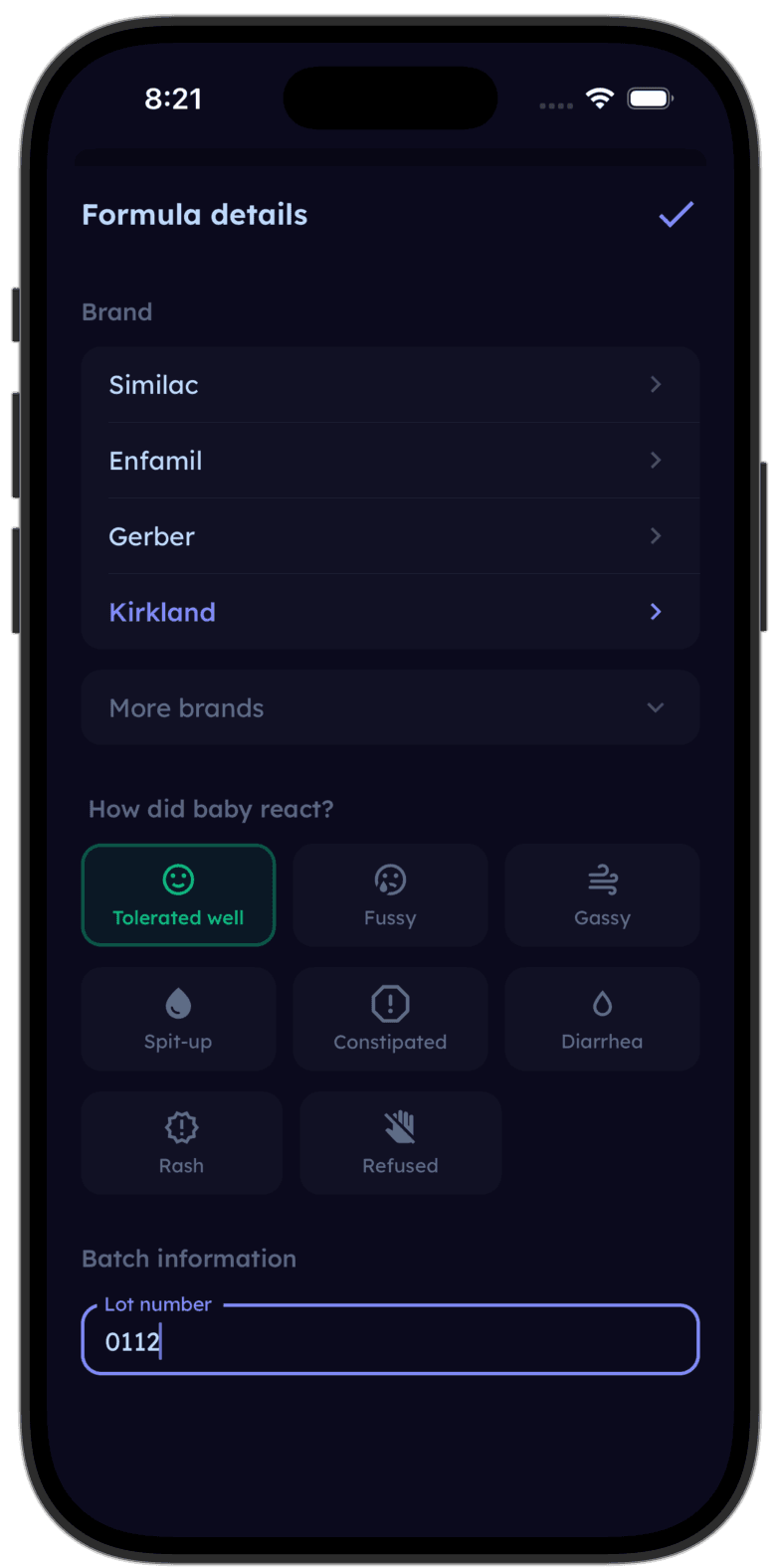
Tinylog tracks formula intake so you can spot what's working.
Log each bottle in seconds — see daily totals, track which formula your baby is on, and have real data ready for your pediatrician. Critical when evaluating soy formula effectiveness.


Taste, Mixing, and Practical Differences
Taste: Soy formulas taste noticeably different from cow's milk formulas — more bean-like. Some babies accept them readily; others resist. If your baby has only had cow's milk formula, expect an adjustment period.
Mixing: Both dissolve reasonably well. Soy formulas can be slightly grittier than cow's milk-based formulas. A formula pitcher helps.
Stool changes: Soy formula typically produces firmer, darker stools than cow's milk formula. This is normal. The change is more pronounced with ProSobee due to palm olein.
Availability: Both are widely available at major retailers. Store-brand soy options are also widely available.
When to Talk to Your Pediatrician
Soy formula should ideally be started in consultation with your pediatrician, especially if you are considering it for allergy-related symptoms.
Signs That Need Medical Evaluation
- Blood or mucus in stools (suggests protein allergy — soy may not be enough)
- Persistent vomiting (not just spit-up) after feedings
- Failure to gain weight or weight loss
- Symptoms that persist after 2 weeks on soy formula
- Severe eczema flares
- Signs of allergic reaction: hives, facial swelling, wheezing (seek immediate care)
If your baby has confirmed or suspected CMPA, soy formula is not the recommended treatment. Ask your pediatrician about extensively hydrolyzed formulas (Nutramigen, Alimentum) or amino acid-based formulas (PurAmino, EleCare).
The Bottom Line
Similac Soy Isomil and Enfamil ProSobee are very similar soy-based formulas for a narrow set of specific needs. The main difference is the fat source (palm-free vs. palm olein).
Choose Similac Soy if: your baby needs soy formula and you prefer a palm-olein-free option, or if your baby tends toward constipation.
Choose Enfamil ProSobee if: your baby needs soy formula and tolerates palm olein without stool issues.
Consider a different formula entirely if: you suspect cow's milk protein allergy (try hypoallergenic instead), your baby is premature, or fussiness is your only concern (try a gentle cow's milk formula first).
If you are evaluating soy formula, tracking feeds and symptoms for 2 weeks gives you and your pediatrician clear data. Tinylog logs feeds, diapers, and fussiness so you can see whether soy actually helped. Once you've settled on a formula, sign up for free recall alerts so you'll know right away if it's ever recalled.
For hypoallergenic options, see Alimentum vs. Nutramigen vs. PurAmino. For gentle cow's milk options, see Similac Sensitive vs. Enfamil Gentlease.
Related Guides
-
Best Baby Formulas 2026 — An evidence-based guide
-
Best Hypoallergenic Formulas — When you need one and how to choose
Sources
- U.S. Food and Drug Administration. "21 CFR Part 107 — Infant Formula." Code of Federal Regulations.
- American Academy of Pediatrics. "The Use of Soy Protein-Based Formulas in Infant Feeding." Pediatrics, 2008.
- Andres A, et al. "Developmental status of 1-year-old infants fed breast milk, cow's milk formula, or soy formula." Pediatrics, 2012.
- Koletzko S, et al. "Diagnostic approach and management of cow's-milk protein allergy in infants and children." Journal of Pediatric Gastroenterology and Nutrition, 2012.
- Vandenplas Y, et al. "Guidelines for the diagnosis and management of cow's milk protein allergy in infants." Archives of Disease in Childhood, 2007.
- U.S. FDA. "Infant Formula Guidance Documents and Regulatory Information." fda.gov, 2023.
This guide is for informational purposes only and is not a substitute for professional medical advice. Soy formula decisions should be discussed with your pediatrician, especially for babies with allergies or medical conditions.
Frequently asked questions
- Is soy formula safe for babies?
- Yes. Soy-based infant formula has been used for decades and meets all FDA nutritional requirements. The AAP considers soy formula a safe option when cow's milk formula is not appropriate. Concerns about phytoestrogens have been studied extensively, and no adverse effects on growth, development, or reproductive health have been established.
- When should a baby use soy formula?
- Soy formula is appropriate for galactosemia (a rare metabolic disorder), families who prefer plant-based feeding for cultural or religious reasons, and some cases of lactose intolerance. It is NOT recommended as a first-line treatment for colic, fussiness, or cow's milk protein allergy.
- Can soy formula help with cow's milk allergy?
- Usually not. Approximately 40–60% of babies with cow's milk protein allergy also react to soy protein. The AAP recommends extensively hydrolyzed or amino acid-based formulas (like Nutramigen, Alimentum, or PurAmino) for confirmed CMPA, not soy formula.
- Is Similac Soy or Enfamil ProSobee better?
- Both are nutritionally equivalent soy-based formulas meeting FDA requirements. The main difference is the fat source — Similac Soy uses no palm olein, Enfamil ProSobee does. If your baby has firm stools, the palm-free option may help.
- Do soy formulas contain phytoestrogens?
- Yes. Soy-based formulas contain isoflavones (phytoestrogens) from soy protein. Multiple long-term studies, including a 2012 Pediatrics study tracking children fed soy formula through adolescence, found no adverse effects on growth, development, bone health, or reproductive outcomes. The AAP considers the evidence reassuring.