
GUIDE
Snoo vs. Cradlewise
Published on
The Snoo is the gold standard for the newborn-to-6-month window — responsive soothing, a built-in swaddle, and a strong safety record. The Cradlewise is a smarter long-term investment that works from birth to 24 months, includes a built-in baby monitor, and costs less upfront. Which one is right for you depends almost entirely on how long you want to use it and whether you prefer to buy or rent.
The Snoo Smart Sleeper Bassinet and Cradlewise Smart Crib both use motion and sound to respond to a fussing baby. Both connect to an app, log sleep data, and cost well over $1,000. But they are fundamentally different products: the Snoo is a bassinet built for the hardest three to six months of early parenting, while the Cradlewise is a full crib designed to last two years. The right choice depends on your budget, your timeline, and whether you want the best tool for one phase or a solid tool for the whole first chapter.
Log sleep, wake windows, and more
Two Smart Sleepers — One Fundamental Difference
The Snoo and Cradlewise both promise the same thing: a crib that responds to your baby so you can get more sleep. Both use motion. Both use sound. Both connect to an app. And both cost well over $1,000.
But they are designed to solve different problems. The Snoo is a bassinet engineered for the most chaotic stretch of early parenting — the first four to six months when sleep deprivation is sharpest and newborns need the most soothing. It is not a long-term product. By design, your baby will outgrow it.
The Cradlewise is a full crib that works from birth to age two. It includes a bassinet insert for newborns, a built-in HD camera, and AI-powered sleep analytics. It is meant to be the one sleep product you buy for the entire first chapter.
If you need to make a decision quickly: rent the Snoo if you want the best newborn soothing tool for as little as $477 over three months. Buy the Cradlewise if you want one product that lasts two years and includes a baby monitor. Everything below is the detail behind that framing.
| Feature | Snoo Smart Sleeper Bassinet | Cradlewise Smart Crib | What It Means |
|---|---|---|---|
| Product type | Smart bassinet | Smart crib (bassinet-to-crib convertible) | Cradlewise wins on longevity. Snoo wins if you only need the newborn phase covered. |
| Age range | 0–6 months (up to 25 lbs or until baby pushes up on hands/knees) | 0–24 months | Cradlewise wins by a wide margin. The Snoo stops being usable at 6 months. |
| Price (buy) | ~$1,695 | ~$1,499–$1,999 | Comparable upfront. Cradlewise delivers more months of use per dollar. |
| Rental option | ~$159/month (official rental program) | No official rental program | Snoo wins for flexibility. Renting for 3–4 months costs ~$475–$635 total. |
| Soothing mechanism | Responsive rocking + white noise triggered by baby's fussing | AI-powered auto-bouncing triggered by sleep disruption | Both respond to the baby automatically. Snoo's response is faster and more calibrated for newborns. |
| Built-in swaddle | Yes — Snoo Sack keeps baby safely on their back | No — uses standard crib sleep environment | Snoo wins for newborn safety. The Snoo Sack is a meaningful safe-sleep feature in the first months. |
| Built-in baby monitor | No (app tracks sleep, but no camera) | Yes — HD camera with night vision built in | Cradlewise wins. One fewer device to buy and manage. |
| Sleep tracking | App logs sleep sessions, soothing events, and total sleep time | AI sleep analytics, sleep cycle tracking, movement detection via camera | Cradlewise offers richer data. Snoo's tracking is solid but simpler. |
| App connectivity | iOS and Android; control responsiveness levels, view history | iOS and Android; view live camera, adjust sensitivity, review sleep reports | Both apps are well-regarded. Cradlewise's live camera feed adds meaningful value. |
| Weaning mode | Yes — gradual reduction of motion to ease transition out | N/A — no weaning needed, baby stays in the crib | Snoo wins here. Weaning mode is a thoughtful feature that makes the 6-month transition easier. |
| Design origin | Designed by Dr. Harvey Karp (Happiest Baby), based on the 5 S's method | Built by a team of engineers and pediatric sleep researchers | Snoo has the more recognized clinical pedigree. Both are grounded in infant sleep science. |
| Safe sleep compliance | Yes — flat sleep surface, Snoo Sack prevents rolling, back-sleeping enforced | Yes — flat sleep surface, meets CPSC crib standards | Both comply with safe sleep guidelines. The Snoo's swaddle adds an extra layer of back-sleeping enforcement for newborns. |
The Age Range Problem With the Snoo
The Snoo's most significant limitation is also its most honest one: it stops working at approximately 6 months old. More precisely, it stops being safe to use once your baby can push up on their hands and knees, which typically happens between 4 and 6 months. At that point, the Snoo Sack — the swaddle that keeps babies safely on their backs — becomes a movement restriction risk rather than a safety feature.
That means you are buying (or renting) a product with a hard expiration date. If you buy the Snoo at full price ($1,695) and use it for 5 months, your effective cost is roughly $339/month before resale. If you sell it for $600 used, the net cost drops to about $219/month. That math works if the product delivers on sleep improvement. For many families, it does.
The Cradlewise starts at $1,499 and can be used for 24 months. At full price with no resale, that is roughly $62/month — a dramatically better cost-per-month calculation, assuming it works as well for your baby.
Neither math argument is complete without accounting for actual effectiveness, which varies by baby. But if your baby responds well to motion-based soothing, the Cradlewise delivers more total value for most buyers.
How the Soothing Technology Actually Works
Both products use responsive soothing — they detect when a baby is fussing and respond with motion and sound. But they do it differently.
Snoo: The bassinet contains a microphone that detects crying and a motor that produces rhythmic rocking and white noise. The system escalates through five levels of intensity, starting gently and increasing if the baby does not settle. If the baby quiets, the motion fades. The response is fast — typically within seconds — and the whole mechanism is calibrated around the science in Dr. Harvey Karp's work on newborn soothing. The Snoo Sack keeps the baby on their back throughout, which matters for safe sleep compliance.
Cradlewise: The crib uses its built-in camera to monitor the baby's sleep state. When the AI detects movement or waking, the crib begins a gentle bouncing motion. The system learns the baby's sleep patterns over time and adjusts its responses accordingly. Because it has a camera, the soothing response is based on visual movement data rather than sound alone — which can reduce false positives from ambient noise.
Neither approach is definitively superior. The Snoo's sound-based detection is faster but can be triggered by noise that is not the baby. The Cradlewise's camera-based detection is more precise but slightly slower. For newborns in the 0–3 month window, many parents find the Snoo's immediate response more satisfying. For older babies at 4–12 months, Cradlewise's pattern-learning has more room to show its value.
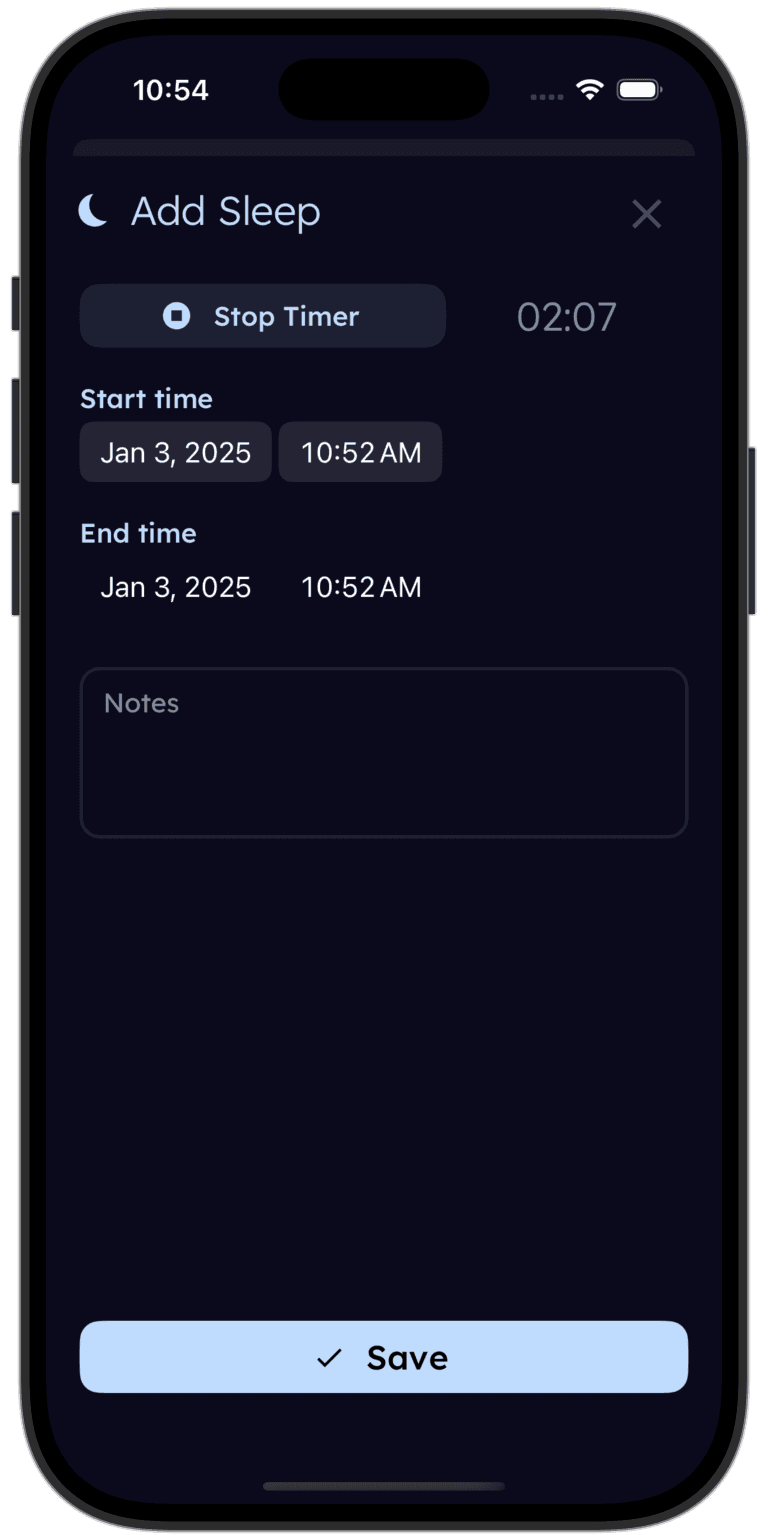
Tinylog tracks sleep so you can spot patterns.
Log naps and overnight sleep, track wake windows by age, and see how sleep shifts through regressions and growth spurts. Free to try.


The Snoo Rental Option Changes the Calculation
One of Snoo's most underrated features is not hardware — it is the rental program. For roughly $159/month, you can rent the Snoo and return it when your baby outgrows it. No resale logistics, no upfront $1,695 commitment, no storage problem after month six.
For three months of use, renting costs approximately $477. For five months, roughly $795. Even at the higher end, that is still below the $1,695 purchase price — and you walk away with no product to store or sell.
The rental makes sense in a few scenarios: you are not sure whether your baby will respond to it and want to try before committing; you know you only need it for three to four months; you are pregnant with your first child and understandably cautious about buying expensive gear you may not use.
Cradlewise does not offer a comparable rental program. If you want the Cradlewise, you buy it — which means committing $1,499–$1,999 upfront on a product you have not tested with your specific baby.
For parents who are uncertain, the Snoo rental is the lowest-risk path to finding out whether responsive soothing technology works for your family.
| Product | Typical Price | Notes |
|---|---|---|
| Snoo Smart Sleeper Bassinet (buy) | ~$1,695 | Resale value is strong — units often sell for $400–$700 used. Occasional sales on the Happiest Baby website. |
| Snoo Smart Sleeper Bassinet (rent) | ~$159/month | 3 months = ~$477. 5 months = ~$795. Best value if you only need it for the newborn phase. |
| Cradlewise Smart Crib | ~$1,499–$1,999 | Includes built-in baby monitor. No rental option. Price varies by configuration and availability. |
| Separate baby monitor (if using Snoo) | $80–$350 | The Snoo has no camera. If you want video monitoring, budget for a separate monitor. |
Baby Monitor: One Hidden Cost of the Snoo
The Snoo does not include a baby monitor. It has a microphone for sound detection and an app for sleep logging, but there is no camera. If you want to visually check on your baby — and most parents do — you need to buy a separate video monitor.
A decent baby monitor runs $80–$350 depending on features. A high-quality one like the Nanit or Owlet Dream Sock bundle runs $200–$400. Add that to the Snoo purchase price and the total system cost rises to $1,800–$2,100.
The Cradlewise includes an HD camera with night vision, two-way audio, and live streaming to the app. That camera is not an afterthought — it is the same sensor the AI uses to monitor sleep states and trigger soothing. You get a fully integrated system.
If you buy the Snoo, budget for a separate monitor. If you buy the Cradlewise, you do not need one. That difference is worth factoring into your total cost comparison.
Choose the Snoo If
- You want the most responsive newborn soothing available and are focused on the first 4–6 months
- You prefer to rent and minimize upfront commitment — the $159/month rental is a standout feature
- You value the built-in Snoo Sack as a safe-sleep enforcement tool for a newborn who rolls
- You already have a crib and just need a bassinet solution for the early months
- You want the Dr. Harvey Karp 5 S's methodology built into the hardware
Choose the Cradlewise If
- You want one sleep product that works from newborn through toddlerhood — no transition at 6 months
- You want a built-in baby monitor so you do not need to purchase a separate camera
- You prefer richer, AI-driven sleep analytics and longer-term sleep data
- You are buying everything fresh and want the best cost-per-month-of-use at full purchase price
- You want to avoid the emotional and logistical disruption of transitioning out of the Snoo at 6 months
- You plan to use the same crib for a second child — the longer use window and durability help amortize the cost
Where to Buy
The Snoo Smart Sleeper Bassinet is available for purchase (~$1,695) or rental (~$159/month) directly through Happiest Baby. The rental program is managed through their website and includes free shipping both ways. Used Snoos are also available through Facebook Marketplace and resale sites — always verify that the unit has not been recalled and that the Snoo Sack is included.
The Cradlewise Smart Crib (~$1,499–$1,999) is sold directly through the Cradlewise website. As of 2026, it is not widely available through third-party retailers. Check their site for current pricing, availability, and any bundle options.
Tinylog earns a small commission on purchases made through these links, at no cost to you.
Before you buy, it's worth checking promo.new for a deal. It doesn't cover everything, but we've had good luck with it.
The Bottom Line
Both the Snoo and Cradlewise are well-engineered products that use technology to reduce the burden of the newborn sleep phase. Neither is a guaranteed solution — babies are individuals, and some will respond immediately while others take weeks or do not respond at all.
The Snoo is the right choice if you are focused on the newborn window (0–6 months), want the flexibility of a rental, and value a product with a long track record and a built-in swaddle for safe-sleep enforcement.
The Cradlewise is the right choice if you want one product from birth through toddlerhood, want a built-in monitor, and prefer richer sleep analytics without needing a separate camera.
For most families buying from scratch with a two-year view, the Cradlewise delivers more total value per dollar. For families who want to minimize risk, test the concept, or only need a bassinet solution, the Snoo rental is one of the most sensible deals in baby gear.
Whichever you choose, logging your baby's actual sleep — nap lengths, wake windows, overnight stretches — gives you data that no smart crib can provide on its own. Tinylog makes it easy to track sleep over time so you can see what is actually working.
Related Guides
- Baby Fighting Sleep — Why it happens and what actually helps
- 4-Month Sleep Regression — The hardest regression, and what to expect
- White Noise vs. Pink Noise vs. Brown Noise for Babies — What the research says
- 1-Month-Old Sleep Schedule — What normal looks like in the newborn stage
Sources
- Happiest Baby. "Snoo Smart Sleeper Bassinet — Product Overview and Safety." happiestbaby.com, 2026.
- Cradlewise. "Cradlewise Smart Crib — How It Works." cradlewise.com, 2026.
- Karp, Harvey, MD. The Happiest Baby on the Block, 2nd ed. Bantam Books, 2015.
- American Academy of Pediatrics. "Safe Sleep Recommendations." healthychildren.org, 2022.
- Consumer Reports. "Best Baby Bassinets and Cradles of 2026." consumerreports.org, 2026.
- BabyGearLab. "Best Smart Bassinets Reviewed and Tested." babygearlab.com, 2025.
- Wirecutter / New York Times. "The Best Baby Monitor." nytimes.com/wirecutter, 2026.
- CPSC. "Infant Sleep Products Safety Standards." cpsc.gov, 2025.
This guide is for informational purposes only. Product specifications, pricing, and availability change frequently — verify current details on the manufacturer's websites before purchasing. Safe sleep guidelines recommend placing babies on a firm, flat surface on their backs, free of loose bedding. Consult your pediatrician with any questions about your baby's sleep environment.
Frequently asked questions
- Is the Snoo worth the price for the newborn stage?
- For many families, yes — especially if sleep deprivation is severe or if you plan to rent rather than buy. The Snoo rents for roughly $159/month, which makes the first three to four months cost around $475–$635 total. If the responsive soothing gets you even one extra hour of sleep a night, most parents consider that a worthwhile trade. Whether it works as advertised varies by baby — some respond immediately, others take a week or two to adjust, and a small percentage never take to it.
- Does the Cradlewise really work as both a bassinet and a crib?
- Yes. Cradlewise ships with a bassinet insert that raises the sleep surface for newborns. When your baby outgrows the bassinet stage (typically around 4–6 months), you remove the insert and use it as a standard crib. The bouncing and sleep analytics work in both configurations. The transition is straightforward and does not require purchasing a separate product.
- Can you rent the Cradlewise like the Snoo?
- Cradlewise does not offer an official rental program the way Snoo does. Snoo's rental program ($159/month) is one of its most compelling features for families who want to minimize upfront cost or try it before committing. If cost is the deciding factor and you only need it for a few months, the Snoo rental is hard to beat.
- What is the Snoo weaning mode?
- Snoo includes a weaning mode that gradually reduces the level of responsive motion over time, helping babies adjust to sleeping without the crib's soothing before you transition them to a regular crib. You activate it through the app in the weeks before you plan to stop using the Snoo. Most parents start weaning around 4–5 months so the transition to a crib at 6 months is less abrupt.
- Which sleep tracker is more useful — Snoo or Cradlewise?
- Both provide app-based sleep tracking, but they measure different things. The Snoo logs sleep sessions, responsive soothing events, and overall sleep duration. Cradlewise uses its built-in camera and AI to track sleep cycles, movement, and whether the baby is awake or asleep — without requiring a separate baby monitor. For parents who want richer, longer-term sleep data in a single device, Cradlewise has the edge.
- What happens when baby outgrows the Snoo?
- The Snoo has a maximum weight limit of 25 lbs and is designed for babies up to approximately 6 months old, or until they can push up on their hands and knees (whichever comes first). At that point you transition to a traditional crib. If you bought the Snoo, you can resell it — the resale market is active and units often sell for $400–$700 depending on condition. If you rented, you simply return it.