GUIDE

Teething vs. Ear Infection

The key difference is fever. Teething does not cause fever at or above 100.4°F. Ear infections usually do.

Both teething and ear infections cause ear pulling, fussiness, and disrupted sleep. But an ear infection needs treatment and teething does not. Here is how to tell which one you are dealing with.

Why This Is So Confusing

Teething and ear infections are frustratingly easy to confuse. Both cause ear pulling. Both cause fussiness. Both disrupt sleep. And they happen at the exact same age — ear infections are most common between 6 and 24 months, which is also the peak teething window.

The confusion leads to two problems: parents sometimes assume their baby has an ear infection when it is actually teething (resulting in unnecessary doctor visits and occasionally unnecessary antibiotics), and — more concerningly — parents sometimes assume their baby is "just teething" when they actually have an ear infection that needs treatment.

The good news is that there are reliable ways to distinguish between the two, even at home. The pattern of symptoms, the presence or absence of fever, and the overall trajectory give you enough information to make a reasonable judgment call — and to know when a pediatrician visit is warranted.

Teething vs. Ear Infection: Side-by-Side Comparison
Fever
TeethingNo true fever. May have slight temperature elevation below 100.4°F (38°C)
Ear InfectionOften causes fever, frequently above 100.4°F. Can spike to 102-104°F.
Ear pulling
TeethingCommon — pain radiates from jaw to ear. Usually bilateral (both ears).
Ear InfectionCommon — usually focused on the affected ear. Often unilateral.
Preceding cold symptoms
TeethingNo — teething does not cause congestion or runny nose
Ear InfectionYes — ear infections typically follow a cold by several days
Fussiness pattern
TeethingIntermittent — comes and goes. Baby has periods of being happy.
Ear InfectionMore persistent and progressive. Baby seems increasingly miserable.
Worse when lying down
TeethingNot specifically
Ear InfectionYes — pressure changes in the ear increase pain when lying flat
Drooling
TeethingOften significantly increased
Ear InfectionNot typically a feature
Desire to chew
TeethingYes — counter-pressure on gums provides relief
Ear InfectionNot a feature
Visible gum changes
TeethingSwollen, red gums. May see white bump where tooth is emerging.
Ear InfectionGums appear normal
Duration
TeethingPeaks around eruption day, resolves within days
Ear InfectionProgressively worsens over 2-3 days without treatment
Response to teething remedies
TeethingCold items and pressure on gums provide relief
Ear InfectionTeething remedies do not help. Pain relief (acetaminophen/ibuprofen) helps.
The single most reliable differentiator is fever. Teething does not cause true fever (≥100.4°F / 38°C). If your baby has a fever, something other than teething is causing it.

Why Ear Pulling Happens During Teething

The reason babies pull at their ears during teething has to do with anatomy. The jaw, the teeth, and the ears share nerve pathways — specifically branches of the trigeminal nerve and connections to the temporomandibular joint (TMJ). When a tooth is pushing through the gum, the discomfort can radiate along these nerve pathways and be felt in the ear area, even though there is nothing wrong with the ear itself.

This is called referred pain, and it happens in adults too — a lower wisdom tooth can cause ear pain, and a toothache can make the whole side of the face ache. Babies respond to this referred discomfort by rubbing, pulling, or pressing on their ears.

The key distinction is that teething-related ear pulling typically involves both ears (since the nerve pathways run bilaterally), comes and goes, and is not accompanied by fever or cold symptoms. Ear infection pain is usually concentrated on one side, is more persistent, and almost always accompanies or follows a cold.

How Ear Infections Actually Happen

Understanding how ear infections develop helps explain why they look different from teething. An ear infection (acute otitis media) almost always starts with a cold. The viral infection causes inflammation and swelling in the upper respiratory tract, including the Eustachian tubes — the small channels that connect the middle ear to the back of the throat.

In babies, the Eustachian tubes are shorter, more horizontal, and less efficient at draining than in adults. When a cold causes swelling, fluid gets trapped behind the eardrum. Bacteria that are normally present in the nose and throat can then infect this trapped fluid, causing the pain, pressure, and fever of an ear infection.

This is why ear infections follow a predictable pattern: cold symptoms for several days, then escalating fussiness, fever, and ear pain. If your baby has not had a cold recently and is pulling at their ears, an ear infection is much less likely than teething.


When to Call Your Pediatrician

  • Fever of 100.4°F (38°C) or higher — especially in babies under 3 months
  • Symptoms worsening over 2-3 days rather than improving
  • Fussiness that is worse when lying down (suggests ear pressure)
  • Ear pulling accompanied by fever and recent cold symptoms
  • Fluid or discharge draining from the ear
  • Baby seems significantly more unwell than 'teething fussy'
  • Sleep disruption that does not improve after several days
  • Baby is inconsolable — not just fussy, but cannot be comforted

Ear infections are common and highly treatable. Do not hesitate to call your pediatrician if you suspect one. An exam with an otoscope is the only way to definitively diagnose an ear infection.

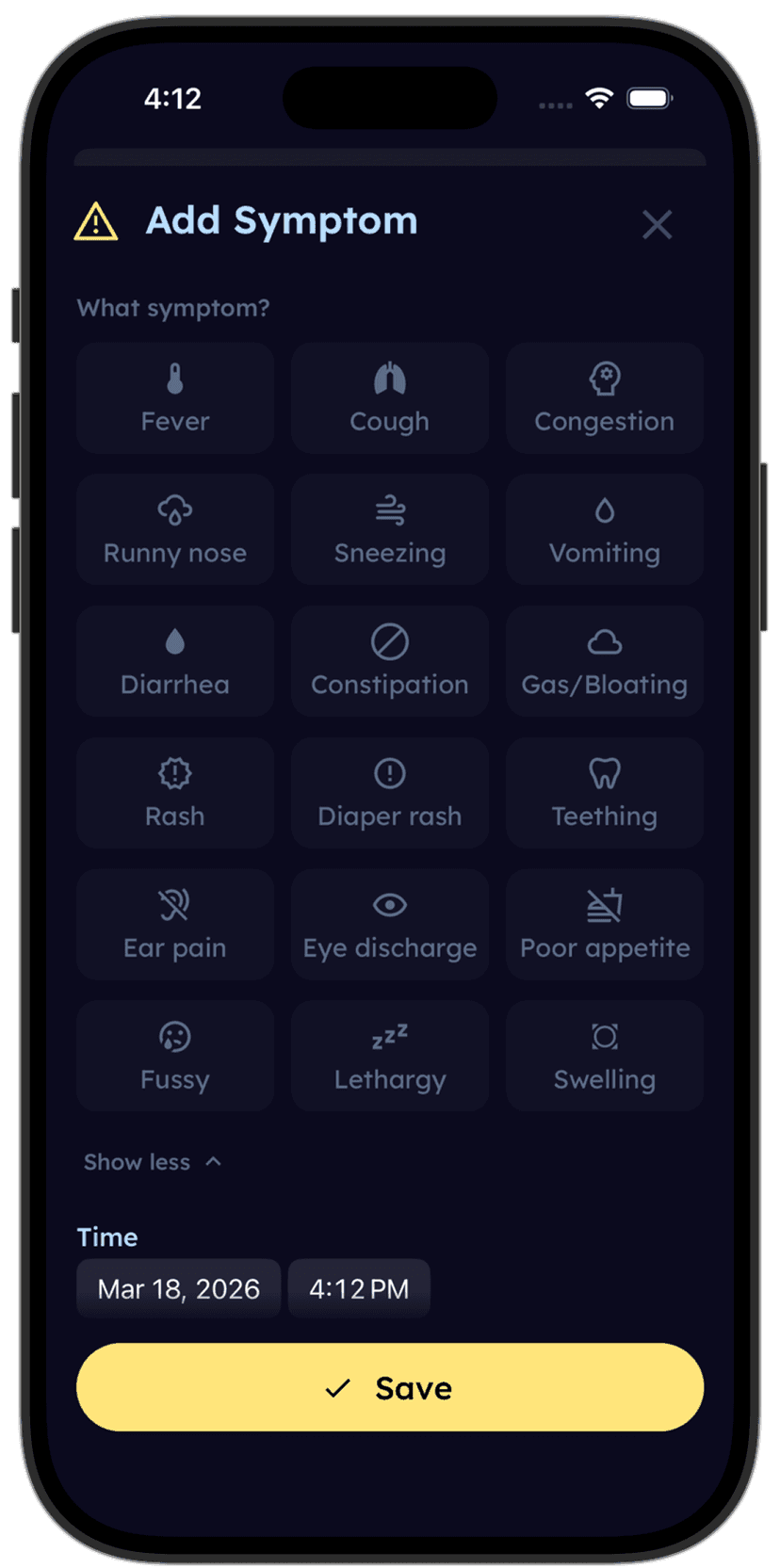
tinylog symptom tracking screen showing daily patterns

Track the symptom timeline — it tells the story.

Was there a cold last week? When did the ear pulling start? Is the fussiness getting worse or staying the same? A few days of tracked data in tinylog gives you — and your pediatrician — a much clearer picture than trying to reconstruct the timeline from memory during a sick visit.

Download on the App StoreGet It On Google Play

What Your Pediatrician Wants You to Know

Ear infections need eyes on the eardrum. The only way to definitively diagnose an ear infection is for a provider to look at the eardrum with an otoscope. Home diagnosis is not possible, and that is okay — a quick visit gives you a clear answer.

Not every ear infection needs antibiotics. Current AAP guidelines support watchful waiting for some ear infections — particularly in children over 6 months with mild symptoms and unilateral (one-sided) infection. Your pediatrician may recommend pain management and a follow-up check rather than immediate antibiotics.

Recurrent ear infections are worth discussing. If your baby has had three or more ear infections in six months or four or more in a year, talk to your pediatrician about whether referral to an ENT specialist is appropriate.

Teething is real, but it is the diagnosis of exclusion. When a baby has fever, ear pulling, and significant fussiness, the responsible approach is to rule out ear infection first and attribute to teething second — not the other way around.

Practical Tips

Check for the cold connection

Ear infections rarely come out of nowhere. They almost always follow a cold by several days. If your baby had a runny nose last week and now is pulling at their ear with a fever, that is the classic ear infection progression — fluid from the cold gets trapped behind the eardrum and becomes infected. Teething, on the other hand, has no connection to cold symptoms.

The lying-down test

Ear infection pain typically worsens when the baby is lying flat, because the position change increases pressure in the middle ear. If your baby is relatively comfortable upright but becomes significantly more distressed when laid down — especially at bedtime or for diaper changes — ear infection is more likely than teething.

Look at the gums, not just the ears

Before assuming ear infection, open your baby's mouth and look at the gums. If you see swelling, redness, or a bump where a tooth should be, teething is a reasonable explanation for the fussiness and ear pulling. If the gums look perfectly normal and your baby has a fever, the ears are the more likely culprit.

Both can happen at the same time

Life with a baby is rarely simple. Your baby can absolutely be teething and have an ear infection simultaneously. If symptoms are more severe than typical teething — particularly if fever is present — get an evaluation even if you can see a tooth coming through. Treating the ear infection will help your baby feel better faster, and you can manage the teething discomfort alongside it.

Related Guides

Sources

  • Macknin, M. L., et al. (2000). Symptoms associated with infant teething: a prospective study. Pediatrics, 105(4), 747-752.
  • Massignan, C., et al. (2016). Signs and symptoms of primary tooth eruption: A meta-analysis. Pediatrics, 137(3), e20153501.
  • Lieberthal, A. S., et al. (2013). The diagnosis and management of acute otitis media. Pediatrics, 131(3), e964-e999. (AAP Clinical Practice Guideline)
  • American Academy of Pediatrics (AAP). Ear infection (otitis media). HealthyChildren.org.
  • Wake, M., et al. (2000). Teething and tooth eruption in infants: A cohort study. Pediatrics, 106(6), 1374-1379.

Medical Disclaimer

This guide is for informational purposes only and is not a substitute for professional medical advice. If your baby has a fever of 100.4°F (38°C) or higher, is refusing to eat, or seems unusually unwell, contact your pediatrician — these symptoms are not typical of teething alone.

Get this guide in your inbox.
We'll email you this guide so you can tell the difference at 3 AM.
Track symptoms day by day — see the pattern clearly.
Download tinylog free — log sleep, feeds, and symptoms in seconds.
Download on the App StoreGet It On Google Play