
Make drops part of your routine
Give vitamin D drops at the same time each day — during a morning feeding works well. Put the bottle next to your nursing station or formula prep area so it becomes automatic.
GUIDE
Published on
Vitamin D drops are the recommended source for infants. The AAP advises 400 IU daily starting in the first few days of life. Sunlight is unreliable and carries UV risk for baby skin.
Vitamin D deficiency in infants is preventable, but the method matters.
Log vitamin D drops daily
“Don't wait to see if your baby develops symptoms of vitamin D deficiency. Supplement vitamin D regularly to prevent deficiency.”
 Dr. Kylie Liermann, DO, Pediatrician, Cleveland Clinic
The AAP, WHO, and virtually every pediatric organization worldwide recommend vitamin D supplementation for infants. The reason is straightforward: breast milk does not contain enough vitamin D, and sunlight is neither reliable nor safe for babies under 6 months.
Vitamin D is essential for calcium absorption and bone development. Without adequate vitamin D, infants are at risk for rickets — softening and weakening of the bones. Before routine supplementation, rickets was common. It still occurs in infants who are exclusively breastfed without supplementation, particularly those with darker skin or limited sun exposure. Vitamin D supplementation is one of many key items on your newborn essentials checklist to have ready before baby arrives.
The recommended dose is 400 IU (10 mcg) of vitamin D daily, starting within the first few days of life. This applies to all breastfed infants and formula-fed infants consuming less than 32 oz of fortified formula per day. It continues until the child gets enough vitamin D from diet alone — typically around age 1 when whole milk and vitamin D-rich foods enter the picture. Vitamin D also plays a role in baby immune system development, supporting the body's defenses during the critical first year.
| Aspect | Vitamin D Drops | Sunlight |
|---|---|---|
| AAP recommendation | Recommended — 400 IU daily for all infants | Not recommended as primary source for infants |
| Reliability | Consistent, measurable dose every day | Varies by latitude, season, skin tone, cloud cover, clothing |
| Safety | Very safe at recommended doses; toxicity rare unless massively overdosed | UV radiation risk — infant skin is thin and burns easily |
| Ease of use | One drop daily — takes seconds | Requires direct skin exposure with no sunscreen, which AAP advises against |
| Cost | ~$8-15 for a 90-day supply | Free, but comes with UV risk and unreliable dosing |
| Effectiveness | 400 IU reliably prevents deficiency when given daily | 10-15 min of midday sun may produce vitamin D in adults, but studies in infants are lacking |
| When to start | First few days of life | Not applicable — AAP says avoid direct sun under 6 months |
Drops are the standard of care. This is one of the few supplements with near-universal pediatric consensus.
The biggest real-world challenge is simply remembering. A tracking app helps.
These benefits are real for older children and adults. For infants under 6 months, the AAP advises against direct sun exposure.
Infant skin has less melanin and a thinner stratum corneum, making it significantly more vulnerable to UV damage.
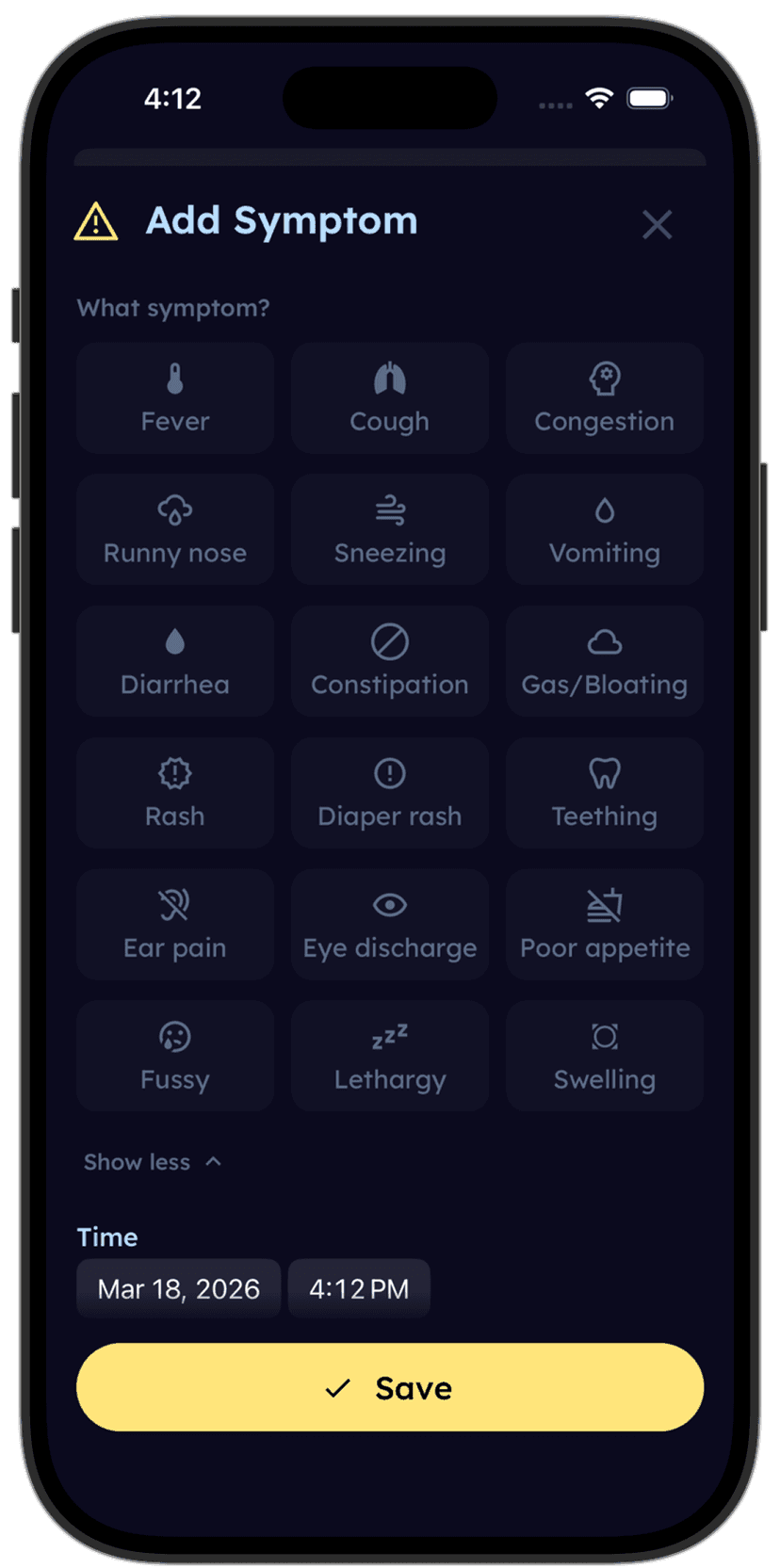
Tinylog lets you log supplements alongside feedings and diapers — one quick tap each morning and you know it's done.


Adults can produce roughly 600-1000 IU of vitamin D from 10-15 minutes of midday summer sun on exposed arms and legs. But this number depends heavily on latitude (above 37°N, UVB is insufficient for vitamin D synthesis from November through February), skin pigmentation (darker skin requires 3-6x more exposure), cloud cover, and the amount of skin exposed.
For infants, the math falls apart entirely. You cannot safely expose enough infant skin to reliably produce 400 IU daily. The AAP recommends infants under 6 months stay out of direct sunlight completely. After 6 months, sunscreen is recommended for any sun exposure — and sunscreen blocks vitamin D synthesis by 95-99%.
This does not mean babies should stay indoors. Outdoor time in shade, with protective clothing and a stroller canopy, is healthy and encouraged — and it pairs well with daily tummy time outdoors on a blanket. But it should not be counted as a vitamin D source.
The market is full of vitamin D drops with different formulations. Here is what actually matters:
Single-ingredient vs. multivitamin: Single-ingredient vitamin D drops (like Baby Ddrops or D-Vi-Sol) are simpler and make dosing easier. Multivitamin drops may include vitamins A and C, which most infants don't need to supplement. Stick with vitamin D3 alone unless your pediatrician recommends otherwise.
D3 vs. D2: Vitamin D3 (cholecalciferol) is more effective at raising blood levels than D2 (ergocalciferol). Most infant drops use D3. Check the label.
One drop vs. one dropper: Some products deliver 400 IU in a single drop (Baby Ddrops), while others require a full 1 mL dropper (D-Vi-Sol). Either works — just know which type you have so you dose correctly.
Give vitamin D drops at the same time each day — during a morning feeding works well. Put the bottle next to your nursing station or formula prep area so it becomes automatic.
Look for drops that contain only vitamin D3 (cholecalciferol) without added flavors, colors, or other vitamins. D-Vi-Sol and Baby Ddrops are two widely used options. Single-ingredient drops mean one drop equals one dose.
Babies benefit from fresh air and outdoor stimulation. Use shade, lightweight clothing, and a stroller canopy. After 6 months, mineral sunscreen (zinc oxide) is safe. Enjoy the outdoors without relying on it for vitamin D.
This guide is for informational purposes only and is not a substitute for professional medical advice. Consult your pediatrician for guidance specific to your baby.