GUIDE

Wake Windows vs. Nap Schedules

Wake windows work better for younger babies (under 6-7 months) whose rhythms change frequently. Set nap schedules work better for older babies with predictable patterns. Most families naturally transition from one to the other.

These aren't competing philosophies — they're tools for different developmental stages.

Track sleep with Tinylog

See wake windows and nap patterns

Most kids have a 'tell' that indicates they are ready for sleep. Try to notice which cue, when followed consistently, allows the child to fall asleep independently and within 15 minutes of being placed into the crib.
Dr. Nilong VyasDr. Nilong Vyas, MD, MPH, Pediatrician, Sleepless in NOLA

It's Not Really a Debate

Wake windows and nap schedules aren't opposing philosophies — they're tools suited to different developmental stages. The confusion comes from parenting advice that presents them as competing approaches without explaining when each one makes sense.

Wake windows are about tracking how long your baby has been awake and starting nap prep before they cross into overtired territory. Our wake windows by age chart gives the specific ranges for each month. They work beautifully for younger babies (under 6-7 months) because at this age, nap lengths are unpredictable, wake tolerance is short and changes week to week, and the circadian rhythm isn't fully developed. A 3-month-old with a 75-90 minute wake window might nap at 8:30 AM one day and 9:15 AM the next, depending on when they woke up and how long the last nap was. Trying to force a set schedule on this level of variability creates frustration.

Set nap schedules — putting baby down at the same times daily — work better once a baby's circadian rhythm is established and nap patterns are more consistent. This typically happens around 6-7 months when most babies settle into 2-3 predictable naps. At this point, your baby's body clock is doing much of the work, and consistent timing reinforces that clock. Research by Galland et al. (2012) in Sleep Medicine Reviews found that establishing consistent sleep-wake times is associated with better overall sleep quality in infants and young children.

Wake Windows vs. Set Nap Schedule
How it works
Wake WindowsTrack how long baby has been awake. Start nap prep when approaching the wake window limit for their age.
Set Nap ScheduleSet nap times (e.g., 9:30 AM and 1:00 PM) and put baby down at those times regardless of when they last woke.
Best age range
Wake Windows0-6 months, when wake tolerance changes rapidly and nap lengths are unpredictable.
Set Nap Schedule7+ months, when baby has consolidated to 2-3 predictable naps and circadian rhythm is established.
Flexibility
Wake WindowsHighly flexible. Nap times shift based on when baby last slept and how long. Adapts to variable days.
Set Nap ScheduleLess flexible. Relies on consistency. Works best when the day has a predictable structure.
Predictability
Wake WindowsLow for parents. You can't plan activities far in advance because nap times depend on wake-up time.
Set Nap ScheduleHigh for parents. You know when naps are, so you can plan appointments and outings.
Ease of use
Wake WindowsRequires tracking wake time and watching sleepy cues. More mental load.
Set Nap ScheduleSimple once established. Same times every day, less to think about.
Risk of overtiredness
Wake WindowsLower if followed correctly — you're calibrating to baby's actual needs in real time.
Set Nap ScheduleHigher if baby had a short nap and the next nap time is far away. Requires judgment calls.
Most families naturally transition from wake windows (younger babies) to set schedules (older babies).

Wake Window Advantages

  • Responsive to baby's actual tiredness rather than arbitrary clock times
  • Adapts to day-to-day variation in nap length and quality
  • Better for younger babies whose sleep needs change rapidly week to week
  • Prevents overtiredness by catching the sleep window before it closes
  • Works even on unpredictable days (travel, disruptions, illness)

Wake windows are essential for young babies — don't fight the biology.

Wake Window Challenges

  • Requires constant tracking of awake time — higher mental load for parents
  • Nap times shift daily, making it hard to plan activities or appointments
  • Relies on accurate sleepy cue reading, which isn't always easy
  • Can feel stressful when you're constantly watching the clock

A tracking app significantly reduces the mental load of wake window monitoring.

Nap Schedule Advantages

  • Predictable structure makes planning the day much easier
  • Aligns with childcare and daycare schedules
  • Less mental load — nap times are the same every day
  • Supports circadian rhythm development by reinforcing consistent sleep times
  • Easier for multiple caregivers to follow

Schedules work best when built around your baby's natural pattern, not imposed from a book.

Nap Schedule Challenges

  • Doesn't account for day-to-day variation (short naps, early wake-ups, off days)
  • Too rigid a schedule can force baby into naps they're not tired for — or miss the window
  • Not appropriate for young babies whose sleep patterns aren't yet predictable
  • Requires adjustment during nap transitions when the old schedule no longer fits

Even on a schedule, stay flexible. Rigid adherence to clock times ignores real-time signals.

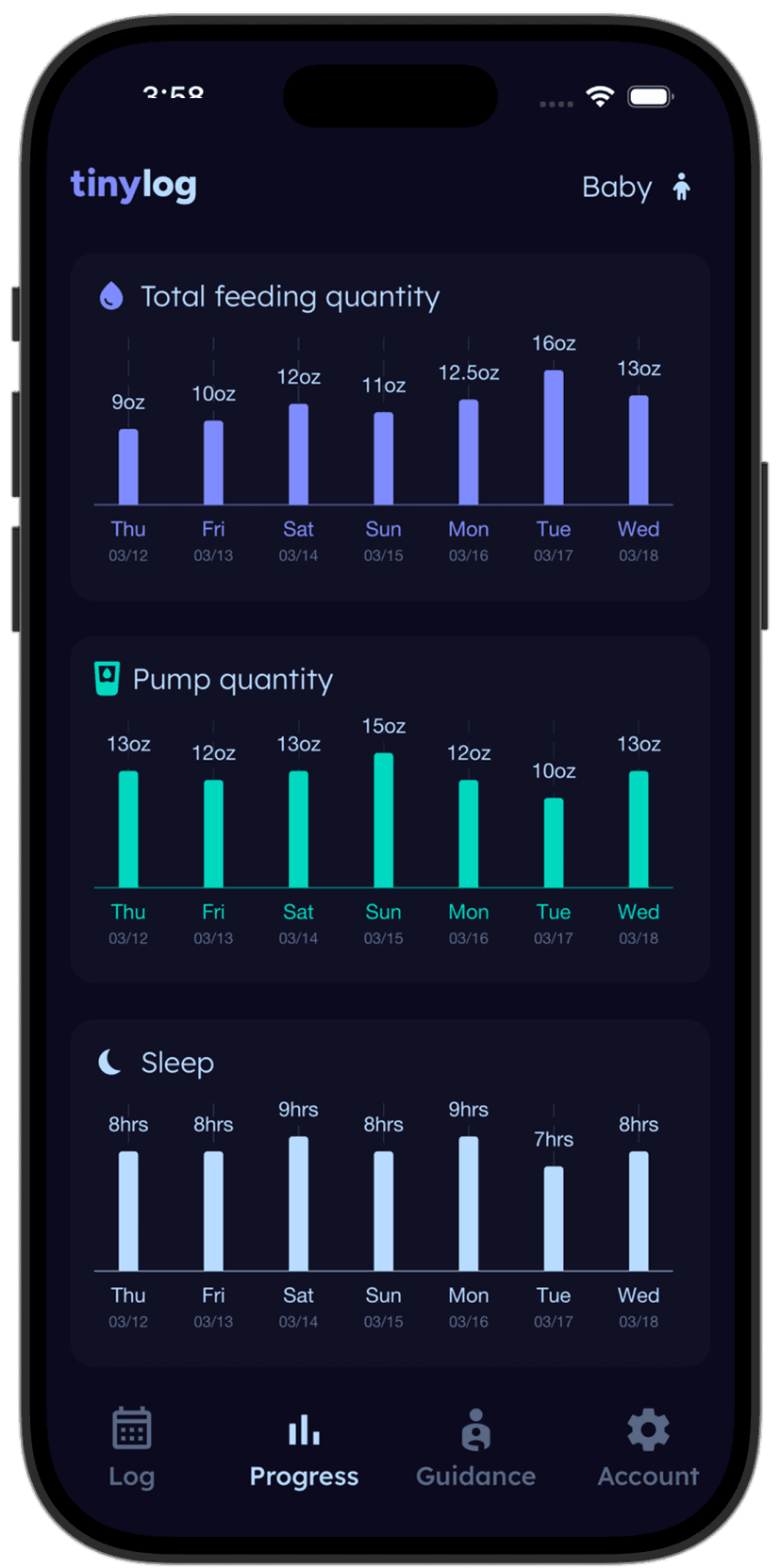
Tinylog sleep trends showing nap patterns over time

Visual sleep trends show you when patterns emerge

Tinylog tracks every nap and displays trends over time. You'll see wake windows naturally tighten, naps consolidate, and a schedule emerge from the data — so you know exactly when your baby is ready for set nap times.

Download on the App StoreGet It On Google Play

The Transition Zone: 5-8 Months

The messiest period is the transition between wake-window-based napping and schedule-based napping. Around 5-8 months, many babies are dropping from 3 naps to 2 — a shift covered in detail in our nap transitions guide — wake windows are lengthening, and some days the old system works while other days it doesn't.

During this transition, aim for a hybrid approach. Set anchor times for your baby's two main naps (morning and afternoon), but flex by 30-45 minutes based on how the day is going. If the morning nap ran short, pull the afternoon nap earlier. If baby woke up late, push the morning nap later. The anchor gives you structure; the flexibility prevents overtiredness.

By 8-9 months, most babies on two naps are ready for a reliable schedule. The morning nap often settles around 9-9:30 AM and the afternoon nap around 1-1:30 PM. These times work because they align with natural dips in circadian alerting — your baby's biology is helping you maintain the schedule at this point.


Common Wake Window Ranges by Age

These are averages — your baby may fall above or below. Newborns (0-8 weeks): 45-75 minutes. 2-4 months: 75-120 minutes. 4-6 months: 1.5-2.5 hours. 6-8 months: 2-3 hours. 8-12 months: 2.5-3.5 hours. 12-18 months: 3-5 hours (usually on one or two naps).

Watch for sleepy cues near the end of these windows: yawning, eye rubbing, staring into space, becoming quiet, fussiness. An overtired baby who fights sleep is harder to settle, so if you consistently miss the window, try starting nap prep 10-15 minutes earlier. If baby is taking a long time to fall asleep, the window may be too short — push it 10-15 minutes later.

Tips That Apply Either Way

Combine both approaches

The best approach for most families over 6 months is a schedule anchored to wake windows. You have target nap times, but you flex based on how long baby has been awake. If the morning nap ran short, you pull the afternoon nap earlier. If baby slept in, you push the morning nap later.

Watch baby, not just the clock

Whether you're using wake windows or a schedule, sleepy cues matter. Yawning, eye rubbing, zoning out, fussiness — these signals override any chart. A 7-month-old who's yawning at 2 hours awake needs a nap, even if the wake window chart says 2.5 hours.

Track for a week to see your baby's pattern

Before committing to either approach, log sleep and wake times for 5-7 days. You'll often discover your baby already has a loose natural pattern. Building your approach around that existing rhythm is easier than imposing one from scratch.

Related Guides

Sources

  • Galland, B. C., et al. (2012). Normal sleep patterns in infants and children: A systematic review of observational studies. Sleep Medicine Reviews, 16(3), 213-222.
  • Mindell, J. A., et al. (2010). Development of infant and toddler sleep patterns: real-world data from a mobile application. Journal of Sleep Research, 19(4), 394-399.
  • Jenni, O. G., & Carskadon, M. A. (2007). Sleep Behavior and Sleep Regulation from Infancy through Adolescence. Sleep Medicine Clinics, 2(3), 321-329.
  • Weissbluth, M. (2015). Healthy Sleep Habits, Happy Child. 4th Edition, Ballantine Books.

This guide is for informational purposes only and is not a substitute for professional medical advice. Consult your pediatrician for guidance specific to your baby.

Get this comparison in your inbox.
We'll send you the breakdown so you can figure out what works for your baby's age.
Visual sleep trends show you when your baby is ready for a nap schedule.
Download Tinylog to track wake windows and see patterns emerge over time.
Download on the App StoreGet It On Google Play