
GUIDE
Willow Go vs. Medela Pump In Style Hands-Free
Published on
Both are hands-free double electric breast pumps built for cord-free pumping. The Willow Go offers a spill-proof bag system and total freedom of movement. The Medela Pump In Style delivers refined suction cycling, proven motor durability, and wider insurance coverage.
Willow helped pioneer the modern wearable breast pump category, and the Willow Go brings that spill-proof technology to a more accessible price point. Medela has been the default recommendation from lactation consultants for decades, and their Pump In Style Hands-Free brings that heritage into a wearable format. Both pumps are cordless, both fit inside a nursing bra, and both promise discreet pumping on your schedule. The real differences are in how they handle movement, suction technology, and long-term reliability.
Log sessions, output, and feeding patterns
The Spill-Proof Newcomer vs. the Lactation Consultant's Favorite
The Willow Go and the Medela Pump In Style Hands-Free tackle the same problem from very different angles. One was designed around the idea that pumping parents should be able to move freely without worrying about spilling milk. The other was built on decades of clinical suction research and hospital-grade reliability.
Willow basically invented the spill-proof wearable pump. Their sealed bag system lets you pump lying down, bending forward, or running after your older kid without losing a single drop. The Willow Go is their most accessible model, bringing that spill-proof technology to a mid-range price point.
Medela is the name your lactation consultant probably mentioned first. The Pump In Style has been a go-to recommendation for years, and the hands-free version brings that trusted suction technology into a wearable form factor.
Both pumps get milk out. The real question is whether you need spill-proof freedom or clinical-grade suction refinement more.
For tips on building a pumping routine, see our exclusive pumping guide.
| Feature | Willow Go | Medela Pump In Style | What It Means |
|---|---|---|---|
| Manufacturer | Willow (subsidiary of Willow Innovations) | Medela | Willow helped create the wearable pump category. Medela is a 60-year-old Swiss medical device company trusted by hospitals worldwide. |
| Type | Wearable, in-bra, cordless | Wearable, in-bra, cordless | Tie. Both slip inside a nursing bra and operate without tubes or cords. |
| Max suction | ~300 mmHg | ~270 mmHg | Willow Go is stronger on paper. Medela's cycling rhythm is more refined and closer to natural nursing patterns. |
| Spill-proof design | Yes — sealed bag system, pump in any position | No — open container, best used upright | Willow Go wins here. You can bend over, lie down, or chase a toddler without spilling a drop. |
| Milk container | 4 oz reusable containers or disposable self-sealing bags | 5.3 oz (160 mL) reusable collection cups | Medela holds more per session. Willow's bags are convenient but add ongoing cost. |
| Noise level | ~45-48 dB (quiet conversation) | ~45 dB (between library and conversation) | Very close. The Medela is a touch quieter, but neither will turn heads in an office. |
| Battery life | ~2.5 hours (4-5 sessions) | ~2 hours (3-4 sessions) | Willow Go lasts a bit longer per charge. Both charge via USB-C. |
| App connectivity | Yes — Willow app tracks sessions and volume via Bluetooth | No built-in app | Willow Go has the edge if you want automated session logging. Medela users can track with a third-party app. |
| Flange sizes included | 21 mm and 24 mm included | 21 mm and 24 mm included | Tie. Both ship with two sizes so you can test fit right away. |
| Closed system | Yes — backflow protector | Yes — backflow protector | Tie. Both prevent milk from entering the motor. Hygienic and safe to share or resell. |
| Weight per cup | ~210 g (7.4 oz) | ~200 g (7.1 oz) | Nearly identical. You will not notice 10 grams of difference in your bra. |
Movement Freedom: Willow's Killer Feature
This is the single biggest difference between these two pumps, and it is not close.
The Willow Go uses a sealed bag system that is completely spill-proof. Milk flows directly into a closed container as it is expressed. You can lean forward to pick up your baby, lie down for a nap, bend over to load the dishwasher, or sit at any angle without worrying. The milk stays put.
The Medela Pump In Style uses an open collection cup. It works great when you are sitting or standing relatively upright. Tilt too far forward, and you risk spilling expressed milk back toward the flange. It is not a dealbreaker if you pump at a desk or on the couch, but it limits what you can do mid-session.
If your life involves pumping while doing other things — which, let's be honest, is most pumping parents — the Willow Go's spill-proof design is a meaningful advantage.
Suction Technology: Medela's Decades of Research
Medela's 2-Phase Expression technology is backed by years of clinical research into how babies actually nurse. The pump starts with a fast, light stimulation phase to trigger letdown, then transitions to a slower, deeper expression phase to extract milk. The cycling pattern is calibrated to mimic natural nursing rhythm, and many lactation consultants consider it the gold standard for wearable pumps.
The Willow Go also has a two-phase stimulation and expression system, and it has slightly higher raw suction at around 300 mmHg versus Medela's 270 mmHg. It works well for most parents. But some users report that the Medela's transition between phases feels smoother and more natural, which can make a difference in milk output for parents who are sensitive to suction patterns.
Worth repeating: flange fit matters more than any suction spec. A perfectly fitted 200 mmHg pump will outperform a poorly fitted 300 mmHg pump every time. If you have not been sized, talk to a lactation consultant before you buy either pump.
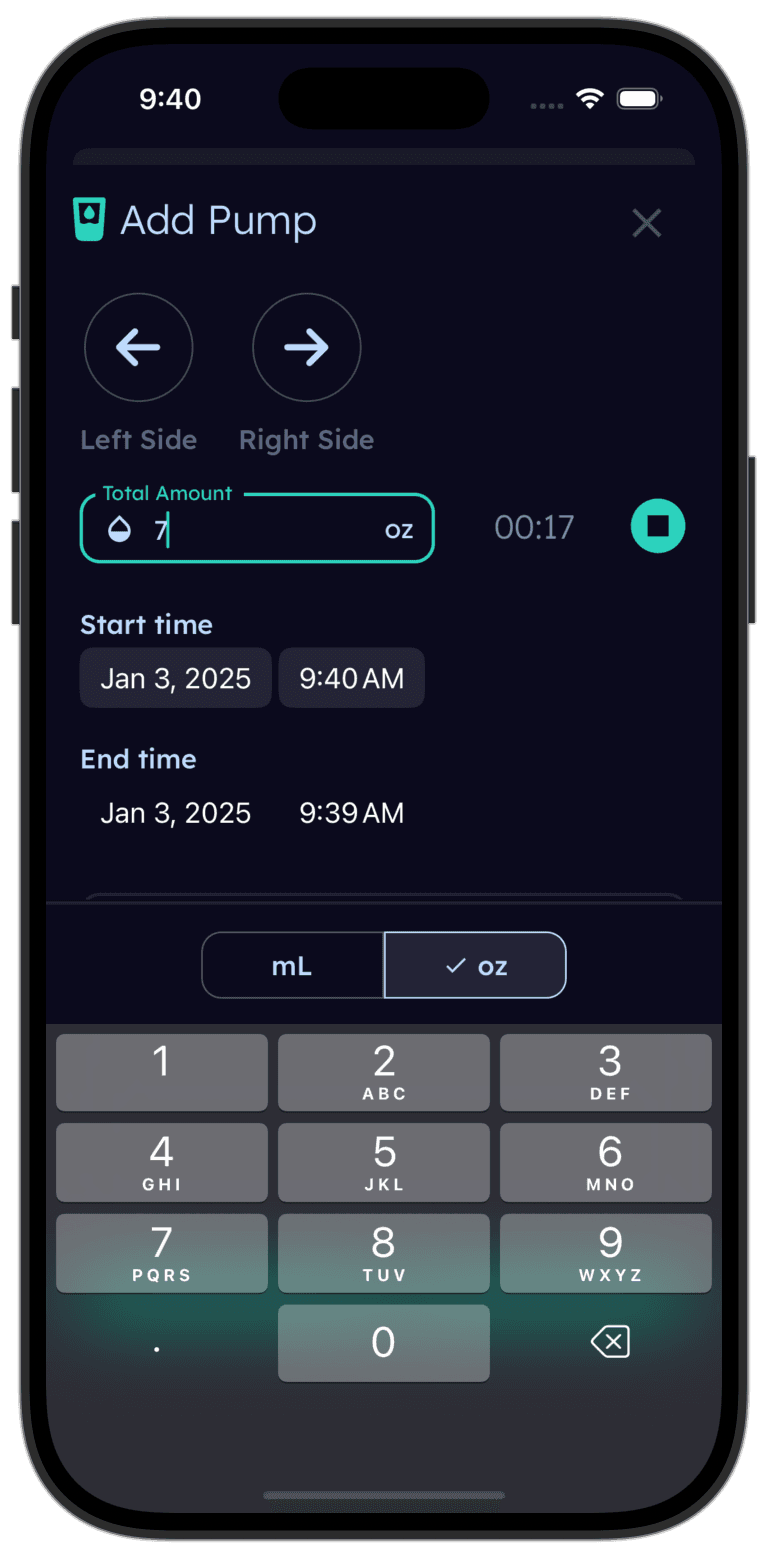
Tinylog tracks pumping sessions so you can spot supply trends.
Log each pump with duration and volume, see daily and weekly output totals, and bring the data to your lactation consultant. Works whether you pump with a Willow, Medela, or any other pump.


Durability and Long-Term Use
The Medela Pump In Style is built like the medical device it is. Parents who exclusively pump 6-8 times per day for a full year regularly report that the motor still performs like new at the end. Medela has been making breast pump motors for decades, and the engineering shows.
The Willow Go holds up well for moderate use — a few sessions per day over several months. Some exclusive pumpers have reported that suction consistency starts to dip after 4-5 months of very heavy daily use. That said, Willow has improved durability with each product revision, and most parents who pump 3-4 times daily have no issues.
If you are an exclusive pumper who needs a workhorse, the Medela's motor durability gives it an edge. If you pump a few times a day and value the spill-proof design, the Willow Go will serve you well.
| Product | Typical Price | Frequency | Ongoing Cost |
|---|---|---|---|
| Willow Go (double, wearable) | $250-$300 | One-time cost | $0 after purchase |
| Medela Pump In Style Hands-Free (double, wearable) | $280-$350 | One-time cost | $0 after purchase |
| Willow Go replacement parts + bags (per month) | $20-$35 | Monthly (bags) + every 2-3 mo (parts) | ~$20-$35/mo |
| Medela replacement parts (per set) | $18-$28 | Every 2-3 months | ~$7-$14/mo |
The Hidden Cost: Willow's Disposable Bags
The upfront price of both pumps is surprisingly close — the Willow Go runs $250-$300 and the Medela Pump In Style runs $280-$350. If you stop there, the Willow Go actually looks like the cheaper option.
But there is a catch. The Willow Go's spill-proof magic comes from disposable self-sealing milk bags. Each bag costs roughly $0.50-$0.75. If you pump 4-6 times per day, that is $2-$4.50 per day in bags alone, which adds up to $60-$135 per month.
You can reduce this by using the Willow Go's reusable containers instead of bags, but you lose the spill-proof advantage — the reusable containers behave more like the Medela's open cups.
A few things that shift the math:
- Insurance coverage. If your plan covers either pump, take the covered one. The price gap disappears entirely.
- Bag costs. Budget an extra $60-$135/month if you use Willow's disposable bags regularly.
- Replacement parts. Both pumps need new flanges and valves every 2-3 months. Medela parts cost slightly more per set.
- Resale value. Both are closed systems, meaning they can be safely resold. Willow Go units hold resale value well due to demand.
If you go with reusable containers on the Willow Go, the total cost of ownership is similar to the Medela. If you use the bags, the Willow Go costs noticeably more over six to twelve months.
Choose the Willow Go If
- You need to pump while moving — walking, commuting, chasing a toddler, or lying down
- Spill-proof operation is non-negotiable for your daily routine
- You want built-in app tracking without manually logging every session
- You prefer the convenience of disposable self-sealing milk bags for storage
- You pump at varied angles throughout the day and cannot stay upright
- You already know your flange size and want a pump that just works out of the box
Choose the Medela Pump In Style If
- You plan to exclusively pump and need a motor that holds up across 6-8 daily sessions for months
- Your insurance covers the Medela — making both pumps essentially the same price or making Medela free
- You want the larger 5.3 oz collection cup to pump longer without emptying
- You want clinically researched 2-Phase Expression suction technology
- You prefer lower ongoing costs without disposable bags eating into your budget
Where to Buy
The Willow Go Wearable Breast Pump (~$270 retail) is the pump for parents who refuse to sit still. The spill-proof bag system means you can pump in any position, the app tracks sessions automatically, and the compact design disappears under most tops. It is the strongest pick if freedom of movement is your top priority.
The Medela Pump In Style Hands-Free (~$300 retail) is the pump lactation consultants have trusted for years, now in a wearable form factor. Medela's 2-Phase Expression technology, durable motor, and lower ongoing costs make it the stronger choice for heavy daily use and long-term pumping. Check your insurance first — many plans cover it fully.
Our honest advice: check your insurance before buying either pump. If one is covered, that is your answer. If you are paying out of pocket, pick based on lifestyle — spill-proof movement with Willow or battle-tested durability with Medela.
Tinylog earns a small commission on purchases made through these links, at no cost to you.
We've found promo.new handy for finding discounts on baby gear. Doesn't always have what you need, but it's worth a shot.
The Bottom Line
The Willow Go and the Medela Pump In Style Hands-Free are both solid wearable breast pumps that solve the hands-free problem well. They just prioritize different things:
Willow Go wins on spill-proof design, pumping position flexibility, battery life, and app connectivity. It is the right pump for parents who need to move freely while pumping and want automated session tracking.
Medela Pump In Style wins on motor durability, suction refinement, collection cup capacity, and lower ongoing costs. It is the right pump for exclusive pumpers, budget-conscious families, and anyone whose insurance covers it.
For most families, the deciding factor is either insurance coverage or lifestyle. If you pump at a desk, the Medela's durability and lower running costs win. If you pump while wrangling a household, the Willow Go's spill-proof freedom is worth the premium.
If you are tracking pumping output — and you should be, especially when establishing supply or troubleshooting dips — Tinylog makes it easy to log sessions, spot trends, and share data with your lactation consultant.
Related Guides
- Exclusive Pumping — How to build and maintain supply when you pump full-time
- Pumping Schedule for Working Parents — Realistic schedules for the office, hybrid, and remote work
- How Much Milk Should I Be Pumping? — Output expectations by age and frequency
- How to Increase Milk Supply — Evidence-based strategies that actually work
Sources
- Willow.com. "Willow Go Wearable Breast Pump — Product Specifications." 2026.
- Medela.com. "Pump In Style with MaxFlow Hands-Free Breast Pump — Product Specifications." 2026.
- Journal of Human Lactation. "Comparison of Milk Output Using Wearable vs. Traditional Electric Breast Pumps." 2025.
- Wirecutter (NYT). "The Best Breast Pumps." nytimes.com/wirecutter, 2026.
- Exclusive Pumping. "Willow Go Review." exclusivepumping.com, 2025.
- Healthline Parenthood. "Medela Pump In Style Review." healthline.com, 2025.
- ACA Breast Pump Coverage Guide. healthcare.gov, 2026.
This guide is for informational purposes only. Breast pump selection depends on your individual anatomy, supply needs, and pumping goals. If you have concerns about milk supply or pumping effectiveness, consult a board-certified lactation consultant (IBCLC).
Frequently asked questions
- Can you pump lying down with the Willow Go?
- Yes. The Willow Go uses a spill-proof bag system that allows you to pump in any position — lying down, bending over, or leaning forward without losing milk. The Medela Pump In Style uses an open container design and works best when you stay relatively upright.
- Is the Medela Pump In Style stronger than the Willow Go?
- The Willow Go has a slightly higher maximum suction rating at around 300 mmHg compared to the Medela's 270 mmHg. However, Medela's 2-Phase Expression cycling pattern is clinically refined to mimic a baby's natural nursing rhythm, which many lactation consultants say matters more than raw suction power.
- Does insurance cover the Willow Go or Medela Pump In Style?
- Most US insurance plans cover at least one breast pump under the ACA. The Medela Pump In Style has wider insurance coverage because it is an established medical device brand. The Willow Go is covered by some plans but availability varies. Check with a pump benefits service like Aeroflow or Edgepark to see your options.
- Which pump is better for exclusive pumping?
- The Medela Pump In Style generally has the edge for exclusive pumping. Its motor is built for sustained heavy use across 6-8 daily sessions over many months. The Willow Go works well for moderate pumping schedules, but exclusive pumpers should factor in the ongoing cost of Willow's disposable bag inserts.
- Do both pumps have app tracking?
- Yes. The Willow Go connects to the Willow app via Bluetooth and logs session duration and volume. The Medela Pump In Style does not have a companion app — you would use a third-party tracker like Tinylog to log sessions and monitor output trends over time.
- How often do you need to replace parts on these pumps?
- Both manufacturers recommend replacing flanges, valves, and membranes every two to three months for optimal suction. Willow Go parts run about $15-$25 per set, plus the cost of disposable milk bags if you use them. Medela replacement parts cost $18-$28 per set. Worn-out parts are the most common cause of declining output.