


GUIDE

10 Month Old Sleep Schedule

Ten months is often a sweet spot — the regression is fading, the schedule is humming, and your baby might refuse a nap just to keep you guessing.

The temptation to drop to one nap is strong. Resist it. Here's why 2 naps still matter and how to handle the 'false drop' that tricks many parents.

Ten Months: The Sweet Spot (If You Let It Be)

Ten months is often a breath of fresh air. The 8-10 month regression is winding down (or over), your baby has settled into their motor skills, and the 2-nap schedule is humming along with predictable wake windows and a consistent bedtime. For many families, this is the most stable sleep period since birth.

But there's a temptation lurking: your baby may start refusing one nap, and you might wonder if they're ready for the 2-to-1 nap transition. In the vast majority of cases, they are not. The 2-to-1 transition typically happens between 14 and 18 months. What you're seeing at 10 months is a developmental blip — a "false drop" that lasts 1 to 2 weeks and resolves on its own.

The best advice for 10 months is deceptively simple: if sleep is working, don't change anything. Enjoy the stability, maintain your routines, and resist the urge to optimize what's already functioning well. The schedule you have right now is a solid foundation that will carry your baby through the next few months.

10 Month Old Sleep at a Glance
Total sleep (24 hrs)
12–14 hours
Nighttime sleep
10–12 hours
Number of naps
2
Nap duration
1–1.5 hours each
Wake windows
3–4 hours
Every baby is different — these ranges are based on AAP and sleep research averages.

Sample 10 Month Old Schedule

A realistic example. Your baby's day may vary by 30 minutes.

Sample daily schedule

  1. Wake + milk feed
  2. Breakfast (solids)
  3. Nap 1 (1–1.5 hrs)
  4. Wake + milk feed
  5. Lunch (solids)
  6. Nap 2 (1–1.5 hrs)
  7. Wake + milk feed + snack
  8. Dinner (solids)
  9. Bedtime routine + milk feed
  10. Bedtime

The wake windows matter more than the clock times. At 10 months, the schedule should feel fairly automatic. If it's not, check that wake windows are age-appropriate — many parents are still using shorter windows from earlier months.

Wake Windows at 10 Months

Your baby can handle 3 to 4 hours between sleeps. First window: 3 to 3.25 hours. Mid-day: 3.25 to 3.5 hours. Last before bed: 3.5 to 4 hours.

These are stretching toward the longer end of the range. If your baby takes more than 15 minutes to fall asleep and seems alert (not distressed), the wake window is probably too short. Try extending by 15 minutes.

The last wake window before bed is the most important one to get right. Too short and your baby isn't tired enough to fall asleep easily. Too long and they're overtired, which causes more night wakings. At 10 months, 3.5 to 4 hours is the target for most babies.

Naps at 10 Months

Two naps, totaling 2 to 3 hours. Morning nap: 1 to 1.5 hours. Afternoon nap: 1 to 1.5 hours. Both naps matter — they provide the restorative sleep your baby needs to maintain energy and mood throughout the day.

If your baby occasionally refuses a nap (especially the afternoon one), don't panic. Offer quiet time in the crib for 15 to 20 minutes. If they don't sleep, get them up and move bedtime 30 minutes earlier. One skipped nap does not mean they're ready for a nap transition.

Total daytime sleep matters: if your baby consistently naps more than 3 hours during the day and has trouble at night or wakes early in the morning, try capping day sleep at 2.5 to 3 hours total.

Nighttime Sleep at 10 Months

Nighttime sleep is typically 10 to 12 hours. This can be one of the most consistent nighttime sleep periods since birth — many 10-month-olds sleep through the night without feeds.

If night sleep is good, enjoy it. If you're still experiencing 1 to 2 wakings, check: is the last wake window long enough? Is total day sleep too high? Is the sleep environment optimized (dark, cool, white noise)? Small schedule adjustments can resolve lingering night wakings at this age.

Some babies still have one night feed at 10 months, and that's fine. If it's working for everyone, there's no medical reason to drop it. If you'd like to wean the night feed, do it gradually — reduce the feed by a minute (nursing) or an ounce (bottle) every few nights.

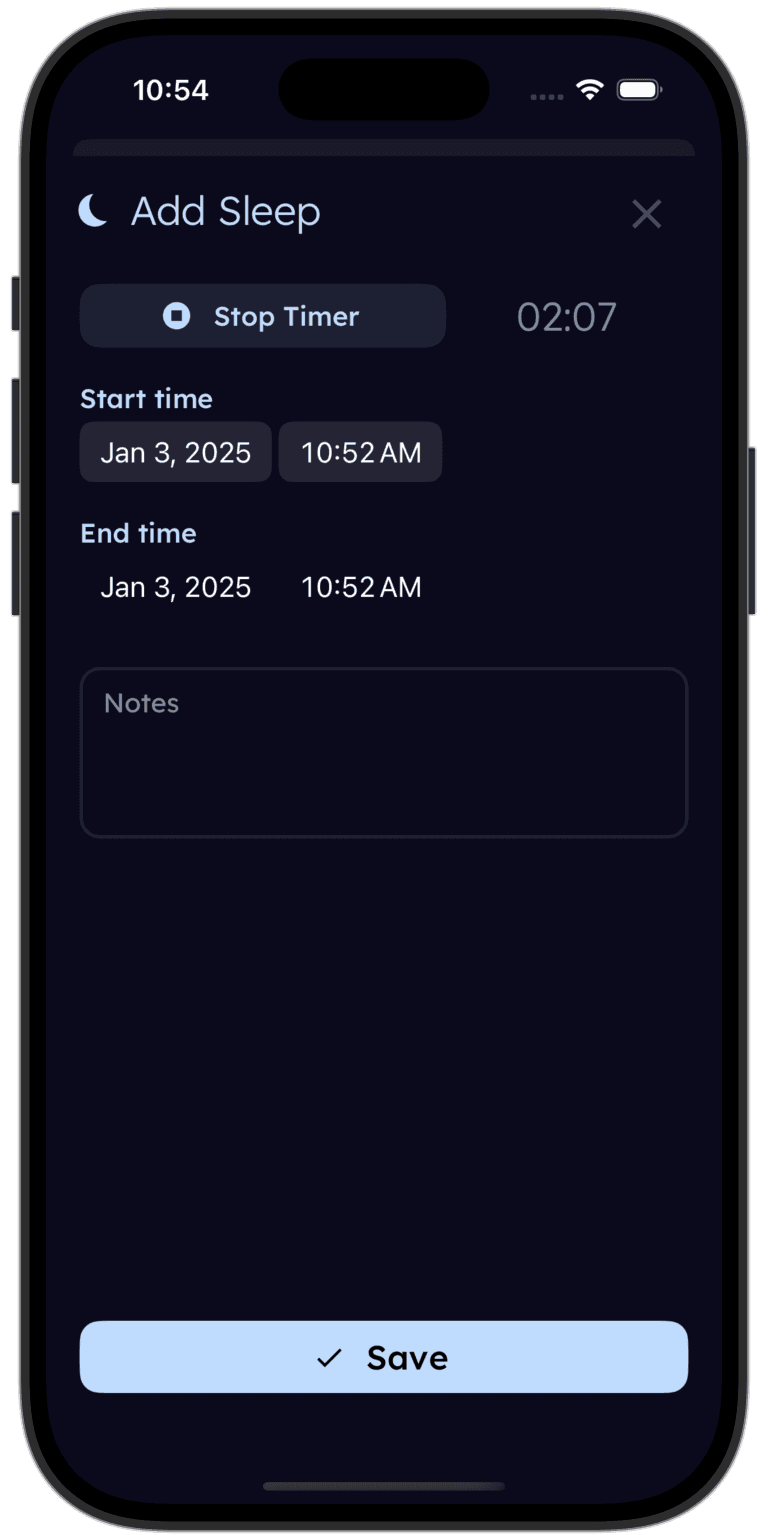
tinylog showing consistent 10 month old 2-nap schedule

This is the schedule you've been building toward — see it clearly.

At 10 months, the 2-nap rhythm is at its peak. Track it in tinylog and you'll see just how consistent your baby's natural schedule has become. This data is useful now and even more useful when the toddler transitions start.

Download on the App StoreGet It On Google Play

What's Happening Developmentally

At 10 months, your baby is pulling to stand confidently, cruising along furniture, and possibly taking their first unsupported steps. They're pointing at objects (a major communication milestone), waving bye-bye, clapping, and understanding simple words and commands. Their personality is fully on display.

These motor milestones are exciting but less sleep-disruptive than the 8-month crawling explosion. Your baby has already been through the "must practice motor skills at 2 AM" phase and has largely resolved it. Standing and cruising may cause brief nighttime disruptions, but they're usually less intense and shorter-lived.

Cognitively, your baby is beginning to show early problem-solving skills (reaching around barriers for a toy), engaging in simple pretend play, and imitating actions they've seen you do. This cognitive growth is important for sleep because it signals that your baby's brain is maturing rapidly — and mature brains sleep more efficiently.

Common Problems at 10 Months

The false nap drop

Your baby refuses the afternoon nap for a week. Everything about it says 'ready for one nap.' But they're not. This is a false start — often the tail end of the 8-10 month regression or simply a phase of nap resistance. If you push to 1 nap now, you'll end up with an overtired baby who sleeps worse, not better. The test: keep offering 2 naps for 2 more weeks. If refusal continues AND they handle the longer wake windows without meltdowns, revisit at 12+ months.

Bedtime battles are emerging

Your 10-month-old has opinions. They may resist being placed in the crib, reach for you when you try to leave, or engage in a new level of boundary-testing at bedtime. This is independence emerging — a healthy developmental sign. Keep your bedtime routine predictable, give them appropriate choices where you can ('this book or that book?'), and be firm but warm about the non-negotiables.

Waking happy at 5:30 AM

Early morning wakings where your baby is genuinely cheerful are one of the hardest sleep problems to solve because nothing is 'wrong.' Check: is bedtime too early? Is total day sleep too high? Is morning light entering the room? If all variables are optimized, your baby may simply be a naturally early riser — some babies have an earlier circadian preference. A 'toddler clock' or OK-to-wake light isn't effective at this age yet, but it will be useful later.

What No One Tells You About Sleep at 10 Months

Nap resistance at 10 months is almost never a sign to drop to one nap

At 10 months, some babies go through a 'false start' where they refuse one nap for 1 to 2 weeks. It looks exactly like readiness for the 2-to-1 transition — but they're not ready. If you push to one nap now, you get overtiredness, worse night sleep, earlier mornings, and a cranky baby. The 2-to-1 transition typically happens between 14 and 18 months. Stick with 2 naps until at least 13 to 14 months, even if they fight it sometimes.

This is one of the best sleep ages — if things are working, don't change anything

Ten months can be a genuine sleep sweet spot: the regression is behind you, the 2-nap schedule is humming, wake windows are predictable, and nighttime sleep is often long and consistent. If your baby is sleeping well, resist the urge to optimize. There's no benefit to tweaking a schedule that works. Enjoy the stability — the 12-month regression and eventual nap transition will bring change soon enough.

When to Talk to Your Pediatrician

  • Your baby shows no interest in pulling to stand or cruising
  • Sleep disruption continues with no improvement beyond what's expected for the regression timeline
  • Snoring or noisy breathing during sleep
  • Your baby seems excessively tired despite adequate sleep time
  • Regression in previously acquired skills (e.g., stopped babbling, stopped sitting)
  • Any concerns about growth, feeding, or development

You never need a 'good enough' reason to call. 'I want to check' is always fine.

Related Guides

Sources

American Academy of Pediatrics (AAP). (2022). Healthy Sleep Habits: How Many Hours Does Your Child Need?
Mindell, J. A., et al. (2016). Development of infant and toddler sleep patterns. Journal of Sleep Research, 25(5), 508–516.
Galland, B. C., et al. (2012). Normal sleep patterns in infants and children: A systematic review. Sleep Medicine Reviews, 16(3), 213–222.
Baby Sleep Information Source (BASIS), Durham University. Normal Infant Sleep Development. https://www.basisonline.org.uk
Zero to Three. (2022). Sleep: 8-12 Months. https://www.zerotothree.org

Medical Disclaimer

This guide is for informational purposes only and is not a substitute for professional medical advice. Always follow safe sleep guidelines (baby on their back, on a firm surface, in their own sleep space). Consult your pediatrician with any concerns about your baby's sleep.

Want this guide in your inbox?
We'll send you this guide so you can reference it when nap refusal strikes.
Two naps, one clear schedule — track it.
Download ${appName} free — log naps and night sleep to see your baby's rhythm.
Download on the App StoreGet It On Google Play