GUIDE

9 Month Old Sleep Schedule

Nine months often sits in the middle of the 8-10 month regression — the schedule is solid, but the disruption keeps throwing wrenches.

Your baby's 2-nap routine is well-established on paper. Cruising, cognitive leaps, and lingering regression are the wildcards. Here's how to ride it out.

Nine Months: The Schedule Is Right — the Disruption Is Temporary

Nine months often feels like a paradox: your baby's schedule is theoretically the best it's ever been (2 naps, consistent bedtime, solid wake windows), but the 8-10 month regression and ongoing developmental explosions keep throwing wrenches into it. The daily routine is set. The execution is messy.

Your baby is becoming increasingly mobile — possibly cruising along furniture, climbing on things that shouldn't be climbed on, and showing an almost aggressive curiosity about every object in their environment. Their understanding of the world is expanding so rapidly that their brain is working overtime during sleep to process it all, which means sleep itself can be more active and restless.

The frustrating thing about 9 months is that the problems are real but the solutions are mostly "wait it out." The regression peaks and fades. The motor compulsions settle once the skills are mastered. The separation anxiety evolves into something more manageable. In the meantime, maintain the schedule, keep your routines consistent, and remind yourself that this phase has an expiration date.

9 Month Old Sleep at a Glance
Total sleep (24 hrs)
12–15 hours
Nighttime sleep
10–12 hours
Number of naps
2
Nap duration
1–2 hours each
Wake windows
3–3.5 hours
During regression periods, actual sleep may fall below these ranges. That's temporary.

Sample 9 Month Old Schedule

A realistic example. Your baby's schedule may shift by 30 minutes.

Sample daily schedule

  1. Wake + milk feed
  2. Breakfast (solids)
  3. Nap 1 (1–1.5 hrs)
  4. Wake + milk feed
  5. Lunch (solids)
  6. Nap 2 (1–1.5 hrs)
  7. Wake + milk feed + snack
  8. Dinner (solids)
  9. Bedtime routine + milk feed
  10. Bedtime

The wake windows matter more than the clock times. At 9 months, the 3 to 3.5 hour windows are fairly consistent across the day. If your baby fights a nap, check that the wake window was long enough — undertiredness is a common cause of nap resistance at this age.

Wake Windows at 9 Months

Wake windows are fairly stable at 3 to 3.5 hours across the day. The first window is about 3 hours, mid-day is 3 to 3.25 hours, and the last before bed is 3.25 to 3.5 hours.

At 9 months, wake windows are becoming more consistent — you don't need to vary them as much as you did at younger ages. This makes the schedule more predictable and easier to plan around.

If your baby seems consistently undertired at nap time (takes 15+ minutes to fall asleep, seems playful rather than tired), try extending wake windows by 15 minutes. If they seem consistently overtired (meltdowns before nap, very short naps), pull wake windows back. Small adjustments make a big difference at this age.

Naps at 9 Months

Two naps, totaling 2 to 3 hours. Both naps should be 1 to 1.5 hours. If one nap is short, the other may compensate by being slightly longer — that's fine.

Some 9-month-olds have days where they refuse a nap entirely. This is almost always the regression talking, not readiness to drop a nap. Keep offering both naps. If one is refused, move bedtime earlier by 30 minutes that night.

Total day sleep matters for night sleep. If your baby consistently naps more than 3 hours during the day and has trouble at night, try capping total nap time at 2.5 to 3 hours. Too much day sleep can steal from nighttime sleep.

Nighttime Sleep at 9 Months

Nighttime sleep should be 10 to 12 hours. If the regression is still active, you may see 1 to 3 night wakings. As the regression resolves, these should decrease.

Night feeds: most 9-month-olds can go all night without eating. If your baby is eating well during the day (3 meals of solids plus 3 to 4 milk feeds), night wakings are likely about comfort or cycle transitions rather than hunger. That said, if one night feed is part of your routine and everyone sleeps better for it, there's no rush to drop it.

Separation anxiety may still cause bedtime distress or middle-of-the-night calling out. Continue with your consistent, brief response. Over time, your baby learns that you always come back — and that knowledge eventually reduces the anxiety.

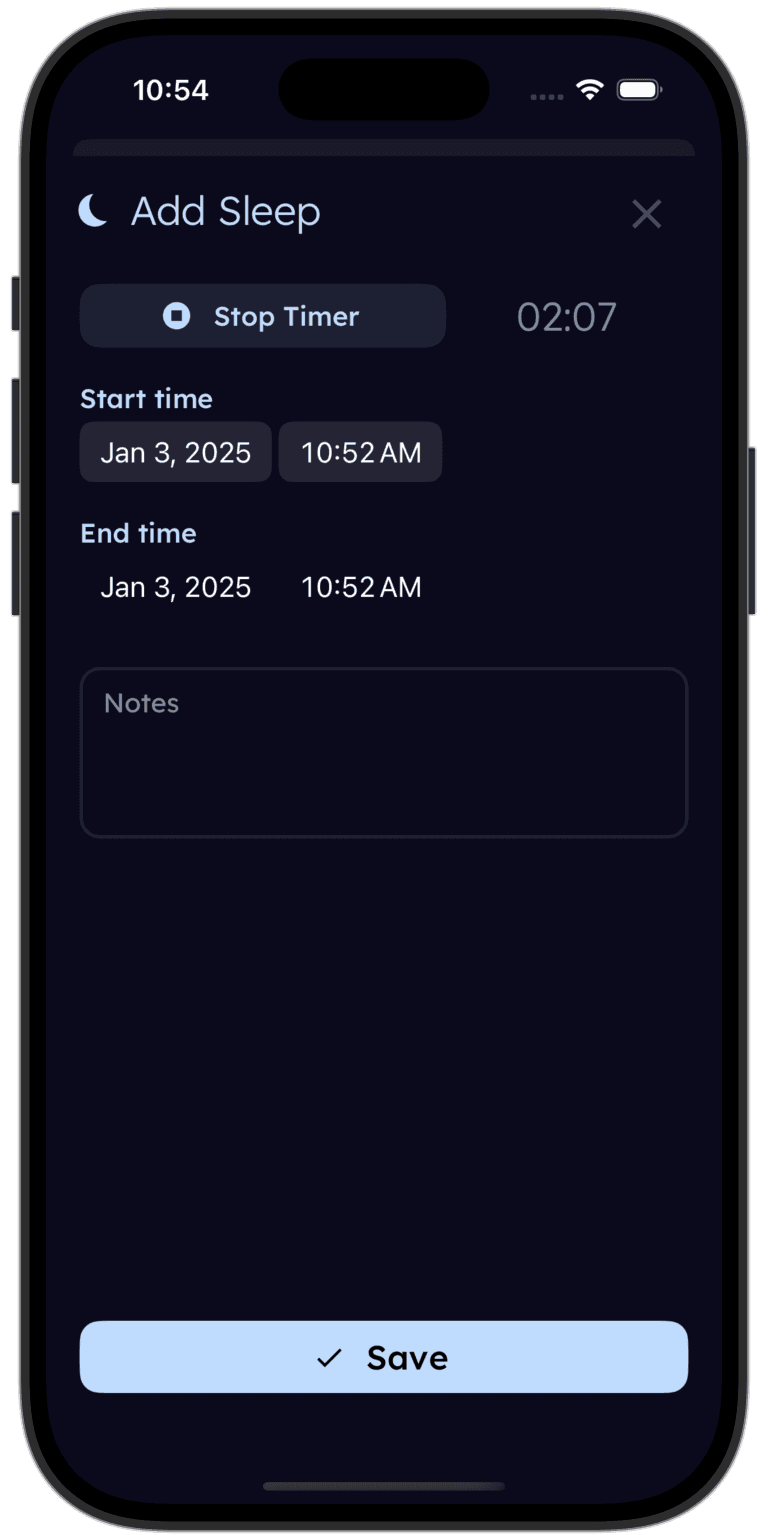
tinylog showing gradual sleep improvement at 9 months

Is it getting better? The trend is hiding in the data.

Regression recovery is gradual — one fewer waking this week, a slightly longer nap the next. Tracking shows you the trajectory when it feels like nothing is changing.

Download on the App StoreGet It On Google Play

What's Happening Developmentally

At 9 months, your baby is cruising along furniture, possibly standing briefly unsupported, clapping, waving, and beginning to use gestures to communicate (pointing, reaching up to be held). They understand simple words and may say their first intentional "mama" or "dada."

The cognitive explosion at this age is massive. Your baby is learning about cause and effect, problem-solving (moving obstacles to reach a toy), and social referencing (looking at your face to decide how they should feel about something new). All of this complex learning gets consolidated during sleep, which makes sleep more active.

Pincer grasp development means your baby can now pick up small foods, which is expanding their solids repertoire and making mealtimes more interactive. This increased food intake can positively impact sleep as their nutritional needs are more fully met during the day.


Common Problems at 9 Months

The regression that won't end

If the 8-10 month regression started at 8 months, you're now 4+ weeks in and exhausted. The good news: the regression does peak and fade. You should start seeing gradual improvement — one fewer night waking, slightly easier nap settling. If things are no better at all after 6 weeks, it's worth talking to your pediatrician to rule out other causes (ear infections, reflux, etc.).

Baby is too social to sleep

Your 9-month-old wants to interact with everything and everyone. At bedtime, they may try to engage you in play — reaching for your face, babbling, smiling. This is adorable and exasperating. Keep your bedtime routine consistent, dim, and boring. Avoid eye contact during the final settling — it signals 'playtime' to your baby. Your calm, quiet presence communicates 'it's sleep time' more effectively than words.

Early morning wake-ups (5:00-5:30 AM)

This is one of the most common complaints at 9 months. Early wakings are often caused by: too much total day sleep (try capping naps at 2.5 to 3 hours total), a bedtime that's too late or too early, or environmental factors (morning light, neighborhood noise). The counter-intuitive fix for a too-early bedtime: push the first nap later by 15 minutes. This gradually extends the morning wake window and can shift the whole cycle later.

What No One Tells You About Sleep at 9 Months

Your baby's brain is processing a language explosion — and it makes sleep restless

Nine-month-olds are in the middle of a receptive language boom. They understand far more words than they can say — 'mama,' 'dada,' 'no,' 'bye-bye,' their own name, and dozens of other words are being processed and catalogued. All of this language learning gets consolidated during sleep, which makes sleep itself more active and restless. Your baby may babble during sleep, cry out briefly, or have more active REM phases. This is their brain working, not a sleep problem.

If early mornings are your problem, the fix is often a later first nap — not an earlier bedtime

When your baby wakes at 5:30 AM, the instinct is to move bedtime earlier or offer an early morning nap. But this often reinforces the early wake cycle. Instead, try gradually pushing the first nap later by 10 to 15 minutes every few days. This stretches the morning wake window and, over 1 to 2 weeks, can shift the entire cycle so wake-up moves later. It's slow but effective.

When to Talk to Your Pediatrician

  • Sleep disruption is severe with no improvement after 6+ weeks
  • Your baby seems lethargic or excessively sleepy during wake periods
  • Frequent ear pulling accompanied by fever or fussiness (possible ear infection)
  • Snoring, gasping, or breathing pauses during sleep
  • No babbling or attempts at communication by 9 months
  • You're concerned about any aspect of development or behavior

The 9-month well visit is a great time to discuss sleep, development, and any lingering regression concerns.

Related Guides

Sources

American Academy of Pediatrics (AAP). (2022). Healthy Sleep Habits: How Many Hours Does Your Child Need?
Mindell, J. A., et al. (2016). Development of infant and toddler sleep patterns. Journal of Sleep Research, 25(5), 508–516.
Galland, B. C., et al. (2012). Normal sleep patterns in infants and children: A systematic review. Sleep Medicine Reviews, 16(3), 213–222.
Baby Sleep Information Source (BASIS), Durham University. Normal Infant Sleep Development. https://www.basisonline.org.uk
Zero to Three. (2022). Language and Communication. https://www.zerotothree.org

Medical Disclaimer

This guide is for informational purposes only and is not a substitute for professional medical advice. Always follow safe sleep guidelines (baby on their back, on a firm surface, in their own sleep space). Consult your pediatrician with any concerns about your baby's sleep.

Want this guide in your inbox?
We'll send you this guide for those middle-of-the-night reference moments.
See the regression's end before you feel it.
Download ${appName} free — track sleep and watch the improvement emerge.
Download on the App StoreGet It On Google Play