GUIDE

8 Month Old Sleep Schedule

Your baby is crawling, pulling to stand, and hit peak separation anxiety — all at once. Sleep takes the hit.

The 8-10 month regression is the perfect storm of motor milestones and emotional development. Here's the schedule, why sleep is disrupted, and what actually helps.

Eight Months: The Perfect Storm

Eight months is one of the most physically dramatic developmental periods of infancy — and sleep takes a direct hit. Your baby is likely crawling (or about to), pulling to stand (or trying), and fully in the grip of separation anxiety. These three forces combine to create the 8-10 month sleep regression, which can feel overwhelming even if your baby's schedule was working beautifully.

The schedule itself hasn't changed from 7 months: 2 naps, predictable wake windows, consistent bedtime. But the disruption around that schedule can be intense. Night wakings increase, naps become battlegrounds, and bedtime features a level of clinginess you may not have seen since the newborn days.

Here's the reassuring part: unlike the 4-month regression (which was a permanent change in sleep architecture), the 8-10 month regression is temporary. It's driven by developmental milestones that your baby will master, and once they do, sleep returns to normal — usually within 2 to 4 weeks.

8 Month Old Sleep at a Glance
Total sleep (24 hrs)
12–15 hours
Nighttime sleep
10–12 hours
Number of naps
2
Nap duration
1–2 hours each
Wake windows
2.5–3.5 hours
During the regression, your baby may sleep less than these ranges. That's temporary — these are the targets, not the reality of every week.

Sample 8 Month Old Schedule

A realistic example — not a prescription. During the regression, expect disruption.

Sample daily schedule

  1. Wake + milk feed
  2. Breakfast (solids)
  3. Nap 1 (1–1.5 hrs)
  4. Wake + milk feed
  5. Lunch (solids)
  6. Nap 2 (1–2 hrs)
  7. Wake + milk feed + snack
  8. Dinner (solids)
  9. Bedtime routine + milk feed
  10. Bedtime

The wake windows matter more than the clock times. If your baby had a short nap, don't necessarily shorten the next wake window — at 8 months, they often still need the full window to build enough sleep pressure for the next nap.

Wake Windows at 8 Months

Your baby can handle 2.5 to 3.5 hours between sleeps. The first wake window is 2.5 to 3 hours, mid-day is 3 to 3.25 hours, and the last before bed is 3.25 to 3.5 hours. These are slightly longer than at 7 months.

During the regression, you may be tempted to shorten wake windows because your baby seems tired. But at 8 months, overtiredness from too-long windows and undertiredness from too-short windows look almost identical (both cause nap resistance and night wakings). If your baby takes more than 20 minutes to fall asleep and seems alert rather than distressed, try extending the wake window by 15 minutes.

Active play during wake windows is more important now than ever. Crawling practice, pulling-to-stand practice, and plenty of floor time help your baby work through their motor compulsions during the day — which means less practice during sleep times.

Naps at 8 Months

Two naps, totaling 2 to 3 hours. Morning nap: 1 to 1.5 hours. Afternoon nap: 1 to 2 hours. During the regression, one or both naps may be shorter or refused entirely. This is frustrating but temporary.

If your baby refuses a nap after 20 minutes of trying: get them up, keep things calm and low-stimulation, and move bedtime 30 minutes earlier that evening. One bad nap day is recoverable. A string of bad nap days during the regression is normal and ends when the developmental milestone is mastered.

Do NOT drop to 1 nap at this age. Nap resistance during the regression can look like readiness to transition, but it's not. The 2-to-1 nap transition typically happens between 14 and 18 months. Dropping too early leads to chronic overtiredness.

Nighttime Sleep at 8 Months

The regression typically hits night sleep hardest. Your baby may go from sleeping 10 to 12 hours with minimal wakings to waking 2 to 4 times per night. Common scenarios: standing up in the crib and crying, calling out for you (separation anxiety), or waking and practicing crawling movements.

Night feeds at this age: most 8-month-olds can go the entire night without eating, especially if they're eating well during the day (3 meals of solids plus 3 to 4 milk feeds). If you've been feeding 0 to 1 times at night and suddenly your baby wants to eat every waking, the extra feeds are likely comfort-seeking rather than hunger. You can offer comfort without feeding — though this is a personal choice.

For a deeper look at the regression, see our 8-10 month sleep regression guide.

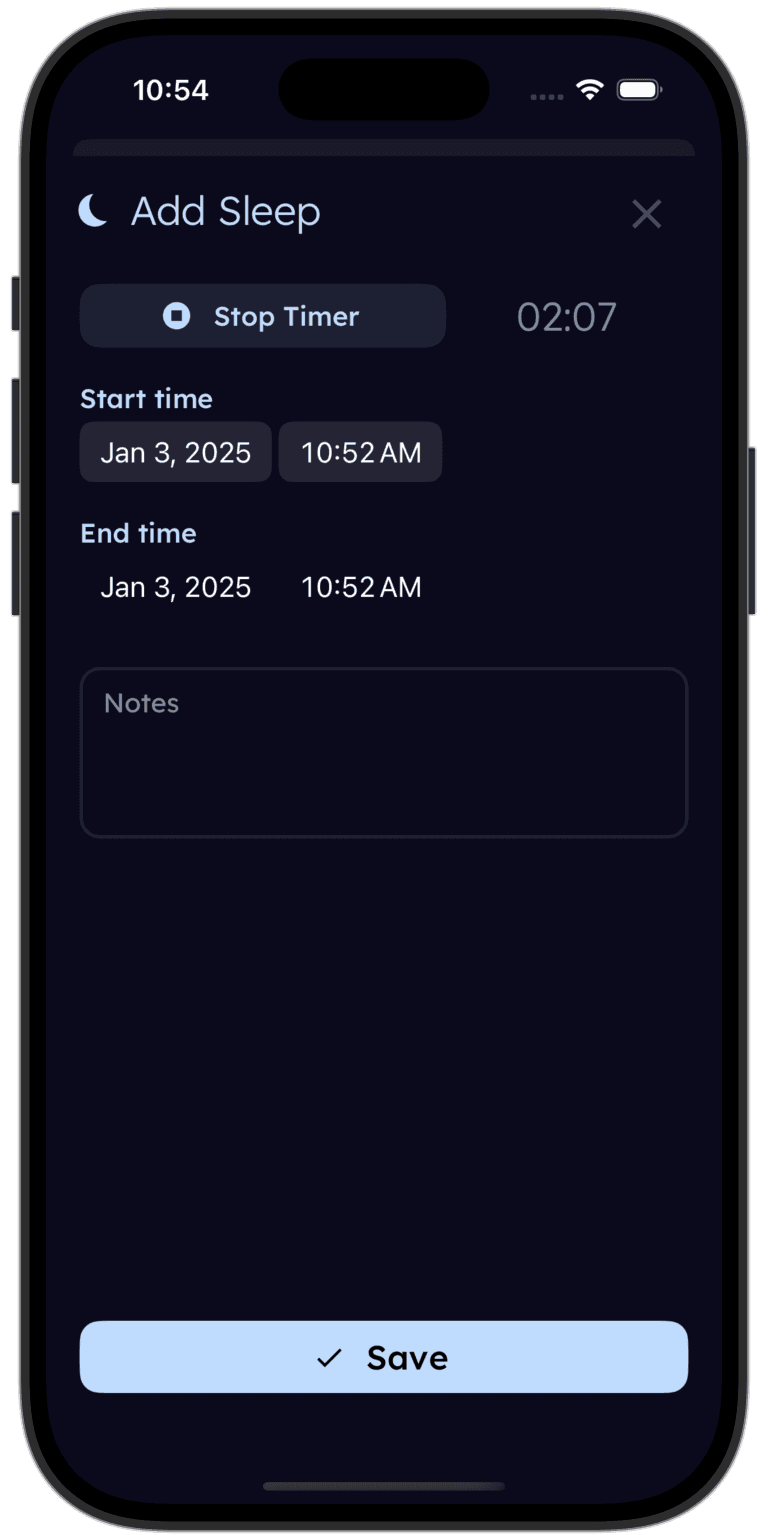
tinylog tracking sleep through 8 month regression showing improvement pattern

The regression has a shape — you just can't see it from inside.

Track sleep through the regression and you'll see what you can't feel: the peak, the gradual improvement, and the new normal emerging. Data replaces the feeling of 'this will never end.'

Download on the App StoreGet It On Google Play

What's Happening Developmentally

Eight months is a motor milestone explosion. Your baby is crawling (or commando crawling), pulling to stand, possibly cruising along furniture, and developing the pincer grasp (thumb and forefinger). Their brain is processing an enormous amount of new spatial and motor information — and sleep is when that processing happens.

Separation anxiety reaches its peak around 8 to 9 months. Your baby now has full object permanence and understands that you continue to exist when you leave. This creates a new form of bedtime distress: they're not just uncomfortable, they're emotionally missing you. This is a sign of healthy, secure attachment — even though it doesn't feel like a positive development at 2 AM.

Cognitively, your baby is beginning to understand cause and effect (I drop the spoon, you pick it up — fun!), responding to simple words ("no," their name, "mama/dada"), and showing early problem-solving skills. All of this cognitive work gets consolidated during sleep, which makes sleep itself more active and sometimes more disrupted.


Common Problems at 8 Months

Standing in the crib and screaming

Your baby has discovered they can pull to stand — thrilling! But they have no idea how to get back down. So they stand there, gripping the crib rail, crying. During daytime play, practice the getting-down motion: hold their hands, show them how to bend their knees, lower themselves to sitting. Do this 10 to 15 times a day. Within a week or two, they'll figure it out and the nighttime standing stops.

Separation anxiety at its peak

Eight months is typically the peak of separation anxiety. Your baby may cling to you desperately at bedtime, cry when you leave the room, and need more reassurance during night wakings. This isn't a sleep training failure — it's a developmental milestone. Keep your bedtime goodbye consistent and brief: same words, same kiss, same exit. Lingering makes it harder. If you need to do check-ins at night, keep them short and boring.

Nap strikes

Your baby may refuse one or both naps — they're too busy crawling, standing, and exploring to sleep. This is temporary (usually 1 to 2 weeks during the regression peak). Keep offering naps at the usual times. If they don't sleep after 20 minutes of trying, get them up and adjust bedtime earlier. Don't drop to 1 nap — 8 months is far too early for that transition.

What No One Tells You About Sleep at 8 Months

Your baby standing in the crib isn't stubbornness — they genuinely can't sit back down

It looks like your baby is choosing to stand instead of sleep. But pulling up is a new skill they can't resist practicing, and sitting back down is a separate skill they haven't learned yet. They're stuck — literally. Spend time during the day showing them how to lower themselves from standing (bend the knees, slowly sit). They'll master it in 1 to 2 weeks, and the crib standing resolves itself.

The regression can look like hunger — but it usually isn't

During the 8-10 month regression, many babies want to nurse or take a bottle every time they wake at night. And they'll eat — because sucking is comforting, not because they're genuinely hungry. If your baby is eating well during the day (3 meals of solids plus 3 to 4 milk feeds), the nighttime eating is about connection and comfort, not calories. This is important to recognize, because if you increase night feeds, you may inadvertently reduce daytime appetite and create a cycle.

When to Talk to Your Pediatrician

  • Your baby can't bear weight on their legs at all when held upright
  • They show no interest in crawling, scooting, or any form of mobility
  • Sleep disruption is severe after 6+ weeks with no improvement
  • You notice snoring, gasping, or breathing pauses during sleep
  • Excessive daytime sleepiness despite apparently adequate sleep time
  • Your baby has lost interest in food (solids or milk) for more than a few days

You never need a 'good enough' reason to call. 'I'm worried about my baby's development or sleep' is always sufficient.

Related Guides

Sources

American Academy of Pediatrics (AAP). (2022). Healthy Sleep Habits: How Many Hours Does Your Child Need?
Mindell, J. A., et al. (2016). Development of infant and toddler sleep patterns. Journal of Sleep Research, 25(5), 508–516.
Galland, B. C., et al. (2012). Normal sleep patterns in infants and children: A systematic review. Sleep Medicine Reviews, 16(3), 213–222.
World Health Organization. (2006). WHO Motor Development Study: Windows of Achievement for Six Gross Motor Development Milestones.
Zero to Three. (2022). Helping Your Baby Sleep. https://www.zerotothree.org

Medical Disclaimer

This guide is for informational purposes only and is not a substitute for professional medical advice. Always follow safe sleep guidelines (baby on their back, on a firm surface, in their own sleep space). Consult your pediatrician with any concerns about your baby's sleep.

Want this guide in your inbox?
We'll send you this guide so you have it during the regression.
The regression has a shape — track it.
Download ${appName} free — log sleep and see the pattern through the disruption.
Download on the App StoreGet It On Google Play