


GUIDE

7 Month Old Sleep Schedule

Seven months brings two naps, separation anxiety, and a baby who practices crawling at 2 AM. Welcome to the next chapter.

Your baby's daily schedule is becoming genuinely predictable. But separation anxiety and motor milestones add new layers. Here's the full picture.

Seven Months: Predictable Schedule, Unpredictable Emotions

Seven months brings two big emotional developments that directly impact sleep: separation anxiety and fully developed object permanence. Your baby now understands that you exist even when you leave the room — which means they care when you leave. Bedtime can suddenly become charged with anxiety that wasn't there a month ago.

On the schedule side, this is often when things click. Most 7-month-olds are firmly in a 2-nap groove, with consistent morning and afternoon naps and a predictable bedtime. The daily rhythm — wake, play, eat, nap, repeat — is becoming genuinely reliable. You can actually plan your day around the schedule, and that's a real quality-of-life improvement.

Physically, your baby is likely crawling (or getting very close), sitting confidently without support, and possibly pulling up on furniture. These motor milestones are exciting and exhausting — and they directly impact sleep, because your baby's brain is compelled to practice new physical skills even during sleep time.

7 Month Old Sleep at a Glance
Total sleep (24 hrs)
12–15 hours
Nighttime sleep
10–12 hours
Number of naps
2
Nap duration
1–2 hours each
Wake windows
2.5–3.25 hours
Every baby is different — these ranges are based on AAP and sleep research averages.

Sample 7 Month Old Schedule

A realistic example. Your baby's schedule may shift by 30 minutes in either direction.

Sample daily schedule

  1. Wake + milk feed
  2. Breakfast (solids)
  3. Nap 1 (1–1.5 hrs)
  4. Wake + milk feed
  5. Lunch (solids)
  6. Nap 2 (1–2 hrs)
  7. Wake + milk feed + snack
  8. Dinner (solids)
  9. Bedtime routine (bath, pajamas, milk, book)
  10. Bedtime

The wake windows matter more than the clock times. At 7 months, the 2-nap schedule should feel fairly settled. If it doesn't, check that your wake windows are age-appropriate — too-short windows are the most common cause of nap resistance at this age.

Wake Windows at 7 Months

Your baby's wake windows are stretching to 2.5 to 3.25 hours — a noticeable increase from a month ago. This longer wake tolerance is what makes the 2-nap schedule sustainable.

The first wake window is about 2.5 hours. After the overnight sleep, your baby has enough sleep pressure to handle a decent morning stretch before the first nap. Mid-day windows (between nap 1 and nap 2) are 2.75 to 3 hours. The last wake window before bed is the longest at 3 to 3.25 hours.

If your baby is resisting naps, the most common fix at this age is actually making wake windows LONGER, not shorter. Many parents are still using 5-month wake windows, and a 7-month-old who isn't tired enough simply won't sleep. Try extending by 15 minutes and see if nap settling improves.

Naps at 7 Months

Two naps is the standard. Morning nap: 1 to 1.5 hours, typically starting around 9:00 to 9:30 AM. Afternoon nap: 1 to 2 hours, typically starting around 1:00 to 2:00 PM. Total day sleep should be about 2.5 to 3 hours.

If naps are consistently shorter than expected, check two things: wake windows (are they long enough?) and the sleep environment (is the room truly dark and is white noise running?). At 7 months, environmental factors matter more because your baby is more alert and easily stimulated.

If your baby occasionally skips or shorts a nap due to separation anxiety, move bedtime earlier that evening. A 6:00 to 6:30 PM bedtime after a bad nap day prevents the overtiredness spiral.

Nighttime Sleep at 7 Months

Nighttime sleep should be 10 to 12 hours. Many 7-month-olds are sleeping through the night or waking only once. However, separation anxiety can introduce new night wakings — your baby calls out for you because they know you're there and want confirmation of your presence.

If night wakings increase at this age, consider whether it's separation anxiety (calls out, settles quickly once reassured) or a schedule issue (fully awake, takes a long time to resettle). For anxiety-driven wakings, a brief, boring check-in usually works: go in, say your phrase ("I'm here, you're okay, goodnight"), and leave. Keep it consistent and keep it short.

Night feeds: most 7-month-olds can go 10 to 12 hours without eating, especially if they're eating well during the day (milk plus solids). However, some babies still benefit from one night feed, and that's perfectly fine. If you're unsure whether a night waking is hunger or habit, track feed times and amounts for a few days — the pattern usually becomes clear.

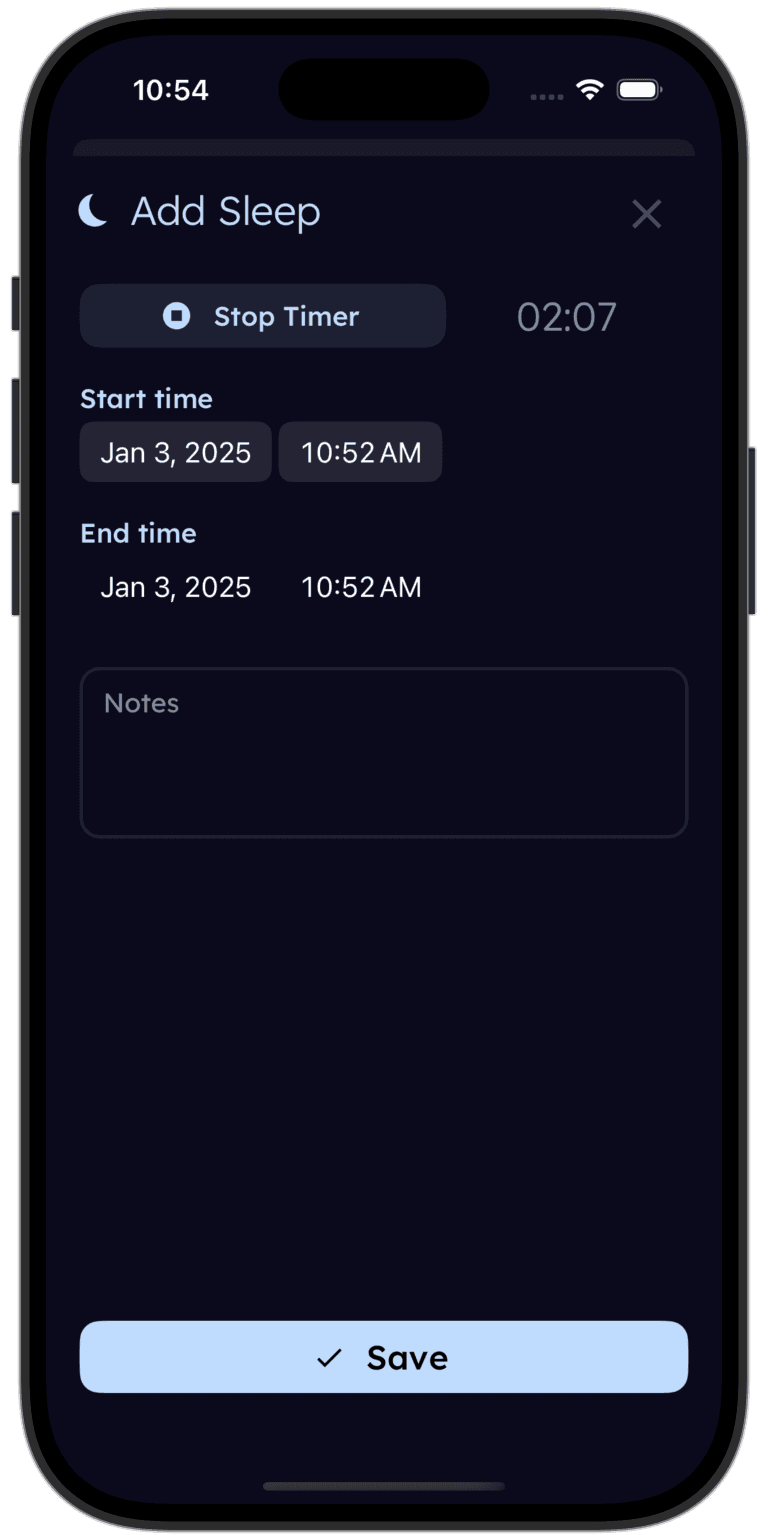
tinylog showing 7 month old sleep patterns during separation anxiety phase

Separation anxiety makes everything feel worse than it is.

Tracking sleep during this phase shows you the reality: most nights are actually okay, and the bad stretches are shorter than they feel. Data replaces anxiety with information.

Download on the App StoreGet It On Google Play

What's Happening Developmentally

Seven months is a period of intense cognitive and motor development. Your baby is likely crawling (or commando crawling), sitting independently, transferring objects between hands, and beginning to understand cause and effect (bang the toy, it makes noise — do it again). They respond to their name, babble with consonant-vowel combinations, and may show stranger anxiety alongside separation anxiety.

The developmental milestone that most impacts sleep is object permanence. Your baby now fully understands that objects (and people) continue to exist when they can't be seen. This is why peek-a-boo becomes hilarious — and why your departure at bedtime becomes distressing. They know you're out there, and they want you.

Crawling practice is the other major sleep disruptor. Many babies practice crawling movements during light sleep phases — you'll hear them shuffling, grunting, or rocking in the crib. This usually peaks for 1 to 2 weeks when the skill is newest and gradually fades as they master it. Plenty of floor time during the day helps them work through the compulsion faster.

Common Problems at 7 Months

Sudden bedtime screaming

Your baby who used to go down without protest now screams when you walk out of the room. This is separation anxiety — a completely normal and healthy developmental milestone. Your baby's brain has developed object permanence: they know you exist even when they can't see you, and your departure now carries emotional weight. Keep your goodbye ritual short and predictable (a kiss, a phrase like 'I love you, goodnight,' and walk out). Sneaking out actually makes anxiety worse because they can't trust that you'll be there when they look for you.

Crawling practice at 2 AM

Babies who are learning to crawl or pull up literally cannot stop practicing — even in the middle of the night. You may hear your baby grunting and shuffling in the crib, practicing their new motor skills when they should be sleeping. This is a compulsive developmental drive and it passes in 1 to 2 weeks once the skill is mastered. Lots of floor time and crawling practice during the day helps them work through it faster.

Won't nap in the crib anymore

Separation anxiety doesn't just affect bedtime — it can hit naps too. If your baby was napping independently and suddenly needs you nearby, this is the anxiety at work. Keep the nap routine consistent, stay boring during the settling process (no eye contact, minimal talking), and consider a transitional comfort object if your baby is 7+ months (a small lovey that stays in the crib). Most babies work through nap anxiety within 2 to 3 weeks.

What No One Tells You About Sleep at 7 Months

Separation anxiety is a sign of healthy attachment — not a sleep problem

When your baby cries at bedtime because you're leaving, they're not being manipulative or difficult. Their brain has developed the ability to miss you — and that's actually a sign of secure attachment and cognitive advancement. Short, predictable goodbyes work better than either lingering (which prolongs the distress) or sneaking out (which erodes trust). 'I love you, I'm right outside, I'll see you in the morning' — same words every night.

Motor practice in the crib is involuntary — they literally can't help it

If your baby is army crawling, rocking on all fours, or pulling to knees in the crib instead of sleeping, they're not choosing to play instead of sleep. Their brain is compelled to practice new motor skills, especially during the light sleep phases between cycles. It's the neurological equivalent of having a song stuck in your head. It passes once the skill is mastered — usually within 1 to 2 weeks of intensive practice.

When to Talk to Your Pediatrician

  • Your baby shows no interest in sitting, reaching, or interacting socially
  • Sleep disruption is severe and shows no improvement after 3 to 4 weeks
  • You notice snoring, gasping, or breathing pauses during sleep
  • Your baby seems excessively anxious or distressed beyond normal separation anxiety
  • They're refusing to eat or not gaining weight appropriately
  • You're struggling with the emotional toll of separation anxiety at bedtime

Separation anxiety is normal, but if it's severe or interfering with daily functioning, your pediatrician can help.

Related Guides

Sources

American Academy of Pediatrics (AAP). (2022). Healthy Sleep Habits: How Many Hours Does Your Child Need?
Mindell, J. A., et al. (2016). Development of infant and toddler sleep patterns. Journal of Sleep Research, 25(5), 508–516.
Galland, B. C., et al. (2012). Normal sleep patterns in infants and children: A systematic review. Sleep Medicine Reviews, 16(3), 213–222.
World Health Organization. (2006). WHO Motor Development Study: Windows of Achievement for Six Gross Motor Development Milestones.
Baby Sleep Information Source (BASIS), Durham University. Normal Infant Sleep Development. https://www.basisonline.org.uk

Medical Disclaimer

This guide is for informational purposes only and is not a substitute for professional medical advice. Always follow safe sleep guidelines (baby on their back, on a firm surface, in their own sleep space). Consult your pediatrician with any concerns about your baby's sleep.

Want this guide in your inbox?
We'll send you this guide so you can reference it without searching.
Two naps, one rhythm — see it clearly.
Download ${appName} free — track your baby's 2-nap schedule and spot patterns.
Download on the App StoreGet It On Google Play