GUIDE

6 Month Old Sleep Schedule

Six months brings the 3-to-2 nap transition, starting solids, and a baby who's more alert and curious than ever.

The big event: dropping the third nap. Here's how to manage the transition, what solids mean for sleep (spoiler: not what you think), and how to ride out the changes.

Six Months: Everything Changes (Again)

Six months is a milestone month in almost every way — and sleep is no exception. Your baby may be starting solids, sitting up independently (or getting close), and showing a whole new level of curiosity about the world around them. They notice things they didn't notice before: the dog walking across the room, the sound of a door closing, the way light moves across the ceiling. This is wonderful for development and challenging for sleep.

The big sleep event at 6 months is the 3-to-2 nap transition. That third late-afternoon catnap is on its way out, and your baby is moving toward a 2-nap schedule that will carry them through to about 14 to 18 months. Managing this transition gracefully — knowing when to offer 2 naps versus 3, and adjusting bedtime accordingly — is the key skill of this month.

There's also the question of solids. Everyone and their grandmother will tell you that starting solids will fix your baby's sleep. The evidence for this is weak at best. Solids are important for nutrition and development, but they're not a sleep magic bullet. Start solids when your baby is ready (can sit with support, shows interest in food, has lost the tongue-thrust reflex) — not because you're hoping for a longer sleep stretch.

6 Month Old Sleep at a Glance
Total sleep (24 hrs)
12–15 hours
Nighttime sleep
10–11 hours
Number of naps
2–3 (transitioning to 2)
Nap duration
1–2 hours
Wake windows
2–2.75 hours
Your baby may be on 3 naps at the start of this month and 2 by the end. Both are normal at 6 months.

Sample 6 Month Old Schedule (2 Naps)

This is what the schedule looks like once the third nap drops. During the transition, you may alternate between this and a 3-nap version.

Sample daily schedule (2-nap version)

  1. Wake + milk feed
  2. Breakfast (solids — if started)
  3. Nap 1 (1–1.5 hrs)
  4. Wake + milk feed
  5. Lunch (solids)
  6. Nap 2 (1–2 hrs)
  7. Wake + milk feed
  8. Dinner (solids) + milk feed
  9. Bedtime routine
  10. Bedtime

Your baby's schedule may shift by 30 to 60 minutes. On days when a nap is short, you may need to add a rescue catnap or move bedtime earlier. Flexibility is more important than consistency during the transition.

Wake Windows at 6 Months

Wake windows are stretching to 2 to 2.75 hours. The first wake window is about 2 hours — your baby wakes, eats, has some activity time, and is ready for their first nap. Mid-day windows are 2.25 to 2.5 hours. The last wake window before bed stretches to 2.5 to 2.75 hours.

When your baby transitions to 2 naps, the last wake window before bed may need to stretch a bit further — up to 3 hours on some days. This is okay. The increased wake pressure actually helps your baby fall asleep faster and sleep more deeply at night.

The sign that wake windows need to be longer: your baby takes more than 15 to 20 minutes to fall asleep for a nap, or they pop awake after 10 minutes and seem alert. The sign they're too long: cranky meltdowns before nap time, very short naps, or difficulty settling at bedtime.

Naps at 6 Months

The 3-to-2 nap transition is the main event. Signs your baby is ready to drop the third nap: they fight it consistently for more than a week, it pushes bedtime past 7:30 PM, or they seem perfectly happy going from their second nap to bedtime without a third.

During the transition, flexibility is everything. Some days your baby will need 3 naps (if one was short), other days 2 naps will work perfectly. You might alternate between 2-nap and 3-nap days for 2 to 4 weeks. This is normal — the transition isn't a single day switch, it's a gradual shift.

Once on 2 naps, the morning nap typically runs 1 to 1.5 hours and the afternoon nap 1 to 2 hours, totaling 2.5 to 3.5 hours of day sleep. If total day sleep consistently exceeds 3.5 hours, it may start cutting into nighttime sleep quality.

Nighttime Sleep at 6 Months

Nighttime sleep should be fairly solid — 10 to 11 hours with 0 to 1 night feeds. Many 6-month-olds are capable of sleeping through the night or with just one feed, though some babies still need 1 to 2 feeds, and that's perfectly normal.

The 6-month regression (if it happens) is usually milder than the 4-month version. It's typically driven by motor milestones — sitting up, crawling preparation, rolling — rather than a fundamental change in sleep architecture. Most families experience 1 to 3 weeks of slightly disrupted sleep. For details, see our 6-month sleep regression guide.

If your baby is now sitting up in the crib, this can cause some amusing (and frustrating) bedtime moments. They sit up, look around, and don't know how to lie back down. Practice the sitting-to-lying transition during the day — they'll figure it out within a few days.

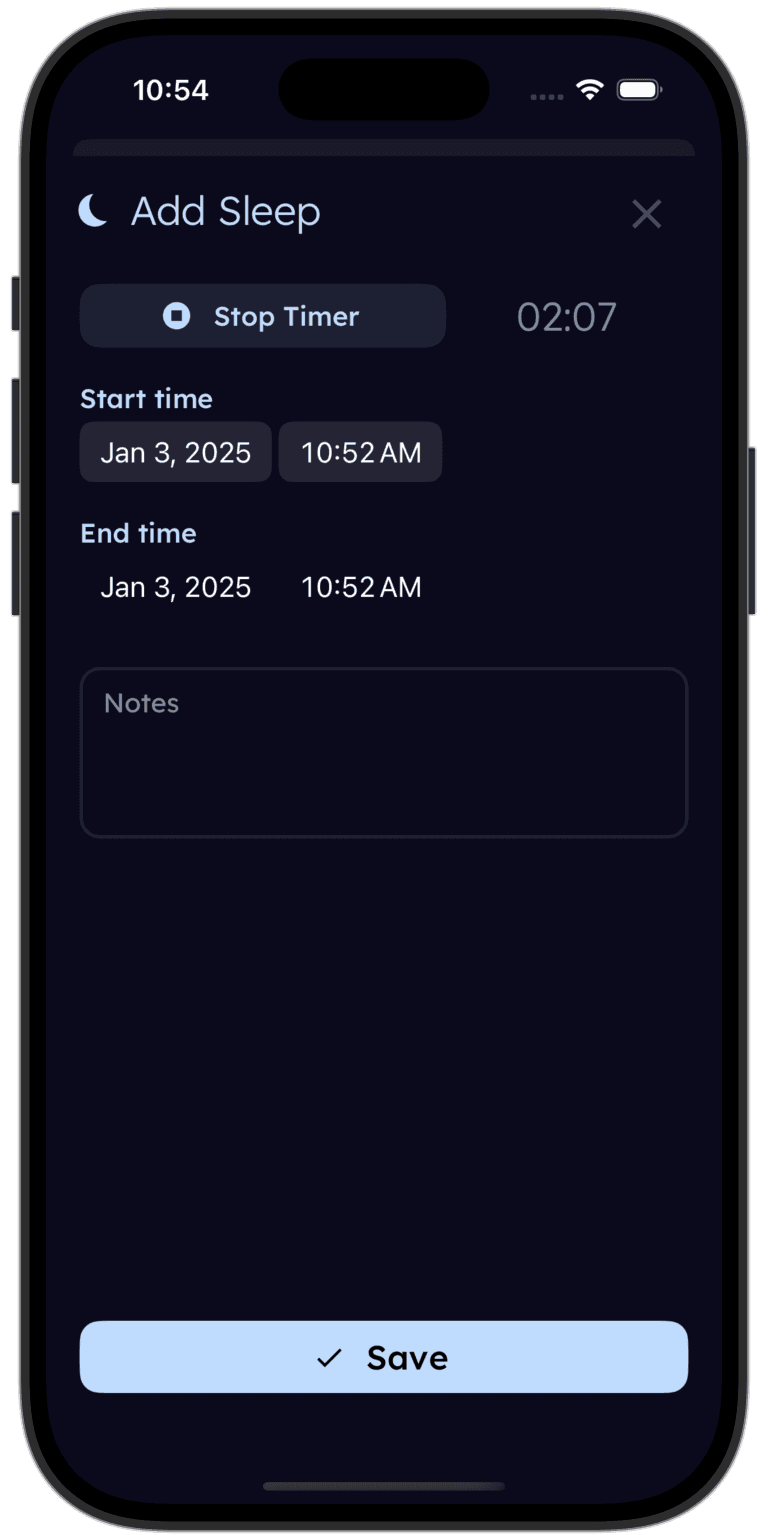
tinylog showing 6 month old nap transition patterns

Not sure if it's time to drop the third nap? The data tells you.

Track nap lengths, fall-asleep times, and bedtime for a week. If the catnap consistently takes 20+ minutes to achieve and pushes bedtime too late, the data makes the decision clear.

Download on the App StoreGet It On Google Play

What's Happening Developmentally

Six months is a cognitive and motor explosion. Your baby is likely sitting independently (or very close), reaching for and manipulating objects with both hands, transferring objects between hands, and showing early signs of crawling (rocking on hands and knees, scooting backward). They may also be babbling with consonant sounds ("ba," "da," "ma") and responding to their name.

Starting solids is the other major milestone. Your baby's digestive system is now ready for foods beyond milk, and the introduction of textures, flavors, and the mechanics of eating is a significant developmental step. For sleep purposes, the key is timing: offer solids during wake windows, not right before sleep, and expect some digestive adjustment in the first week or two.

Increased object permanence means your baby now understands that things (and people) continue to exist even when out of sight. This is why peek-a-boo becomes hilarious at this age — and why your departure at bedtime can trigger anxiety. They know you're out there somewhere, and they want you back.


Common Problems at 6 Months

The 3-to-2 nap transition is a mess

This transition typically takes 2 to 4 weeks and involves messy, inconsistent days. Some days your baby needs 3 naps, some days 2. The key is flexibility: on 2-nap days, move bedtime earlier (as early as 6:00 PM). On days when one nap was short, offer a quick rescue catnap. Expect that it won't be clean — one day the new schedule works perfectly, the next day everything falls apart. That's normal.

Starting solids disrupted everything

Some babies experience digestive adjustment when starting solids — gas, changes in stool, mild discomfort — that can temporarily affect sleep. This usually resolves within 1 to 2 weeks as their gut adapts. Practical tips: offer solids during wake windows (not right before naps or bedtime), introduce one food at a time, and don't panic if sleep is slightly worse for a week after starting solids.

Baby is too excited to sleep

At 6 months, your baby's awareness of the world has exploded. They notice everything — a sound in the hallway, a shadow on the ceiling, your face appearing at the door. This heightened alertness is developmentally wonderful but makes settling for sleep harder. A very dark room and consistent white noise become more important now than they were a few months ago. And a boring, predictable bedtime routine signals 'time to turn off' in a way that stimulation cannot.

What No One Tells You About Sleep at 6 Months

Starting solids doesn't automatically improve sleep

The advice 'just wait until they eat food' is one of the most persistent sleep myths. Some babies sleep slightly longer stretches after starting solids, but many show no change at all. Research shows that the relationship between solid food and sleep is weak at best. If your baby's sleep doesn't improve after starting solids, that's normal — food and sleep operate on different systems, and nighttime waking at 6 months is still developmentally typical.

An earlier bedtime during the nap transition prevents — not causes — early morning wake-ups

Parents worry that a 6:00 PM bedtime will mean a 4:00 AM wake-up. But sleep science says the opposite: an overtired baby (from skipping the third nap without compensating) wakes up MORE at night and EARLIER in the morning. Sleep pressure works in your favor. A 6:00 PM bedtime on a 2-nap day typically produces the same morning wake time, or even a slightly later one, with fewer night disturbances.

When to Talk to Your Pediatrician

  • Your baby isn't showing any interest in sitting up or bearing weight on legs
  • Night sleep is severely fragmented with no improvement over several weeks
  • Your baby shows signs of allergic reaction after starting new foods (rash, vomiting, difficulty breathing)
  • Snoring or noisy breathing during sleep
  • You're concerned about weight gain or growth
  • Your baby seems lethargic or excessively sleepy during alert periods

The 6-month well visit is a natural time to discuss sleep, feeding, and development.

Related Guides

Sources

American Academy of Pediatrics (AAP). (2022). Healthy Sleep Habits: How Many Hours Does Your Child Need?
Mindell, J. A., et al. (2016). Development of infant and toddler sleep patterns. Journal of Sleep Research, 25(5), 508–516.
Galland, B. C., et al. (2012). Normal sleep patterns in infants and children: A systematic review. Sleep Medicine Reviews, 16(3), 213–222.
World Health Organization. (2003). Complementary Feeding: Report of the Global Consultation. Geneva.
Baby Sleep Information Source (BASIS), Durham University. Normal Infant Sleep Development. https://www.basisonline.org.uk

Medical Disclaimer

This guide is for informational purposes only and is not a substitute for professional medical advice. Always follow safe sleep guidelines (baby on their back, on a firm surface, in their own sleep space). Consult your pediatrician with any concerns about your baby's sleep.

Want this guide in your inbox?
We'll send you this guide for reference during the nap transition.
Navigating the nap drop? Let the data guide you.
Download ${appName} free — track naps and see when the transition is ready.
Download on the App StoreGet It On Google Play