GUIDE

Amber Teething Necklace vs. Teething Toys

The AAP and FDA advise against amber teething necklaces due to choking and strangulation risks. Teething toys, chilled washcloths, and gum massage are the evidence-based approaches to teething relief.

This is one comparison where the evidence clearly favors one side.

Track teething symptoms

Log symptoms and what helps

The risk is two-fold — strangulation and choking.
Dr. Natasha BurgertDr. Natasha Burgert, MD, FAAP, Pediatrician, American Academy of Pediatrics

A Comparison the Evidence Has Already Settled

This is not a both-sides-are-equal comparison. The evidence is clear: amber teething necklaces have no proven benefit and carry documented risks, including strangulation and choking. The FDA issued a formal safety warning in 2018, and the AAP recommends against their use. At least one infant death has been linked to an amber teething necklace.

The claimed mechanism — that body heat releases succinic acid from Baltic amber, which is then absorbed through the skin and acts as an anti-inflammatory — has not been validated in any peer-reviewed research. A 2019 study by Marchisio et al. tested the claim directly and found no measurable succinic acid release at body temperature. The necklaces do not work through the mechanism their proponents describe.

Teething toys, by contrast, use a well-understood mechanism: counter-pressure on the gums from biting relieves discomfort, and cold provides mild numbing. Our teething toys guide covers which designs are safest and most effective. These are the same principles behind gum massage, which pediatricians have recommended for decades. They are not glamorous, but they work and they are safe.


Amber Necklace vs. Teething Toys
Safety profile
Amber NecklaceFDA and AAP warn against use. Risks include strangulation, choking on beads, and aspiration.
Teething ToysSafe when age-appropriate and used under supervision. One-piece designs eliminate choking risk.
Evidence of effectiveness
Amber NecklaceNo peer-reviewed studies demonstrate pain relief from amber necklaces. The succinic acid mechanism is unvalidated.
Teething ToysCounter-pressure on gums is a well-established pain relief mechanism. Chilled teethers add mild numbing.
How it supposedly works
Amber NecklaceClaim: body heat releases succinic acid from amber, which is absorbed through skin and reduces inflammation.
Teething ToysBiting applies counter-pressure to sore gums. Cold reduces blood flow and provides mild numbing.
Regulatory status
Amber NecklaceFDA issued a safety warning in 2018. Not approved as a medical device. No regulatory oversight.
Teething ToysRegulated as consumer products. Must meet CPSC safety standards for children's toys.
Supervision required
Amber NecklaceMust be removed during sleep, naps, and any unsupervised time — negating most use cases.
Teething ToysShould be used under supervision, but the baby controls when and how they use it.
Cost
Amber Necklace$10-30 for a single necklace.
Teething Toys$5-15 for most teething toys. A wet washcloth costs nothing.
This comparison reflects the current scientific evidence and regulatory guidance as of 2026.

Amber Necklace Perceived Advantages

  • Widely available and heavily marketed as a natural remedy
  • Low maintenance — no cleaning or refrigerating required
  • Some parents report subjective improvement (which may reflect natural symptom fluctuation or placebo)
  • Does not require active engagement from the baby
  • Popular in natural parenting communities, creating social proof

These are reasons parents choose amber necklaces, not evidence that they work. Subjective reports of improvement likely reflect natural symptom fluctuation.

Amber Necklace Risks

  • FDA and AAP explicitly warn against use due to choking and strangulation risk
  • No scientific evidence supports the succinic acid absorption mechanism
  • At least one infant death has been attributed to an amber teething necklace (2016 CPSC report)
  • Must be removed for sleep, which is when teething pain is often worst

The AAP, FDA, and CPSC all advise against amber teething necklaces for infants and young children.

Teething Toy Advantages

  • Evidence-based: counter-pressure and cold are proven pain relief mechanisms
  • Safe when one-piece designs are used and baby is supervised
  • Baby controls the interaction — they chew when they want relief
  • Wide variety of textures, shapes, and designs available
  • Can be chilled for extra relief (refrigerated, not frozen)

Counter-pressure and cold are the two most evidence-supported non-pharmacological teething interventions.

Teething Toy Limitations

  • Requires supervision during use
  • Multi-piece or liquid-filled teethers can pose choking or contamination risks
  • Baby may lose interest or throw them repeatedly
  • Does not provide passive, continuous relief — baby must actively chew

These are minor practical limitations, not safety concerns.

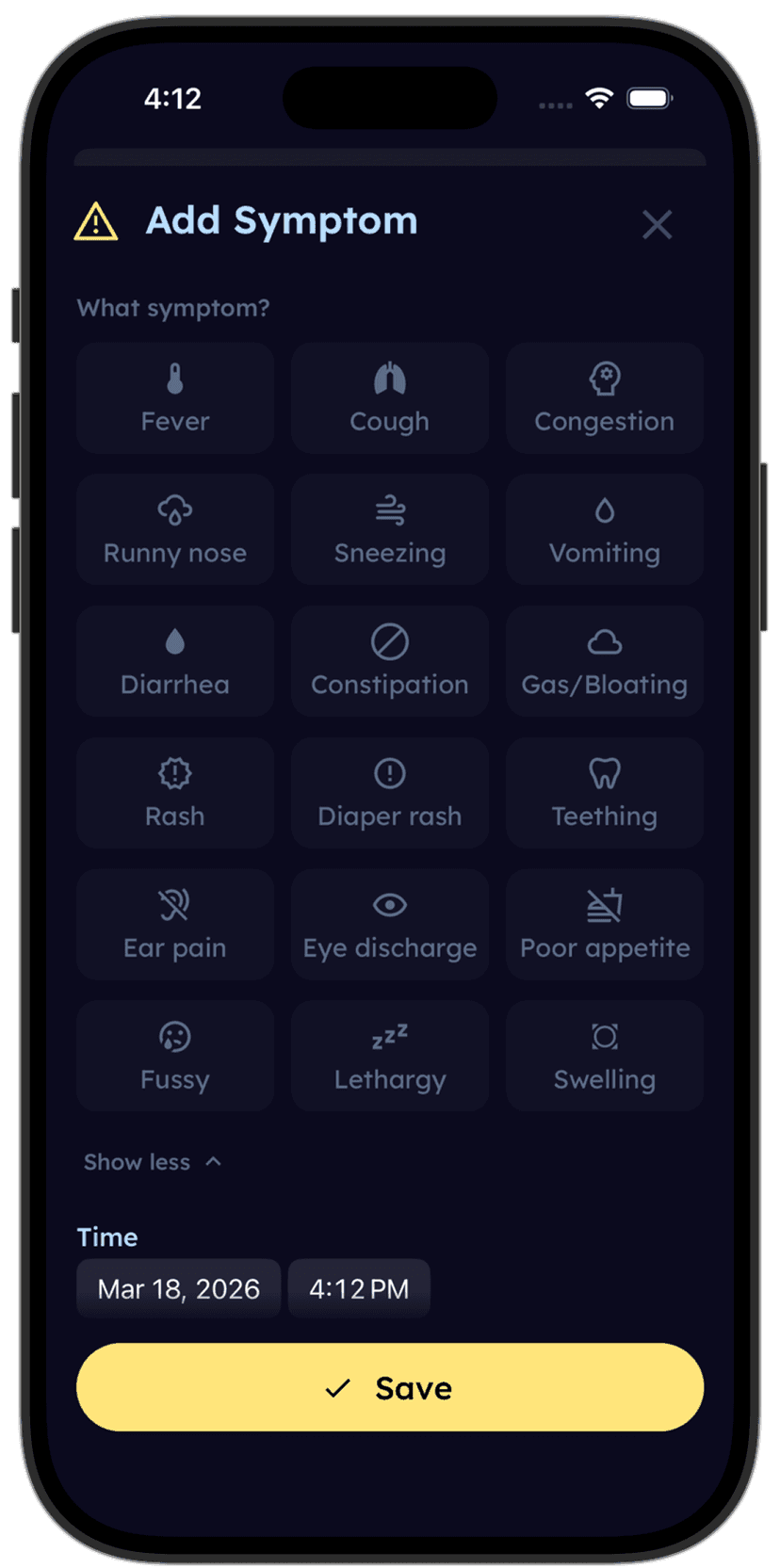
Tinylog symptom tracking showing teething symptoms and remedies

Track teething symptoms to see what actually provides relief.

Tinylog lets you log teething symptoms and the remedies you try, so you can see patterns over time instead of relying on memory or guesswork.

Download on the App StoreGet It On Google Play

What Actually Helps with Teething Pain

The most effective non-pharmacological teething interventions are simple. Chilled (not frozen) teething toys provide counter-pressure and cold. A cold, wet washcloth is equally effective. For a full rundown of what works, see our guide on teething remedies that actually work. Gum massage with a clean finger works well for young infants. For older babies, chilled fruit in a mesh feeder combines nutrition with relief.

For more significant pain, infant acetaminophen (Tylenol) or ibuprofen (Advil/Motrin, for babies 6 months and older) can be used as directed by your pediatrician. Avoid topical numbing gels containing benzocaine (the FDA warns against them for children under 2 due to the risk of methemoglobinemia) and homeopathic teething tablets (which have been linked to adverse events due to inconsistent belladonna content).

If You Currently Use an Amber Necklace

If your baby wears an amber necklace and you feel it helps, consider that teething symptoms naturally come and go — our baby teething chart shows the typical timeline so you can see how symptoms align with tooth eruption. The necklace may coincide with symptom improvement without causing it. If you choose to continue using one against medical advice, never allow your baby to sleep or nap with it on, ensure the necklace has a breakaway clasp, and never let your baby chew on it (the beads can break free and become choking hazards). But the safest option is to switch to evidence-based alternatives.

Tips That Apply Either Way

Track what actually helps

Teething symptoms wax and wane naturally. Without tracking, it is easy to credit whatever remedy you tried most recently. Log symptoms and interventions over several days to see what correlates with actual improvement versus natural fluctuation.

Cold washcloth is underrated

Wet a clean washcloth, wring it out, and put it in the refrigerator for 15-20 minutes. The cold provides relief, and the texture gives the baby something satisfying to chew. It is free, always available, and easy to wash. Many pediatricians recommend this first.

Know when teething is not the problem

Teething causes mild discomfort, drooling, and gum swelling. It does not cause high fever (over 100.4F), diarrhea, or severe fussiness. If your baby has these symptoms, something else is going on. Track symptoms and consult your pediatrician.

Related Guides

Sources

  • U.S. Food and Drug Administration. (2018). FDA Warns About Safety Risks of Teething Necklaces, Bracelets to Relieve Teething Pain or to Provide Sensory Stimulation.
  • Marchisio, P., et al. (2019). Effectiveness of Baltic Amber Necklaces on Teething Symptoms: A Systematic Review. European Journal of Pediatrics, 178(9).
  • American Academy of Pediatrics. (2018). Amber Teething Necklaces: A Caution for Parents. HealthyChildren.org.
  • U.S. Consumer Product Safety Commission. (2016). Deaths and Injuries with Teething Jewelry. CPSC Safety Alert.
  • Tsang, A. K. (2010). Teething, Teething Pain and Teething Remedies. International Dentistry South Africa, 12(5), 48-61.

This guide is for informational purposes only and is not a substitute for professional medical advice. Consult your pediatrician for guidance specific to your baby.

Get this comparison in your inbox.
We'll send you the evidence-based breakdown of teething relief options.
Tracking teething symptoms helps you see what works for your baby.
Download Tinylog to log symptoms, remedies, and patterns during teething.
Download on the App StoreGet It On Google Play