GUIDE

Baby Massage vs. No Baby Massage

Baby massage has documented benefits for bonding, digestion, and sleep — but it's a nice-to-have, not a must-do. Babies develop perfectly well without formal massage if they're getting plenty of touch and interaction.

If you enjoy it and your baby enjoys it, keep going. If it feels like another chore, skip it without guilt.

Track your baby's wellness routines

Log activities and see daily patterns

That one-on-one interaction has benefits that parents may not see today or tomorrow, but over the long arc of the child's early life will have a profound effect.
Dr. Gregory P. WeaverDr. Gregory P. Weaver, MD, MPH, Pediatrician, Cleveland Clinic

The Research: Real Benefits, Reasonable Expectations

Baby massage has been studied extensively, particularly in the work of Tiffany Field at the Touch Research Institute. The findings show genuine but modest benefits. Massaged infants tend to settle faster, sleep slightly longer, and show lower cortisol levels. Premature infants in the NICU who received massage gained weight faster — one of the strongest findings in the literature (Field et al., 2010). For preemies, it's also important to understand how adjusted age vs. actual age affects milestone expectations.

For full-term, healthy babies, the benefits are more subtle. A Cochrane review found that massage may slightly improve mother-infant interaction and reduce crying, but the quality of evidence was moderate. The digestive benefits — reduced gas, easier bowel movements — have some support, particularly for the specific "I Love U" abdominal massage technique.

What the research does not show is that baby massage is essential for normal development. Babies who aren't massaged develop fine. The benefits are real but incremental, and many of them can be achieved through other forms of responsive touch and caregiving. Think of baby massage as a bonus, not a requirement.


Baby Massage vs. No Formal Massage
Bonding effect
Baby MassageStructured skin-to-skin contact with focused attention on baby
No Formal MassageBonding happens through many activities — holding, feeding, talking, playing
Sleep impact
Baby MassageStudies show modest improvements in sleep duration and settling
No Formal MassageBabies develop healthy sleep patterns through consistent routines regardless
Digestion support
Baby MassageAbdominal massage may help with gas, constipation, and colic symptoms
No Formal MassageBicycle legs, warm baths, and time also help with digestive discomfort
Stress hormones
Baby MassageResearch shows reduced cortisol levels in massaged infants
No Formal MassageAny responsive, warm caregiving also regulates baby's stress response
Parent benefit
Baby MassageCan boost parent confidence and reduce postpartum depression symptoms
No Formal MassageMany other bonding activities provide similar psychological benefits for parents
Time investment
Baby Massage10-20 minutes per session, ideally daily
No Formal MassageNo additional time commitment — time can go to other bonding activities
Baby massage is a tool, not a necessity. The underlying principle — responsive, attentive touch — can be delivered in many ways.

Baby Massage Advantages

  • Research-supported benefits for sleep quality and settling time
  • May reduce crying duration in colicky babies (Dobson et al., 2012)
  • Promotes parent-infant bonding through focused, responsive touch
  • Can lower cortisol levels in babies, supporting stress regulation
  • Gives parents a structured bonding activity that builds confidence

The strongest evidence for massage benefits comes from studies of premature infants. For healthy full-term babies, the effects are more modest.

Baby Massage Challenges

  • Not all babies enjoy it — some find the stimulation overwhelming
  • Benefits are modest and many can be achieved through other forms of touch
  • Requires a calm, alert baby — hard to fit between feeds and naps
  • Can feel like another task on an already overwhelming to-do list

If your baby consistently dislikes massage, don't force it. Some babies are more tactile-sensitive, and that's normal.

No Massage Advantages

  • Babies receive plenty of beneficial touch through normal caregiving — holding, feeding, bathing
  • No evidence that skipping formal massage leads to any developmental gaps
  • Frees up time and mental bandwidth for other activities
  • Skin-to-skin during feeding and cuddles provides many of the same hormonal benefits
  • Less pressure on parents who already feel overwhelmed

Normal caregiving involves enormous amounts of touch — feeding, holding, bathing, diaper changes, and cuddling all provide physical contact.

No Massage Challenges

  • May miss the specific digestive benefits of targeted abdominal massage
  • Less structured opportunity for focused, distraction-free touch time
  • No dedicated routine that signals 'calm, bonding time' to the baby
  • Parents who struggle with bonding may miss a useful tool

If you're struggling with postpartum bonding, baby massage classes can be a structured way to build connection. Talk to your provider.

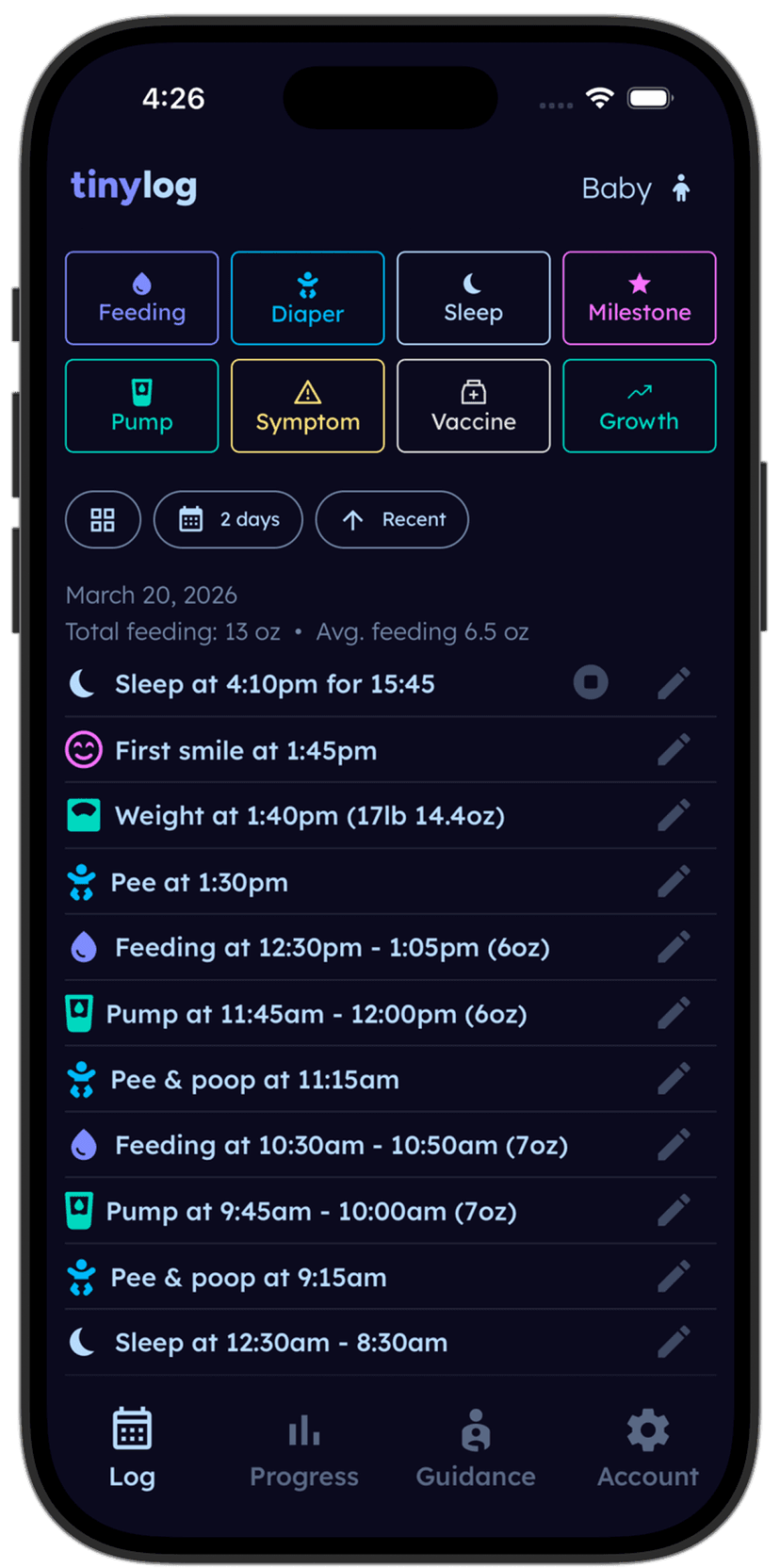
Tinylog activity tracking showing daily baby care activities

Track all the ways you connect with your baby.

Log massage sessions, tummy time, skin-to-skin, and other activities in Tinylog. Seeing how much bonding time fills the day can be reassuring — especially on hard days.

Download on the App StoreGet It On Google Play

How to Get Started (If You Want To)

Start simple. After a bath or diaper change, when your baby is calm and alert, warm a small amount of oil between your hands. Begin with the legs — they're the least sensitive area and most babies tolerate leg strokes well. Use gentle, firm pressure (too light can feel ticklish and irritating). Stroke from hip to foot, then from ankle up.

If your baby is receptive, move to the belly. Gentle clockwise strokes follow the direction of digestion and can help with gas. Then arms, chest, and finally the back if they'll tolerate being on their tummy — this prone position also doubles as a gentle tummy time session. The whole sequence can take 5 minutes or 20 — let your baby set the pace.

Infant massage classes are available through hospitals, birthing centers, and community organizations. They're especially valuable for parents who want hands-on guidance and for those experiencing bonding difficulties. The class structure itself — dedicated time with baby, other parents to connect with — is often as valuable as the massage technique.

The Bottom Line

Baby massage is a pleasant, evidence-supported bonding activity with real but modest benefits. If you enjoy doing it and your baby enjoys receiving it, make it part of your routine. If it feels forced, stressful, or like one more thing you "should" be doing, skip it without guilt. Your baby is getting plenty of beneficial touch through normal caregiving. Around 2 months, your baby starts responding more visibly to touch with smiles and coos, making massage sessions — or any hands-on bonding — even more rewarding. The best bonding activity is the one that both of you enjoy.

Tips That Apply Either Way

Follow your baby's cues

The biggest rule of baby massage is consent. Watch your baby's body language — relaxed limbs, eye contact, and cooing mean they're enjoying it. Fussing, arching away, or stiffening means stop. This isn't about completing a routine; it's about responsive interaction.

Timing matters

Massage works best when your baby is in a quiet alert state — not hungry, not tired, not immediately after a feed. Many parents find 30-45 minutes after a feed works well. Avoid massage right before sleep if it tends to stimulate rather than calm your baby.

Touch in any form counts

If formal massage doesn't work for your family, don't stress. Holding, cuddling, skin-to-skin during feeding, gentle touch during diaper changes — it all provides the physical contact babies need for healthy development.

Related Guides

Sources

  • Field, T., et al. "Preterm Infant Massage Therapy Research: A Review." Infant Behavior and Development, 2010.
  • Dobson, D., et al. "Manipulative Therapies for Infantile Colic." Cochrane Database of Systematic Reviews, 2012.
  • Bennett, C., et al. "Massage for Promoting Mental and Physical Health in Typically Developing Infants Under the Age of Six Months." Cochrane Database of Systematic Reviews, 2013.
  • Underdown, A., et al. "Massage Intervention for Promoting Mental and Physical Health in Infants Aged Under Six Months." Cochrane Database of Systematic Reviews, 2006.

This guide is for informational purposes only and is not a substitute for professional medical advice. Consult your pediatrician for guidance specific to your baby.

Get this comparison in your inbox.
We'll send you this guide so you can decide whether baby massage fits your routine.
Whether you massage, do tummy time, or just cuddle — it all counts.
Log your baby's daily activities in Tinylog and see how bonding time adds up across the day.
Download on the App StoreGet It On Google Play