
Check safety standards before anything else
Whether you choose a bassinet or crib, confirm it meets current CPSC standards. No inclined sleepers, no soft sides, no padded bumpers. Firm, flat, and bare is the rule for both.
GUIDE
Published on
Both are safe when they meet CPSC standards. Bassinets are smaller and more portable, ideal for the first 4-6 months. Cribs last through toddlerhood. Many families use both.
You don't need both, but you do need to understand the trade-offs.
Log sleep from day one
“We recommend a crib, bassinet, portable crib or play yard that meets Consumer Product Safety Commission (CPSC) standards — along with a tight-fitting, firm mattress, and a fitted sheet designed for that product.”
 Dr. Raj Rambhatla, MD, Pediatrician, Cleveland Clinic
Before your baby arrives, you'll need to answer a deceptively simple question: where will they sleep? The two main options — a bassinet and a crib — both meet the same fundamental requirement. Both provide a firm, flat, separate sleep surface that the AAP recommends.
The difference is practical, not safety-related. A bassinet is small, portable, and designed for the first few months. A crib is full-size, stationary, and lasts through toddlerhood. Both are safe when used correctly. Neither is inherently superior. Your choice comes down to your bedroom size, your budget, and whether you want the convenience of a bedside sleeper during those first exhausting months of unpredictable newborn sleep.
Most parents who buy a bassinet also buy a crib eventually. That means a bassinet is an additional expense, not a replacement. If money is tight, a crib in your bedroom from day one is a perfectly sound decision. If you value having a small, moveable sleep surface for those first months of constant night feeds, a bassinet earns its keep.
| Aspect | Bassinet | Crib |
|---|---|---|
| Age range | Birth to ~4-6 months or 15-20 lbs (whichever comes first) | Birth through toddlerhood (up to 35 inches tall, typically age 2-3) |
| Size and footprint | Compact — fits next to the bed, easy to move between rooms | Full-size — requires dedicated floor space, stays in one room |
| Portability | Lightweight, often has wheels or a carry handle. Easy to move around the house. | Heavy and stationary. Moving between rooms is impractical. |
| Cost | $80-$350 depending on features. Used for 4-6 months max. | $150-$500+ for standard cribs. Used for 2-3 years. Convertible cribs last longer. |
| Room-sharing | Designed for bedside use. Makes AAP-recommended room-sharing easy. | Takes up significant bedroom space. May not fit in smaller rooms. |
| Night feeds | Baby is arm's reach away. Minimizes disruption for night feeds. | May require getting up and walking across the room depending on placement. |
| Safety standards | Must meet CPSC bassinet standards. Firm, flat surface required. | Must meet CPSC crib standards. Firm, flat mattress. No drop-side cribs. |
A bassinet's main value is proximity and portability during the newborn phase.
Always check your specific model's weight limit and safety certifications before purchasing.
A crib is the only sleep surface you truly need — it works from birth.
If your bedroom can fit a crib, most of these challenges disappear.
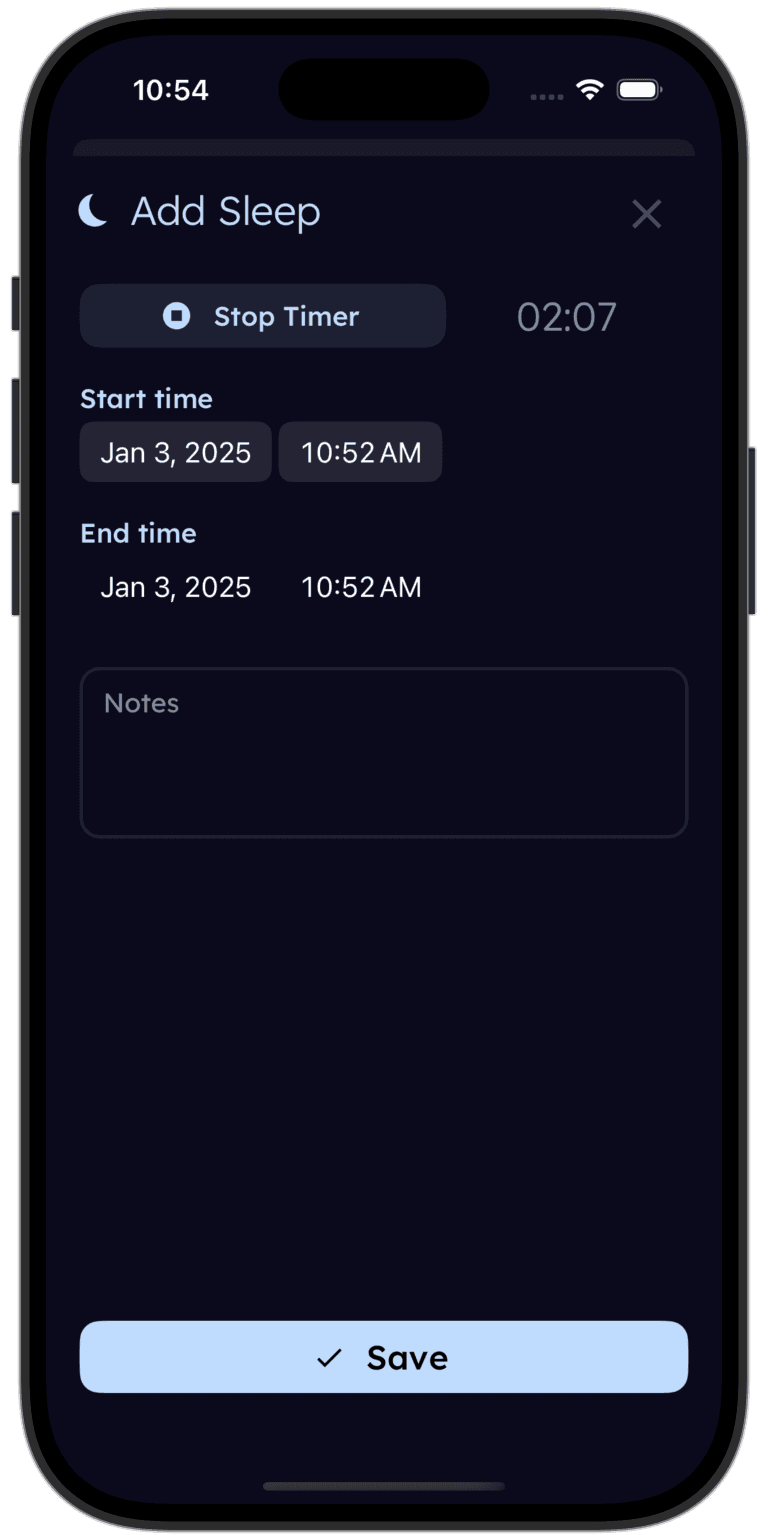
Newborn sleep patterns are unpredictable, but Tinylog helps you log every nap and night stretch — so you can see how your baby sleeps in their bassinet, crib, or both.


The AAP recommends that babies sleep in the parents' room — on a separate surface — for at least the first six months. A 2016 study in Pediatrics found that room-sharing is associated with up to a 50% reduction in SIDS risk, likely because parental proximity leads to faster response to breathing irregularities.
This recommendation is the single biggest factor in the bassinet vs. crib decision — and our full room-sharing vs. separate room guide covers the research in depth. If your bedroom can comfortably fit a crib, you can room-share with a crib from day one and skip the bassinet entirely. If your bedroom is small — which is common in apartments and older homes — a bassinet is the practical way to keep your baby nearby.
Some parents use a bedside bassinet (like the Halo BassiNest or Arms Reach Co-Sleeper) that sits flush against the bed, making night feeds almost effortless. These models bridge the gap between room-sharing convenience and safe sleep surface requirements.
The decision tree is simpler than the registry marketing suggests. If your bedroom fits a crib and you're comfortable with the baby sleeping there from day one, buy a crib. Done. If your bedroom is tight on space, or you want a portable option you can move around the house, a bassinet for the first four to six months makes life easier — then transition to a crib.
Budget matters here too. A bassinet plus a crib typically runs $250-$800 combined. A crib alone is $150-$500. If you're watching your spending, the crib-only route saves money without compromising safety. You'll also want to factor in a swaddle or sleep sack regardless of which sleep surface you choose. Many families receive bassinets as gifts or borrow them from friends, which changes the equation.
One thing to avoid: don't assume you need to buy everything before the baby arrives. Plenty of families start with a bassinet, realize they need a crib at four months, and buy one then. Or start with a crib and never miss the bassinet. Either path works.
Whether you choose a bassinet or crib, confirm it meets current CPSC standards. No inclined sleepers, no soft sides, no padded bumpers. Firm, flat, and bare is the rule for both.
The AAP recommends room-sharing for at least six months. If your bedroom can fit a crib, you may not need a bassinet at all. If it can't, a bassinet solves the space problem for the first few months.
Newborn sleep is chaotic, but logging it from the beginning helps you spot patterns earlier than you'd expect — and gives your pediatrician useful data at check-ups.
This guide is for informational purposes only and is not a substitute for professional medical advice. Consult your pediatrician for guidance specific to your baby.