GUIDE

Cry It Out vs. Ferber Method

Cry it out (full extinction) means no check-ins after putting baby down. Ferber (graduated extinction) includes timed check-ins at increasing intervals. Both are effective, but Ferber involves less total distress for most parents. Neither has been shown to cause harm.

These two methods get conflated constantly. They're actually quite different in practice.

The Ferber method may feel like a 'tough love' approach, but it empowers your child to develop the essential skills of self-soothing and self-regulation.
Dr. Pranshu AdavadkarDr. Pranshu Adavadkar, MD, Sleep Medicine Physician, Sleep Foundation Medical Advisory Board

They're Not the Same Method

"Cry it out" has become a catch-all term for any sleep training that involves crying, but technically, it refers to a specific method: unmodified extinction. You put baby down awake, you leave, and you don't go back in until morning (or a pre-planned night feed). That's it. No check-ins, no pats, no shushing from the doorway.

The Ferber method — formally called graduated extinction — is different. Developed by Dr. Richard Ferber at Boston Children's Hospital, it involves putting baby down awake and then checking in at progressively longer intervals (typically 3 minutes, then 5, then 10, capping at 10-15 minutes). Check-ins are brief (1-2 minutes), involve verbal reassurance and possibly a gentle pat, but no picking up. The intervals increase each subsequent night.

Both methods work. A 2016 randomized controlled trial by Gradisar et al. compared graduated extinction (Ferber), bedtime fading, and a control group over three months. Both intervention groups showed faster sleep onset, fewer night wakings, and no differences in cortisol levels or attachment security compared to controls. For a broader look at whether formal training is right for your family, see our sleep training vs. no sleep training guide. The methods are both safe and effective — the question is which one your family can actually execute.


Full Extinction vs. Graduated Extinction (Ferber)
How it works
Cry It Out (Full Extinction)Put baby down drowsy but awake. Leave the room. Don't return until the next scheduled feed or morning.
Ferber (Graduated Extinction)Put baby down drowsy but awake. Check in at increasing intervals (3 min, 5 min, 10 min, etc.). Brief reassurance only — no picking up.
Typical timeline
Cry It Out (Full Extinction)Most babies show significant improvement in 3-5 nights.
Ferber (Graduated Extinction)Most babies show significant improvement in 5-7 nights.
Initial crying intensity
Cry It Out (Full Extinction)Higher. First night often involves 30-60+ minutes of crying. Drops dramatically by night 3.
Ferber (Graduated Extinction)Moderate. Check-ins reduce peak intensity for most babies. First night crying is often 20-45 minutes.
Total crying across training
Cry It Out (Full Extinction)Paradoxically, may involve less total crying because it resolves faster.
Ferber (Graduated Extinction)More total nights of crying but less intense per night. Check-ins can extend crying for some babies.
Parent experience
Cry It Out (Full Extinction)Extremely difficult emotionally. Most parents find the first 1-2 nights very hard.
Ferber (Graduated Extinction)Still difficult but check-ins provide some emotional relief for parents.
Best suited for
Cry It Out (Full Extinction)Parents who can commit fully, babies who are re-stimulated by check-ins, older babies (8+ months).
Ferber (Graduated Extinction)Parents who need the reassurance of checking in, younger sleep-training-age babies (4-6 months), first-time sleep trainers.
Both methods teach the same skill — independent sleep onset. They differ in how much parental involvement occurs during the learning process.

Cry It Out Advantages

  • Often resolves faster — fewer total nights of disrupted sleep
  • Clear, simple protocol — no timing to track during an emotional situation
  • May involve less total crying across the training period
  • Avoids the re-stimulation problem that check-ins can cause for some babies
  • Strong evidence of safety (Gradisar et al., 2016)

Faster resolution means fewer total difficult nights for the whole family.

Cry It Out Challenges

  • First 1-2 nights are emotionally brutal for most parents
  • Feels extreme — many parents can't tolerate not responding at all
  • Harder to get partner buy-in due to perceived harshness
  • Not appropriate for babies under 4-6 months
  • Must rule out hunger, illness, and safety concerns — you're not checking

The emotional difficulty is the main barrier. The method itself is straightforward.

Ferber Advantages

  • Check-ins provide emotional relief for parents — you're still 'doing something'
  • Feels more gradual and less extreme than full extinction
  • Well-studied and well-documented protocol with clear instructions
  • Easier to get both parents and caregivers on board
  • Allows parents to briefly assess baby is safe and comfortable

For most first-time sleep trainers, Ferber feels more manageable.

Ferber Challenges

  • Takes slightly longer to see full results (5-7 nights vs. 3-5)
  • Check-ins can re-stimulate some babies, causing more crying than full extinction
  • Parents may find check-ins harder than expected — seeing baby cry and leaving again is painful
  • Timing intervals require discipline — going in too early or staying too long undermines the method
  • Inconsistent check-ins can create intermittent reinforcement, making things worse

Watch whether check-ins are helping or re-stimulating your specific baby.

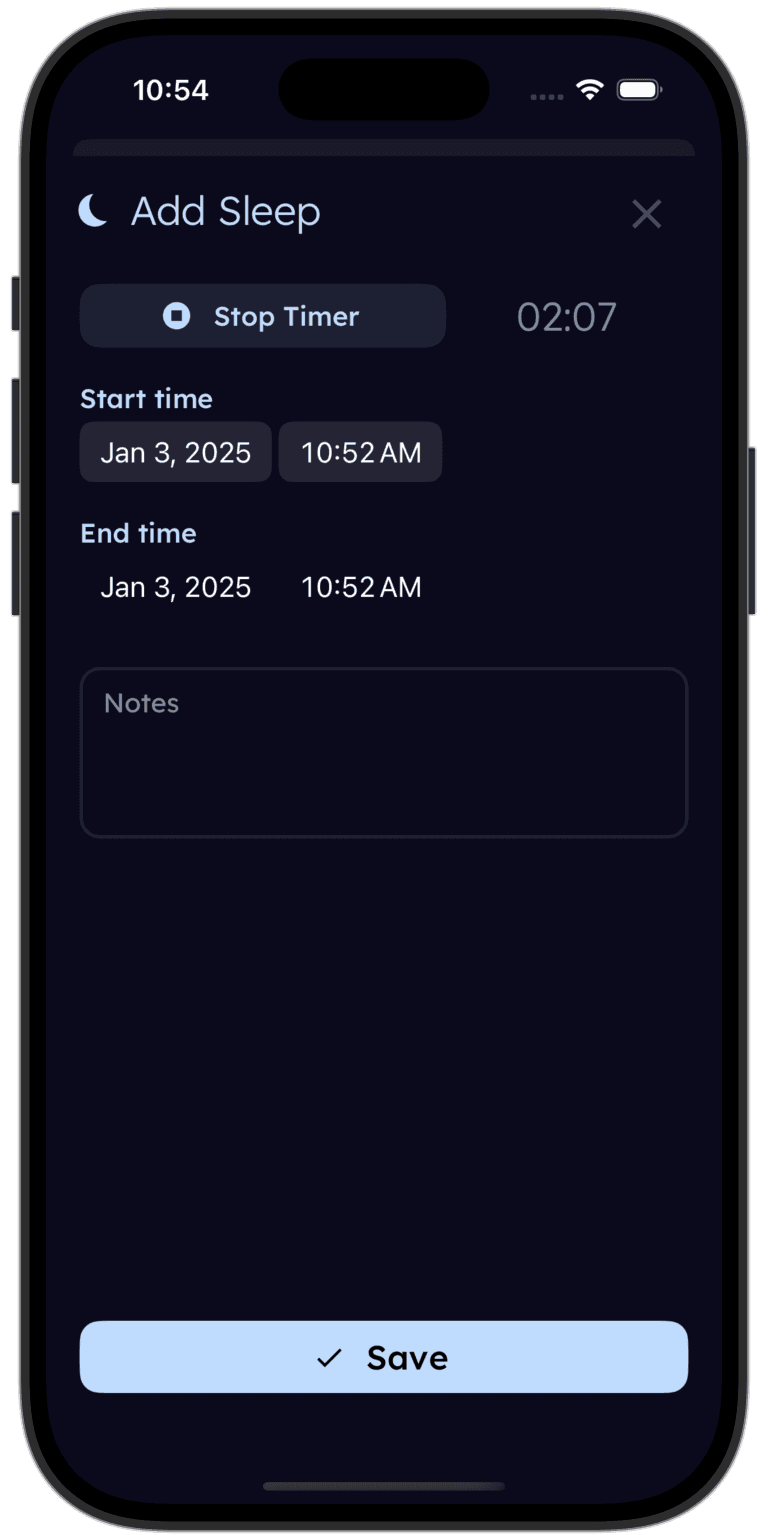
Tinylog sleep log showing nightly sleep training progress

Log nightly progress during sleep training

Tinylog lets you track crying duration, number of wake-ups, and time to sleep onset each night. When you're in the middle of sleep training and it feels like it's not working, your data shows the real trend.

Download on the App StoreGet It On Google Play

How to Choose Between the Two

Consider your own temperament first. If hearing your baby cry without responding would be genuinely unbearable — not just hard, but something you truly can't sustain — Ferber's check-ins will be easier to maintain. Consistency matters more than method choice. A Ferber approach you stick with will outperform a CIO attempt you abandon at 11 PM on night one.

Consider your baby's temperament too. Some babies escalate when they see a parent during a check-in — the brief appearance and disappearance is more upsetting than being left alone. If your baby gets more agitated after check-ins rather than less, full extinction may actually be kinder. Other babies are soothed by hearing your voice during check-ins, and for them, Ferber works well. If neither out-of-room approach feels right, the chair method lets you stay in the room while baby learns to self-settle.

Consider your living situation. If you share a wall with neighbors or have older children sleeping nearby, a slightly longer but potentially less intense approach (Ferber) might be more practical. If you can isolate the noise and commit to a few intense nights, CIO resolves faster.

What to Expect Night by Night

Both methods typically follow a predictable pattern, so understanding your baby's sleep schedule by age can help set realistic expectations. Night 1 is the hardest — the most crying, the longest duration. Night 2 is often worse than night 1 (the "extinction burst") as baby tests the new boundaries. Night 3 usually shows significant improvement. By nights 4-7, most babies are falling asleep with minimal or no crying.

This pattern is remarkably consistent across the research literature. The key is knowing about the extinction burst in advance so you don't interpret the worsening on night 2 as evidence that the method isn't working. It is working — your baby is learning. The burst is part of the process.

Tips That Apply Either Way

Commit to whichever method you choose

The biggest predictor of failure isn't the method — it's inconsistency. Starting and stopping, switching methods mid-night, or giving in after 40 minutes teaches your baby that prolonged crying eventually works. Pick a method, commit for at least 5 nights, and stay consistent.

Track each night

Sleep training progress isn't linear. Night 2 is often worse than night 1 (the 'extinction burst'). Without data, you'll feel like it's not working. Logging crying duration each night shows you the trend line — which is almost always downward, even when individual nights are hard.

Agree on a plan with your partner first

At 2 AM with a screaming baby, you need a pre-made plan. Discuss the method, agree on the rules, and decide who does check-ins and who waits outside (or in another room). Having this conversation when you're calm prevents 2 AM arguments about whether to abort.

Related Guides

Sources

  • Gradisar, M., et al. (2016). Behavioral Interventions for Infant Sleep Problems: A Randomized Controlled Trial. Pediatrics, 137(6), e20151486.
  • Ferber, R. (2006). Solve Your Child's Sleep Problems. Revised Edition, Fireside.
  • Mindell, J. A., et al. (2006). Behavioral Treatment of Bedtime Problems and Night Wakings in Infants and Young Children. Sleep, 29(10), 1263-1276.
  • Price, A. M. H., et al. (2012). Five-Year Follow-up of Harms and Benefits of Behavioral Infant Sleep Intervention. Pediatrics, 130(4), 643-651.

This guide is for informational purposes only and is not a substitute for professional medical advice. Consult your pediatrician for guidance specific to your baby.

Get this comparison in your inbox.
We'll send you the breakdown so you and your partner can discuss which approach fits.
Logging nightly progress shows you that it's working — even when it doesn't feel like it.
Download Tinylog to track crying duration, wake-ups, and improvements night by night.
Download on the App StoreGet It On Google Play