GUIDE

Sleep Training vs. No Sleep Training

Sleep training is safe and effective for most babies over 4-6 months, according to available research. Not sleep training is also fine — most children learn to sleep independently eventually. Neither choice causes long-term harm.

This is the most emotionally charged debate in parenting. Here's what the evidence says when you strip away the noise.

Track sleep with Tinylog

See your baby's sleep patterns clearly

The key is to stay consistent even when it gets hard. Especially when parents are using the more gentle approaches, sometimes hiring a sleep coach can be beneficial to help keep parents accountable and supported.
Dr. Nilong VyasDr. Nilong Vyas, MD, MPH, Pediatrician, Sleepless in NOLA

Moving Past the Judgment

No parenting topic generates more guilt, shame, and judgment than sleep training. Anti-sleep-training advocates accuse sleep trainers of neglecting their babies. Pro-sleep-training advocates accuse the other side of martyrdom. Social media amplifies both extremes, and new parents end up feeling like any choice they make is wrong.

The evidence doesn't support either extreme position. The most rigorous research available — including the Gradisar et al. (2016) randomized controlled trial published in Pediatrics — found that graduated extinction and bedtime fading were both effective at improving infant sleep, and neither caused elevated cortisol, insecure attachment, or behavioral problems at the one-year follow-up. A separate study by Price et al. (2012) followed 225 families for five years after a sleep intervention and found no long-term differences in child emotional health, behavior, or the parent-child relationship.

At the same time, there's no evidence that babies who aren't sleep trained are harmed by the experience. Responsive nighttime parenting is the biological norm across human history and cultures. Most children eventually learn to sleep independently without formal training — it just takes longer and the timeline is less predictable. The question isn't whether your baby will learn to sleep. It's how much disruption your family can sustain while waiting.


Sleep Training vs. No Sleep Training
What it involves
Sleep TrainingTeaching baby to fall asleep independently using a structured method. Multiple approaches exist (extinction, graduated, chair method, etc.).
No Sleep TrainingResponding to baby as needed at bedtime and during night wakings. Baby falls asleep with parental help (nursing, rocking, holding).
Evidence of safety
Sleep TrainingMultiple studies (Gradisar 2016, Price 2012, Hiscock 2007) found no adverse effects on attachment, cortisol, or behavior at 1-5 year follow-up.
No Sleep TrainingResponsive parenting is the biological norm. No studies show harm from not sleep training either.
Effectiveness
Sleep TrainingMost methods show significant improvement in sleep onset and night wakings within 1-2 weeks. 80%+ success rate with consistent application.
No Sleep TrainingMost children learn to sleep independently by age 3-5 without formal training. Timeline is longer and less predictable.
Parental mental health
Sleep TrainingStudies show improved maternal mood and reduced anxiety/depression symptoms after successful sleep training (Hiscock et al., 2007).
No Sleep TrainingSleep deprivation is a significant risk factor for postpartum depression. If a parent is coping well, no issue — if not, the status quo may be unsustainable.
Crying involved
Sleep TrainingAll methods involve some crying. Extinction involves more initial crying. Gradual methods have less crying but over a longer period.
No Sleep TrainingBaby may still cry but parent responds immediately. Some babies cry more overall from overtiredness if they sleep poorly.
Night feeds
Sleep TrainingSleep training and night feeds can coexist. Training addresses sleep onset, not hunger.
No Sleep TrainingNight feeds continue as long as baby wakes for them. No structured approach to reducing them.
Consistency required
Sleep TrainingHigh. Most methods require strict consistency for 1-2 weeks. Inconsistency can make things worse.
No Sleep TrainingNo consistency demands — you respond as needed, which is flexible but can also be exhausting.
The decision is about family functioning, not one-size-fits-all evidence.

Sleep Training Advantages

  • Strong evidence of effectiveness — most methods work within 1-2 weeks
  • No demonstrated long-term harm to attachment or emotional development
  • Significantly improves parental sleep and mental health
  • Teaches baby a skill (independent sleep) that benefits them going forward
  • Reduces bedtime battles and night wakings

Effectiveness is well-documented when methods are applied consistently.

Sleep Training Challenges

  • Involves hearing your baby cry, which is emotionally difficult for many parents
  • Requires high consistency — all caregivers must follow the plan
  • Not appropriate before 4-6 months when babies can't self-soothe
  • Doesn't account for underlying issues (reflux, sleep apnea, hunger) that may cause wakings
  • Can feel at odds with attachment-focused parenting values

The emotional difficulty is real and valid. Feeling ready matters.

No Sleep Training Advantages

  • Aligns with responsive parenting instincts and attachment theory
  • No crying-it-out — parent responds to baby's needs as they arise
  • Flexible — no rigid plan to follow or maintain across caregivers
  • Most children learn to sleep independently by 3-5 years without training
  • Night feeds are maintained naturally as long as baby needs them

Not sleep training is a legitimate choice, not a failure.

No Sleep Training Challenges

  • Sleep deprivation can persist for months or years, affecting parental health
  • Independent sleep onset develops on a longer, less predictable timeline
  • Can contribute to postpartum depression and anxiety in some parents
  • May create unsustainable sleep associations (must be rocked/nursed to sleep every time)
  • Partners and caregivers may struggle with the physical demands of prolonged night waking support

If sleep deprivation is affecting your health or safety, that matters.

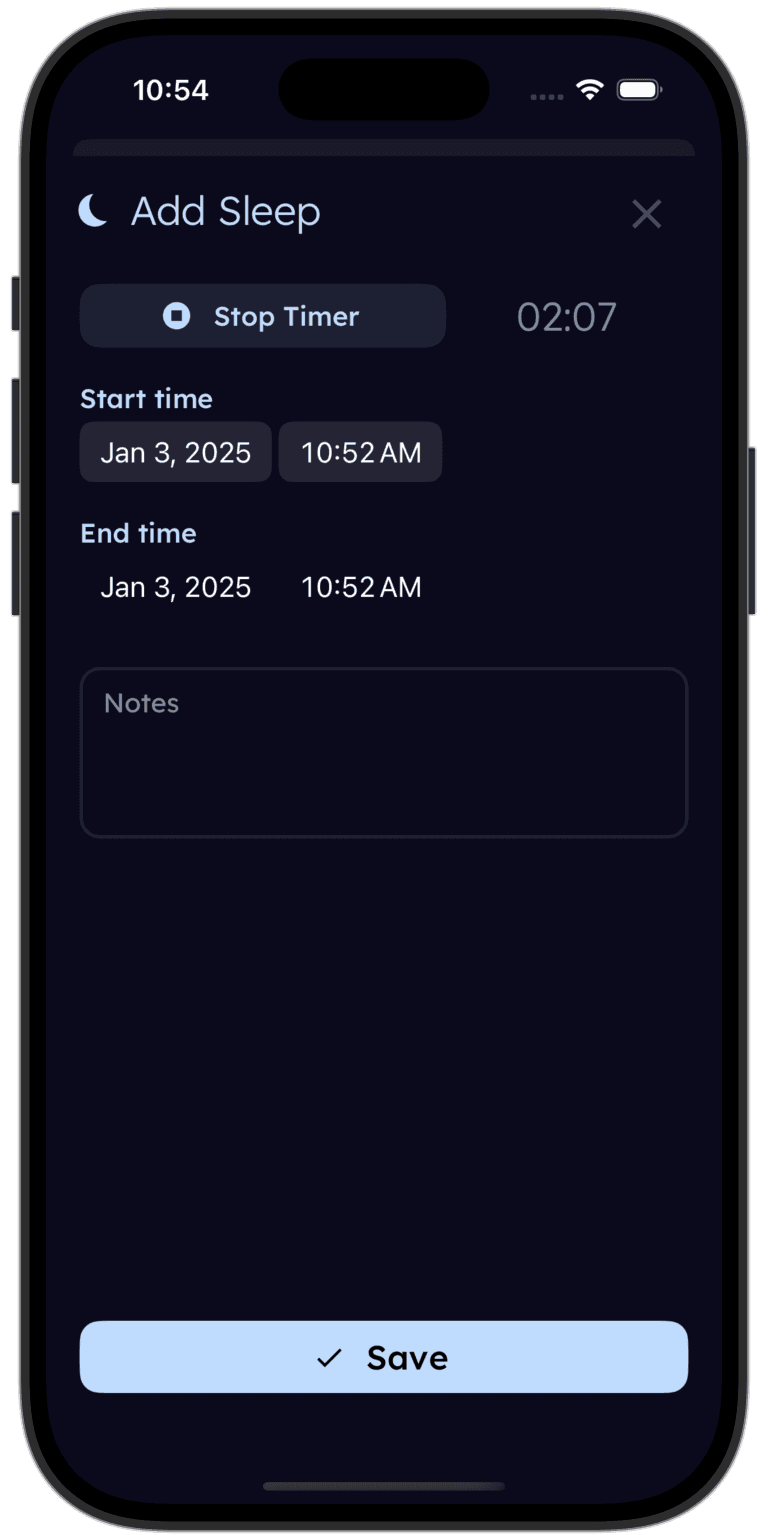
Tinylog sleep tracker showing daily sleep patterns and night wakings

Track sleep patterns to make an informed choice

Tinylog logs sleep times, durations, and night wakings so you can see your baby's actual pattern. Whether you're deciding about sleep training, in the middle of it, or choosing another path — data replaces guessing.

Download on the App StoreGet It On Google Play

Questions to Ask Yourself Before Deciding

How is everyone sleeping right now? If everyone in the house is functioning reasonably well — even if it's not perfect — there may be no urgent reason to change anything. Sleep training solves a problem. If the problem isn't severe, the solution can wait.

How is your mental health? Sleep deprivation is a significant risk factor for postpartum depression and anxiety. If you're struggling emotionally, physically, or in your relationships because of broken sleep, that's a valid reason to consider sleep training. Your wellbeing matters for your baby's wellbeing.

Can you be consistent? Sleep training methods require 1-2 weeks of unwavering consistency. If your living situation, work schedule, or partner's buy-in doesn't support that, an inconsistent attempt may make things worse. Make sure the timing is right and all caregivers are on the same page. If you'd rather not sleep train, our guide on managing night wakings without sleep training offers gentler alternatives.

The Middle Ground That Gets Overlooked

The internet presents two options: full extinction (put baby down, close the door, don't go back) or no sleep training at all. In reality, there's a wide spectrum. Graduated methods like Ferber, the chair method, pick-up-put-down, bedtime fading, and gentle sleep shaping all exist between the extremes. You can also do partial sleep training — teaching independent sleep at bedtime while still responding to night wakings.

Many families find their sweet spot somewhere in this middle ground. The approach that works is the one you can commit to consistently and that aligns with your values as a parent.

Tips That Apply Either Way

Your decision can change

Choosing not to sleep train now doesn't mean you can't later. Choosing to sleep train doesn't mean you failed at responsive parenting. Circumstances change — a parent's mental health, a baby's sleep patterns, a family's functioning. Reassess as needed without guilt.

Data helps either way

Whether you sleep train or not, tracking sleep for a week gives you a clear picture of what's actually happening versus what 3 AM exhaustion tells you. You might discover your baby's sleep isn't as bad as it feels, or that there's a clear pattern you can work with.

There's a middle ground

It's not just 'cry it out' or 'do nothing.' Gradual methods, partial sleep training (independent bedtime but responsive to night wakes), and gentle approaches exist. The binary framing of this debate obscures the many options between the extremes.

Related Guides

Sources

  • Gradisar, M., et al. (2016). Behavioral Interventions for Infant Sleep Problems: A Randomized Controlled Trial. Pediatrics, 137(6), e20151486.
  • Price, A. M. H., et al. (2012). Five-Year Follow-up of Harms and Benefits of Behavioral Infant Sleep Intervention: Randomized Trial. Pediatrics, 130(4), 643-651.
  • Hiscock, H., et al. (2007). Improving infant sleep and maternal mental health: a cluster randomised trial. Archives of Disease in Childhood, 92(11), 952-958.
  • Mindell, J. A., et al. (2006). Behavioral Treatment of Bedtime Problems and Night Wakings in Infants and Young Children. Sleep, 29(10), 1263-1276.

This guide is for informational purposes only and is not a substitute for professional medical advice. Consult your pediatrician for guidance specific to your baby.

Get this comparison in your inbox.
We'll send you the evidence summary so you can decide without the internet screaming at you.
Whether you sleep train or not, understanding your baby's sleep patterns helps.
Download Tinylog to log sleep and see patterns that guide your approach.
Download on the App StoreGet It On Google Play