GUIDE

Dream Feed vs. Dropping Night Feeds

A dream feed adds a strategic late-night feed to extend the first sleep stretch. Dropping feeds eliminates night feeds entirely when baby is developmentally ready. Both can work — the right choice depends on your baby's age and readiness.

These strategies target different stages. Here's when each makes sense.

Log night feeds in the app

Track feeds and sleep stretches

A dream feed is a late-night feeding session given to a child while they are mostly asleep. This is typically done in the earlier part of the night, before a parent goes to sleep.
Dr. Nilong VyasDr. Nilong Vyas, MD, Pediatrician, Sleepless in NOLA

Two Strategies, Two Different Problems

Dream feeds and dropping night feeds are both aimed at the same outcome — longer uninterrupted sleep — but they approach it from completely different angles. Understanding the difference helps you choose the right strategy at the right time.

A dream feed is a proactive strategy for younger babies. You initiate a feed around 10-11 PM, while your baby is still asleep or drowsy, to fill their stomach so they'll sleep a longer stretch before waking hungry. It works best between 1-4 months, when babies genuinely need night calories but parents want to align the longest sleep stretch with their own bedtime. Our newborn feeding schedule guide covers what typical feeding patterns look like in these early months.

Dropping night feeds is a reactive strategy for older babies. Once your baby has the stomach capacity and caloric intake during the day to sustain 10-12 hours without eating — usually around 5-9 months — you can gradually eliminate night feedings entirely. This approach is more permanent and better studied, but it requires developmental readiness that younger babies simply don't have.

Dream Feed vs. Dropping Night Feeds — Side by Side
What it is
Dream FeedA parent-initiated feed at 10-11 PM while baby sleeps, to extend the next sleep stretch.
Dropping Night FeedsGradually eliminating night feeds as baby is developmentally ready to sleep without them.
Best age range
Dream Feed1-4 months — works best before baby can sleep long stretches independently.
Dropping Night Feeds5-9+ months — when baby has the stomach capacity and weight gain to go all night.
Goal
Dream FeedExtend the longest sleep stretch into the parents' sleep window (e.g., 11 PM to 5 AM).
Dropping Night FeedsAchieve continuous sleep from bedtime to morning without any feeds.
Calorie impact
Dream FeedAdds calories at a strategic time. Doesn't reduce total daily intake.
Dropping Night FeedsShifts calories to daytime. Baby compensates by eating more during waking hours.
Sleep disruption risk
Dream FeedCan disrupt a natural sleep cycle if baby was already in deep sleep. Some babies wake more, not less.
Dropping Night FeedsInitial nights may involve more crying or wake-ups as baby adjusts. Usually resolves in 3-7 days.
Evidence base
Dream FeedLimited research. Pinilla & Birch (1993) showed positive results but study was small.
Dropping Night FeedsBetter studied. Multiple sleep training studies show night weaning is effective by 6 months when done appropriately.
Always consult your pediatrician before changing night feeding patterns, especially for babies under 6 months.

Dream Feed Advantages

  • Can extend the longest sleep stretch to align with parents' sleep window — you sleep when baby sleeps
  • Doesn't require baby to cry or self-settle — it's a proactive feed, not a reactive one
  • Works for younger babies (1-4 months) who still genuinely need night calories
  • Simple to implement — just set an alarm and offer a feed before you go to bed
  • Can be combined with other strategies — it doesn't conflict with sleep training later

A dream feed works best as a bridge strategy — it buys time until baby is ready to drop feeds entirely.

Dream Feed Challenges

  • Doesn't work for every baby — some wake more after being disturbed during deep sleep
  • Creates a parent-dependent feed that you'll need to wean eventually
  • Limited research — most evidence is anecdotal rather than from large studies
  • Can disrupt the baby's natural sleep architecture if timed poorly

If a dream feed makes sleep worse, stop. Not every baby responds to it.

Dropping Night Feeds Advantages

  • Permanent solution — once night feeds are dropped, baby sleeps through consistently
  • Better studied — research supports that healthy babies can go 10-12 hours by 6-9 months
  • Shifts calories to daytime, which supports better daytime eating patterns
  • Removes a sleep association (feeding to sleep at night) that causes repeated wake-ups
  • Benefits the whole family — everyone sleeps longer once the transition is complete

This is the long-term solution, but timing matters. Don't rush it.

Dropping Night Feeds Challenges

  • Not appropriate for young babies — dropping feeds too early can affect weight gain and supply
  • May involve some crying during the adjustment period, which is hard for parents
  • Requires pediatrician clearance to confirm baby is gaining well enough to go without
  • If done before baby is ready, they'll simply wake hungry and the strategy fails

If your baby is genuinely hungry, they're not ready. Feed them and try again in a few weeks.

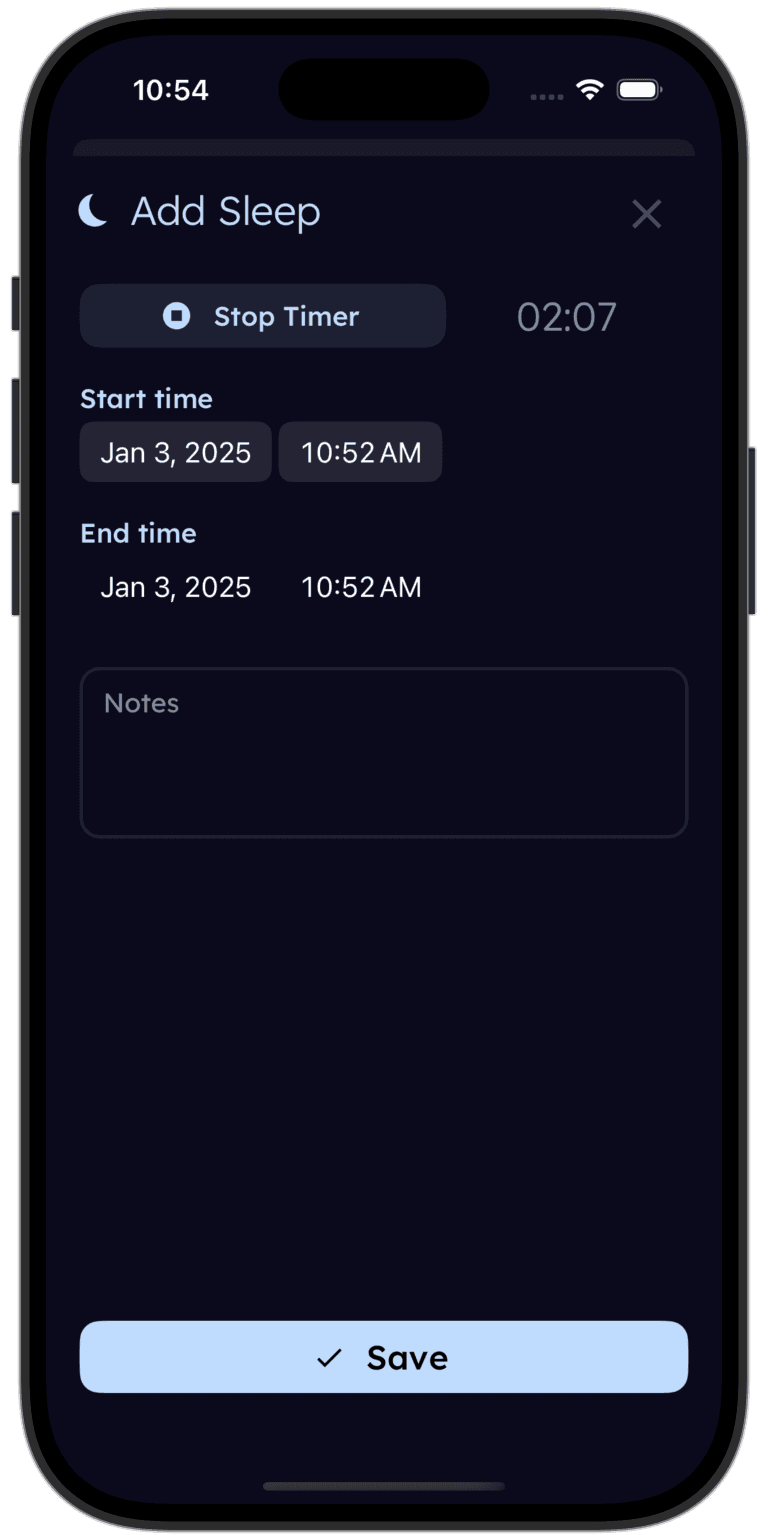
Tinylog sleep tracker showing night feed times and sleep stretches

Night feed logs reveal when your baby is ready.

Track every night feed in Tinylog — time, volume, and duration. After a week, patterns emerge that tell you whether wake-ups are hunger or habit. That data is exactly what your pediatrician needs to help you decide.

Download on the App StoreGet It On Google Play

How to Tell If Night Waking Is Hunger or Habit

This is the central question. If your baby is waking because they're hungry, they need to eat — no strategy changes that. If they're waking out of habit (a sleep association with feeding), the approach is different.

Signs it's hunger: baby takes a full feed (3-5 oz or a full breastfeed), goes right back to sleep after eating, and the wake-up time varies based on when the last feed happened. Younger babies, underweight babies, and babies going through growth spurts are more likely to be genuinely hungry.

Signs it's habit: baby takes a small amount and falls asleep during the feed, wakes at the same time every night regardless of when the last feed was, and needs feeding specifically to fall back asleep (not just food). This pattern often develops after 5-6 months when caloric need at night has decreased but the feeding-to-sleep association persists.

Tracking feed volumes and times for a week makes this distinction obvious. Without data, you're guessing.


How to Decide Which Strategy Fits

If your baby is 1-4 months old and waking multiple times at night, try a dream feed. It won't eliminate all wake-ups — your baby still needs to eat at night at this age — but it can consolidate the longest stretch into your sleep window.

If your baby is 5+ months, gaining weight well, eating solid amounts during the day, and your pediatrician agrees, you can start working toward dropping night feeds. Gradual approaches — reducing feed volume by an ounce every few nights, or shortening nursing sessions by a minute at a time — tend to be gentler than cold turkey. If you're also considering formal sleep training methods, night weaning often fits naturally into that process.

If your baby is between stages, you can combine approaches: keep a dream feed while gradually reducing one of the later wake-up feeds. This phased approach gives baby's daytime appetite time to compensate.

Tips That Apply Either Way

Track feed volumes, not just times

Logging how much your baby actually eats at night — not just when they wake — tells you whether the wake-up is hunger or habit. A baby who takes 4 oz at 2 AM is probably hungry. A baby who takes 1 oz and falls asleep is probably using the feed as a sleep association.

Talk to your pediatrician first

Before dropping any night feed, confirm with your doctor that your baby's weight gain supports it. This is especially important for premature babies, babies with feeding difficulties, or any baby under 4 months.

You can do both sequentially

Many families use a dream feed from months 2-4, then transition to dropping night feeds entirely at 5-6 months. The dream feed buys you time while your baby's stomach capacity grows.

Related Guides

Sources

  • Pinilla, T., & Birch, L. L. (1993). Help Me Make It Through the Night: Behavioral Entrainment of Breast-Fed Infants' Sleep Patterns. Pediatrics, 91(2), 436-444.
  • Galland, B. C., et al. (2012). Normal Sleep Patterns in Infants and Children: A Systematic Review. Sleep Medicine Reviews, 16(3), 213-222.
  • American Academy of Pediatrics. (2012). Breastfeeding and the Use of Human Milk. Pediatrics, 129(3), e827-e841.
  • Mindell, J. A., et al. (2006). Behavioral Treatment of Bedtime Problems and Night Wakings in Infants and Young Children. Sleep, 29(10), 1263-1276.

This guide is for informational purposes only and is not a substitute for professional medical advice. Consult your pediatrician for guidance specific to your baby.

Get this comparison in your inbox.
We'll send you the full breakdown so you can assess your baby's readiness and choose a strategy.
Logging night feeds reveals when your baby is ready.
Download Tinylog — track feed times and volumes to spot patterns your pediatrician needs to see.
Download on the App StoreGet It On Google Play