
Track bedtime vs. morning wake time for a week
Log the exact bedtime and wake time every day. You'll likely see that wake time barely moves regardless of bedtime — which tells you that earlier bedtime means more sleep, not earlier mornings.
GUIDE
Published on
Earlier bedtimes (6:00-7:30 PM) generally produce longer, more consolidated sleep. Later bedtimes rarely result in later mornings — they usually just mean less total sleep.
The counterintuitive truth: an overtired baby sleeps worse, not better.
Log bedtimes and wake times
“Adequate sleep helps with everything. The more you do to help them get that sleep, the better off they'll be.”
 Dr. Heidi Szugye, DO, Pediatrician, Cleveland Clinic
If you're keeping your baby up late hoping they'll sleep in tomorrow, the research has bad news. It almost never works. Babies' morning wake times are driven primarily by their circadian rhythm — specifically by cortisol levels that rise in the early morning and light exposure that signals daytime. These biological clocks don't care what time your baby went to sleep.
Mindell et al. (2009) studied over 29,000 children across 17 countries and found a consistent pattern: later bedtimes were associated with less total sleep, not later mornings. The children who went to bed latest simply slept the least. This finding has been replicated across multiple studies and aligns with what most sleep consultants observe clinically.
The mechanism behind this is what sleep scientists call the "cortisol paradox." When a baby stays awake past their natural sleepiness window, their body produces cortisol to keep them going — a stress hormone that creates a wired, hyper state often mistaken for being "not tired." This cortisol makes it harder to fall asleep, leads to more fragmented sleep, and drives early morning wake-ups. In other words, an overtired baby sleeps worse in every measurable way.
| Aspect | Early Bedtime (6:00-7:30 PM) | Late Bedtime (8:00+ PM) |
|---|---|---|
| Total sleep | More total sleep. Babies who go to bed earlier sleep longer overall — the extra evening hours aren't offset by earlier mornings. | Less total sleep. Later bedtime rarely pushes the morning wake time later. Baby just loses sleep on the front end. |
| Morning wake time | Wake time stays roughly the same (6:00-7:00 AM). Cortisol and light exposure drive morning wake-ups, not bedtime. | Morning wake time stays roughly the same — or gets earlier if baby becomes overtired. |
| Night wakings | Fewer night wakings when baby goes to bed in the right sleep pressure window — not overtired. | More night wakings. Overtiredness triggers cortisol release, making sleep more fragmented. |
| Sleep onset | Falls asleep faster when bedtime aligns with circadian sleepiness window and adequate sleep pressure. | May actually take longer to fall asleep if overtired — the cortisol paradox. |
| Melatonin timing | Aligns with natural melatonin rise, which begins around 6:00-7:00 PM in babies with regular light exposure. | Misses the initial melatonin wave. Baby fights through sleepiness and enters a cortisol-driven 'second wind.' |
| Parent evening time | Parents get their evening back earlier. A 7:00 PM bedtime gives hours of adult time. | Later bedtime means less evening downtime for parents. This matters for mental health. |
Benefits are strongest when bedtime aligns with the natural melatonin window and appropriate wake windows.
Too early is a real thing. Bedtime should be based on the last nap's end time and age-appropriate wake windows.
For newborns and families with non-traditional schedules, later bedtimes may be appropriate.
The sleep loss from late bedtimes compounds. A 30-minute later bedtime every night adds up to 3.5 hours of lost sleep per week.
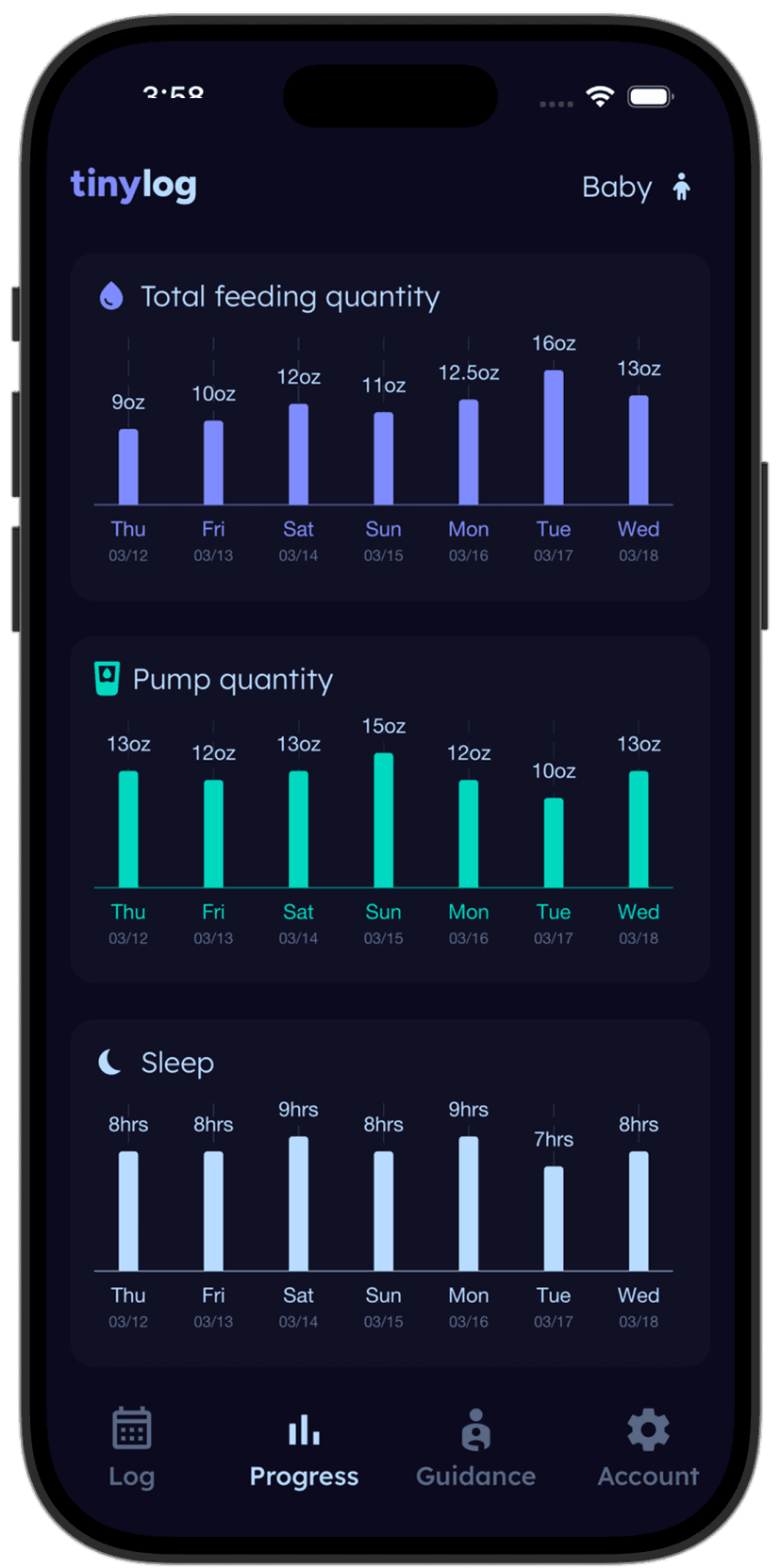
Tinylog tracks bedtimes and wake times side by side, so you can see exactly how a 15-minute bedtime shift affects your baby's total sleep, night wakings, and morning wake time.


The ideal bedtime isn't a single number — it's a window that depends on your baby's age, last nap, and individual sleep needs. But there are general guidelines that work for most babies.
For babies 3-6 months: bedtime typically falls between 7:00-8:00 PM, with a wake window of 2-2.5 hours after the last nap. Newborns under 3 months often have later, more variable bedtimes — this is normal and resolves as the circadian rhythm matures around 3-4 months.
For babies 6-18 months: the sweet spot is usually 6:30-7:30 PM, with the last wake window of 3-4 hours depending on age. If naps are cut short or skipped, moving bedtime earlier by 30 minutes can prevent the overtiredness cascade.
The key test: if your baby falls asleep within 10-20 minutes of being put down, the timing is right. If they fight sleep for 30+ minutes, they're either overtired (too late) or undertired (too early). Adjust by 15 minutes and try again.
For most families, earlier bedtime produces better sleep. The research is fairly consistent on this. If your baby is going to bed after 8 PM and you're dealing with night wakings, early morning wake-ups, or short sleep totals, moving bedtime earlier is one of the simplest and most effective changes you can make.
But family life matters too. If both parents work until 6 PM and need time with the baby before bed, a 6:00 PM bedtime isn't realistic. A 7:30 PM bedtime that includes quality time, a calm bedtime routine, and a connected parent is better than a 6:30 PM bedtime that feels rushed and stressful.
The data should guide you, not rule you. Track bedtimes, wake times, and sleep quality for a couple of weeks. Your baby's own patterns will tell you where the sweet spot is.
Log the exact bedtime and wake time every day. You'll likely see that wake time barely moves regardless of bedtime — which tells you that earlier bedtime means more sleep, not earlier mornings.
Exposing your baby to bright natural light within 30 minutes of waking helps set their circadian rhythm. This makes melatonin production start predictably in the evening, which makes an early bedtime feel natural rather than forced.
If you're moving bedtime earlier, shift by 15 minutes every 2-3 days rather than jumping from 8:30 to 7:00 in one night. Gradual shifts are easier on the baby's internal clock and produce less resistance.
This guide is for informational purposes only and is not a substitute for professional medical advice. Consult your pediatrician for guidance specific to your baby.