
GUIDE
Enfamil NeuroPro vs. Similac 360 Total Care
Published on ·Updated on
Both are premium flagship formulas with proprietary bioactive ingredients. The clinical evidence for their signature additions is promising but limited — and not strong enough to say one outperforms the other.
These are the formulas that both brands pour their biggest marketing budgets into. Enfamil leads with MFGM for brain development. Similac leads with HMOs for immune support. Both cost more than standard lines. Here is what the science actually supports.
Log formula and bottles
“All infant formulas must meet requirements that ensure optimal nutrition for babies. If your baby's formula is sold in the U.S., it has the nutrients your baby needs.”
 Dr. Matthew Badgett, MD, Pediatrician, Cleveland Clinic
The Premium Formula Landscape
Enfamil NeuroPro and Similac 360 Total Care are the flagship products of the two largest formula brands in the United States. They represent the top tier of each company's product line and carry premium pricing to match.
Both formulas share the same nutritional foundation — they meet all FDA requirements under 21 CFR 107, use cow's milk protein, and provide the standard macro and micronutrient profile that every infant formula must deliver. Where they diverge is in their proprietary bioactive additions: Enfamil adds MFGM, and Similac adds a blend of HMOs.
These are real components of human breast milk, and both have legitimate research behind them. But "legitimate research" and "proof that your baby will be smarter or healthier" are not the same thing. Understanding the difference between what the evidence shows and what the marketing implies is the key to making an informed decision.
For a general comparison of the parent brands, see our Enfamil vs. Similac guide.
| Feature | Enfamil NeuroPro | Similac 360 Total Care | What It Means |
|---|---|---|---|
| Brand positioning | Premium brain development formula | Premium complete nutrition formula | Marketing angles differ — 'brain' vs. 'total' — but both are the flagship premium products |
| Signature ingredient | MFGM (milk fat globule membrane) | 5 HMOs including 2'-FL (human milk oligosaccharides) | Both are real breast milk components. Different biological functions. |
| Claimed benefit | Supports brain development (cognitive, language, motor) | Supports immune health, gut health, and overall development | Both claims have some research support. Neither is definitively proven in long-term outcomes. |
| Protein source | Nonfat milk, whey protein concentrate | Nonfat milk, whey protein concentrate | Same base protein. |
| Fat source | Palm olein, soy, coconut, high oleic sunflower oils + MFGM lipids | High oleic safflower, soy, coconut oils (no palm olein) | The palm olein difference carries over from standard lines. May affect stool consistency. |
| DHA level | 0.32% of total fatty acids | 0.32% of total fatty acids | Equivalent DHA levels in current formulations. |
| Carbohydrate | Lactose | Lactose | Same primary carbohydrate. |
| Price (powder, ~20 oz can) | $33-$38 | $33-$38 | Comparable pricing. Both are $5-10 more per can than standard (non-premium) lines. |
| Available forms | Powder, ready-to-feed, liquid concentrate | Powder, ready-to-feed, liquid concentrate | Same availability. Ready-to-feed is most expensive but requires no mixing. |
MFGM: What the Science Actually Says
MFGM stands for milk fat globule membrane. In breast milk, fat is delivered in globules surrounded by a membrane rich in phospholipids, sphingomyelin, cholesterol, and glycoproteins. This membrane is not just packaging — research suggests it plays roles in brain development, gut maturation, and immune function.
The key study Enfamil cites is the Timby et al. (2014) randomized controlled trial from Sweden. In this study, 160 infants were randomized to receive either standard formula or formula supplemented with a bovine MFGM concentrate. At 12 months, the MFGM group scored higher on the Bayley Scales of Infant Development (cognitive subscale) compared to the standard formula group, and their scores were closer to a breastfed reference group.
This is a genuinely interesting finding. But context matters. This was a single study with a relatively small sample size. The cognitive difference, while statistically significant, was modest. There is no published long-term follow-up showing whether the difference persists at age 2, 3, or 5. And the study was partially funded by industry.
The Lasekan et al. (2015) study demonstrated that MFGM-supplemented formula is safe and well-tolerated with normal growth — important for establishing safety, but not evidence of cognitive benefit.
Bottom line: MFGM is a real, biologically relevant component of breast milk. Adding it to formula is scientifically reasonable. But the evidence that it produces measurable, lasting cognitive improvements in healthy, full-term, formula-fed babies is preliminary, not established.
HMOs: What the Science Actually Says
HMOs (human milk oligosaccharides) are complex sugars that are the third most abundant solid component of breast milk, after lactose and fat. Breast milk contains over 200 distinct HMOs. They are not digested by the baby — instead, they feed beneficial gut bacteria (acting as prebiotics), directly block pathogens from attaching to gut cells, and modulate the immune system.
Similac 360 Total Care includes five HMOs, with 2'-fucosyllactose (2'-FL) as the primary one. The Marriage et al. (2015) study showed that formula with 2'-FL HMO was well-tolerated, supported normal growth, and that the HMO was absorbed and excreted in patterns similar to breastfed infants. Parents also reported lower rates of respiratory infections and eczema.
The Puccio et al. (2017) study tested formula with 2'-FL and LNnT (another HMO) and found lower rates of parent-reported respiratory infections and antibiotic use in the HMO group compared to standard formula.
These are encouraging results. HMOs clearly play important roles in breast milk, and adding them to formula is scientifically reasonable. But the studies rely heavily on parent-reported outcomes (which are subjective), the sample sizes are moderate, and the research is industry-funded. Breast milk delivers over 200 HMOs in complex interactions — adding 5 synthesized versions is a meaningful start but a fraction of the breast milk HMO profile.
Bottom line: HMOs are biologically important, and including them in formula is a reasonable scientific step. But the evidence that adding 5 synthesized HMOs produces the same benefits as the 200+ HMOs in breast milk is incomplete.
| Ingredient | Key Study | Findings | Limitations |
|---|---|---|---|
| MFGM (Enfamil) | Timby et al., 2014 — randomized controlled trial, 160 infants | MFGM-supplemented formula group scored higher on cognitive tests at 12 months compared to standard formula. Scores were closer to a breastfed reference group. | Single study, relatively small sample, funded by industry. No long-term follow-up beyond 12 months published. Effect size was modest. |
| MFGM (Enfamil) | Lasekan et al., 2015 — growth and tolerance study | MFGM-supplemented formula was well-tolerated with normal growth. No significant adverse effects compared to control formula. | Growth and tolerance study, not designed to measure cognitive outcomes. Industry-funded. |
| 2'-FL HMO (Similac) | Marriage et al., 2015 — randomized controlled trial, 424 infants | Formula with 2'-FL HMO was well-tolerated, supported normal growth, and the HMO was absorbed and excreted similarly to breastfed infants. Infants had lower rates of parent-reported infections. | Parent-reported infection outcomes are subjective. Industry-funded (Abbott). Short study duration. |
| 2'-FL HMO (Similac) | Puccio et al., 2017 — randomized controlled trial, 175 infants | Infants receiving formula with 2'-FL and LNnT HMOs had fewer parent-reported respiratory infections and antibiotic use compared to control formula. | Parent-reported outcomes. Relatively small sample. Industry-funded. Effects were modest. |
| Both (general) | No head-to-head comparison studies exist | No published study has directly compared MFGM-containing formula against HMO-containing formula in the same trial. | Without a direct comparison, any claim that one is 'better' than the other is not evidence-based. |
What the Marketing Doesn't Tell You
Here is what gets lost between the clinical research and the formula aisle:
The base nutrition is the same. Strip away MFGM and HMOs, and you have two formulas with the same protein, similar fat profiles, lactose as the carbohydrate, and the same FDA-required nutrients. The premium ingredients are additions on top of an identical nutritional foundation.
No study has shown long-term outcome differences. As of 2026, there is no published research demonstrating that children who were fed MFGM-supplemented or HMO-supplemented formula have better cognitive function, stronger immune systems, or better health outcomes at age 2, 5, or 10 compared to children fed standard formula. The studies are short-term, and infant development is influenced by hundreds of factors beyond formula composition.
The premium price is paying for the bioactive ingredients. The $5-10 per can price difference between premium and standard formulas from the same brand amounts to roughly $60-120 per year. Whether that investment is "worth it" is a personal values question, not a medical one. The base nutrition your baby needs is fully covered by standard formulas.
Both companies are marketing to parental anxiety. "Brain development" and "immune support" are loaded phrases designed to make parents feel that anything less than the premium option is shortchanging their baby. This is not true. Millions of healthy children were raised on standard formula before MFGM and HMO supplementation existed. These ingredients are potential optimizations, not requirements.
Store brands are catching up. Some store-brand formulas now include 2'-FL HMO. None currently include MFGM. But the base nutritional profile of store brands meets the same FDA requirements at 30-50% lower cost.
| Product | Price Range | Monthly Estimate | Compared to Standard |
|---|---|---|---|
| Enfamil NeuroPro (20.7 oz powder) | $33-$38 | $150-$175 | ~$5-8 more per can vs. Enfamil Infant |
| Similac 360 Total Care (20.6 oz powder) | $33-$38 | $150-$175 | ~$5-8 more per can vs. previous Similac Advance |
| Store brand standard (comparable size) | $18-$25 | $90-$120 | Meets same FDA nutritional floor. No MFGM or multiple HMOs. |
| Premium formula (ready-to-feed, monthly) | $9-$12 per 32 oz | $250-$350 | Most expensive format. Convenient but costs roughly 2x powder. |
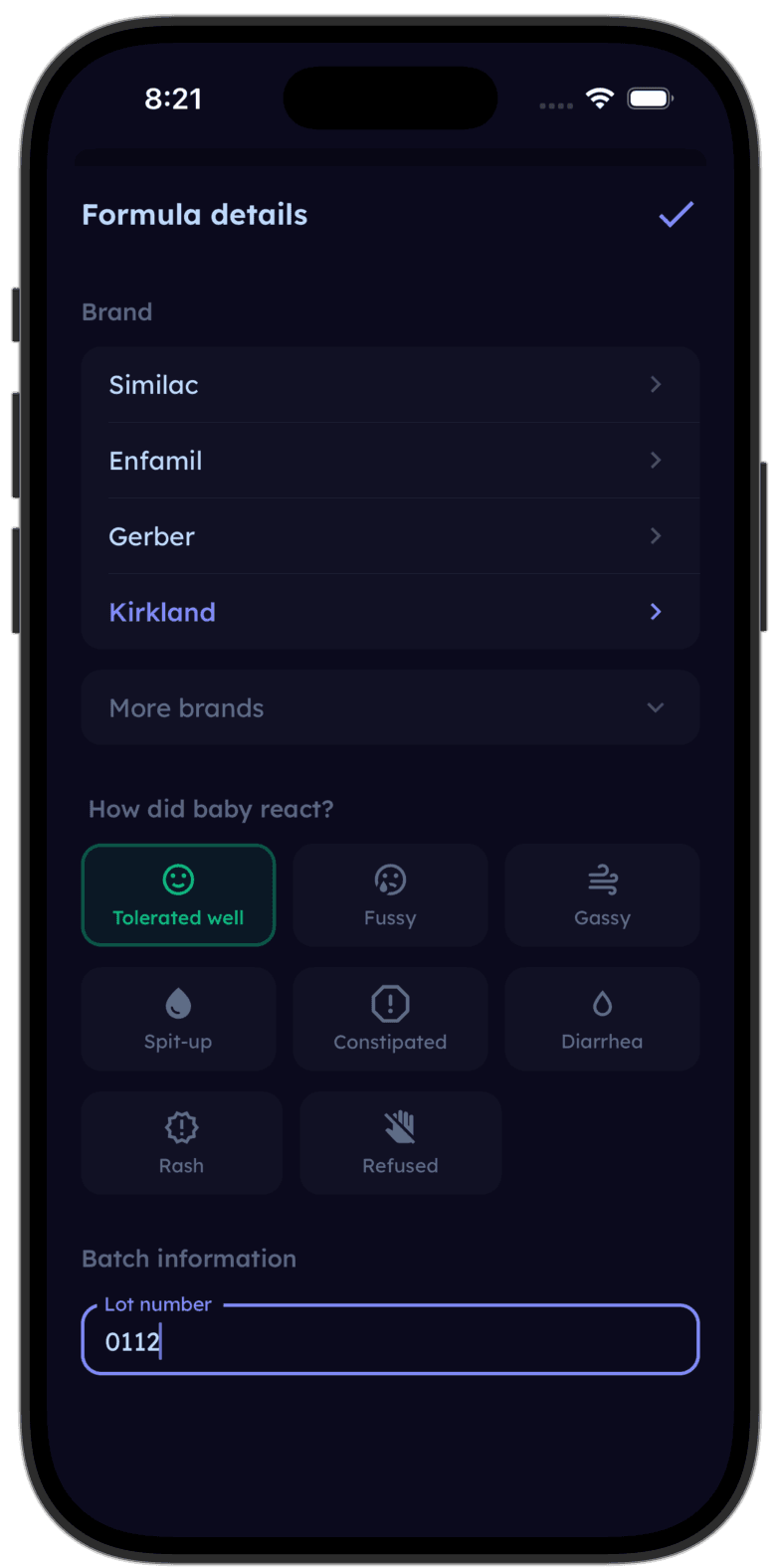
Tinylog tracks what matters most — how your baby is actually doing.
Whether you choose premium or standard formula, what tells you it's working is your baby's growth, feeding patterns, and output. Log it all in seconds and see the trend over time.


When to Talk to Your Pediatrician
The choice between NeuroPro and 360 Total Care does not require a medical consultation for healthy babies — pick whichever your baby tolerates and your budget supports. However, talk to your pediatrician in these situations:
When to Consult Your Pediatrician
- Your baby consistently refuses the formula or feeds significantly less than expected
- Persistent vomiting (not just spit-up) after most feedings
- Signs of allergic reaction: hives, facial swelling, wheezing
- Poor weight gain despite adequate intake volume
- You are considering a specialty formula (soy, hydrolyzed, amino acid-based) and want guidance
- You have questions about whether the premium formula is necessary for your specific baby
Your pediatrician can help determine if your baby needs a specialty formula. For most healthy, full-term babies, the choice between standard and premium formula within either brand is a personal preference, not a medical decision.
The Bottom Line
Enfamil NeuroPro and Similac 360 Total Care are both well-formulated, safe, nutritionally complete formulas. Their signature ingredients — MFGM and HMOs — are biologically relevant compounds found in breast milk, with some clinical research supporting their addition to formula.
However, the evidence does not demonstrate that one is superior to the other, and it does not prove that either produces meaningfully better long-term outcomes than standard (non-premium) formulas. The base nutrition is the same. The premium price reflects the bioactive additions, which are scientifically interesting but not proven necessities.
Choose based on what your baby tolerates, what is available, and what your budget allows. If the premium price feels comfortable, go for it — there is no downside. If it is a stretch, standard formula (from either brand or a store brand) provides everything your baby needs nutritionally. No guilt required.
If you are switching between formulas or comparing how your baby does on different products, tracking feeds and growth for a couple of weeks gives you real data to reference. Tinylog makes it simple to log feeds and see patterns, so you can make decisions based on observation rather than marketing.
For comparisons of the gentle and sensitive lines, see our Enfamil Gentlease vs. Similac Sensitive guide. For how newer brands compare, see our Bobbie vs. Enfamil vs. Similac guide.
Related Guides
-
Enfamil vs. Similac — A complete comparison
-
Best Baby Formulas 2026 — An evidence-based guide
Sources
- U.S. Food and Drug Administration. "21 CFR Part 107 — Infant Formula." Code of Federal Regulations.
- Timby N, et al. "Neurodevelopment, nutrition, and growth until 12 months of age in infants fed a low-energy, low-protein formula supplemented with bovine MFGM." American Journal of Clinical Nutrition, 2014.
- Lasekan JB, et al. "Growth of newborn, term infants fed sn-2 palmitate-predominant fat formula." Clinical Pediatrics, 2015.
- Marriage BJ, et al. "Infants fed a lower calorie formula with 2'-FL show growth and 2'-FL uptake similar to breastfed infants." Journal of Pediatric Gastroenterology and Nutrition, 2015.
- Puccio G, et al. "Effects of infant formula with human milk oligosaccharides on growth and morbidity: a randomized multicenter trial." Journal of Pediatric Gastroenterology and Nutrition, 2017.
- Bode L. "Human milk oligosaccharides: every baby needs a sugar mama." Glycobiology, 2012.
- American Academy of Pediatrics. "Choosing an Infant Formula." HealthyChildren.org, 2024.
This guide is for informational purposes only and is not a substitute for professional medical advice. Formula choices should be discussed with your pediatrician if your baby has specific medical conditions, allergies, or feeding concerns.
Frequently asked questions
- Is Enfamil NeuroPro better than Similac 360 Total Care?
- Neither is objectively better. Enfamil NeuroPro contains MFGM (milk fat globule membrane) and markets brain development benefits. Similac 360 Total Care contains 2'-FL HMO and five other HMOs and markets immune and gut health benefits. Both meet the same FDA nutritional requirements. The clinical evidence does not demonstrate superiority of one over the other for healthy, full-term infants.
- What is MFGM in Enfamil NeuroPro?
- MFGM stands for milk fat globule membrane. It is a complex lipid structure found naturally in breast milk that contains phospholipids, sphingomyelin, and other bioactive compounds. Some research suggests it may support cognitive development, but most studies are short-term and manufacturer-funded. MFGM is a real component of breast milk, but the evidence that adding it to formula produces measurable long-term cognitive benefits is still emerging.
- What are HMOs in Similac 360 Total Care?
- HMOs (human milk oligosaccharides) are complex sugars found naturally in breast milk. They are prebiotics that feed beneficial gut bacteria and support immune function. Similac 360 Total Care includes 2'-FL and four additional HMOs. Research shows HMOs play an important role in breast milk, but the clinical benefit of adding synthesized HMOs to formula is still being studied.
- Is the premium formula worth the extra cost?
- That depends on your priorities and budget. The premium formulas cost roughly $5-10 more per can than standard lines from the same brand. The base nutrition is the same — both meet FDA requirements. You are paying for the proprietary bioactive ingredients (MFGM or HMOs), which have some research support but no proof of meaningfully different long-term outcomes in healthy babies.
- Are store-brand formulas as good as NeuroPro or 360 Total Care?
- Store-brand formulas meet the same FDA nutritional requirements for the base formulation. They typically do not include MFGM or multiple HMOs, though some are beginning to add 2'-FL HMO. For the core nutrition your baby needs, store brands are equivalent. The proprietary additions in premium formulas are not required for healthy development.