GUIDE

Extended Breastfeeding

Breastfeeding past 12 months is recommended by the WHO and the AAP. It's biologically normal, nutritionally beneficial, and more common than the judgment suggests.

If you're breastfeeding a toddler and feeling like you need to justify it — you don't. Here's the evidence, the real challenges, and how to decide what's right for your family.

Beyond the First Birthday

In many parts of the world, breastfeeding a 2 or 3-year-old is completely unremarkable. In parts of the US and Western Europe, breastfeeding past 12 months is sometimes treated as unusual, excessive, or even inappropriate.

The evidence doesn't support that view. Both the WHO and the AAP recommend breastfeeding for 2 years or longer. Breast milk continues to provide significant nutrition and immune benefits well past the first birthday. And the natural age of weaning in humans, based on anthropological and comparative primate data, is estimated at 2.5 to 7 years.

You're not doing anything weird. You're doing something that is both biologically normal and evidence-supported. But you might need some talking points for Thanksgiving dinner, so here they are.

What Extended Breastfeeding Offers

Continued immune protection

Breast milk doesn't lose its immune properties at 12 months. Secretory IgA, lactoferrin, and white blood cells continue to provide active immunity. This is especially valuable in the toddler years, when kids are constantly exposed to new germs in daycare, playgroups, and the world of putting everything in their mouth.

Nutritional value persists

In the second year, breast milk provides an estimated 29% of a toddler's energy needs, 43% of protein needs, 36% of calcium needs, 75% of vitamin A needs, and 60% of vitamin C needs (Dewey, 2001). It's a significant nutritional contributor, not just comfort food.

Emotional regulation and comfort

For toddlers navigating a world of big emotions, limited language, and constant new experiences, nursing provides a reliable source of comfort and connection. This isn't dependency — it's a healthy coping mechanism that they'll eventually outgrow.

Health benefits for the breastfeeding parent

Longer breastfeeding duration is associated with reduced risk of breast cancer, ovarian cancer, type 2 diabetes, and cardiovascular disease in the nursing parent. These benefits increase with total duration of breastfeeding across all children.

Sick toddler recovery

When a toddler is sick and refusing all food — which happens a lot — breast milk is often the one thing they'll still take. It provides hydration, calories, and immune support all at once. Many parents cite illness as the time they're most grateful for extended breastfeeding.

The Real Challenges (Not the Imagined Ones)

Social judgment

The biggest challenge of extended breastfeeding isn't physical — it's social. Comments from family, friends, and strangers about nursing a toddler are common and can range from surprised to hostile. Having evidence-based responses helps, but the emotional toll of constant justification is real.

Nursing gymnastics

Toddlers do not nurse like infants. They climb, twist, stand, unlatch to comment on something, and generally treat nursing like a combination of meal and jungle gym. It's physically awkward and sometimes hilarious. Setting boundaries ('you can nurse, but you need to be still') is reasonable.

Night waking persistence

Some toddlers who are still nursing continue to wake at night for comfort nursing. If this is affecting your sleep, night weaning while continuing daytime nursing is a common and effective approach. You don't have to fully wean to get better sleep.

Nursing aversion (touched out)

Some parents develop nursing aversion — a sudden, intense feeling of irritation or revulsion during feeds, often triggered by hormonal changes, pregnancy, or simple overstimulation. This is common in extended breastfeeding and is not a character flaw. If nursing is making you miserable, you are allowed to set limits or wean.

Setting boundaries becomes necessary

A newborn nurses on demand. A toddler can learn to wait, can understand 'not right now,' and can nurse at specific times. Setting boundaries around when and where you nurse is healthy for both of you. Extended breastfeeding doesn't mean unlimited access.

What the Evidence Says

  • The AAP (2022) recommends breastfeeding for 2 years or longer, mutually desired by parent and child
  • The WHO recommends continued breastfeeding up to 2 years of age or beyond
  • Global average weaning age is between 2-4 years (Dettwyler, 2004)
  • Breast milk antibody concentration actually increases in the second year (Goldman, 1983)
  • Longer breastfeeding duration correlates with reduced maternal cancer risk (Collaborative Group, 2002)
  • No evidence of negative psychological effects from extended breastfeeding (Fergusson & Woodward, 1999)

Extended breastfeeding has strong institutional support and consistent evidence of benefit. The social stigma is cultural, not scientific.

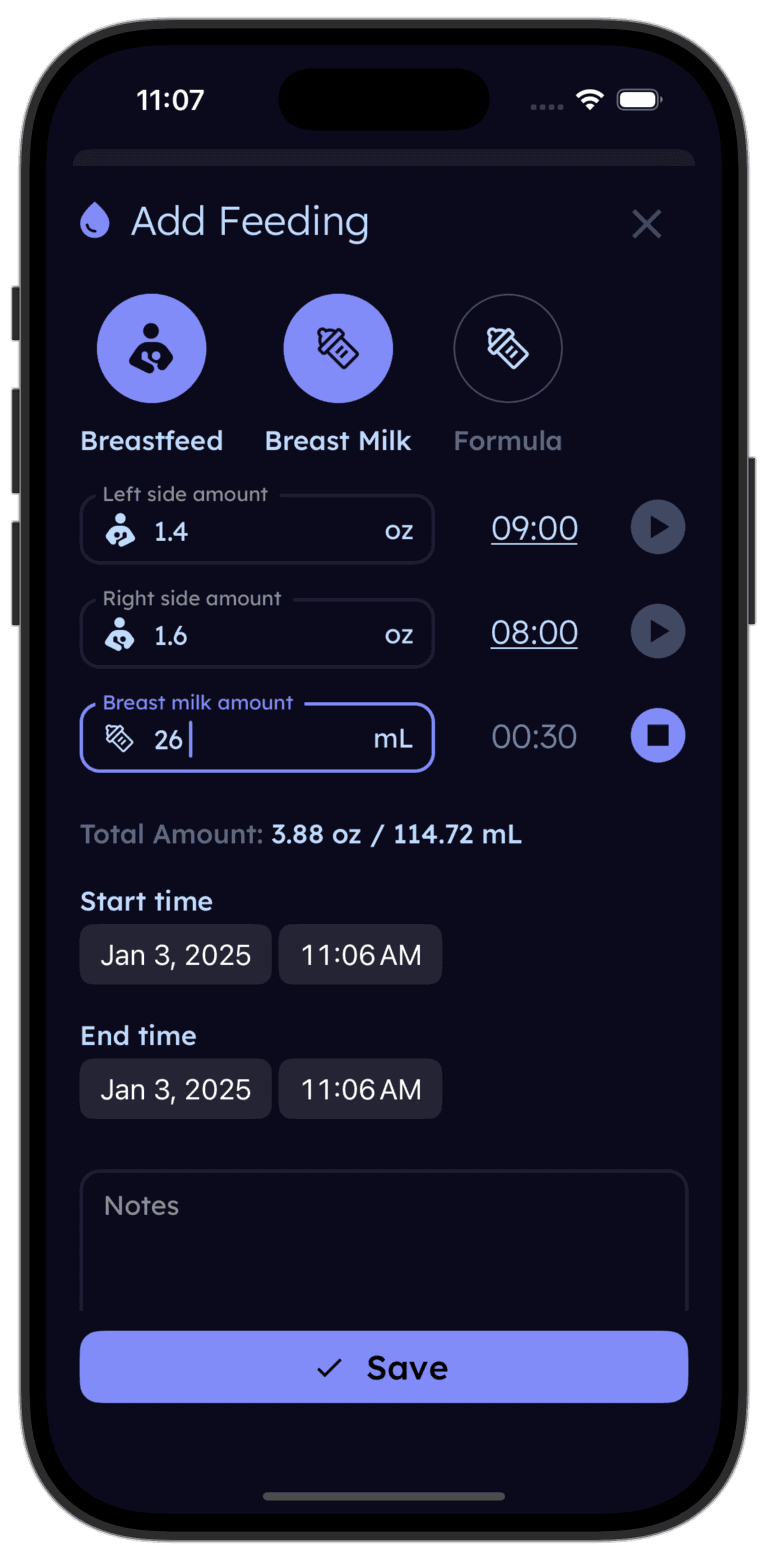
tinylog nursing tracker showing toddler breastfeeding session log

Toddler nursing looks different — fewer sessions, shorter duration, more snack-and-comfort than full meals. Tracking still helps you see the pattern and plan for eventual weaning.

tinylog logs nursing sessions at every stage. When you're ready to start reducing, your feed history shows you the natural pattern to work with.

Download on the App StoreGet It On Google Play

Handling the Opinions

Here are some evidence-based responses for the inevitable comments:

"You're STILL breastfeeding?" "The AAP recommends breastfeeding for two years or longer. We're following current medical guidance."

"They'll never stop on their own." "Actually, all children wean eventually. The global average is between 2-4 years. We're on a normal timeline."

"They don't need it anymore — they eat real food." "Breast milk provides significant nutrition and immune support in the second year and beyond. It's not instead of food — it's in addition to it."

"It's for your benefit, not theirs." "The evidence shows clear health benefits for both of us. I'm not sure why that's a problem."

Or simply: "This works for our family." You don't owe anyone a research presentation. A clear boundary is a perfectly valid response.


When Extended Breastfeeding Isn't Working

Extended breastfeeding should be mutually desired — the AAP specifically includes this language. If nursing is causing you significant physical discomfort, emotional distress, or nursing aversion, those are valid reasons to wean regardless of your child's age.

You do not need to continue breastfeeding past the point where it's working for you. Weaning at 13 months or 18 months or 22 months is not a failure. It's a parenting decision made by someone who knows their own limits.

For guidance on how to wean at any age, see our weaning guide.

When to Get Help and What Kind

See an IBCLC if: you're experiencing nursing aversion and want to manage it rather than wean, if you want to set boundaries around toddler nursing, or if you want to partially wean.

See your provider if: you're experiencing mood changes or nursing aversion that's affecting your wellbeing.

Find community: Online groups for extended breastfeeding parents (La Leche League, local breastfeeding groups) provide peer support from people who understand the unique social challenges of nursing a toddler.

If night nursing is part of your extended breastfeeding journey, our breastfeeding and sleep guide covers how to balance both. If you're also pumping and want to wind down, see our weaning from the pump guide.

Related Guides

Sources

  • American Academy of Pediatrics (AAP). (2022). Breastfeeding and the Use of Human Milk. Pediatrics, 150(1).
  • World Health Organization. (2023). Breastfeeding recommendations.
  • Dewey, K. G. (2001). Nutrition, growth, and complementary feeding of the breastfed infant. Pediatric Clinics of North America, 48(1).
  • Dettwyler, K. A. (2004). When to wean: Biological versus cultural perspectives. Clinical Obstetrics and Gynecology, 47(3).
  • Goldman, A. S., et al. (1983). Immunologic components in human milk during the second year of lactation. Acta Paediatrica Scandinavica, 72(3).
  • Collaborative Group on Hormonal Factors in Breast Cancer. (2002). Breast cancer and breastfeeding. Lancet, 360(9328).
  • Victora, C. G., et al. (2016). Breastfeeding in the 21st century. Lancet, 387(10017).

Medical Disclaimer

This guide is for informational purposes only and is not a substitute for professional medical advice. If you're experiencing breastfeeding difficulties, consider consulting an IBCLC (International Board Certified Lactation Consultant) or your pediatrician.

Get this guide in your inbox.
We'll send you the evidence and practical tips for breastfeeding past the first year.
Track feeds at every stage — toddler nursing looks different, and the data still matters.
Download tinylog free — log nursing sessions however long you breastfeed.
Download on the App StoreGet It On Google Play