GUIDE

Weaning from the Pump

Drop one session at a time, wait 3-7 days between drops, and express for comfort only. Gradual is the key word — your body needs time to get the message.

Whether you've been exclusively pumping for months or pumping at work, here's how to step down without your body revolting.

When Pumping Ends

Weaning from the pump is different from weaning from the breast. When you wean from nursing, baby gradually reduces the demand signal. When you wean from the pump, YOU control the reduction — and your body needs clear, consistent signals to understand that production should decrease.

The principle is the same as establishing supply, but in reverse: less removal = less production. But your body doesn't get the memo instantly. It takes days for each session reduction to register hormonally. Go too fast and you'll be dealing with engorgement, clogged ducts, and potentially mastitis. Go at the right pace and the process is surprisingly smooth.

Sample Pump Weaning Schedule (From 6 Sessions)
Week 1
Sessions per DayDrop from 6 → 5
What to DropDrop lowest-output session (usually mid-afternoon)
ManagementMay feel slightly full at the dropped session time. Hand express for comfort only if needed.
Week 2
Sessions per DayDrop from 5 → 4
What to DropDrop another low-output session
ManagementBody should be adjusting. Less engorgement expected. If still very full, wait a few more days before next drop.
Week 3
Sessions per DayDrop from 4 → 3
What to DropDrop evening session
ManagementYou're now pumping 3x daily. Per-session output may increase slightly as body adjusts to fewer sessions.
Week 4
Sessions per DayDrop from 3 → 2
What to DropDrop mid-day session, keeping morning and one other
ManagementSupply is significantly reduced. Engorgement risk decreases with each dropped session.
Week 5-6
Sessions per DayDrop from 2 → 1 → 0
What to DropDrop to one session, then pump every other day, then stop
ManagementFinal stage. Some parents pump every other day for a week before stopping completely. Others stop from 1/day.
This is a template — adjust based on how your body responds. If you're still very engorged 3 days after dropping a session, wait another 2-3 days before dropping the next one.

Managing Comfort During Pump Weaning

Express for comfort, not for emptying

When your breasts feel uncomfortably full after dropping a session, hand express or pump JUST enough to take the pressure down. If you fully empty, you're telling your body to refill — which defeats the purpose. Express for 2-3 minutes or until the pressure eases, then stop.

Cold compresses are your best friend

Cold cabbage leaves (yes, really — they conform to your breast shape), gel ice packs, or frozen peas wrapped in a towel. Apply for 15-20 minutes after any comfort expression. Cold reduces swelling and mildly suppresses milk production.

Wear a supportive bra (not a compression bra)

A snug, supportive sports bra reduces breast movement and provides comfort. Avoid extremely tight compression — it can worsen clogged ducts. You want support, not a tourniquet.

Ibuprofen for inflammation

Anti-inflammatory medication (ibuprofen/Advil) helps with both pain and inflammation from engorgement. Take it as directed on the package. It's safe during breastfeeding and during weaning.

Watch for clogged ducts

Tender lumps that don't resolve with a feed or expression may be clogged ducts. Warm compress, gentle massage toward the nipple, and nursing or pumping can clear them. If a clog persists for 48+ hours or you develop fever, it may be progressing to mastitis.

Watch for mastitis

Fever, flu-like symptoms, red hot area on the breast — this is mastitis and needs medical attention within 24 hours. Continuing to remove milk from the affected breast (nursing or pumping) is important even during mastitis. You may need antibiotics.

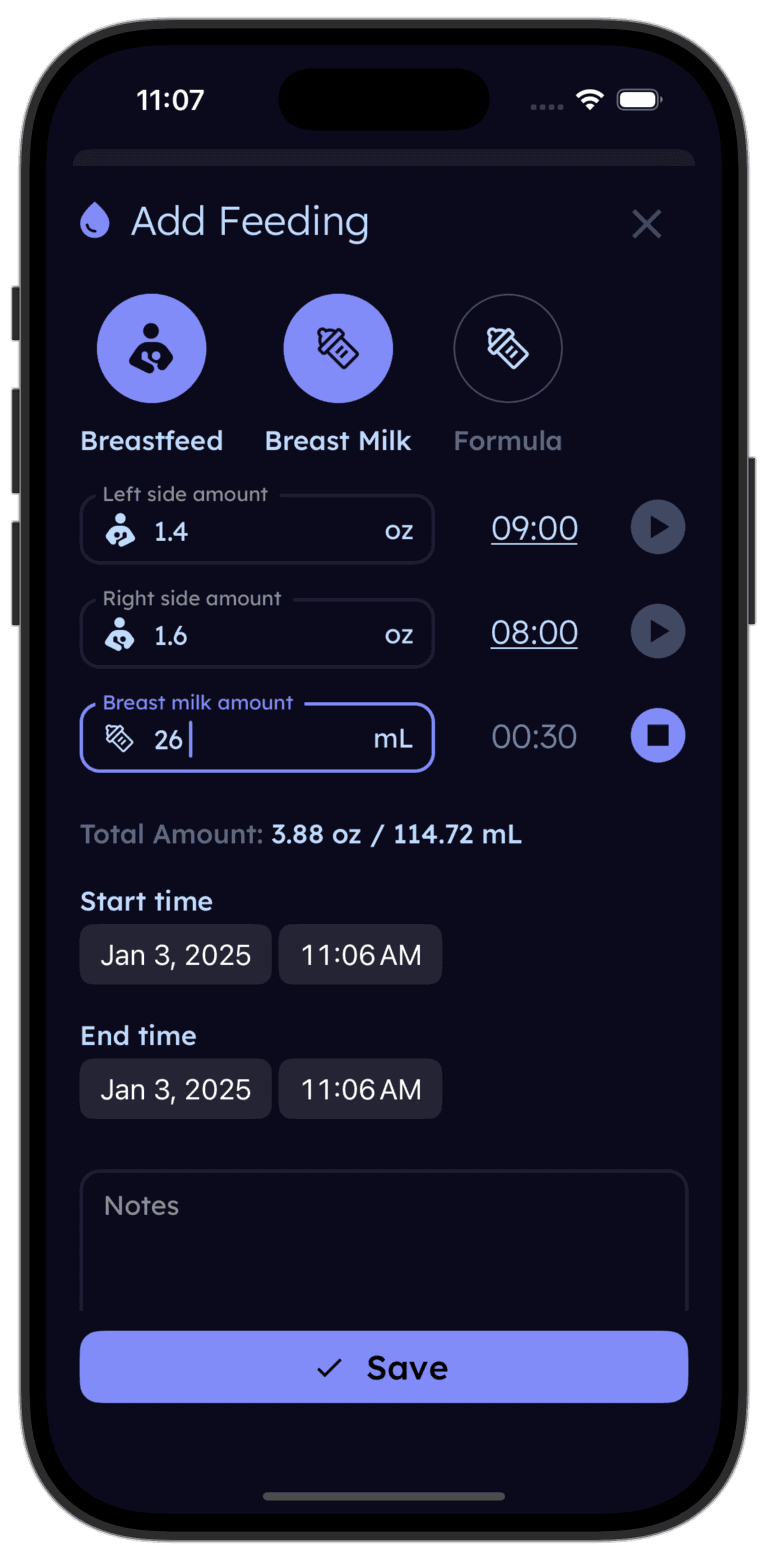
tinylog pump log showing decreasing pump sessions during weaning

Track your pump-down schedule — knowing when you dropped each session helps you pace the weaning and gives you a record if you need to slow down.

tinylog logs pump sessions so you can see the step-down in real time. When you go from 6 sessions to 5 to 4, the data confirms you're on pace.

Download on the App StoreGet It On Google Play

The Emotional Side

It's okay to feel relief

If you've been pumping 6-8 times a day for months, wanting to stop does not make you a bad parent. Getting your body and time back is a legitimate reason to wean. You've done something incredibly demanding, and relief at the end is natural.

It's okay to feel grief too

Even if you wanted to stop, the hormonal drop during weaning can bring unexpected sadness. Some parents mourn the end of this phase. Both relief and grief can exist simultaneously, and both are valid.

Hormonal shifts happen

Prolactin and oxytocin drop as you wean. This can affect mood, energy, and even libido. These changes are temporary for most people but can be significant. If you feel markedly worse, talk to your provider.

You did something extraordinary

Whether you pumped for 2 months or 2 years, exclusive pumping is one of the most demanding feeding methods that exists. You logged hundreds of hours hooked up to a machine to give your baby breast milk. Take a moment to be proud of that.

What the Evidence Actually Says

"Cabbage leaves work for engorgement." Surprisingly, there's some evidence for this. A few small studies suggest that cold cabbage leaves applied to the breast may reduce engorgement and pain similarly to cold gel packs. The mechanism isn't fully understood — it may just be the cold, or there may be a component in cabbage that helps. Either way, it's harmless and many parents find it helpful.

"You should bind your breasts to stop production." Outdated and potentially harmful. Breast binding increases the risk of clogged ducts and mastitis. A snug, supportive bra provides comfort without the risks of compression. The evidence supports gradual milk reduction, not forceful suppression.

"Once you start weaning, you can't go back." Not entirely true. If you're in the early stages of weaning (still pumping several times daily), you can increase frequency again and supply usually responds — especially if weaning has only been going on for days, not weeks. The longer you've been reducing, the harder it is to rebuild.


When to Get Help and What Kind

See your OB/GYN or provider if: you develop mastitis symptoms (fever, red hot area, flu-like feelings), if engorgement doesn't resolve with conservative management, or if you want guidance on the pace of weaning.

See an IBCLC if: you want a customized weaning plan based on your current schedule and supply, or if you want to partially wean (reduce pumping but not stop entirely).

See a therapist or your provider if: the emotional/hormonal effects of weaning are significant. Post-weaning mood changes are real and treatable.

If you're not ready to wean but want to optimize your schedule, our working parents pumping schedule can help. For managing your remaining stash, see our breast milk storage guide.

Related Guides

Sources

  • Academy of Breastfeeding Medicine. (2020). ABM Clinical Protocol #4: Mastitis. Breastfeeding Medicine.
  • Roberts, K. L., et al. (1995). A comparison of chilled and room-temperature cabbage leaves in treating breast engorgement. Journal of Human Lactation, 11(3).
  • American Academy of Pediatrics (AAP). (2022). Breastfeeding and the Use of Human Milk. Pediatrics, 150(1).
  • Lawrence, R. A., & Lawrence, R. M. (2015). Breastfeeding: A Guide for the Medical Profession. 8th edition.

Medical Disclaimer

This guide is for informational purposes only and is not a substitute for professional medical advice. If you're experiencing breastfeeding difficulties, consider consulting an IBCLC (International Board Certified Lactation Consultant) or your pediatrician.

Get this pump weaning plan in your inbox.
We'll send you the step-down schedule so you can plan your exit strategy.
Track sessions as you drop them — see the process working.
Download tinylog free — watch pump sessions decrease and know you're on track.
Download on the App StoreGet It On Google Play