GUIDE

Foremilk vs. Hindmilk

Foremilk and hindmilk aren't separate types of milk. They're the same milk with a gradual increase in fat content as the breast empties. The distinction matters far less than the internet suggests.

The foremilk/hindmilk 'imbalance' is one of the most misunderstood concepts in breastfeeding. Here's what actually matters.

Track left and right side feeding

Log duration and side to see your pattern

The misunderstandings around these concepts have caused anxiety, upset, and even led to breastfeeding problems and premature weaning.
Nancy MohrbacherNancy Mohrbacher, IBCLC, FILCA, Lactation Consultant, Author of Breastfeeding Answers Made Simple

The Most Misunderstood Concept in Breastfeeding

If you've spent any time in breastfeeding forums, you've encountered the foremilk/hindmilk discussion. A baby has green poop? Must be a foremilk/hindmilk imbalance. Baby seems fussy after feeds? Not enough hindmilk. Baby is gassy? Too much foremilk. The concept has become a catch-all explanation for every breastfeeding concern, and most of what you've read about it is oversimplified or wrong.

Here's what's actually happening: breast milk isn't produced in two types. There's no foremilk gland and hindmilk gland. Your breast produces one milk. Understanding proper breastfeeding latch matters far more for effective feeding than worrying about foremilk and hindmilk ratios. As the breast fills between feeds, fat globules in the milk stick to the walls of the milk ducts. When baby starts feeding, the first milk to flow is lower in fat because the fat is still stuck to the duct walls. As the breast empties and milk flows more vigorously, it picks up these fat globules. So the milk gradually gets fattier as the feed progresses. It's a gradient, not a switch.

Lactation researcher Peter Hartmann, whose lab at the University of Western Australia has done some of the most detailed studies on breast milk composition, has emphasized that the foremilk/hindmilk distinction is far less clinically significant than popular breastfeeding culture suggests. The total fat baby receives over a 24-hour period is what matters for growth — not the fat content of any single feed.

Foremilk vs. Hindmilk — What They Actually Are
What it is
Foremilk (Early Milk)The milk available at the start of a feed — thinner, more watery-looking, higher in lactose.
Hindmilk (Later Milk)The milk that comes later in a feed — creamier, higher in fat, more calorie-dense.
Fat content
Foremilk (Early Milk)Lower fat — but not fat-free. Contains all the same components, just in different proportions.
Hindmilk (Later Milk)Higher fat — fat globules stick to the milk duct walls and are released as the breast empties.
Appearance
Foremilk (Early Milk)Thinner, slightly bluish or clear-looking. Resembles skim milk.
Hindmilk (Later Milk)Thicker, creamier, whiter. More visibly opaque.
Calories
Foremilk (Early Milk)Lower calorie density per ounce, but still nutritious.
Hindmilk (Later Milk)Higher calorie density per ounce. Contributes to satiety.
Volume
Foremilk (Early Milk)Makes up the majority of milk volume in a full breast.
Hindmilk (Later Milk)Smaller volume but higher caloric contribution per ounce.
How it works
Foremilk (Early Milk)Available first because it collects in the ducts between feeds. Lower fat because fat sticks to duct walls.
Hindmilk (Later Milk)Comes later because as milk flows, it picks up fat globules that adhered to duct walls during storage.
Foremilk and hindmilk are not separate products. They're the beginning and end of a continuous fat gradient.

What Foremilk Provides

  • Provides hydration — the higher water content of early milk quenches baby's thirst
  • Contains lactose, which is baby's primary carbohydrate energy source
  • Delivers the full complement of antibodies, white blood cells, and immune factors
  • Contains all vitamins and minerals present in breast milk
  • Makes up the largest volume of any single feed — baby isn't missing out on nutrition

Foremilk is not 'junk milk.' It contains everything your baby needs — just with a different fat ratio.

Foremilk Concerns — Mostly Overblown

  • If baby only ever gets very short feeds from very full breasts, they may get proportionally less fat
  • In true oversupply situations, large volumes of lower-fat milk can cause lactose overload symptoms
  • The concept of 'too much foremilk' has created unnecessary anxiety in mothers with normal supply

True foremilk-related issues are rare and almost always linked to significant oversupply, not normal feeding.

What Hindmilk Provides

  • Higher fat content contributes to satiety — helps baby feel full and satisfied
  • Calorie-dense — important for weight gain and growth
  • Gradually increases during the feed, providing a natural satiety signal
  • Fat content supports brain development — breast milk fat is rich in DHA and AA

The fat gradient exists for a reason — it provides a natural satiety signal as the feed progresses.

Hindmilk Concerns — Mostly Overthinking

  • Not a separate 'thing' to chase — it's a natural gradient, not a distinct milk type
  • Obsessing over hindmilk can lead to block feeding or unnecessary feeding interventions
  • The idea that baby 'needs' to get hindmilk has been oversimplified in popular breastfeeding advice

If your baby is gaining weight, they're getting enough fat. Full stop.

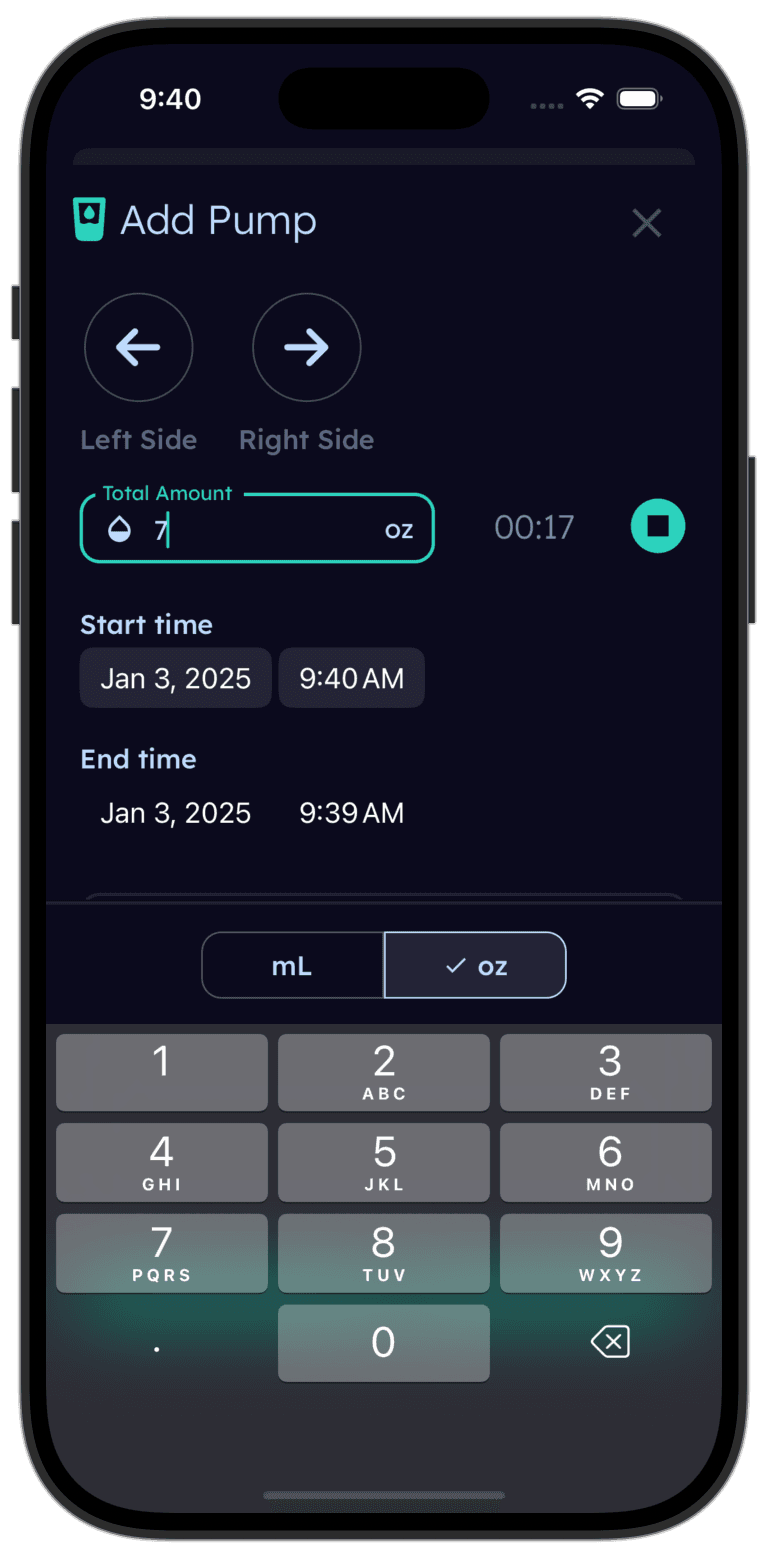
Tinylog breastfeeding log showing side and duration tracking

Track which side and for how long — not to stress, but to stay informed.

Tinylog logs left/right side and feed duration so you can see your pattern over time. If your lactation consultant ever asks 'which side are you starting on?' and 'how long is baby feeding?' — you'll have the data ready instead of guessing.

Download on the App StoreGet It On Google Play

When 'Foremilk/Hindmilk Imbalance' Is Real

True lactose overload — the actual clinical condition behind the popular "foremilk/hindmilk imbalance" — does exist. But it's uncommon and almost always associated with significant oversupply. Here's the mechanism: when a mother produces substantially more milk than her baby needs, the baby fills up on large volumes of lower-fat milk before ever reaching the higher-fat milk deeper in the breast. The excess lactose from all that lower-fat milk can overwhelm the baby's ability to digest it, leading to osmotic diarrhea.

The symptoms are specific: frothy or explosive green stools, excessive gas and bloating, a baby who seems uncomfortable despite feeding well and gaining weight (often gaining very rapidly), and a mother who is clearly overproducing (breasts that refill quickly, frequent leaking, ability to pump large volumes easily). If baby has green poop but none of the other symptoms, it's probably not a foremilk/hindmilk issue.

The treatment for true oversupply-driven lactose overload is block feeding (feeding from one breast for multiple feeds before switching), not pumping off foremilk, which would make oversupply worse. A lactation consultant can guide this process.


What to Do Instead of Worrying About It

For the vast majority of breastfeeding mothers, the foremilk/hindmilk distinction requires exactly zero intervention. Here's the simple approach: let your baby feed on the first breast until they come off on their own or fall asleep. If they're still showing hunger cues, offer the second breast. Start the next feed on the breast you ended with (or the lesser-used one). That's it.

Don't time feeds to ensure "enough hindmilk." Don't pump off foremilk before feeding. Don't restrict to one breast per feed unless specifically treating oversupply with professional guidance. And don't diagnose "foremilk/hindmilk imbalance" based on a single green diaper. Our guide on breastfed vs. formula-fed poop explains the wide range of normal stool colors — green poop has dozens of benign causes and is rarely related to fat content.

If your baby is gaining weight appropriately, having adequate wet diapers, and generally content between feeds — they're getting the right amount of fat. You can track your baby's progress using growth percentile charts to confirm they're on track. Trust the system.

Tips That Apply Either Way

Let baby finish the breast

The simplest way to ensure adequate fat intake is to let baby feed until they come off the breast on their own, then offer the second side if they're still hungry. You don't need to time feeds or count minutes — baby's suck pattern naturally slows as fat content increases and they become satisfied.

Don't pump off foremilk

Unless specifically advised by a lactation consultant for a medical reason, pumping off foremilk before feeds is unnecessary and can worsen oversupply. Your baby is perfectly designed to handle the natural fat gradient of a normal breastfeed.

Track side and duration to see your pattern

Logging which side you fed on and for how long helps you ensure both breasts get adequate stimulation. It also gives your lactation consultant useful data if you ever do need to troubleshoot. But use this data for information, not anxiety.

Related Guides

Sources

  • Kent, J. C., et al. (2006). Volume and Frequency of Breastfeedings and Fat Content of Breast Milk Throughout the Day. Pediatrics, 117(3), e387-e395.
  • Woolridge, M. W., & Fisher, C. (1988). Colic, "Overfeeding", and Symptoms of Lactose Malabsorption in the Breast-Fed Baby: A Possible Artifact of Feed Management? The Lancet, 332(8607), 382-384.
  • Hartmann, P. E., et al. (2012). Breast Milk Composition and Infant Nutrient Intakes During the First 12 Months of Lactation. European Journal of Clinical Nutrition, 67(S1), S29-S35.
  • Academy of Breastfeeding Medicine. (2020). ABM Clinical Protocol #32: Management of Hyperlactation. Breastfeeding Medicine, 15(3), 129-134.

This guide is for informational purposes only and is not a substitute for professional medical advice. Consult your pediatrician for guidance specific to your baby.

Get this comparison in your inbox.
Save this guide so you can stop worrying about foremilk imbalance — and know when it actually matters.
Tracking side and duration gives you useful information — not anxiety.
Use Tinylog to log which side and how long, so your feeding data works for you.
Download on the App StoreGet It On Google Play