GUIDE

Grandparent Care vs. Daycare

Grandparent care offers love, trust, and cost savings. Daycare offers structure, socialization, and professional standards. Both can be excellent — but each comes with trade-offs that families rarely discuss openly.

Free childcare from grandparents sounds perfect until you factor in boundaries, updated safety practices, and family dynamics.

Sync baby logs with grandparents

Real-time tracking across caregivers

Caregivers do not need to be perfect to help children feel safe, connected and supported.
Dr. Michael YogmanDr. Michael Yogman, MD, FAAP, Pediatrician, American Academy of Pediatrics

The Best Childcare Is the One That Actually Works

Grandparent care is the oldest childcare arrangement in human history. According to the U.S. Census Bureau, approximately 7.7 million children under 15 are cared for by a grandparent as their primary childcare arrangement. It's also the most emotionally complicated option, because the person caring for your child is also the person who raised you — and they may have strong opinions about how you're doing it differently.

Daycare centers, by contrast, are professional relationships with professional boundaries. The teacher follows your feeding instructions because it's her job, not because she agrees with your choices. There's no Thanksgiving dinner where the car seat argument resurfaces.

Both options can be excellent. A 2016 study published in the Journal of Marriage and Family found that children who spent significant time in grandparent care showed no developmental disadvantage compared to children in formal childcare settings. The key variables are the same regardless of setting: responsive caregiving, appropriate stimulation, and consistent routines.

Grandparent Care vs. Daycare: Full Comparison
Cost
Grandparent CareFree or low-cost
Daycare$1,000–$2,500/month
Caregiver-to-child ratio
Grandparent Care1:1 or 1:2
Daycare1:3 to 1:4 (infants)
Training in current safety standards
Grandparent CareVaries — may need updating
DaycareRequired by licensing
Socialization with peers
Grandparent CareLimited — needs to be arranged separately
DaycareDaily interaction with same-age children
Emotional bond
Grandparent CareDeep family connection and attachment
DaycareProfessional relationship, warm but bounded
Schedule reliability
Grandparent CareVariable — depends on health, energy, other commitments
DaycareConsistent — center operates on fixed schedule
Following your parenting approach
Grandparent CareMay push back on rules they disagree with
DaycareFollows center policies, respects parent preferences
Illness exposure
Grandparent CareMinimal — isolated from group germs
DaycareHigh — frequent colds and bugs in group settings
Regulatory oversight
Grandparent CareNone
DaycareState licensed and inspected
Curriculum / structured learning
Grandparent CareInformal — play-based, unstructured
DaycareFormal developmental curriculum
Every family's situation is unique. Many families combine both options for a hybrid approach.

Grandparent Care Advantages

  • Your child is with someone who loves them unconditionally
  • One-on-one attention that no daycare ratio can match
  • Free or very low cost — potentially saving $12,000–$30,000 per year
  • Flexibility on sick days — grandparents usually still provide care when baby has a cold
  • Intergenerational bonding that strengthens family relationships

The financial benefit alone is significant — the average U.S. family spends $12,000-$30,000 per year on daycare.

Grandparent Care Challenges

  • Safety knowledge may be outdated — sleep position, feeding practices, and car seat rules have changed dramatically
  • Boundary conflicts about parenting decisions (discipline, food, screen time) are common
  • Grandparent fatigue is real — full-time childcare is physically demanding at any age
  • No backup if grandparent gets sick, and guilt about 'burdening' them can build

Most boundary issues can be resolved with direct conversation. Some cannot — know your non-negotiables.

Daycare Advantages

  • Licensed staff trained in current infant safety, CPR, and developmental milestones
  • Daily socialization helps develop sharing, communication, and social skills
  • Structured routines and age-appropriate curriculum
  • Reliable hours — center operates regardless of individual staff issues
  • Clear professional boundaries — no family dynamics to navigate

Quality varies enormously between centers. Visit, observe, and check inspection reports.

Daycare Challenges

  • Expensive — can consume 20-30% of household income
  • Frequent illness is almost guaranteed in the first year of group care
  • Less individualized attention due to caregiver-to-child ratios
  • Strict sick-child policies mean unexpected missed work days

The illness frequency decreases significantly after the first 6-12 months as immune systems strengthen.

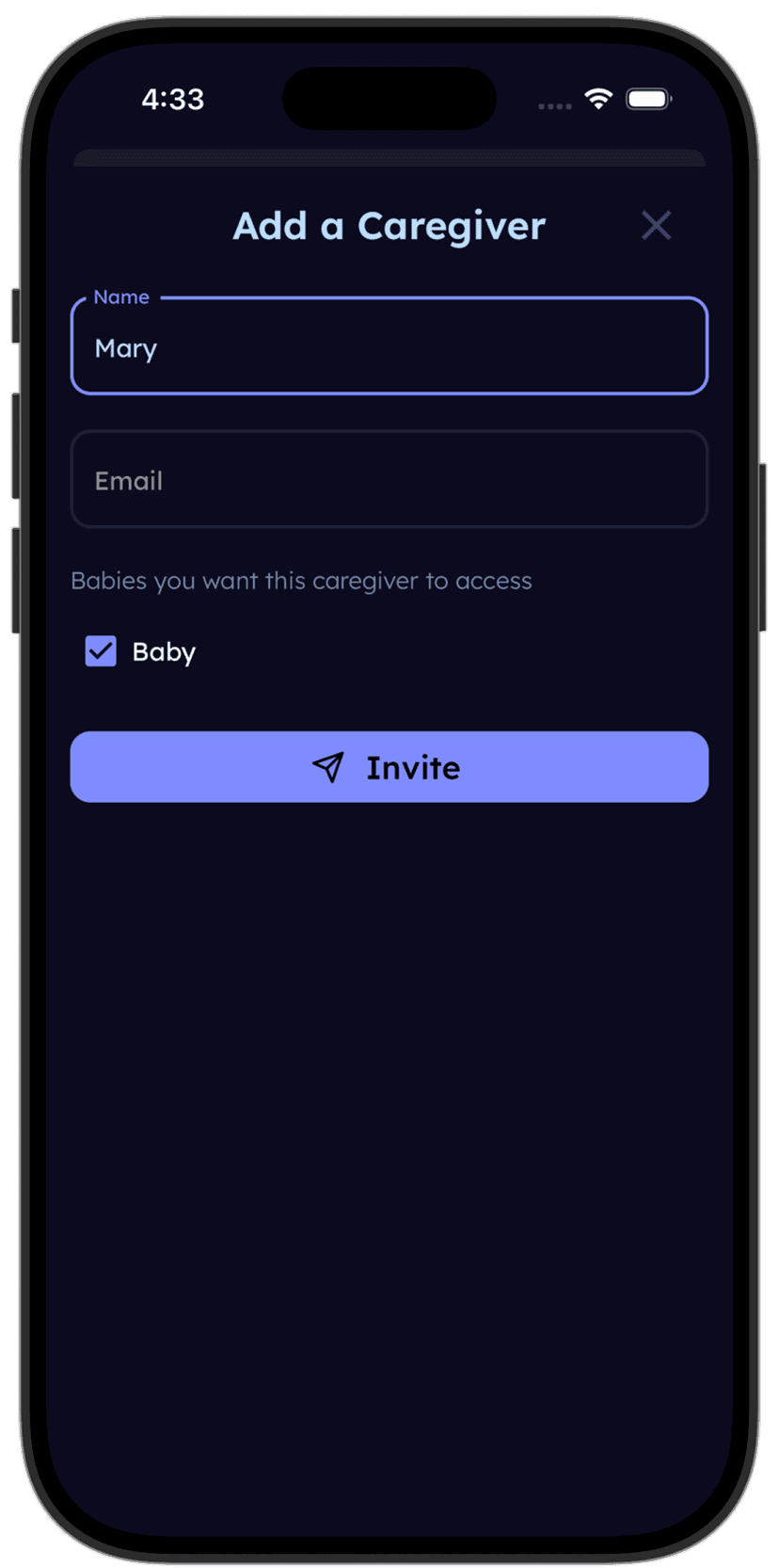
Tinylog caregiver sync showing grandparent and parent sharing a baby log

Grandparents can log care without learning a complicated app.

Tinylog's caregiver sync lets grandparents log feeds, naps, and diapers with a simple tap. You see updates in real time — so you know how the day is going without calling every hour.

Download on the App StoreGet It On Google Play

The Boundary Problem No One Talks About

The hardest part of grandparent care isn't logistics — it's the relationship dynamics. When your mother puts the baby to sleep on her stomach because "you slept that way and you were fine," it's a safety issue wrapped in an emotional one. When your father-in-law gives the 4-month-old a taste of ice cream, it's simultaneously a feeding boundary violation and a grandparent expressing love the way he knows how.

These conflicts don't exist in daycare because the relationship is professional. Your daycare provider follows safe sleep guidelines because her license depends on it, not because you convinced her. That simplicity has real value. If you're weighing other childcare arrangements, our daycare vs. nanny guide covers the professional options in detail.

If you choose grandparent care, have the hard conversations before care begins — not after the first incident. Write down your non-negotiables. And be prepared to accept that some things (extra treats, slightly more screen time than you'd prefer) may not be worth the fight.

How to Decide

Choose grandparent care if you have willing, healthy grandparents who respect your parenting boundaries, the cost savings would significantly reduce financial stress, and you can navigate family dynamics honestly.

Choose daycare if you want structured developmental programming, peer socialization is a priority, professional boundaries simplify your life, or grandparent health, distance, or relationship dynamics make regular care impractical.

Consider a hybrid approach — many families find that grandparents providing care 2-3 days per week and daycare the remaining days offers the best of both worlds. Grandparents stay involved without burning out, and your child gets socialization and structure. Whichever you choose, sharing a feeding schedule with every caregiver keeps everyone aligned.


Tips That Apply Either Way

Have the safety conversation early and directly

Before care starts, go through the big items: back-to-sleep positioning, no blankets or bumpers in the crib, proper car seat installation, food allergy protocols, and age-appropriate food sizes. Frame it as 'here is what our pediatrician told us' — it depersonalizes the conversation.

Share a baby log to avoid miscommunication

Whether grandma or the daycare teacher is watching your baby, knowing when the last feed happened, how long the nap was, and how many wet diapers there were eliminates guesswork. A shared tracking app keeps everyone on the same page without relying on memory or sticky notes.

Build in breaks for grandparent caregivers

Full-time childcare is exhausting for a 30-year-old professional. For a 65-year-old grandparent, it can be overwhelming. Consider a hybrid arrangement — grandparents two or three days, daycare the other days. This protects their health and gives your child the benefits of both.

Related Guides

Sources

  • U.S. Census Bureau. (2023). Who's Minding the Kids? Childcare Arrangements.
  • Dunifon, R. E., et al. (2016). The Effect of Grandparent Coresidence on Child Well-Being. Journal of Marriage and Family, 78(3), 576-590.
  • NICHD Early Child Care Research Network. (2006). Child-Care Effect Sizes for the NICHD Study of Early Child Care and Youth Development.
  • American Academy of Pediatrics. (2022). Safe Sleep Recommendations for Infants. Pediatrics, 150(1).

This guide is for informational purposes only and is not a substitute for professional medical advice. Consult your pediatrician for guidance specific to your baby.

Get this comparison in your inbox.
We'll send you this guide so you can share it with family members during the childcare conversation.
Keep grandparents in the loop without the phone calls.
Download Tinylog — grandparents see feeds, naps, and milestones in real time through caregiver sync.
Download on the App StoreGet It On Google Play