
GUIDE
HALO SleepSack Swaddle vs. Love to Dream Swaddle Up
Published on
Both are safe, effective swaddles but they take opposite approaches to arm position. The HALO keeps arms down at baby's sides in a traditional swaddle. The Love to Dream lets baby sleep arms-up in a natural starfish position. Your baby's sleep preference will tell you which one wins.
The HALO SleepSack Swaddle and the Love to Dream Swaddle Up are two of the most popular swaddles on the market — and they solve the same problem in fundamentally different ways. The HALO wraps arms snugly at the sides with adjustable fasteners. The Love to Dream zips baby into a wings-up pouch that keeps arms raised. Neither is objectively better. The right choice depends on how your baby naturally wants to sleep.
Log sleep, wake windows, and swaddle transitions
Same Goal, Opposite Approaches
The HALO SleepSack Swaddle and the Love to Dream Swaddle Up both exist to help your baby sleep longer and more safely. But they disagree on a pretty fundamental question: what should your baby's arms do?
The HALO SleepSack Swaddle wraps arms down at baby's sides using adjustable hook-and-loop (Velcro) wings. It is a modern take on the traditional swaddle — snug around the upper body, loose around the hips. The idea is to suppress the Moro (startle) reflex that jolts babies awake.
The Love to Dream Swaddle Up takes the opposite approach. Baby's arms stay up in a natural starfish position inside wing-shaped pouches. The stretchy fabric contains movement without pinning arms down. The idea is that babies naturally rest with arms raised, and fighting that instinct creates more waking — not less.
That core difference — arms down vs. arms up — drives everything else about these two swaddles. Your baby's natural preference will make the choice obvious within a few nights.
| Feature | HALO SleepSack Swaddle | Love to Dream Swaddle Up | What It Means |
|---|---|---|---|
| Manufacturer | HALO Innovations | Love to Dream (Halo Group subsidiary) | HALO is a well-known US safe-sleep brand. Love to Dream originated in Australia and has a global following. |
| Arm position | Arms down at sides (traditional swaddle) | Arms up in a natural starfish position | The biggest difference. Arms-up works with baby's natural reflex; arms-down provides a tighter, more traditional wrap. |
| Closure system | Hook-and-loop (Velcro) fasteners with adjustable wings | Full-length dual zipper (no Velcro) | HALO allows more customization of snugness. Love to Dream is faster to put on — zip and done. |
| Self-soothing access | Hands are covered and held at sides — no hand access | Baby can suck on hands through fabric | Love to Dream wins if your baby self-soothes with hands. HALO wins if hand movement wakes your baby. |
| Moro reflex control | Strong — snug wrap suppresses startle reflex well | Moderate — arms are contained but not pinned | HALO is better at dampening the Moro reflex. Love to Dream contains it without full restriction. |
| Fabric (cotton version) | 100% cotton muslin or 100% cotton knit | 93% cotton, 7% elastane (stretch knit) | Both are breathable. Love to Dream's stretch knit hugs the body; HALO's cotton muslin is lighter and airier. |
| Ease of use | Moderate — wings need positioning and securing | Very easy — place baby in, zip up | Love to Dream is faster and more foolproof, especially at 3 AM. HALO takes a few more seconds. |
| Diaper access | Bottom-zip opens for diaper changes | Two-way zipper opens from bottom | Both allow diaper changes without full removal. HALO's opening is slightly wider. |
| Hip safety | Loose sack bottom allows hip flexion | Certified hip-healthy by IHDI | Both allow healthy hip development. Love to Dream has formal IHDI certification. |
| Transition path | Move to arms-free HALO SleepSack wearable blanket | Transition Bag with removable wing zip-offs | Love to Dream's transition is more gradual — you can remove one arm at a time. HALO goes straight to arms-free. |
| Size range | Newborn (6–12 lbs), Small (3–6 months) | Newborn (5–8.5 lbs), S (8.5–13 lbs), M (13–19 lbs) | Love to Dream offers more granular sizing. HALO's sizes run broader. |
| Noise | Velcro can be loud when opening | Zipper is nearly silent | Love to Dream wins. The HALO's Velcro ripping sound can startle a sleeping baby during changes. |
The Arm Position Question
This is where most parents form a strong opinion — often after trying the wrong one first.
Watch your baby during awake time and in the bassinet before swaddling. If your baby consistently brings hands to face, sucks on fingers, or startles awake when arms are pinned down, that is a strong signal the Love to Dream Swaddle Up will work better.
If your baby flails arms wide during the startle reflex and has trouble settling because of it, the HALO SleepSack Swaddle and its snug arms-down wrap will likely help more.
Some babies are genuinely fine either way. But many have a clear preference, and putting them in the wrong swaddle type leads to frustrating nights for everyone. The good news: you will usually know within two or three nights which style your baby prefers.
Ease of Use at 3 AM
When you are half-asleep and your baby is crying, simplicity matters.
The Love to Dream Swaddle Up is objectively easier to put on. Lay it open, place baby inside, zip up. Done. There is no wrapping, no positioning of wings, no Velcro to align. The two-way zipper opens from the bottom for diaper changes without removing the swaddle.
The HALO SleepSack Swaddle requires a few more steps. You place baby in the sack, wrap one wing across the chest, then the other, and secure the Velcro. It is not complicated, but it takes longer and requires more precision — especially with a squirming, upset baby. The upside is that the adjustable wings let you customize the snugness.
One real downside of the HALO: Velcro is loud. The ripping sound when you open the swaddle can wake a sleeping baby, which defeats the purpose during nighttime diaper changes. The Love to Dream's zipper is nearly silent by comparison.
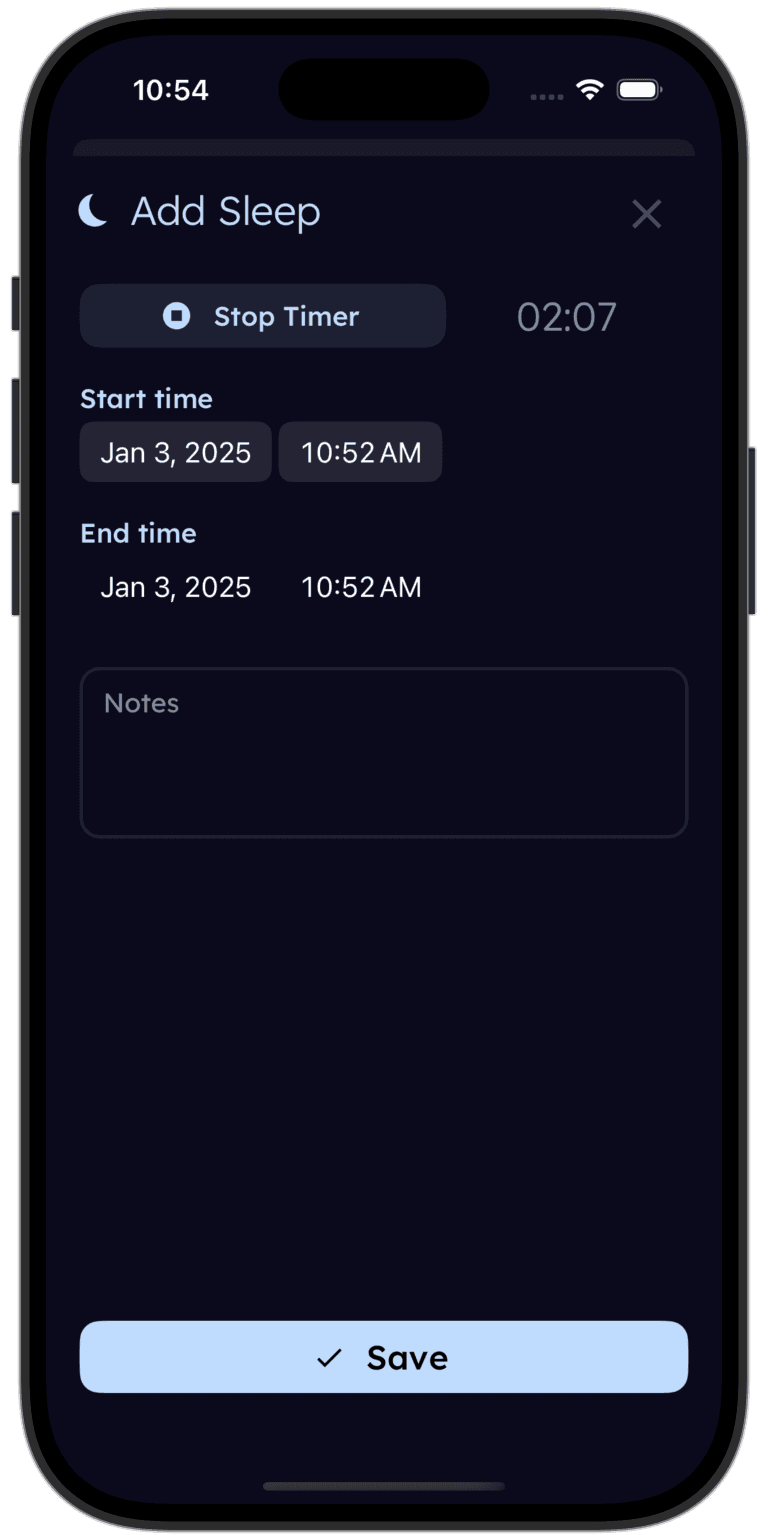
Tinylog tracks sleep so you can see what's working.
Log sleep sessions, note which swaddle you used, track wake windows and night wakings. See patterns over days and weeks.


Fabric and Breathability
Both swaddles come in cotton options, but the feel is different.
The HALO SleepSack Swaddle in cotton uses a 100% cotton muslin or knit fabric. It is lightweight, breathable, and does not stretch much. The non-stretch material keeps the wrap secure — arms stay where you put them.
The Love to Dream Swaddle Up uses a 93% cotton, 7% elastane blend. The stretch is intentional — it lets the fabric hug baby's body while still allowing contained movement. The elastane gives it a snugger, more form-fitting feel.
For warm climates or summer babies, the HALO's muslin version is slightly more breathable. The Love to Dream offers a Lite version (0.2 TOG) for warmer months and a Warm version for colder seasons. HALO also makes fleece and micro-fleece versions for winter.
Both brands offer enough fabric options to handle any climate. Pick the weight that matches your nursery temperature.
The Transition Question
Every swaddle has an expiration date. Once your baby starts showing signs of rolling — usually around 3 to 4 months — you need to stop swaddling. How each swaddle handles this transition matters.
Love to Dream has a clear advantage here. Their Transition Bag lets you unzip one arm wing at a time. Baby can adjust to one free arm for a few nights, then both arms free. It is a gradual process that minimizes sleep disruption.
HALO transitions you into their arms-free SleepSack wearable blanket. The swaddle itself does not have a built-in transition feature — you go from swaddled to fully arms-free in one step. Some babies handle this fine. Others have a rough few nights.
If you are worried about the swaddle transition (and many parents are), the Love to Dream's one-arm-at-a-time approach is genuinely less disruptive.
| Product | Typical Price | Type | Note |
|---|---|---|---|
| HALO SleepSack Swaddle (Cotton, Newborn) | $25–$32 | Single swaddle | One-time purchase per size |
| HALO SleepSack Swaddle (Cotton, Small) | $27–$34 | Single swaddle | One-time purchase per size |
| Love to Dream Swaddle Up Original (Newborn) | $28–$35 | Single swaddle | One-time purchase per size |
| Love to Dream Swaddle Up Original (S/M) | $30–$36 | Single swaddle | One-time purchase per size |
Price: Close Enough to Ignore
Both swaddles cost between $25 and $36 depending on size and fabric. The price difference is usually less than $5.
Where you will actually spend money:
- You need more than one. Babies spit up. Swaddles need washing. Plan on owning at least two, ideally three.
- Sizing up. Your baby will outgrow the newborn size within weeks. Budget for the next size.
- Transition products. If you go with Love to Dream, the Transition Bag is a separate purchase (~$35). HALO's wearable blankets are also separate (~$25–$35).
Price should not drive this decision. The difference is pocket change compared to the value of a baby who actually sleeps.
Choose the HALO SleepSack Swaddle If
- Your baby sleeps best with arms snugly held at their sides
- The Moro (startle) reflex is waking your baby frequently
- You want adjustable snugness — tighter or looser depending on the night
- You prefer a non-stretch, breathable cotton muslin fabric
- Your baby does not fight to get their hands up when wrapped
- You want a swaddle endorsed by safe-sleep organizations
Choose the Love to Dream Swaddle Up If
- Your baby naturally sleeps with arms raised or hands near their face
- Your baby breaks out of traditional arms-down swaddles
- Self-soothing with hands is important — your baby sucks on fingers to settle
- You want the fastest, simplest swaddle — zip and done, no wrapping
- The sound of Velcro wakes your baby during nighttime changes
- You want a gradual swaddle transition path with removable arm panels
Where to Buy
If your baby sleeps best with arms held snugly at their sides, the HALO SleepSack Swaddle (~$28 in cotton) is a trusted, well-designed swaddle with strong Moro reflex control and adjustable fit. It is one of the most widely recommended swaddles by pediatricians and safe-sleep organizations. The cotton muslin version is great for warm sleepers.
If your baby naturally sleeps arms-up or keeps breaking out of traditional swaddles, the Love to Dream Swaddle Up (~$32) is the smarter pick. The arms-up design works with your baby's instinct instead of against it, the zipper is silent and fast, and the transition path with removable arm panels is the most gradual on the market.
Our honest advice: if you are not sure which arm position your baby prefers, buy one of each in the newborn size. You will know within a few nights which one gets longer stretches of sleep.
Tinylog earns a small commission on purchases made through these links, at no cost to you.
Tip: check promo.new before purchasing. It's hit or miss depending on the product, but when it hits, you'll be glad you checked.
The Bottom Line
The HALO SleepSack Swaddle and Love to Dream Swaddle Up are both well-made, safe swaddles that help babies sleep. The difference comes down to arm position and your baby's natural preference.
HALO SleepSack Swaddle is the better choice for babies who are calmed by a snug, traditional arms-down wrap and who startle awake frequently from the Moro reflex. The adjustable Velcro wings let you dial in the perfect snugness.
Love to Dream Swaddle Up is the better choice for babies who want their arms up, who self-soothe with their hands, or who consistently escape traditional swaddles. The zip-on design is faster, quieter, and the transition path is more gradual.
There is no universally "right" swaddle. There is only the right swaddle for your baby, and you will figure that out quickly once you try.
If you are tracking sleep — which is especially valuable during the newborn phase and the swaddle transition — Tinylog makes it easy to log sleep sessions, note what worked, and see patterns over time.
Related Guides
- Newborn Sleep Schedule — What to actually expect in the first weeks
- Sleep Training Methods — Approaches compared, with evidence
- Baby Only Sleeps When Held — Why it happens and what to try
- 4-Month Sleep Regression — When it hits and how to manage it
Sources
- HALO Innovations. "HALO SleepSack Swaddle — Product Information." halosleep.com, 2026.
- Love to Dream. "Swaddle Up Original — Product Information." lovetodream.com, 2026.
- International Hip Dysplasia Institute. "Hip-Healthy Swaddling." hipdysplasia.org.
- American Academy of Pediatrics. "Safe Sleep: Back Is Best." healthychildren.org, 2024.
- Wirecutter (NYT). "The Best Swaddles and Swaddle Blankets." nytimes.com/wirecutter, 2025.
- Babylist. "Best Swaddles of 2026." babylist.com.
- What to Expect. "Best Swaddles for Newborns." whattoexpect.com, 2026.
This guide is for informational purposes only. Swaddle choice depends on your baby's individual preferences and developmental stage. Always follow safe sleep guidelines — place baby on their back, stop swaddling at the first signs of rolling, and never use loose blankets in the crib. If you have questions about safe sleep, consult your pediatrician.
Frequently asked questions
- Is the HALO SleepSack Swaddle or Love to Dream Swaddle Up safer?
- Both meet CPSC safety standards and are considered safe for infant sleep when used as directed. The HALO is endorsed by several safe-sleep organizations. The Love to Dream has been independently tested for hip-healthy design by the International Hip Dysplasia Institute. Neither swaddle should be used once baby shows signs of rolling.
- Which swaddle is better for babies who break out of swaddles?
- The Love to Dream Swaddle Up is often better for escape artists because it does not fight the baby's natural arm position. Babies who constantly bust out of a traditional arms-down swaddle are usually trying to get their hands up. The Swaddle Up works with that instinct rather than against it.
- Can my baby self-soothe in a swaddle?
- Babies in the Love to Dream Swaddle Up can bring their hands to their mouth through the fabric, which supports self-soothing. In the HALO SleepSack Swaddle with arms down, hand access is restricted. If your baby likes to suck on fingers or hands to settle, the arms-up design has an advantage.
- When do I need to stop using a swaddle?
- You should stop swaddling as soon as your baby shows any signs of rolling over, which typically happens around 3–4 months. Both the HALO and Love to Dream offer transition products — the HALO has arms-free wearable blankets, and the Love to Dream has a Transition Bag with removable wing panels.
- Which swaddle is easier to use for middle-of-the-night diaper changes?
- The HALO SleepSack Swaddle has a bottom-zip design that allows diaper changes without fully unwrapping baby. The Love to Dream Swaddle Up uses a two-way zipper that also opens from the bottom. Both handle nighttime changes well, but parents often find the HALO's wider opening slightly easier in the dark.
- Can I use both swaddles and switch between them?
- Yes. There is no reason you cannot try both. Many parents buy one of each to see which their baby prefers. Babies often show a clear preference within a few nights. The one your baby sleeps longer and more calmly in is the right swaddle for your baby.