
GUIDE
Momcozy M5 vs. Willow Go
Published on
The Momcozy M5 is the better value pick — strong suction, simple controls, and roughly one-third the price. The Willow Go wins on app integration, spill-proof design, and discretion under clothing. Both get the job done for hands-free pumping.
Wearable breast pumps have changed the game for pumping parents who need to multitask. The Momcozy M5 and Willow Go are two of the most popular options, sitting at opposite ends of the price spectrum. One costs around $70, the other closer to $250. The question is whether the extra features justify the price gap — and the answer depends on your pumping routine.
Log sessions, output, and feeding patterns
Same Goal, Very Different Price Tags
The Momcozy M5 and Willow Go both promise the same thing: hands-free pumping that lets you actually live your life while expressing milk. No cords tethering you to an outlet. No holding flanges in place. Just drop them in your bra and go.
But one costs around $70 and the other around $250. That is a real difference, especially when you are already spending money on diapers, wipes, and everything else a new baby demands.
The short version: the Momcozy M5 punches well above its price point. The Willow Go justifies its premium if you need portability, discretion, or spill-proof pumping. Your pumping routine — where you pump, how often, and whether you need to move around — determines which one makes sense.
For more on tracking your pumping output and supply patterns, see our pumping output guide.
| Feature | Momcozy M5 | Willow Go | What It Means |
|---|---|---|---|
| Manufacturer | Momcozy | Willow Innovations | Momcozy is a direct-to-consumer brand. Willow is a venture-backed medtech company with FDA-cleared devices. |
| Price | ~$70 | ~$250 | The Momcozy M5 costs roughly one-third of the Willow Go. That price gap is the central tension of this comparison. |
| Suction levels | 9 levels, up to ~300 mmHg | 10 levels, up to ~280 mmHg | Very similar effective suction. The M5 technically reaches a slightly higher max, but most users stay in the mid-range. |
| Battery life | ~4–5 sessions per charge | ~5–6 sessions per charge | Willow Go lasts a bit longer per charge. Both need daily charging for exclusive pumpers. |
| Noise level | ~48 dB | ~45 dB | Both are quiet. The Willow Go is slightly more discreet, but neither will draw attention in a typical office. |
| Collection capacity | 6 oz per cup | 5 oz per cup | The M5 holds an extra ounce per side, which matters for higher-output pumpers. |
| Spill-proof design | No — open cup can spill if tilted | Yes — sealed system, pump in any position | Willow Go wins here. If you need to move around, bend over, or lie down, the sealed design prevents spills. |
| App integration | No dedicated app | Willow app — tracks sessions, volume, and history | The Willow app is genuinely useful for tracking output trends. Momcozy users need a separate app like Tinylog. |
| Flange sizes included | 24mm (inserts for 17mm, 19mm, 21mm available) | 24mm + 27mm included | Both accommodate a range of sizes. Getting the right flange fit matters more than the pump itself. |
| FDA clearance | No | Yes | Willow Go is FDA-cleared as a medical device. This also affects insurance coverage eligibility. |
| Profile under clothing | Noticeable bulge — sits further from body | Flatter profile — designed to sit closer to chest | Willow Go is more discreet. The M5 works fine under loose clothing but is harder to hide in fitted tops. |
| Pumping modes | Stimulation + expression | Stimulation + expression | Tie. Both mimic the two-phase pattern of letdown and extraction. |
Suction and Milk Output: Closer Than You'd Expect
Here is the thing that surprises most people: the Momcozy M5 and Willow Go produce very similar suction strength. The M5 offers 9 levels up to roughly 300 mmHg. The Willow Go has 10 levels up to about 280 mmHg.
In practice, most pumping parents settle into a mid-range suction level anyway. Higher is not always better — effective milk removal depends more on flange fit, letdown response, and relaxation than raw suction numbers.
Both pumps use a two-phase pumping pattern: a faster stimulation mode to trigger letdown, followed by a slower expression mode to extract milk. This mimics how a baby actually nurses and is standard across quality breast pumps.
The honest take: if you get a good flange fit with either pump, your output will likely be similar. A $70 pump with the right flange will outperform a $250 pump with the wrong one every time.
The Spill-Proof Factor
This is where the Willow Go genuinely earns its premium.
The Willow Go uses a sealed collection system. Milk flows into a closed container, and you can pump in any position — standing, sitting, lying down, bending over to pick up your toddler. Nothing spills.
The Momcozy M5 uses an open collection cup. It works perfectly well when you are sitting upright or standing. But if you lean forward too far or tilt at the wrong angle, milk can spill out of the cup. It is not a dealbreaker for home use, but it does limit how freely you can move.
If you pump at a desk, on the couch, or in a private room, the M5's open cup is fine. If you pump while chasing a toddler, commuting, or doing anything physical, the Willow Go's sealed design matters a lot.
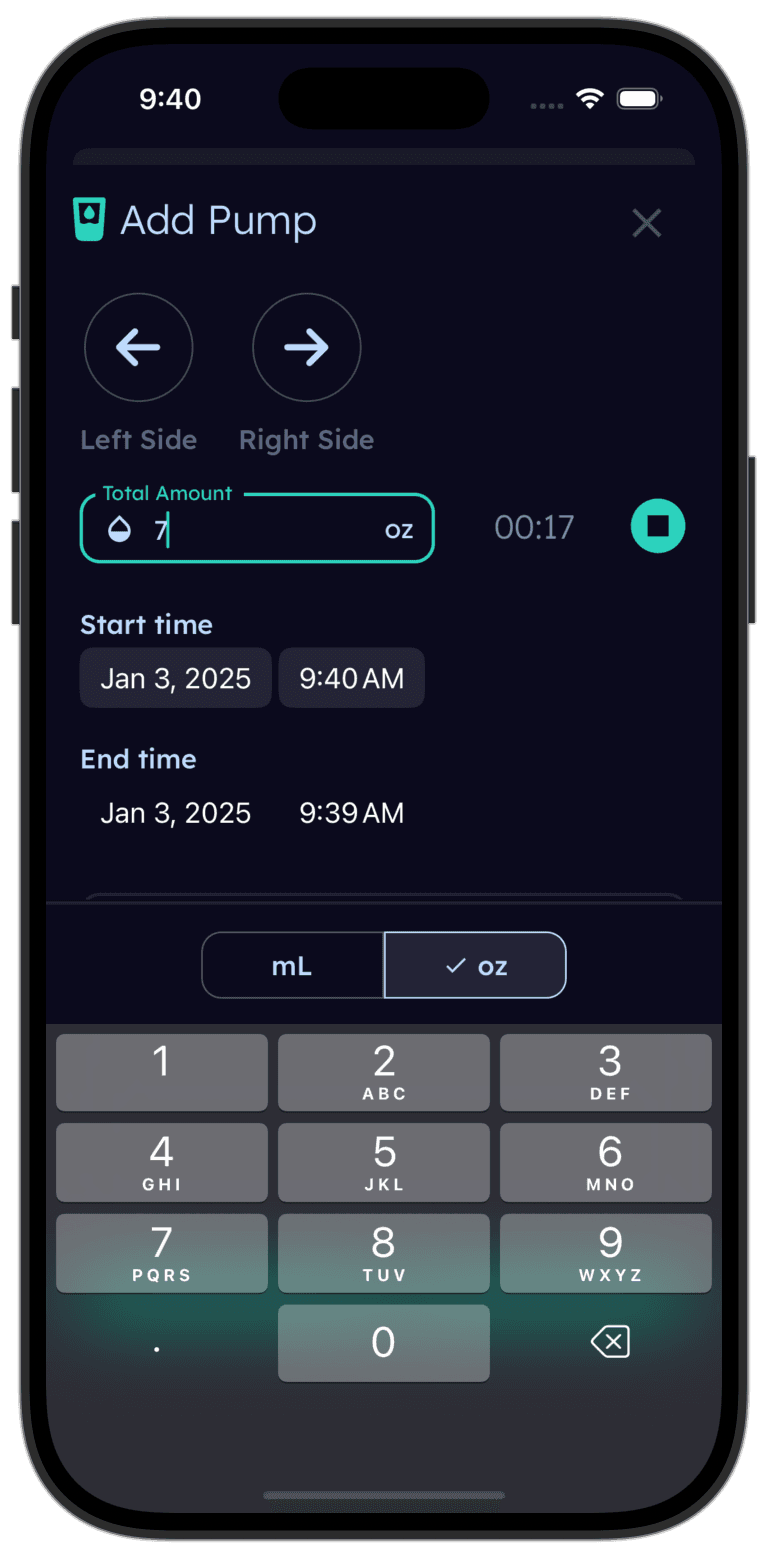
Tinylog tracks pumping sessions so you can watch your supply.
Log every pump session, track ounces over time, spot supply dips early. Share your pumping data with your lactation consultant.


Noise, Discretion, and Pumping at Work
Both pumps are quiet enough for office use, but there is a noticeable difference.
The Willow Go runs at about 45 dB — roughly the volume of a quiet conversation. Combined with its flatter profile against the chest, it is genuinely discreet. Many users report pumping during video calls without anyone noticing.
The Momcozy M5 runs at about 48 dB — slightly louder, and the motor hum is a bit more noticeable. The M5 also sits further from the body, creating a more visible bulge under clothing. Under a loose sweater, it works. Under a fitted blouse, people might notice.
If pumping discretion at work is a top priority, the Willow Go has a real advantage here. If you pump in a private space, the difference barely matters.
| Product | Typical Price | Ongoing Cost | Notes |
|---|---|---|---|
| Momcozy M5 (single pump) | $50–$70 | ~$0 after purchase | Replacement parts ~$15 every 2–3 months |
| Momcozy M5 (double pump set) | $70–$100 | ~$0 after purchase | Replacement parts ~$25 every 2–3 months |
| Willow Go (double pump set) | $220–$270 | ~$0 after purchase | Replacement parts ~$30 every 2–3 months |
Price: The Elephant in the Room
The Momcozy M5 double set costs roughly $70–$100. The Willow Go double set costs roughly $220–$270. That is a $150+ difference for what is fundamentally the same job: getting milk out of your body hands-free.
A few things to consider:
- Insurance often covers breast pumps. The Willow Go's FDA clearance makes it more likely to be covered. If your insurance covers it, the price difference evaporates.
- Replacement parts add up. Both pumps need new duckbill valves and flanges every 2–3 months. Costs are similar ($15–$30 per replacement cycle).
- Pumping is temporary. Most parents pump for 3–12 months. A $150 difference spread over 6 months is about $25/month — meaningful but not massive.
- The M5 makes a great backup. Some parents buy a Willow Go as their primary and an M5 as a backup or work pump. At $70, it is cheap insurance against pump failures.
If insurance covers the Willow Go, get the Willow Go. If you are paying out of pocket and you mostly pump at home, the M5 is hard to beat.
Choose the Momcozy M5 If
- Budget matters — you want a solid wearable pump without spending $250+
- You primarily pump at home or in a private space where spills are easy to manage
- You want a larger collection capacity (6 oz vs. 5 oz per side)
- You already track pumping with a separate app and don't need built-in tracking
- You want a backup pump or secondary pump to keep at work
- You prefer simple controls without app dependency
Choose the Willow Go If
- You need to pump on the move — commuting, chasing a toddler, working on your feet
- Spill-proof design is a must (you pump while bending, lying down, or multitasking)
- You want built-in session tracking through the Willow app
- Discretion matters — you need a low-profile pump under work clothes
- Insurance coverage is available (FDA clearance makes this more likely)
- You want a pump backed by clinical testing and FDA review
Where to Buy
The Momcozy M5 (~$70 for a double set) is one of the best values in wearable pumps right now — solid suction, simple operation, and a price that does not sting. It is available on Amazon and the Momcozy website. If you pump primarily at home or in a private space, it does everything you need.
The Willow Go (~$250 for a double set) is worth the premium if you need true portability — spill-proof design, app tracking, and a discreet profile under clothing. Check your insurance first, because many plans cover it fully or partially. Available on Amazon, the Willow website, and through insurance providers like Aeroflow.
If you are genuinely torn, start with the M5. At $70, you can try wearable pumping without a big commitment. If you find yourself wishing for more portability, upgrade to the Willow Go later — and keep the M5 as your backup.
Tinylog earns a small commission on purchases made through these links, at no cost to you.
Want to save a few bucks? promo.new is worth a quick look. It won't always have your product, but when it does, the savings are real.
The Bottom Line
Both the Momcozy M5 and Willow Go free your hands while pumping, which is the whole point. The differences are real but come down to your specific situation:
Momcozy M5 wins on price, collection capacity, simplicity, and value as a backup pump. It is the right choice for budget-conscious parents who pump in predictable settings.
Willow Go wins on spill-proof portability, app tracking, noise level, discreet profile, and FDA clearance. It is the right choice for parents who pump on the move or need workplace discretion.
Neither pump is a wrong choice. The "best" wearable pump is whichever one you will actually use consistently — because consistent pumping matters more than pump specs.
If you are tracking pumping output to monitor your supply — which is especially useful in the early weeks — Tinylog makes it easy to log sessions and spot trends over time.
Related Guides
- Pumping Output vs. Milk Supply — What your pump numbers actually tell you
- Exclusive Pumping — A complete guide for EP parents
- Pumping Schedule for Working Parents — How to maintain supply when you go back to work
- How to Increase Milk Supply — Evidence-based strategies that actually work
Sources
- Momcozy.com. "Momcozy M5 Wearable Breast Pump — Product Specifications." 2026.
- Willow.com. "Willow Go Wearable Breast Pump — Product Information." 2026.
- FDA.gov. "510(k) Premarket Notification — Willow Wearable Breast Pump." fda.gov.
- Journal of Human Lactation. "Effectiveness of Wearable Breast Pumps: A Comparative Review." 2025.
- Wirecutter (NY Times). "The Best Breast Pumps." nytimes.com/wirecutter, 2026.
- Exclusive Pumping. "Momcozy M5 Review: Is It Worth the Hype?" exclusivepumping.com, 2025.
- Babylist. "Willow Go vs. Momcozy: Which Wearable Pump Should You Get?" babylist.com, 2026.
This guide is for informational purposes only. Breast pump choice is a personal decision based on your pumping routine, body, and budget. If you are experiencing pain while pumping, low output, or supply concerns, consult a board-certified lactation consultant.
Frequently asked questions
- Is the Momcozy M5 as strong as the Willow Go?
- The Momcozy M5 has comparable suction strength to the Willow Go. Both offer adjustable suction levels, and most users report effective milk removal from both pumps. Individual results vary depending on flange fit and breast tissue response.
- Can you lay down while wearing the Willow Go?
- Yes. The Willow Go uses a spill-proof sealed design that allows you to pump in any position, including lying down. The Momcozy M5 uses an open collection cup that can spill if you lean too far forward.
- How loud are wearable breast pumps?
- Both the Momcozy M5 and Willow Go are significantly quieter than traditional pumps. The Willow Go is slightly quieter at around 45 dB. The Momcozy M5 sits around 48 dB. Neither is silent, but both are quiet enough for office use or pumping during meetings.
- Do you need the Willow app to use the Willow Go?
- No, the Willow Go works without the app. However, the app tracks session length, output volume, and pumping history automatically. Without the app, you lose the tracking and remote control features.
- How many parts do you have to wash with each pump?
- The Momcozy M5 has around 5 parts to wash per session. The Willow Go has around 4 washable parts. Neither is dishwasher safe for all components. Both are manageable, but the cleaning adds up across 6-8 sessions per day.
- Can you use insurance to cover a wearable breast pump?
- Most insurance plans cover a breast pump under the Affordable Care Act, but coverage for specific models varies. The Willow Go is more commonly covered since it has FDA clearance. The Momcozy M5 may not be covered by all plans. Check with your insurance provider before purchasing.