GUIDE

Montessori Toys vs. Traditional Baby Toys

Montessori-style toys (simple, open-ended, real materials) tend to promote longer, deeper play. Traditional electronic toys often produce less verbal interaction between parent and child. But the best toy is whichever one your baby is engaged with.

The $80 wooden rainbow is not inherently better than the $5 stacking cups. Here's what the research actually says.

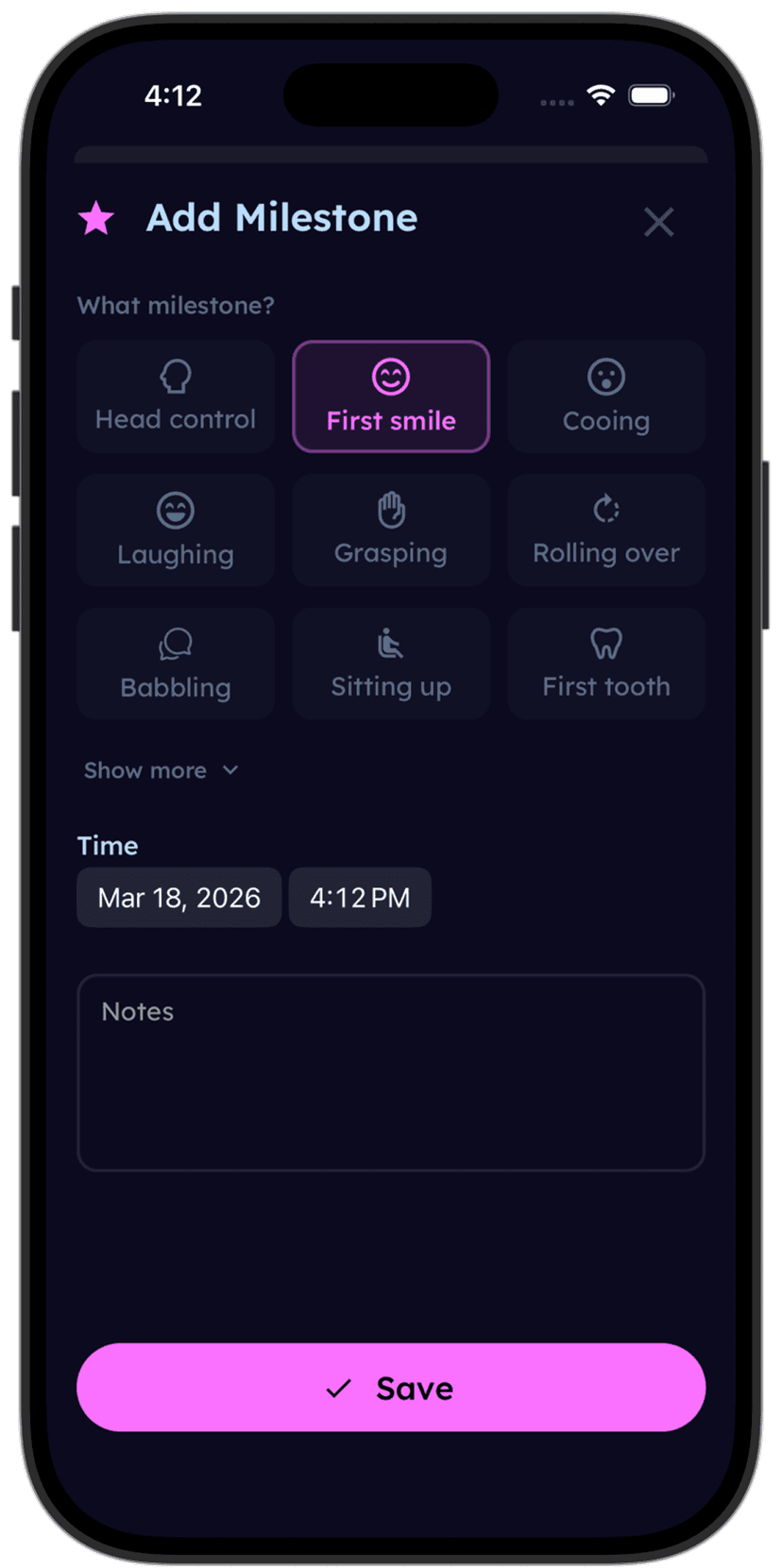
Track your baby's developmental milestones

Log skills and progress over time

Research tells us that the best toys need not be flashy or expensive or come with an app. Simple, in this case, really is better.
Dr. Aleeya Healey, MD, FAAP, Pediatrician, American Academy of Pediatrics

Beyond the Marketing

The Montessori toy industry has exploded in recent years. Beautifully photographed wooden toys fill Instagram feeds with price tags to match. Meanwhile, mainstream toy aisles overflow with plastic, light-up contraptions that promise to teach your baby the alphabet at 6 months.

Neither extreme reflects what the research actually says about toy quality and development. The science is more nuanced: simple, open-ended toys tend to produce better play quality — defined as longer engagement, more creative exploration, and more parent-child interaction. This was demonstrated by Sosa (2016), who found that electronic toys reduced the quantity and quality of language parents used with their babies compared to traditional toys or books.

But the key variable isn't the toy's material or price — it's how the baby (and parent) engage with it. Whether you choose Montessori or conventional toys, what matters most is the balance between structured and free play. A $5 set of plastic stacking cups that a baby spends 15 minutes exploring, with a parent narrating the experience, is more developmentally valuable than an $80 wooden rainbow that sits untouched on a shelf. The Montessori principles — simplicity, purposefulness, child-led exploration — can be applied to any toy, from any price point.

Montessori vs. Traditional Toys
Material
Montessori-Style ToysNatural materials — wood, cotton, metal, silicone
Traditional/Electronic ToysPlastic, often with batteries, lights, and electronic sounds
Play style
Montessori-Style ToysOpen-ended — child determines how to use it
Traditional/Electronic ToysOften prescriptive — push button, get reward (light, sound)
Parent interaction
Montessori-Style ToysEncourages more parent talk, narration, and joint engagement
Traditional/Electronic ToysElectronic features can substitute for parent engagement (Sosa, 2016)
Attention span
Montessori-Style ToysPromotes sustained focus on a single activity
Traditional/Electronic ToysFast feedback loops may train shorter attention spans
Cost
Montessori-Style ToysRanges widely — premium brands are expensive, but DIY alternatives work equally well
Traditional/Electronic ToysRanges widely — from dollar store to expensive branded electronics
Developmental purpose
Montessori-Style ToysEach toy typically isolates one skill (grasping, stacking, cause-effect)
Traditional/Electronic ToysOften tries to teach multiple things at once (colors, numbers, sounds)
Mess factor
Montessori-Style ToysModerate — fewer pieces, but things like sensory bins can be messy
Traditional/Electronic ToysTypically contained — self-contained units with built-in activities
The best toy collection includes a mix: mostly simple, open-ended toys with a few electronic ones for variety. The ratio matters more than absolute purity.

Montessori-Style Advantages

  • Promotes longer, more focused play sessions (Trawick-Smith et al., 2015)
  • Encourages parent-child verbal interaction — parents narrate and describe more
  • Open-ended design allows the toy to grow with the child across stages
  • Teaches cause-and-effect through real physics, not pre-programmed responses
  • Less overwhelming — simple toys let baby focus on one skill at a time

The principles (simplicity, purpose, real materials) matter more than the brand or price. A wooden spoon is more 'Montessori' than an expensive branded toy.

Montessori-Style Challenges

  • Premium Montessori brands can be extremely expensive
  • Not all babies prefer simple toys — some genuinely enjoy electronic stimulation
  • Can create a judgmental culture around toy choices (toy shaming is real)
  • Not all Montessori-marketed products are actually well-designed or developmental

Don't let toy philosophy become another source of parenting guilt. Good play happens with all kinds of toys.

Traditional Toy Advantages

  • Immediate cause-and-effect feedback — push a button, something happens
  • Can capture attention during necessary moments (cooking, phone calls)
  • Some electronic toys teach real concepts when designed well
  • Widely available and often more affordable than artisanal wooden alternatives
  • Musical toys support rhythm and auditory development

Not all electronic toys are equal. Musical instruments, light tables, and well-designed cause-and-effect toys have genuine value.

Traditional Toy Challenges

  • Research shows reduced parent-child verbal interaction during electronic toy play
  • Pre-programmed responses limit creative, open-ended exploration
  • Fast-paced stimulation may not support sustained attention development
  • Many are marketed as 'educational' without evidence to support the claim

The concern isn't the toy — it's when electronic entertainment replaces human interaction. Use electronic toys alongside engagement, not instead of it.

Tinylog milestone tracking showing current developmental skills

Match toys to your baby's current developmental stage.

When you track milestones in Tinylog, you can see what skills your baby is building right now — and choose toys that support those specific abilities. Working on grasping? Time for a rattle. Exploring cause-and-effect? A simple ball drop works perfectly.

Download on the App StoreGet It On Google Play

What Actually Matters in a Toy

Forget the labels. A good toy for a baby has a few key qualities: it matches their developmental stage (not too easy, not too hard), it allows for active exploration (baby does something, something happens), and it doesn't replace the parent's role in play (the toy doesn't do all the entertaining).

By this standard, a cardboard box is an excellent toy for a 9-month-old — they can put things in it, take them out, push it, sit in it, bang on it. A flashy electronic activity center that plays a song when you push a button? It's fine occasionally, but it does the work for the baby rather than letting the baby do the work themselves.

The research from Trawick-Smith et al. (2015) found that the toys rated highest for play quality in early childhood settings were simple: basic blocks, play dough, and toy vehicles. The lowest-rated were complex, multi-feature electronic toys. The simplicity allowed for more creative, sustained engagement.


A Practical Approach to Toys

Build your toy collection around simple, open-ended basics: stacking cups or rings, balls of different sizes and textures, a few board books (even reading to newborns counts as valuable play), soft blocks, and some real household objects. Add a couple of electronic or musical toys for variety. Rotate everything regularly to keep it fresh.

Don't spend a fortune on branded Montessori products. A set of wooden measuring cups from your kitchen, a metal whisk, and a basket of fabric scraps cost nothing and provide the same open-ended exploration as expensive wooden toys. The principles matter. The brand doesn't.

Tips That Apply Either Way

Watch how your baby plays, not what they play with

A baby deeply focused on figuring out a wooden ring stacker is getting more developmental benefit than a baby passively pushing buttons on a flashy toy. The level of engagement matters more than the toy's material or price tag.

Rotate, don't accumulate

Instead of having 50 toys available, rotate 4-5 toys at a time. Research shows fewer options leads to longer, more creative play sessions. When you rotate toys every week or two, 'old' toys become interesting again.

Household items are underrated

A whisk, a set of measuring spoons, a fabric napkin, an empty box — these are legitimately excellent toys for babies. They're novel, they have interesting textures and sounds, and babies love real objects. You don't need to buy anything special.

Related Guides

Sources

  • Sosa, A. V. "Association of the Type of Toy Used During Play With the Quantity and Quality of Parent-Infant Communication." JAMA Pediatrics, 2016.
  • Trawick-Smith, J., et al. "Assessing the Toy Preferences of Preschool Children: A Multi-Method Approach." Early Childhood Education Journal, 2015.
  • Lillard, A. S., & Else-Quest, N. "Evaluating Montessori Education." Science, 2006.
  • Yogman, M., et al. "The Power of Play: A Pediatric Role in Enhancing Development in Young Children." Pediatrics, 2018.

This guide is for informational purposes only and is not a substitute for professional medical advice. Consult your pediatrician for guidance specific to your baby.

Get this comparison in your inbox.
We'll send you this breakdown so you can make informed toy choices for your baby.
Track which milestones your baby is working on — then choose toys that match.
Log developmental milestones in Tinylog so you can see what skills your baby is building and pick toys that support their current stage.
Download on the App StoreGet It On Google Play