
GUIDE
NumNum vs. Munchkin Baby Spoons
Published on
NumNum spoons are built for baby-led self-feeding from the first bite — their flat, textured pre-spoon design lets babies load food themselves and build oral motor skills. Munchkin Soft-Tip spoons are traditional parent-fed spoons with soft silicone tips and long handles for scooping purees. If you want your baby self-feeding from the start, NumNum is the pick. If you plan to spoon-feed purees, Munchkin covers you at a fraction of the cost.
NumNum and Munchkin take fundamentally different approaches to early feeding. NumNum spoons were designed by a pediatric occupational therapist specifically to support baby-led weaning and self-feeding before babies have the grip and coordination for a traditional spoon. Munchkin's Soft-Tip spoons are conventional parent-fed utensils — soft, safe, and effective for introducing purees. The right choice depends on your feeding approach, not the spoons themselves.
Log meals, solids, and more
Two Different Answers to the Same Question
NumNum First Bites Spoons and Munchkin Soft-Tip Infant Spoons are both "baby spoons" — but they solve different problems.
NumNum spoons were designed by a pediatric occupational therapist to support baby-led self-feeding. The shape is not a traditional spoon at all. It is a flat, disc-like utensil with a bumpy texture that grips food, sized and shaped for the way a 4–6 month old actually holds objects: with their whole fist, not their fingers. The premise is that babies who self-feed from the beginning develop stronger oral motor skills and more food confidence. NumNum sells them in two stages, with the Stage 2 version offering slightly more surface area as babies grow and gain coordination.
Munchkin Soft-Tip spoons are traditional parent-fed infant spoons. Long handles for the adult's grip, soft silicone tips that are gentle on emerging gums and teeth, and a conventional bowl shape for scooping and delivering purees. They are exactly what most people picture when they think "baby spoon." At $4–$6 for six spoons, they are also one of the most affordable feeding products you can buy.
Neither is wrong. The right choice depends on your feeding philosophy and how you plan to introduce solids — and at the price points involved, buying both to try is a reasonable move.
For broader context on introducing first foods, see our baby first foods guide.
| Feature | NumNum First Bites | Munchkin Soft-Tip |
|---|---|---|
| Design philosophy | Pre-spoon for baby self-feeding and baby-led weaning | Traditional parent-fed spoon for purees and soft foods |
| Shape | Flat, disc-like bowl — not a traditional spoon shape | Conventional spoon shape with shallow bowl |
| Texture | Bumpy/textured surface to hold food without deep bowl | Smooth soft silicone tip |
| Handle | Short, chubby handle sized for infant palmar grasp | Long handle designed for parent's grip and reach |
| Material | 100% food-grade silicone throughout | Silicone tip with plastic handle |
| Safety | BPA-free, PVC-free, phthalate-free | BPA-free |
| Stages | Stage 1 and Stage 2 (progression by developmental readiness) | One style — infant spoon for early feeding |
| Designed by | Pediatric occupational therapist | Munchkin product team |
| Pack size | 2-pack (one Stage 1, one Stage 2) | 6-pack |
| Typical price | ~$10–$13 per 2-pack | ~$4–$6 per 6-pack |
| Cost per spoon | ~$5–$6.50 per spoon | ~$0.67–$1.00 per spoon |
| Dishwasher safe | Yes — top rack recommended | Yes |
| Best for | Baby-led weaning, self-feeding from first introduction | Parent-led spoon feeding, purees, traditional solids introduction |
The Design Difference: Pre-Spoon vs. Traditional Spoon
The core distinction between these two products is the shape of the eating surface — and that shape reflects a completely different theory of how babies should learn to eat.
NumNum's pre-spoon design is built around developmental science. A 4–6 month old has what occupational therapists call a palmar grasp — they close their whole hand around objects. The NumNum handle is chubby and short specifically to work with this grasp pattern. The bowl is flat rather than concave, so the baby does not need to tilt and angle the spoon correctly to deliver food — they just bring the food-loaded surface to their mouth.
The bumpy texture on the bowl surface acts like tiny food-gripping nubs. Thick purees, yogurt, and mashed foods cling to the surface rather than sliding off. A baby can dip the spoon themselves, transfer it to their mouth, and get a meaningful taste of food without any adult directing the spoon.
Munchkin's conventional design assumes an adult is holding and directing the spoon. The handle is long enough for a parent to grip comfortably without knocking the baby's face. The silicone tip is soft — critical for babies with sensitive gums and for parents who are nervous about hard plastic near an infant's mouth. The shallow bowl holds a small, appropriately sized bite for an infant.
This design works well for puree-led introduction: parent scoops, parent offers, baby accepts. It is the method most pediatricians demonstrate at the 4-month or 6-month visit.
Neither design is inherently superior. A baby fed carefully with Munchkin spoons will thrive. A baby given NumNum spoons for self-feeding will also thrive. What matters is that feeding happens consistently and that babies are exposed to a variety of tastes and textures.
Safety and Materials
Both products are marketed as BPA-free, which is the minimum standard for any reputable baby feeding product sold today. The distinction is in how much silicone each uses.
NumNum spoons are 100% food-grade silicone — handle, bowl, and all. There is no plastic in contact with food or with the baby's mouth. Silicone is non-porous, does not absorb odors, does not leach chemicals at normal temperatures, and tolerates dishwasher cycles without degrading. Food-grade silicone is also free of latex, phthalates, and PVC — the same class of material used in medical-grade equipment.
Munchkin Soft-Tip spoons have a plastic handle with a silicone tip. The silicone tip is the only part that contacts the baby's mouth and food. The plastic handle is BPA-free. This is a standard and widely used construction in infant spoons and is considered safe by regulatory agencies, including the FDA.
If you have concerns about plastic contact with food at all — even indirect contact or handle-chewing — NumNum's all-silicone construction gives more peace of mind. If BPA-free plastic handles are acceptable to you (as they are for most parents), Munchkin's construction is not a safety concern.
One practical note: the soft silicone tip on Munchkin spoons can eventually tear or nick with heavy use or aggressive dishwasher cycles. Inspect tips periodically and replace the set if you see damage. NumNum's all-silicone construction is more durable in this respect and less likely to show wear over the months-long solids introduction period.
Both spoons are dishwasher safe. For NumNum, the top rack is recommended to preserve the silicone surface. Munchkin spoons are dishwasher safe on either rack.
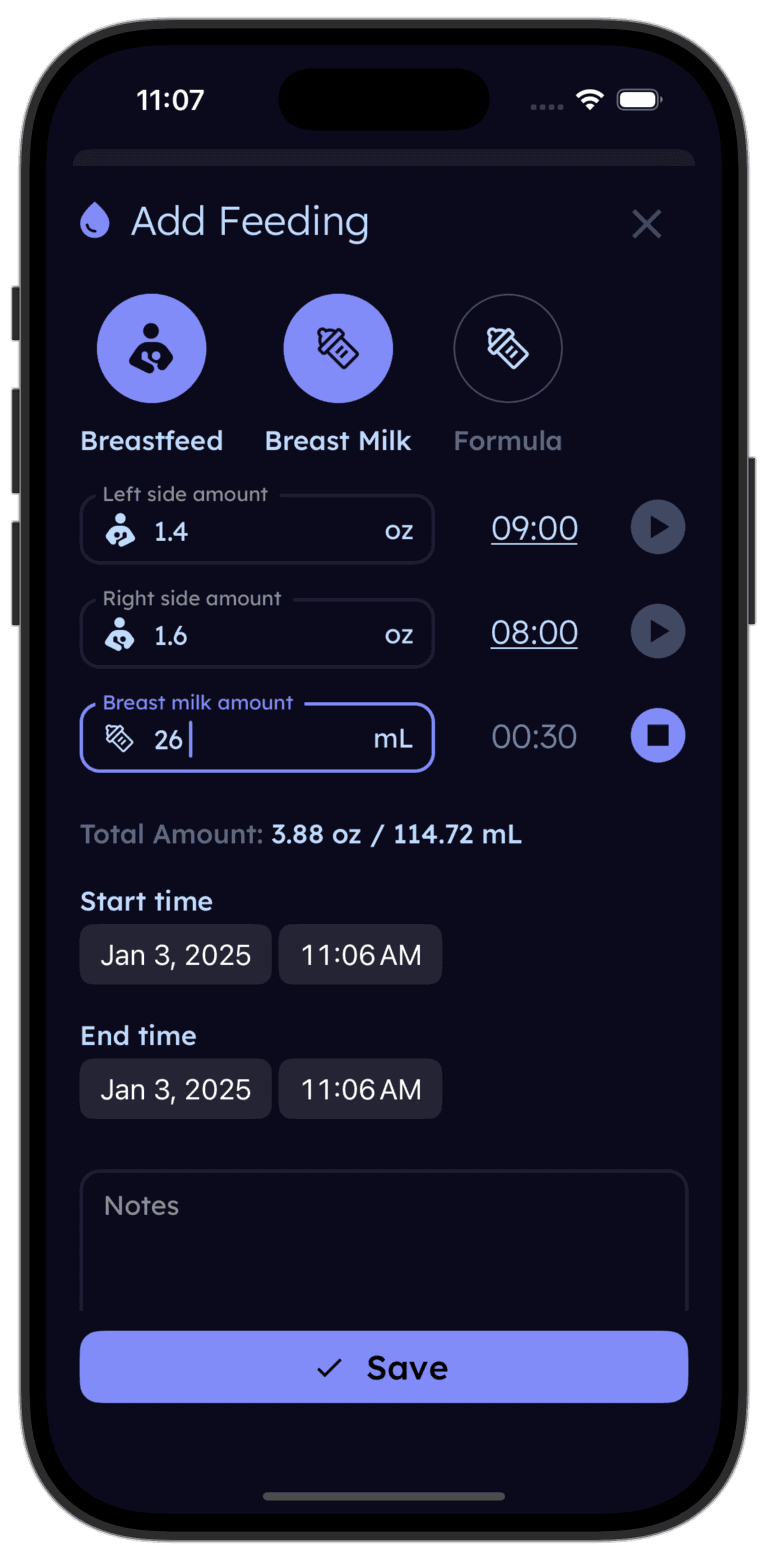
Tinylog tracks meals so you can spot patterns.


Baby-Led Weaning vs. Traditional Spoon Feeding
The NumNum vs. Munchkin choice often comes down to which feeding approach you are taking — and both approaches are supported by current pediatric guidance.
Baby-led weaning (BLW) skips or minimizes purees and encourages babies to self-feed soft, appropriately sized foods from the start. Research suggests BLW babies may have better food acceptance, lower rates of picky eating in toddlerhood, and more developed self-regulation around fullness. It is also messier and requires parents to be comfortable with gagging (a normal reflex) and to learn appropriate food textures and sizes. NumNum spoons are purpose-built for this approach, filling the gap between pure finger foods and traditional spoon feeding.
Traditional spoon feeding with purees is the method most parents were raised with and most pediatricians default to. It gives parents more control over intake, is easier to quantify, and can be useful for babies who struggle with texture, have oral motor delays, or whose families prefer a more structured introduction. Munchkin spoons excel here. The long handle keeps your hand out of the way, and the soft silicone tip is gentle during the earliest sessions when babies are still figuring out how their mouths work with a utensil.
There is also a middle path: combination feeding, where you offer soft finger foods for self-feeding alongside parent-fed purees. Many families find this approach reduces mealtime frustration while ensuring the baby gets adequate food volume. It is exactly why many parents end up buying both types of spoons — NumNum for self-feeding practice and Munchkin for the parent-fed portions.
The American Academy of Pediatrics does not endorse one method over the other. Both are appropriate for healthy, developmentally ready babies.
For more on the debate between approaches, see our baby-led weaning vs. purees guide.
| Product | Typical Price | Cost Per Spoon | Notes |
|---|---|---|---|
| NumNum First Bites Spoons (2-pack, Stage 1 + Stage 2) | $10–$13 | ~$5.00–$6.50 | Includes one of each stage. Reusable for months. |
| Munchkin Soft-Tip Infant Spoons (6-pack) | $4–$6 | ~$0.67–$1.00 | Six identical spoons. Easy to replace if one is lost or damaged. |
| NumNum + Munchkin combined (both products) | $14–$19 | N/A | Many parents buy both. Total cost is still under $20. |
Price: A Wide Gap, But Context Matters
Munchkin Soft-Tip spoons cost roughly 80–90% less per spoon than NumNum spoons. At $4–$6 for six spoons versus $10–$13 for two NumNum spoons, the cost difference is real.
That said, both products are inexpensive in absolute terms. Buying both sets costs less than $20 total — less than a single pack of formula or one diaper bag. If you are unsure which approach you want to take, buying both and trying them in the first week of solids is an entirely reasonable strategy.
A few things worth knowing about cost:
- NumNum spoons are designed to last. All-silicone construction means they do not degrade, and the two stages cover several months of development.
- Munchkin spoons are easily replaceable. At under a dollar each, losing one or wearing one out is no reason to stress. Having six on hand means fewer dishwasher emergencies.
- Neither product requires subscription or replacement packs the way formula or diapers do. You buy them once and they cover the early solids period.
The honest answer: if you are only buying one, buy Munchkin if you plan to spoon-feed purees, and buy NumNum if you are committed to self-feeding from day one. If you are unsure, buy both — the combined cost is still low.
Choose NumNum First Bites Spoons If
- You are following a baby-led weaning approach and want your baby self-feeding from the start
- Your baby's pediatrician or OT has recommended building self-feeding skills early
- You want a spoon designed specifically around how infants physically grip objects (palmar grasp)
- You prefer 100% silicone construction with no plastic components
- You want a stage-based progression tool developed by a pediatric occupational therapist
Choose Munchkin Soft-Tip Spoons If
- You plan to spoon-feed purees yourself rather than encourage immediate self-feeding
- Budget is a priority — Munchkin spoons cost roughly 80–90% less per spoon
- You want a larger set so you always have a clean spoon on hand without running laundry
- Your baby is transitioning from a syringe or finger feeding and needs a familiar long-handled spoon shape
- You want a spare set to leave at grandparents' house or in a diaper bag
- You prefer the traditional feeding approach your pediatrician demonstrated at the well-child visit
Where to Buy
The NumNum First Bites Spoons (~$10–$13 for a 2-pack with Stage 1 and Stage 2) are available on Amazon, Target, and specialty baby retailers. The two-stage set is worth buying together — Stage 1's shallower bowl suits the very earliest introduction, and Stage 2 supports babies who are progressing to thicker textures and more food volume.
The Munchkin Soft-Tip Infant Spoons (~$4–$6 for a 6-pack) are one of the most widely stocked infant spoons in the US — available at virtually every major retailer including Target, Walmart, Amazon, and Buy Buy Baby. The six-pack is good value and gives you enough spoons to handle a week of meals without daily washing.
Tinylog earns a small commission on purchases made through these links, at no cost to you.
We've found promo.new handy for finding discounts on baby gear. Doesn't always have what you need, but it's worth a shot.
Practical Tips for Starting Solids With Either Spoon
Regardless of which spoon you choose, a few practices make the first weeks of solid foods go more smoothly:
Time meals right. Offer solids about 30–60 minutes after a breast or bottle feeding — not when the baby is ravenous and not immediately after a full feed. A mildly hungry but not desperate baby is most receptive to trying a new experience.
Start with one ingredient at a time. Single-ingredient purees or soft foods let you identify any allergic reactions or sensitivities cleanly. If you introduce three new foods in one meal and the baby reacts, you will not know which caused it.
Expect refusal and try again. Research consistently shows that babies may need 10–15 exposures to a new food before accepting it. One rejected spoonful is not a verdict on that food — it is a normal response from a baby experiencing a new taste and texture.
Keep portions tiny at first. The goal in the first weeks of solids is exposure and experience, not caloric intake. Breast milk or formula remains the primary nutrition source through most of the first year. A few teaspoons per sitting is normal and appropriate.
Let it be messy. Whether you are using NumNum for self-feeding or Munchkin for parent-led feeding, solids are messy. A silicone bib with a catch pocket, an easy-clean high chair, and low expectations about clothing are more useful than any specific spoon choice.
The Bottom Line
NumNum First Bites Spoons and Munchkin Soft-Tip Infant Spoons are not competing to do the same thing. NumNum is a self-feeding tool built on occupational therapy principles. Munchkin is a traditional parent-fed spoon that does its job well at a low cost.
Choose NumNum if self-feeding and oral motor development are priorities — especially if you are following baby-led weaning principles or your baby's care team has flagged feeding development as an area to support. The OT-designed pre-spoon shape and two-stage progression are genuinely thoughtful features, not just marketing.
Choose Munchkin if you are planning to introduce purees the traditional way, want a large, affordable set, or just need functional infant spoons without extra considerations. Six spoons for $4–$6 is hard to argue with, and they will hold up for months of daily use.
Buy both if you are not sure, are trying a combination approach, or want to try self-feeding while still having parent-fed backup spoons available. At under $20 combined, the cost of buying both is trivial compared to the benefit of having the right tool for the moment.
One thing that does not change regardless of which spoon you use: the value of tracking what your baby eats. The early weeks of solids involve a lot of new foods, potential reactions, and questions about intake — especially as you balance solids with continued breastfeeding or formula. Logging meals in Tinylog makes it easier to spot patterns, remember which foods you have already introduced, and have accurate information ready for your pediatrician visit.
Related Guides
- Baby First Foods — What to introduce, when, and in what order
- Baby-Led Weaning vs. Purees — How the two approaches compare and how to choose
- Baby Gagging on Solids — What is normal and what needs attention
- Gagging vs. Choking in Babies — How to tell the difference and what to do
- Baby Feeding Chart — How much your baby should eat by age, including when solids are added
- Baby Eating Less — What causes reduced intake and when to follow up with your pediatrician
Sources
- NumNum.com. "NumNum First Bites GOOtensil — Product Information." 2026.
- Munchkin.com. "Soft-Tip Infant Spoons — Product Information." 2026.
- Brown, A., & Lee, M. "A descriptive study investigating the use and nature of baby-led weaning in a UK sample of mothers." Maternal & Child Nutrition, 2011.
- Rapley, G., & Murkett, T. Baby-Led Weaning: The Essential Guide. Experiment Publishing, 2010.
- American Academy of Pediatrics. "Starting Solid Foods." HealthyChildren.org, 2023.
- Townsend, E., & Pitchford, N.J. "Baby knows best? The impact of weaning style on food preferences and body mass index in early childhood." BMJ Open, 2012.
- AOTA (American Occupational Therapy Association). "Occupational Therapy's Role in Feeding, Eating, and Swallowing." aota.org, 2022.
- Fangupo, L.J., et al. "A Baby-Led Approach to Eating Solids and Risk of Choking." Pediatrics, 2016.
This guide is for informational purposes only and does not constitute medical or dietary advice. Always consult your pediatrician or a registered dietitian before introducing solid foods. Supervise babies at all times during feeding. Choking is a serious risk — learn infant choking first aid before starting solids.
Frequently asked questions
- What age are NumNum spoons for?
- NumNum First Bites Spoons are designed for babies starting solids, typically around 4–6 months and up. The Stage 1 (Gootensil) is intended for babies just beginning to explore food, while the Stage 2 (Gootensil) has a slightly deeper bowl for babies who are progressing. Always follow your pediatrician's guidance on when to introduce solids.
- Can babies actually feed themselves with NumNum spoons?
- Yes — that is the specific design intent. The flat, disc-like bowl coated with a bumpy texture allows food to cling to the spoon surface. Babies can dip it in puree, yogurt, or soft mashed food and transfer it to their mouths without needing the scoop-and-tip motion required by a traditional spoon. Many babies manage self-loading within a few sessions.
- Are Munchkin spoons safe for newborns?
- Munchkin Soft-Tip Infant Spoons are designed for infants starting solids, not newborns who are exclusively breastfed or formula fed. Most pediatricians recommend waiting until around 4–6 months or until the baby shows signs of developmental readiness before introducing any spoon or solid food.
- Do NumNum spoons work for purees?
- Yes. The textured surface holds pureed food, thick yogurt, mashed banana, and similar consistencies well. They do not work well with very thin, watery purees — the food will slide off. For thinner foods, thicken slightly or use a traditional spoon.
- Which spoon is better for baby-led weaning?
- NumNum spoons are specifically designed with baby-led weaning in mind. The pre-spoon shape, textured grip surface, and short handle are engineered for a baby's palmar grasp — the way infants hold objects before developing a pincer grip. Munchkin spoons are designed for parent-feeding and are not optimized for self-feeding, though older babies (9–12 months) can eventually manage a traditional spoon shape.
- Can I use both NumNum and Munchkin spoons at the same time?
- Absolutely. Many parents use NumNum spoons to let the baby self-feed while the parent simultaneously loads a Munchkin spoon to offer bites in between. This combination approach — sometimes called the 'two spoon method' — keeps the baby engaged, reduces frustration, and ensures adequate food intake during the messy early weeks of solids.