
GUIDE
Owlet Dream Sock vs. Nanit Pro
Published on
These monitors take fundamentally different approaches. Owlet uses a wearable sock with pulse oximetry to track heart rate and oxygen. Nanit uses a wall-mounted camera with Breathing Wear to track breathing motion. Neither is a medical device. Both give anxious parents more data — just different kinds.
The Owlet Dream Sock and Nanit Pro are the two most popular smart baby monitors in the US. Parents buy them for the same reason — peace of mind — but they work in completely different ways. Owlet reads biometrics from your baby's foot. Nanit watches your baby's chest rise and fall from above. Your choice depends on what kind of data you want and how you feel about wearables vs. cameras.
Log sleep, wake windows, and overnight patterns
Two Popular Monitors, Two Completely Different Philosophies
The Owlet Dream Sock and Nanit Pro are the two smart baby monitors that come up in every parenting forum, every baby registry, and every 2 AM "which monitor should I buy" search. They both cost around $300. They both promise better sleep data and more peace of mind. But they work in completely different ways.
Owlet Dream Sock straps a pulse oximetry sensor to your baby's foot and reads heart rate and blood oxygen levels through the skin. Think of it like a miniature version of the clip they put on your finger at the hospital.
Nanit Pro mounts a camera above the crib and uses computer vision — plus special Breathing Wear garments with a printed pattern — to track the rise and fall of your baby's chest.
One touches your baby. The other watches your baby. That distinction drives every other difference between them.
For more on what's normal with infant sleep, check out our baby sleep schedule by age guide.
| Feature | Owlet Dream Sock | Nanit Pro | What It Means |
|---|---|---|---|
| Manufacturer | Owlet, Inc. | Nanit (Tonies SE) | Owlet is a Utah-based startup. Nanit was acquired by Tonies SE in 2024. |
| Tracking method | Wearable sock with pulse oximetry sensor | Wall-mounted camera + Breathing Wear garments | Fundamentally different approaches. Owlet reads biometrics from skin. Nanit watches chest movement visually. |
| What it monitors | Heart rate, blood oxygen (SpO2), sleep/wake state | Breathing motion, sleep/wake state, room conditions | Owlet gives you physiological data. Nanit gives you motion and environmental data. |
| Video monitor included | No — sock only (Dream Duo bundles sock + camera) | Yes — HD camera with night vision | Nanit is a full video monitor out of the box. Owlet Dream Sock is a wearable only. |
| Camera quality | N/A (sock only) or 1080p (Dream Duo) | 1080p HD with split-screen and zoom | Nanit's camera is widely considered one of the best baby monitor cameras available. |
| Sleep tracking | Tracks sleep duration and quality via movement + biometrics | Tracks sleep duration, quality, and provides coaching tips | Both generate sleep reports. Nanit's sleep analytics are more detailed and include personalized tips. |
| Notifications | Alerts for high/low heart rate and low oxygen | Alerts for breathing motion stoppage and room conditions | Owlet alerts on biometric thresholds. Nanit alerts on visible motion changes. |
| Wearable required | Yes — baby must wear the sock during sleep | Breathing Wear recommended but not required for basic monitoring | Some babies tolerate the sock fine. Others pull it off. Nanit works without the garment for video-only use. |
| Subscription required | Optional (~$10/month for history and insights) | Optional (~$10/month or $50–$100/year for analytics and video history) | Both lock their best features behind a subscription. Budget for the ongoing cost. |
| Room temperature monitoring | No | Yes — tracks temperature, humidity, and light levels | Nanit wins. Room conditions affect sleep quality and safe sleep environment. |
| Age range | 5–30 lbs (roughly birth to 18 months) | Birth through toddlerhood (camera works indefinitely) | Nanit has a longer useful life. The sock becomes obsolete once your baby outgrows it. |
The Core Difference: Biometrics vs. Computer Vision
This is the thing that matters most. Everything else flows from it.
Owlet reads your baby's body directly. The sock sensor uses pulse oximetry — the same technology hospitals use — to measure heart rate and estimated blood oxygen saturation (SpO2). When something is off, you get a notification. The data is physiological. It's measuring what's happening inside your baby.
Nanit reads your baby's movement from above. The camera watches your baby's chest rise and fall using the contrast pattern on the Breathing Wear. If it stops detecting that motion, it alerts you. The data is visual. It's measuring what it can see from the outside.
Which is "better" depends on what you're worried about. Parents who want to see actual heart rate numbers tend to prefer Owlet. Parents who dislike putting anything on their baby — or whose baby kicks off socks at 3 AM — tend to prefer Nanit.
Neither device is a medical monitor. If your pediatrician has genuine concerns about your baby's breathing or oxygen levels, they'll prescribe a medical-grade device. These are consumer wellness products designed to reduce parental anxiety.
The Video Monitor Factor
Here's something easy to overlook: Nanit Pro is a genuinely excellent video baby monitor on its own, even without the breathing tracking. The 1080p camera, night vision, two-way audio, and room environment sensors make it competitive with any standalone baby monitor.
The Owlet Dream Sock is just a sock. No camera. No video. If you want video with Owlet, you need the Dream Duo bundle ($449–$499), which adds their camera. And honestly, the Owlet camera isn't as well-reviewed as the Nanit camera.
So the real comparison often shakes out like this:
- Nanit Pro ($299–$379) = great camera + breathing motion tracking
- Owlet Dream Sock ($299–$349) = biometric sock only — you still need a separate video monitor
- Owlet Dream Duo ($449–$499) = biometric sock + their camera — a pricier total package
If you don't already own a video monitor, Nanit gives you more for your initial spend.
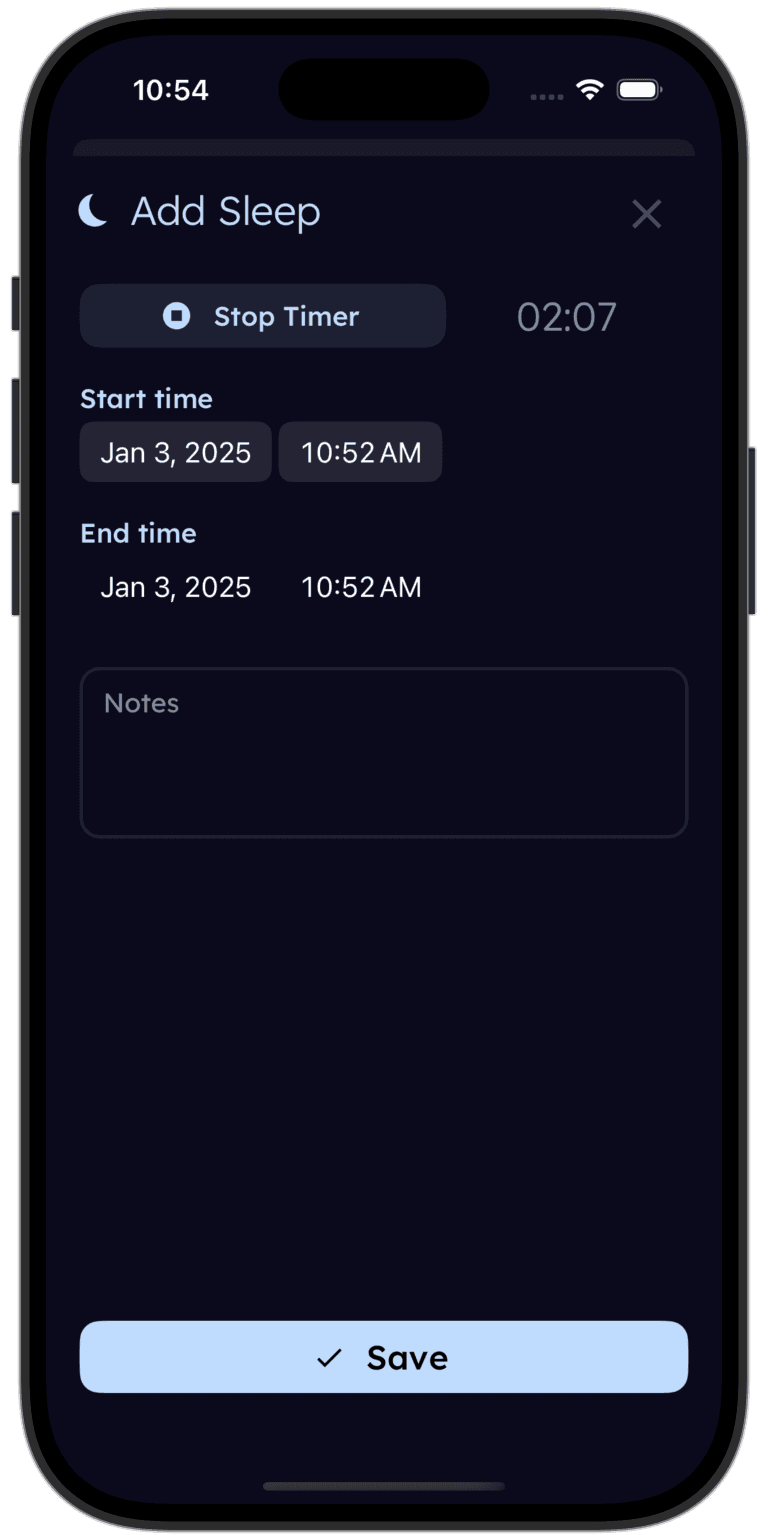
Tinylog tracks sleep so you can spot patterns.
Log sleep sessions, wake windows, and night wakings. See trends over days and weeks. Bring the data to your next pediatrician visit.


Battery, Charging, and the Hassle Factor
The Owlet Dream Sock needs to be charged. Every single day. The sock's battery lasts about 16 hours on a full charge, which means you're plugging it in every morning and hoping you remember to put it back on before bedtime. If you forget to charge it, you're monitoring-free for the night.
Nanit Pro plugs into the wall and stays there. No charging. No forgetting. The Breathing Wear garments need to be washed like any baby clothes, and you'll want a few in rotation, but there's no daily battery ritual.
This sounds minor until you're four months into sleep deprivation and the charging cable has disappeared under the crib for the third time this week. Daily charging is a real friction point that Owlet owners mention often.
| Product | Typical Price | Cost Per Month of Use | Subscription |
|---|---|---|---|
| Owlet Dream Sock (sock only) | $299–$349 | ~$17–$29/mo over 12–18 months of use | +$10/month for premium insights |
| Nanit Pro (camera + Breathing Wear starter set) | $299–$379 | ~$10–$16/mo over 24–36 months of use | +$10/month or $50–$100/year for full analytics |
| Owlet Dream Duo (sock + camera bundle) | $449–$499 | ~$25–$42/mo over 12–18 months of use | +$10/month for premium insights |
The Subscription Trap
Both companies want your monthly payment, and both products feel incomplete without it.
Owlet charges about $10/month for the Premium plan, which unlocks historical sleep trends, advanced insights, and extended data access. Without it, you get real-time readings but limited history.
Nanit charges about $10/month (or $50–$100/year) for Nanit Insights, which includes detailed sleep analytics, personalized tips, video history, and growth tracking via the camera. Without the subscription, you get live video and basic alerts but lose the analytics that make the camera "smart."
Budget for at least $100–$120/year in subscription costs on top of the hardware purchase. It's annoying, but it's the business model for both products. Factor it into your total cost of ownership.
Choose the Owlet Dream Sock If
- You want direct biometric data — heart rate and blood oxygen readings give you more confidence
- Your baby has a health history that makes pulse ox monitoring feel necessary (talk to your doctor first)
- You already have a video monitor you like and just want a wearable add-on
- Your baby tolerates wearing socks during sleep without fussing
- You prefer physiological alerts (heart rate, oxygen) over motion-based alerts
Choose the Nanit Pro If
- You want a top-tier video monitor and smart tracking in one device
- You prefer a non-contact monitoring approach — nothing on your baby's body
- Detailed sleep analytics and coaching tips matter to you
- Room environment monitoring (temperature, humidity, light) is useful for your setup
- You want a monitor that grows with your child past 18 months
- You don't want to deal with charging a wearable device every day
Where to Buy
The Owlet Dream Sock (~$299–$349) is the monitor for parents who want to see hard numbers — heart rate and oxygen levels read directly from their baby's body. If biometric data is what lets you sleep at night, this is the one to get. Just know you'll need a separate video monitor unless you spring for the Dream Duo bundle.
The Nanit Pro (~$299–$379 with Breathing Wear) is the better all-in-one package — a top-quality video monitor with non-contact breathing tracking, room environment sensors, and strong sleep analytics. It lasts longer, doesn't need daily charging, and works as a standard monitor even after your baby outgrows the smart features.
Both are available on Amazon, at Target, and directly from each company's website. Watch for bundle deals during registry completion discounts and holiday sales.
Tinylog earns a small commission on purchases made through these links, at no cost to you.
Tip: check promo.new before purchasing. It's hit or miss depending on the product, but when it hits, you'll be glad you checked.
The Bottom Line
The Owlet Dream Sock and Nanit Pro solve the same parental anxiety from opposite directions.
Owlet Dream Sock is for parents who want physiological data — actual heart rate and oxygen readings from a wearable sensor. It gives you the closest thing to hospital-style monitoring available in a consumer product. The trade-offs are daily charging, a sock that some babies hate, and a shorter useful lifespan (birth to ~18 months).
Nanit Pro is for parents who want an excellent video monitor with smart tracking built in — no wearable required. The breathing detection uses computer vision instead of skin contact. The trade-offs are that it's less "direct" than biometrics and requires Breathing Wear for the breathing feature.
For most families buying their first smart monitor, Nanit Pro is the more practical choice — it's a complete video monitor, lasts longer, and doesn't require anything on your baby's body. But if biometric peace of mind is what you need, the Owlet Dream Sock delivers data that no camera can.
If you're tracking your baby's sleep — and you absolutely should be in those early months — Tinylog can help you log patterns and spot trends over time, regardless of which monitor you choose.
Related Guides
- Baby Sleep Schedule by Age — How much sleep your baby needs at every stage
- Is My Baby's Sleep Normal? — What to expect and when to worry
- When Do Babies Sleep Through the Night? — Realistic timelines and what the data says
- Nanit Pro vs. Infant Optics DXR-8 Pro — Smart camera vs. dedicated video monitor
Sources
- Owlet.com. "Owlet Dream Sock — Product Information and Specifications." 2026.
- Nanit.com. "Nanit Pro Camera and Breathing Wear — Product Information." 2026.
- FDA.gov. "FDA Warns Companies Selling Wearable Products Marketed for Infant Sleep Monitoring." 2021.
- Consumer Reports. "Best Baby Monitors of 2026." consumerreports.org, 2026.
- The Verge. "Owlet Dream Sock Review: Peace of Mind at a Price." theverge.com, 2025.
- Wirecutter (NY Times). "The Best Baby Monitors." nytimes.com/wirecutter, 2026.
- Mommyhood101. "Owlet Dream Sock vs. Nanit Pro: Smart Monitor Comparison." mommyhood101.com, 2025.
This guide is for informational purposes only. Neither the Owlet Dream Sock nor the Nanit Pro is an FDA-cleared medical device. If you have concerns about your baby's breathing, heart rate, or oxygen levels, consult your pediatrician. They may recommend a medical-grade monitor.
Frequently asked questions
- Is the Owlet Dream Sock a medical device?
- No. The Owlet Dream Sock is classified as a consumer wellness product, not an FDA-cleared medical device. It tracks heart rate and blood oxygen trends but is not intended to diagnose, treat, or prevent any medical condition. The FDA required Owlet to stop marketing the original Smart Sock as a medical device in 2021. The Dream Sock was redesigned and relaunched as a wellness monitor.
- Does the Nanit Pro actually detect breathing?
- Nanit uses its overhead camera plus special Breathing Wear (bands or pajamas with a distinct pattern) to detect the rise and fall of your baby's chest. It does not measure blood oxygen or heart rate. It tracks breathing motion visually. If the camera's view is obstructed or the baby isn't wearing the Breathing Wear, breathing monitoring won't work.
- Can I use the Owlet Dream Sock and Nanit Pro together?
- Yes. Some parents use both — the Nanit Pro as their primary video monitor and the Owlet Dream Sock for biometric tracking. They run on separate apps, though, so you'll be managing two systems. It's overkill for most families, but if your baby has health concerns that warrant close monitoring, it's an option.
- Do both monitors require a subscription?
- Both offer basic functionality without a subscription, but the best features are locked behind monthly plans. Owlet charges around $10/month for sleep trend history and advanced insights. Nanit charges $10/month (or $50–$100/year) for sleep tracking analytics, growth tracking, and video history. Without subscriptions, both feel limited.
- Which monitor is better for preemies or babies with health conditions?
- Neither monitor replaces a medical-grade pulse oximeter. If your pediatrician has concerns about your baby's breathing or oxygen levels, they will prescribe a medical device. That said, parents of preemies often prefer the Owlet Dream Sock because it tracks pulse ox and heart rate directly. Always discuss with your doctor first.
- How long can babies wear the Owlet Dream Sock?
- The Owlet Dream Sock fits babies from 5 to 30 pounds (roughly birth to 18 months). It comes with three sock sizes. Once your baby outgrows the largest sock or starts pulling it off consistently, the sock's useful life is over. Nanit's Breathing Wear comes in sizes up to 24 months, and the camera itself works as a standard monitor indefinitely.