GUIDE

Paced Bottle Feeding vs. Regular Bottle Feeding

Paced bottle feeding gives baby more control over intake and reduces the risk of overfeeding. Regular bottle feeding is faster but the gravity-driven flow can override baby's satiety cues.

If your baby is draining bottles in under 5 minutes, this guide is especially worth reading.

Track volume per feeding session

Spot overfeeding patterns before they become a problem

My rule of thumb is to aim for a feeding rate of about 1 ounce every five minutes.
Dr. Heidi SzugyeDr. Heidi Szugye, DO, Pediatrician and Breastfeeding Medicine Specialist, Cleveland Clinic

It's Not Just What's in the Bottle — It's How It Gets Out

Most parents focus on what goes in the bottle — breast milk vs. formula, organic vs. conventional, which brand. But the technique of bottle feeding matters just as much as the contents, and it's something most parents never learn about.

The standard way most people bottle feed — baby reclined, bottle tilted with nipple pointing down, baby drinks until the bottle is empty — works fine in many cases. But it has a fundamental design flaw: gravity does most of the work. Milk flows down into the nipple whether or not the baby is actively sucking, and the fast, easy flow can deliver more milk than the baby actually wants or needs. Babies will often keep swallowing reflexively even after they're satisfied, simply because milk keeps coming.

Paced bottle feeding flips this dynamic. By holding baby upright, keeping the bottle horizontal, and taking deliberate pauses, you force the baby to actively draw milk and you give satiety signals time to catch up with intake. This is especially important for families combination feeding with both breast and bottle. It's not a radical technique — it's how breastfeeding naturally works. At the breast, milk doesn't flow constantly. It comes in letdowns, there are natural pauses, and baby controls the pace. Paced bottle feeding recreates this experience in a bottle.


Paced vs. Regular Bottle Feeding
Baby position
Paced Bottle FeedingBaby held upright at ~45-degree angle, supporting their own head when possible.
Regular Bottle FeedingBaby typically reclined or semi-reclined, with gravity helping milk flow down.
Bottle position
Paced Bottle FeedingHeld horizontal so milk doesn't pool at the nipple. Baby has to actively suck to draw milk.
Regular Bottle FeedingHeld at an angle with nipple pointed down. Gravity assists flow — milk drips continuously.
Flow control
Paced Bottle FeedingBaby controls the pace. Pauses every 1-2 oz or when baby stops sucking. Bottle is tilted down during pauses.
Regular Bottle FeedingContinuous flow with minimal pausing. Baby drinks at the speed the bottle delivers.
Time per feed
Paced Bottle Feeding15-20 minutes on average. Mirrors the pace of breastfeeding.
Regular Bottle Feeding5-10 minutes. Faster because gravity assists the flow.
Overfeeding risk
Paced Bottle FeedingLower. Baby decides when to stop. Pauses allow satiety signals to register.
Regular Bottle FeedingHigher. Fast flow can override satiety cues. Baby may finish the bottle out of reflex, not hunger.
Transition to/from breast
Paced Bottle FeedingEasier. Similar pace and effort to breastfeeding. Reduces nipple preference risk.
Regular Bottle FeedingCan create bottle preference. Easy, fast flow makes breast seem slow and frustrating by comparison.
Paced feeding is recommended by most lactation consultants, especially for combo-fed babies.

Paced Feeding Advantages

  • Reduces overfeeding risk by letting baby's satiety cues catch up with intake
  • Mimics breastfeeding pace — important for combo-fed babies to avoid nipple preference
  • Baby actively works to extract milk, developing oral motor skills similar to nursing
  • Supports healthy appetite self-regulation from early infancy
  • Recommended by most lactation consultants, especially for breastfed babies getting occasional bottles

Particularly important for breastfed babies who also take bottles — reduces nipple confusion risk.

Paced Feeding Challenges

  • Takes longer — 15-20 minutes vs. 5-10 minutes per feed
  • Some babies protest the pauses, especially if they're used to faster flow
  • Requires caregiver training — grandparents and daycare staff may not know the technique
  • Can feel counterintuitive — pausing a feeding when baby seems to want more
  • Not always practical when baby is extremely hungry and upset

The extra time and caregiver training are real costs, but the benefits are worth it for most families.

Regular Bottle Feeding Advantages

  • Faster feeds — useful when time is limited or baby is very upset
  • Simpler technique — requires less caregiver education
  • Baby finishes the bottle completely, which can feel reassuring for anxious parents
  • Familiar approach — most caregivers default to this method
  • Baby is less likely to fuss during the feed itself

Speed and simplicity are real advantages when you're sleep-deprived and overwhelmed.

Regular Bottle Feeding Challenges

  • Higher risk of overfeeding — gravity-driven flow can deliver more than baby needs
  • Can create bottle preference, making breastfeeding more difficult for combo-fed babies
  • May contribute to excessive weight gain if volumes aren't monitored
  • Baby doesn't learn to self-regulate intake as effectively
  • Frequent spit-up can result from taking in too much, too fast

These risks are manageable with slow-flow nipples and volume awareness, even without full pacing.

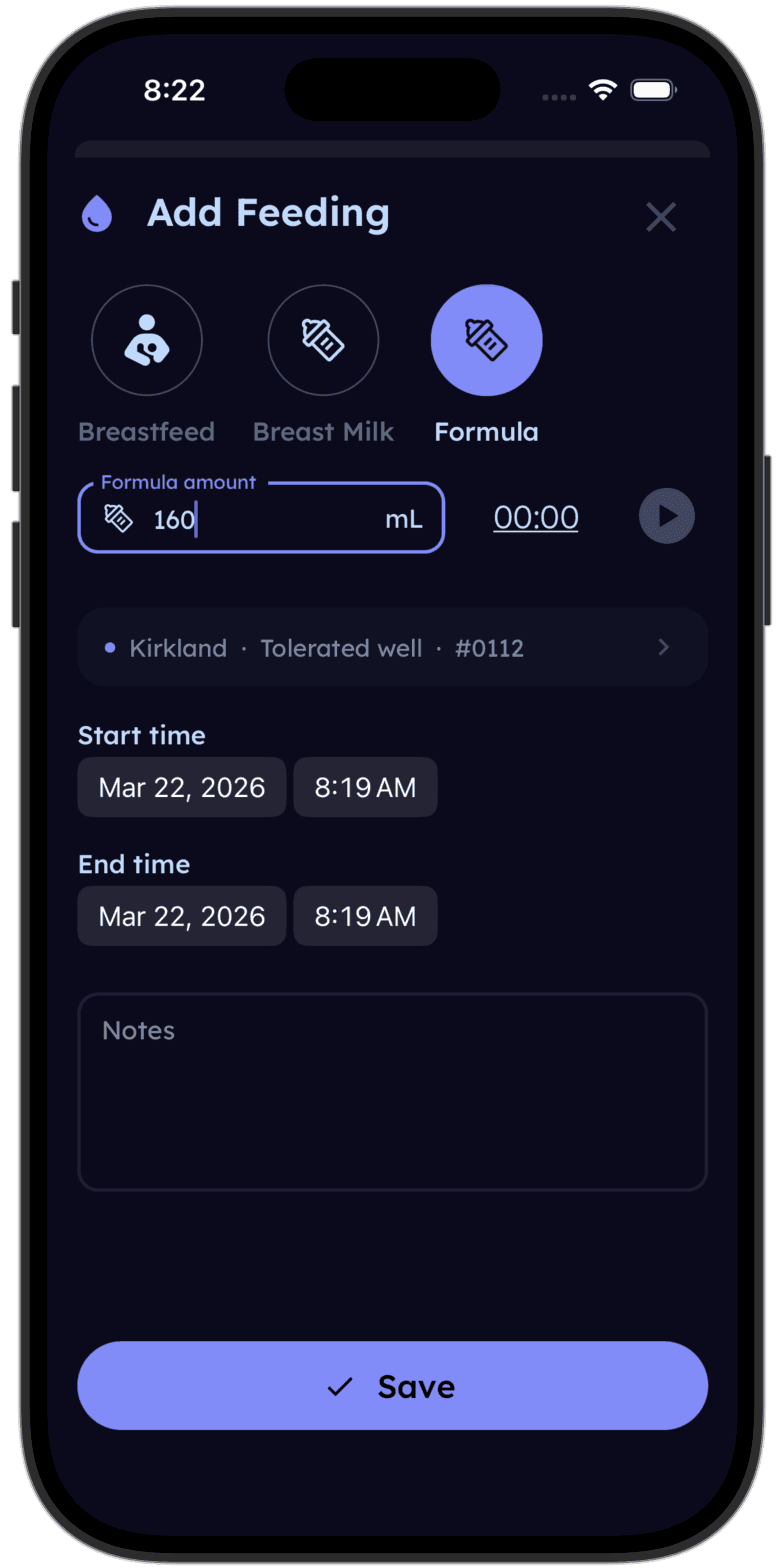
Tinylog formula feeding log showing bottle volumes

How much is too much? The data makes it clear.

Track every bottle feed volume in Tinylog and see per-session and daily totals. If your baby is consistently exceeding age-appropriate amounts, you'll see it in the trends — and you'll have concrete data to discuss with your pediatrician.

Download on the App StoreGet It On Google Play

When Paced Feeding Matters Most

Paced feeding is especially important in three scenarios. First, for combo-fed babies who go back and forth between breast and bottle. The fast, easy flow of a regular bottle can create a preference — baby learns that the bottle delivers more milk with less effort, and may then become frustrated at the slower-paced breast. Paced feeding equalizes the experience so baby doesn't develop a strong preference for one over the other.

Second, for babies showing signs of overfeeding — consistently spitting up large volumes after feeds, feeding that finishes in under 5 minutes, or weight gain that's tracking above the 95th percentile without a genetic reason. Slowing the feed down gives baby's brain time to register fullness before the bottle is empty.

Third, for all bottle-fed newborns in the first few months. Newborn stomachs are small, and the amount a newborn needs per feed is much less than most bottles hold. A newborn who is given a full bottle with fast flow will often drink the whole thing — not because they're hungry, but because the milk keeps coming and the swallowing reflex keeps responding.

How to Choose and When to Adapt

If you're combo feeding, paced feeding is strongly recommended for every bottle to protect the breastfeeding relationship. If you're exclusively bottle feeding and baby's weight gain is healthy, you can be more flexible — some feeds paced, some faster, based on the situation.

The key metric is volume per session relative to your baby's age and weight. Our formula volume by age guide breaks this down in detail — a newborn needs 1.5-3 oz per feed, a 3-month-old needs 4-5 oz. If your baby is consistently exceeding these ranges and draining bottles in 5 minutes, pacing the feed is the simplest intervention. Track volumes over a week and see what the numbers say.

Tips That Apply Either Way

Use a slow-flow nipple regardless of method

Even if you're not doing full paced feeding, a slow-flow nipple forces baby to work harder and eat slower. This alone reduces overfeeding risk. Don't 'level up' nipple flow just because baby gets frustrated — some frustration at the bottle is actually normal and mimics the breast experience.

Track volume to spot patterns

If your baby is consistently taking 6-8 oz per feed when age-appropriate amounts are 3-4 oz, that's a signal to slow things down. Tracking volume per session in an app lets you see this trend before it shows up as excessive weight gain at a pediatrician visit.

Teach the technique to every caregiver

Paced feeding only works if every person who feeds the baby does it consistently. Show grandparents, nannies, and daycare providers the upright position, horizontal bottle, and pause technique. A quick demo is worth more than a paragraph of instructions.

Related Guides

Sources

  • Kair, L. R., et al. (2015). The Experience of Breastfeeding the Late Preterm Infant: A Qualitative Study. Breastfeeding Medicine, 10(2), 102-106.
  • Li, R., et al. (2012). Do Infants Fed From Bottles Lack Self-regulation of Milk Intake Compared With Directly Breastfed Infants? Pediatrics, 125(6), e1386-e1393.
  • Academy of Breastfeeding Medicine. (2017). ABM Clinical Protocol #3: Supplementary Feedings in the Healthy Term Breastfed Neonate.
  • Ventura, A. K., et al. (2019). Infant Feeding Practices and Their Effect on Appetite Self-Regulation. Current Nutrition Reports, 8(2), 71-78.

This guide is for informational purposes only and is not a substitute for professional medical advice. Consult your pediatrician for guidance specific to your baby.

Get this comparison in your inbox.
Save this guide so you can share the paced feeding technique with caregivers.
Volume per session tells you more than you think.
Track bottle feeds in Tinylog to see if intake is appropriate for your baby's age.
Download on the App StoreGet It On Google Play