GUIDE

Pacifier vs. Thumb Sucking

Pacifiers are easier to wean and may reduce SIDS risk. Thumb sucking is self-soothing and always available. Both can cause dental issues if continued past age 3-4, but pacifier use is generally easier to stop.

The AAP recommends pacifiers at sleep time in the first year to reduce SIDS risk.

Track soothing patterns

Log what calms your baby

The sucking motion can alter the way kids' jaws develop. If they're using a pacifier all day, their teeth can't grow in correctly, which creates problems that can get worse over time.
Dr. Jason ShermanDr. Jason Sherman, DO, Pediatrician, Cleveland Clinic

A Common Concern With a Clear Evidence Base

Non-nutritive sucking — whether on a pacifier, thumb, or fingers — is one of the most common self-soothing behaviors in infants. It is normal, developmentally appropriate, and not a sign of anxiety or insecurity. Babies begin sucking in utero as early as 29 weeks gestation. It calms the nervous system and helps with sleep.

The practical question for parents is whether to encourage pacifier use, allow thumb sucking, or try to prevent both. The evidence points in a clear direction for infants: the AAP recommends offering a pacifier at sleep time during the first year because of its significant protective effect against SIDS. A 2005 meta-analysis by Hauck et al. found that pacifier use during sleep was associated with a 50-90% reduction in SIDS risk. This is one of the strongest modifiable protective factors identified in SIDS research.

Beyond the first year, the question shifts from safety to dental health. Both pacifiers and thumb sucking can affect tooth alignment if continued past age 3-4, so understanding the baby teething chart helps you anticipate when teeth are emerging. The key difference: pacifiers are easier to stop because you can take them away. Thumbs are permanently attached.


Pacifier vs. Thumb Sucking
SIDS risk reduction
PacifierYes — strong evidence that pacifier use during sleep reduces SIDS risk (Hauck et al., 2005).
Thumb SuckingNo established protective effect against SIDS.
Availability
PacifierCan be lost, dropped, or forgotten. Baby may need it replaced during the night.
Thumb SuckingAlways available. Baby can self-soothe without parent intervention.
Dental impact
PacifierCan cause open bite or crossbite if used past age 3-4. Orthodontic-shaped pacifiers may reduce risk.
Thumb SuckingSame dental risks as pacifier if continued past age 3-4. Thumb may exert more force due to rigid bone.
Weaning difficulty
PacifierEasier — you can limit use, cut the tip, or remove it entirely.
Thumb SuckingHarder — the thumb cannot be removed. Weaning requires behavioral strategies.
Hygiene
PacifierMust be cleaned regularly. Can fall on the floor, collect bacteria.
Thumb SuckingCleaner initially (attached to baby) but babies touch everything.
Breastfeeding impact
PacifierAAP recommends waiting 3-4 weeks. Evidence shows minimal impact when introduced after breastfeeding is established.
Thumb SuckingNo impact on breastfeeding technique or latch.
The SIDS protective effect of pacifiers is specific to use during sleep and is supported by strong epidemiological evidence.

Pacifier Advantages

  • Reduces SIDS risk when used during sleep — one of the strongest protective factors identified
  • Parents control availability — can limit use to sleep times or remove entirely when ready
  • Easier to wean than thumb sucking because the object can be taken away
  • Orthodontic-shaped pacifiers may reduce dental impact compared to traditional shapes
  • Can provide immediate soothing during medical procedures, car rides, and fussy periods

The SIDS risk reduction alone makes pacifiers worth offering at sleep time during the first year.

Pacifier Challenges

  • Can become a sleep association — baby may wake when it falls out and cry for replacement
  • Must be kept clean — dropped pacifiers need washing, and multiple backups are necessary
  • Extended use past age 3-4 can cause dental misalignment (open bite, crossbite)
  • Some breastfed babies may initially resist the breast after pacifier introduction

The sleep association issue peaks around 4-8 months. Strategies like distributing multiple pacifiers in the crib can help.

Thumb Sucking Advantages

  • Always available — baby can self-soothe without parent help, including at night
  • No objects to clean, replace, or keep track of
  • Natural self-soothing behavior — babies discover it on their own without parent intervention
  • No risk of becoming a lost-pacifier sleep disruption
  • Many babies who suck their thumbs stop naturally between ages 2-4

Thumb sucking is a normal developmental behavior, not a habit that needs correction in infants and young toddlers.

Thumb Sucking Challenges

  • No SIDS protective effect — unlike pacifiers, thumb sucking has no established benefit for SIDS reduction
  • Harder to wean — you cannot take the thumb away when it's time to stop
  • Prolonged, vigorous thumb sucking can cause more dental misalignment than a pacifier due to the rigid bone structure
  • Social pressure and judgment from other parents and relatives can begin early

Most children stop thumb sucking naturally by age 2-4. Intervention is only needed if it persists past age 3-4.

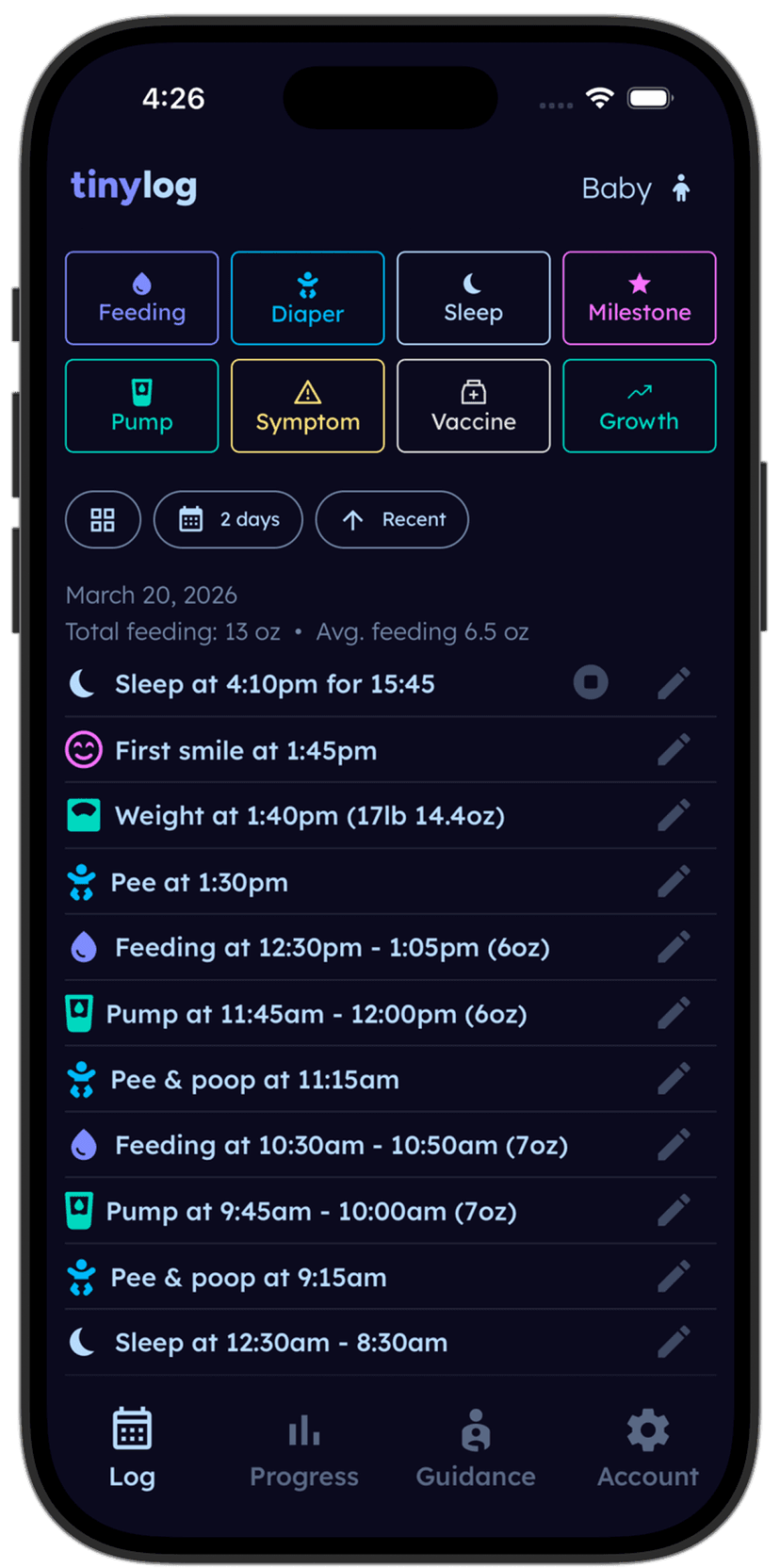
Tinylog activity overview showing daily soothing and sleep patterns

Track your baby's soothing patterns to understand what works.

Tinylog helps you log daily activities and routines, so you can spot patterns in what soothes your baby — whether it's a pacifier, thumb, or something else entirely.

Download on the App StoreGet It On Google Play

The Dental Question

Both pacifier use and thumb sucking can cause dental malocclusion (misalignment) if continued past age 3-4. The most common issues are anterior open bite (front teeth do not meet when back teeth are closed) and posterior crossbite (upper teeth sit inside lower teeth). Recognizing the signs of teething early can help you distinguish between teething discomfort and a sucking habit that is becoming entrenched. The American Academy of Pediatric Dentistry recommends addressing non-nutritive sucking habits by age 3, before permanent teeth begin to emerge around age 6.

Orthodontic-shaped pacifiers (flattened rather than round) may produce less dental impact than traditional round pacifiers, though evidence is mixed. Regardless of shape, duration and intensity of sucking matter more than the specific object. A child who sucks gently and infrequently will have less dental impact than one who sucks vigorously for hours daily.

Practical Advice for Each Path

If your baby uses a pacifier: offer it at sleep times, keep backups in the crib and diaper bag, and plan to wean between ages 2-3. Gradual reduction (limiting to sleep only, then eliminating) works better than cold turkey for most families. When teething intensifies the desire to chew, offering a safe teething toy can replace the pacifier during waking hours. If your baby sucks their thumb: do not try to stop the habit in infancy. It is normal. After age 2-3, use positive reinforcement (praise when they are not sucking) rather than punishment. Consult your pediatric dentist if the habit persists past age 3.

Tips That Apply Either Way

Offer the pacifier at sleep time

The AAP recommends offering (not forcing) a pacifier at nap time and bedtime throughout the first year to reduce SIDS risk. If the baby refuses, do not force it. If it falls out after the baby falls asleep, you do not need to replace it.

Do not stress about the choice

Many babies choose for themselves. Some take to pacifiers immediately. Others refuse every pacifier and find their thumb. Some do neither and soothe in other ways. Let your baby show you what works, and focus on safety and dental health as they grow.

Plan the exit by age 2-3

Whether pacifier or thumb, plan to reduce non-nutritive sucking by age 2-3, before permanent teeth begin to emerge (around age 6). For pacifiers, gradual reduction works well. For thumb sucking, positive reinforcement and gentle reminders are more effective than punishment or bitter nail coatings.

Related Guides

Sources

  • Hauck, F. R., Omojokun, O. O., & Siadaty, M. S. (2005). Do Pacifiers Reduce the Risk of Sudden Infant Death Syndrome? A Meta-Analysis. Pediatrics, 116(5), e716-e723.
  • AAP Task Force on Sudden Infant Death Syndrome. (2022). Sleep-Related Infant Deaths: Updated 2022 Recommendations for Reducing Infant Deaths in the Sleep Environment. Pediatrics, 150(1).
  • Jaafar, S. H., et al. (2016). Effect of Restricted Pacifier Use in Breastfeeding Term Infants for Increasing Duration of Breastfeeding. Cochrane Database of Systematic Reviews, (8).
  • American Academy of Pediatric Dentistry. (2023). Policy on Oral Habits. AAPD Reference Manual.
  • Warren, J. J., et al. (2005). Effects of Non-Nutritive Sucking Habits on Occlusal Characteristics in the Mixed Dentition. Pediatric Dentistry, 27(6), 445-450.

This guide is for informational purposes only and is not a substitute for professional medical advice. Consult your pediatrician for guidance specific to your baby.

Get this comparison in your inbox.
We'll send you the evidence-based breakdown to help you navigate soothing choices.
Understanding your baby's soothing patterns starts with tracking them.
Download Tinylog to log daily activities and spot what works for your baby.
Download on the App StoreGet It On Google Play